
EU condemns Turkey’s ‘Blue Homeland’ doctrine, weighs sanctions on officials
The European Parliament on Wednesday adopted a sharply worded resolution on Turkey, condemning what it described as continued violations of the sovereign rights of Greece and Cyprus and criticizing Ankara’s “Blue Homeland” maritime doctrine. Lawmakers also warned that Turkey risks missing a strategic opportunity linked to renewed European Union enlargement momentum, citing what they called ongoing democratic backsliding. The resolution called for consideration of targeted measures, including sanctions against Turkish officials involved in alleged human rights abuses.
EPPO challenges Greek court decision over prosecutors’ terms
The European Public Prosecutor’s Office (EPPO) has challenged a Greek judicial decision limiting the extension of the terms of three delegated European prosecutors to two years instead of five, in a dispute that could ultimately reach the European Union’s highest court. The dispute arose after Greece’s Supreme Judicial Council approved the shorter extension, prompting objections from the EPPO. Legal experts say the case could eventually be referred to the Court of Justice of the European Union, a possibility previously raised by EPPO chief Laura Kovesi during a visit to Greece.
Ceiling on consumer loan interest rates
The Development Ministry is attempting to end the high interest rates mainly on consumer loans and credit cards through a bill that incorporates a European Directive, albeit with a delay compared to the deadlines set by Brussels. The bill has been as put up for consultation until June 29 before being tabled in Parliament for voting in July. It will not have retroactive effect and the new terms in loan contracts will apply to those concluded from November 20, onward. It concerns loan contracts without collateral on real estate and for amounts up to €100,000. So it mainly concerns consumer and repair loans, as well as credit cards, but not mortgages. Article 40 of the draft law under consultation provides for the imposition of an upper limit on the amount of the total annual effective interest rate (AER) – the loan may not exceed 30% to 50% of the AER – as published on a quarterly basis by the Bank of Greece.
https://www.ekathimerini.com/economy/1306881/ceiling-on-consumer-loan-interest-rates
Greece’s debt to continue its downward trajectory
Greece will continue to be the champion in debt reduction in the eurozone in the coming years, according to Scope Ratings, which estimates that by 2031 the Greek debt ratio will be lower than that of Italy, France and Belgium and close to the levels of Finland. Away from being the most indebted country in the eurozone, Scope notes, Greece will move very close to the average.
According to Scope’s estimates, by 2031 Greece’s debt ratio will fall to 107% of GDP, lower than Italy (135%), France (127%) and Belgium (120%), and very close to Finland (103%). It is worth noting that all of these countries except Italy have ratings ranging from “A+” to “AA,” compared to Greece’s “BBB.”
https://www.ekathimerini.com/economy/1306875/champion-in-debt-reduction
ATHEX: Buyers’ thirst appears to be quenched
The rising sequence in the Greek bourse appears to have reached its end after Wednesday’s ascent. Buyers have outshone sellers for five sessions in a row, though this time it was with smaller daily gains for the benchmark, relatively small daily turnover and more losers than winners among stocks. The main index climbed to a nearly 200-month high, but some profit taking appears to be on its way now.
https://www.ekathimerini.com/economy/1306983/athex-buyers-thirst-appears-to-be-quenched


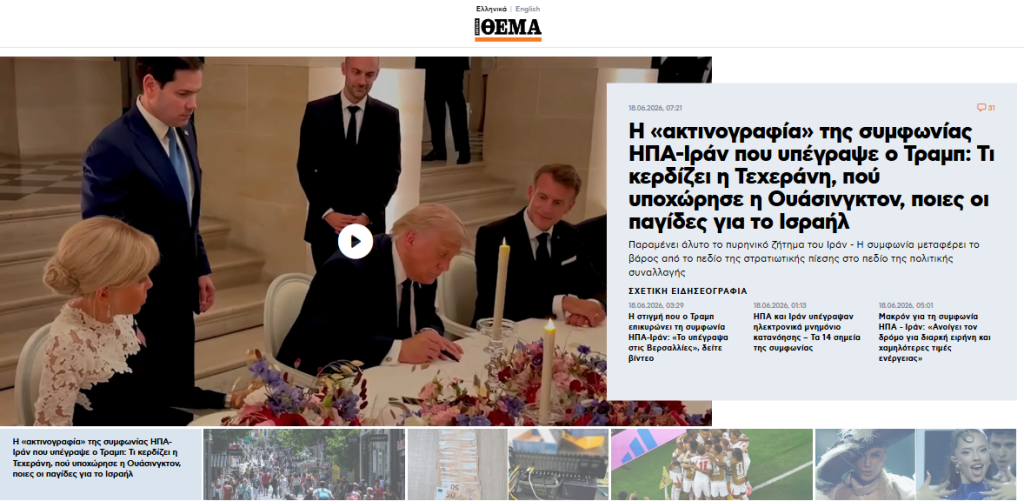
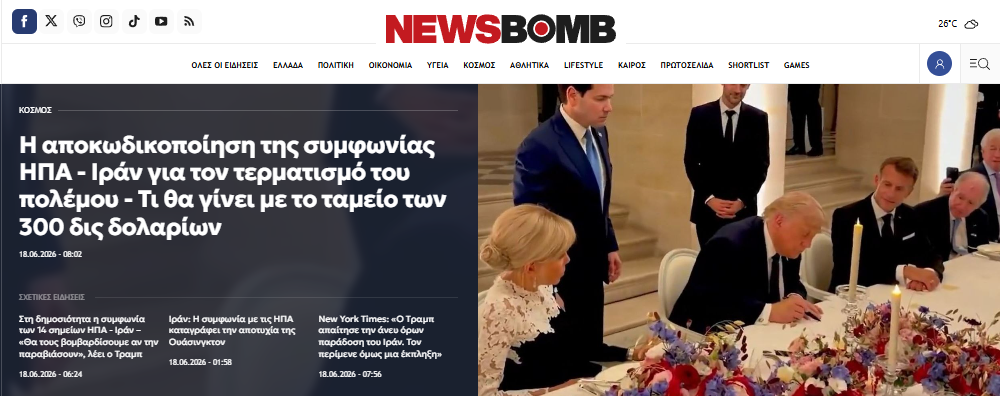
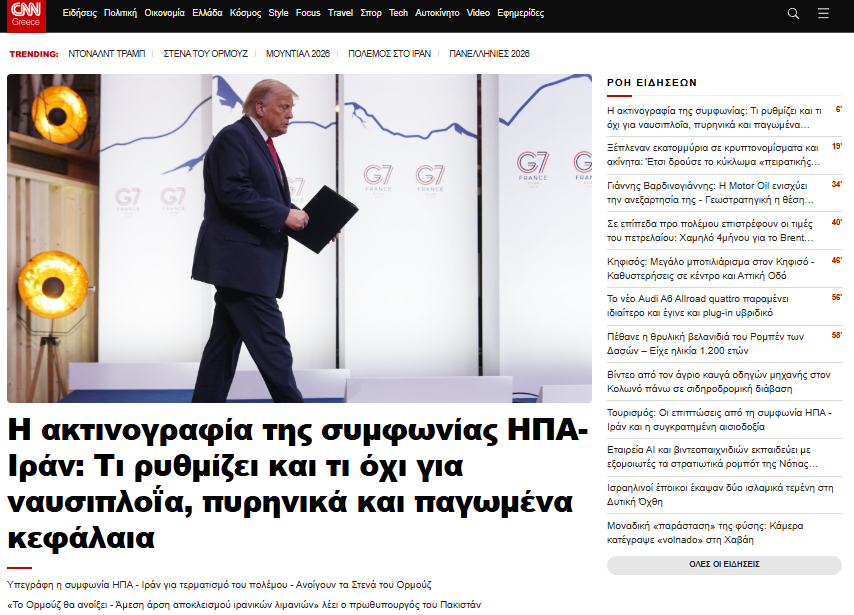

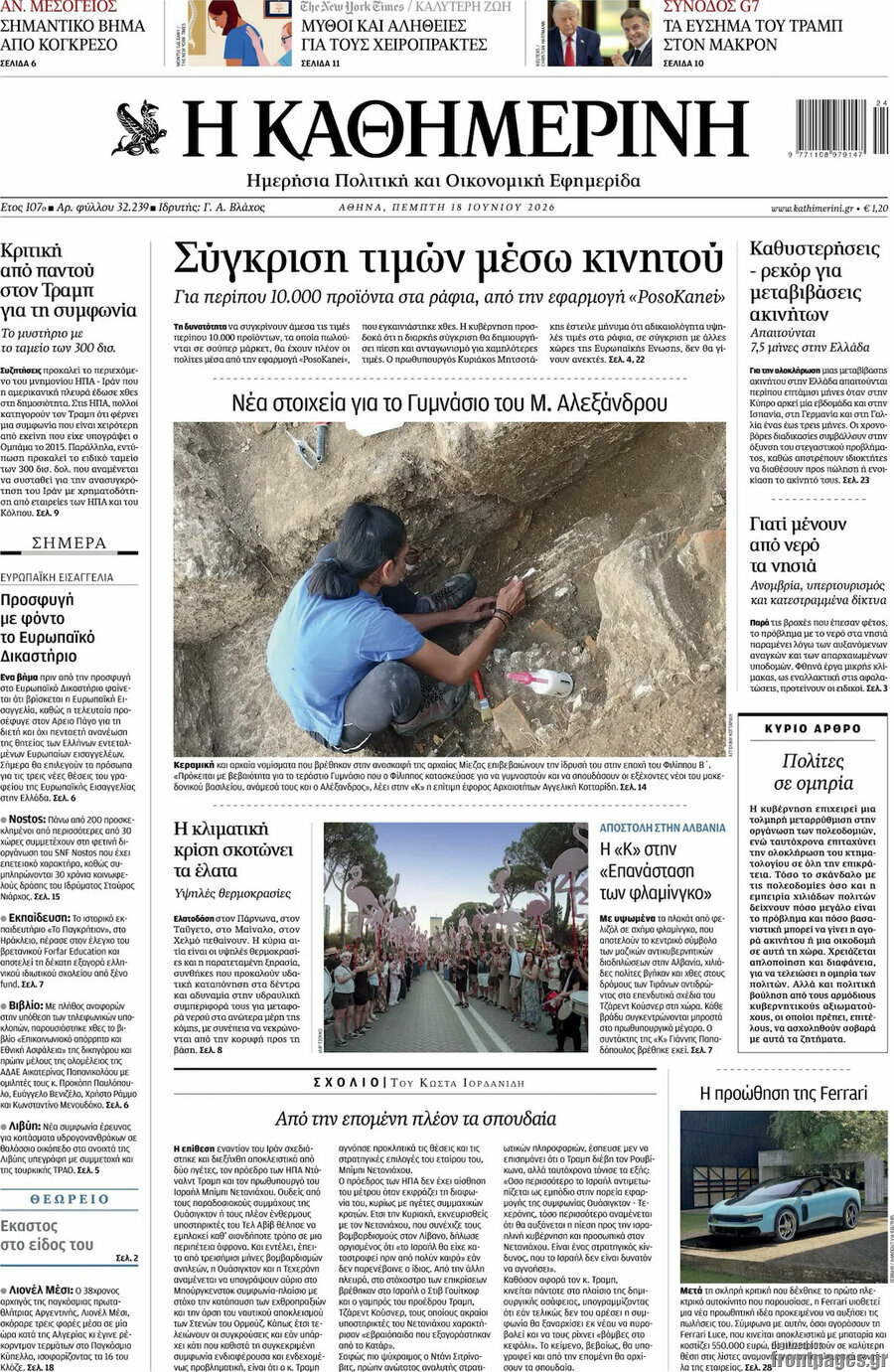
KATHIMERINI: Prices of super market products will be compared on mobile phones
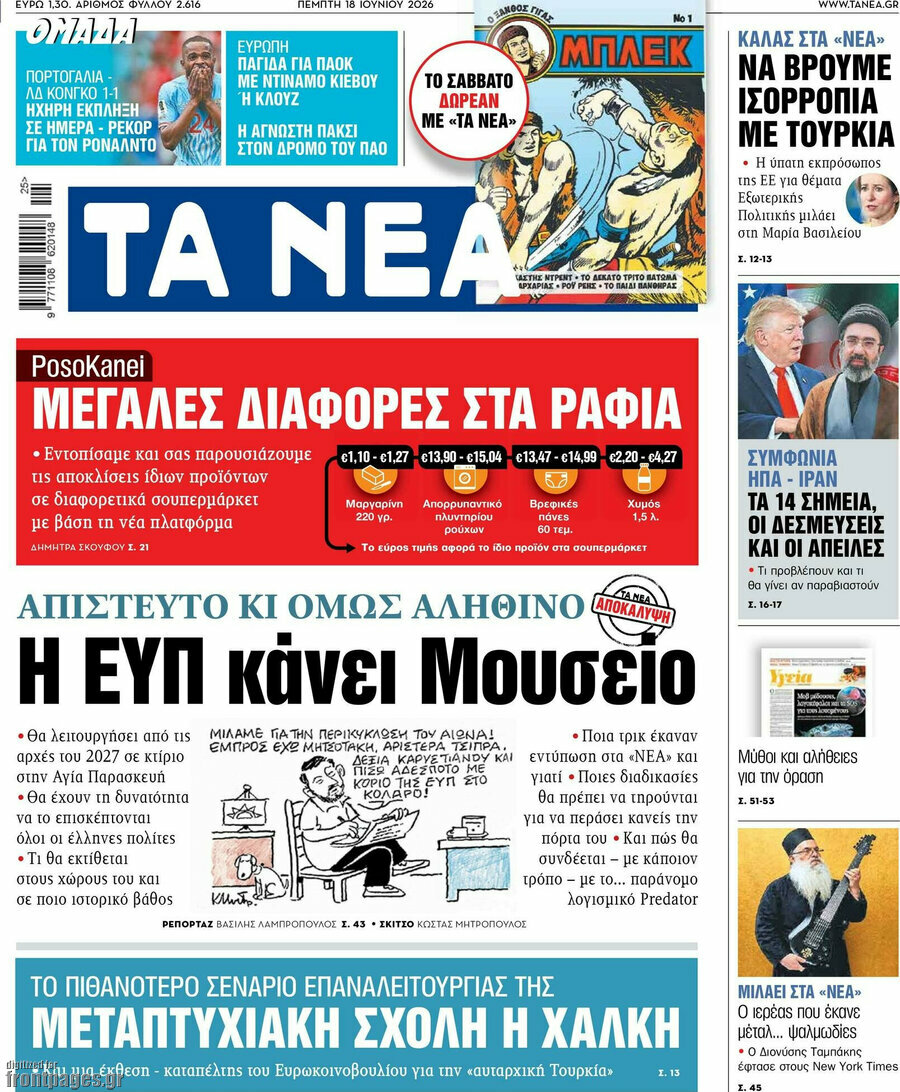
TA NEA: The Greek Intelligence Service is setting up a museum
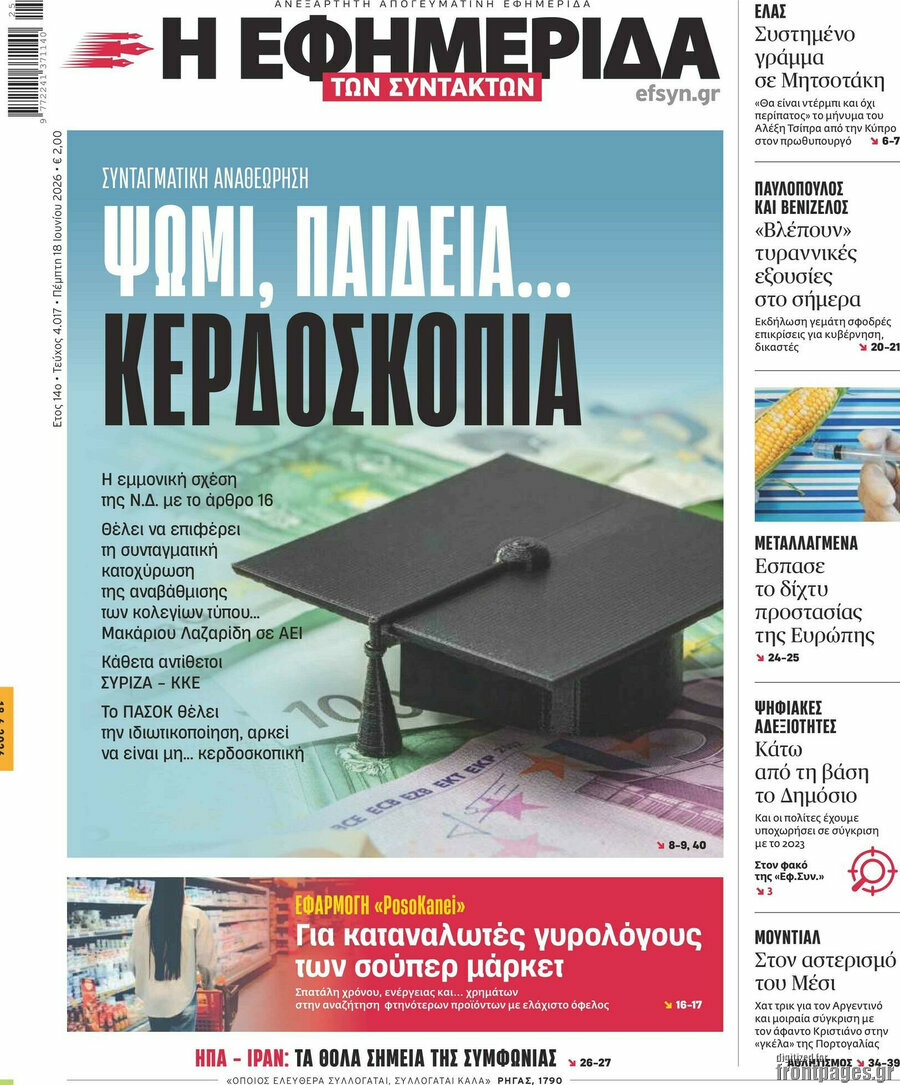
EFIMERIDA TON SYNTAKTON: Food, education and… profiteering
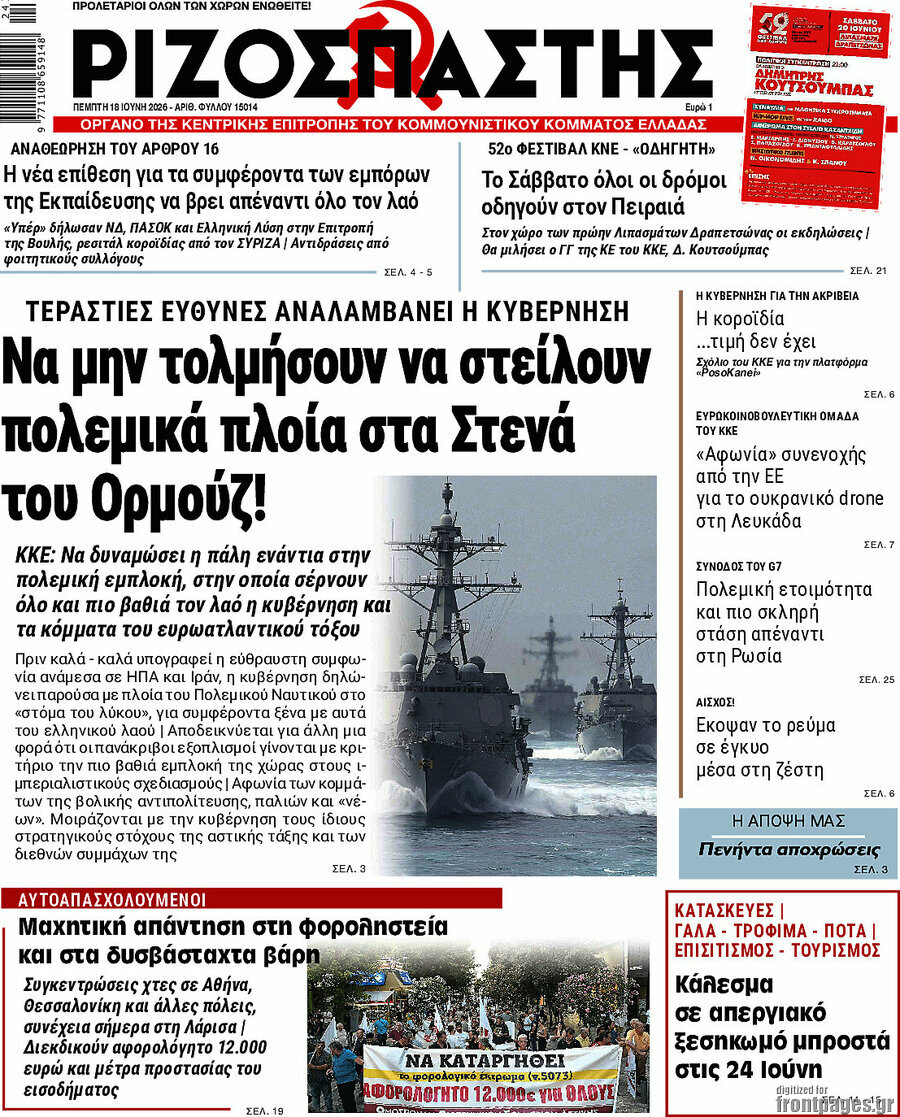
RIZOSPASTIS: The Government should not dare send Greek warships to the Hormuz strait
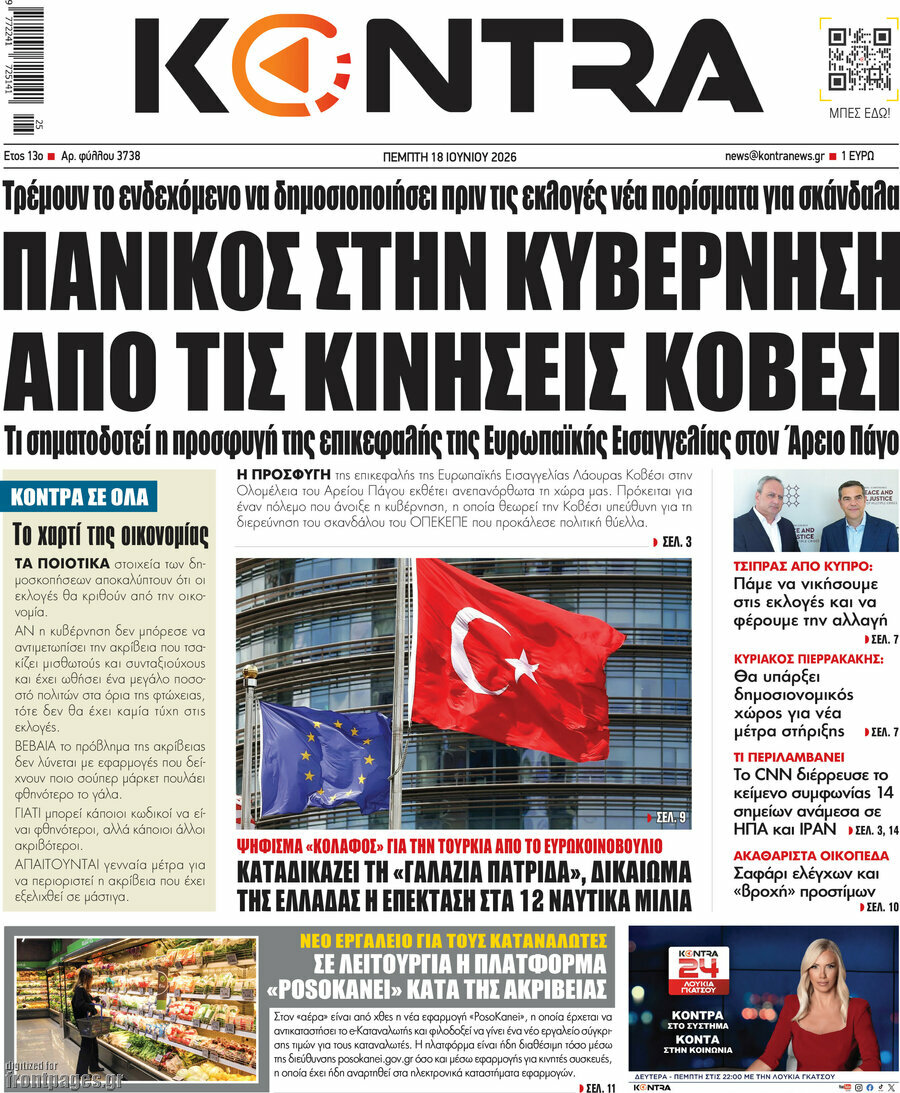
KONTRA NEWS: Panic in the government due to Kovesi’s actions
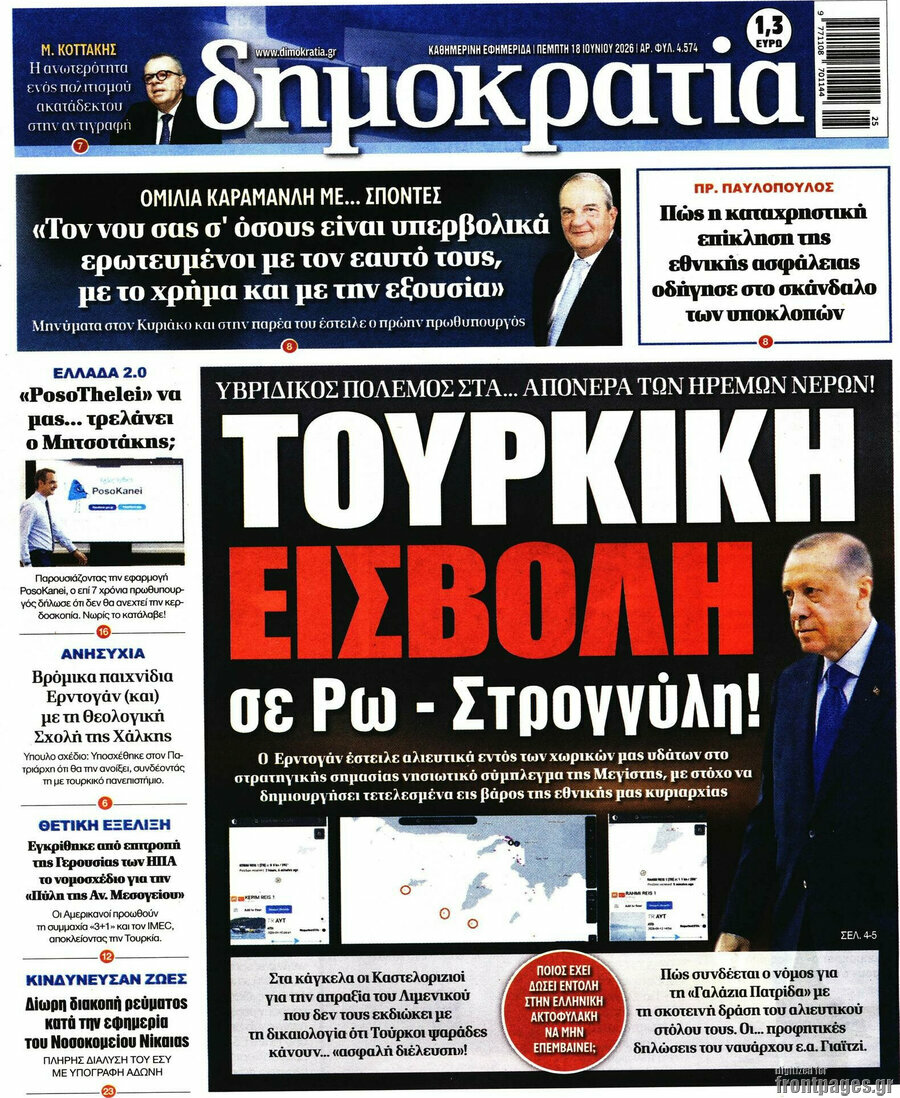
DIMOKRATIA: Turkish invasion in Ro-Stroggyli
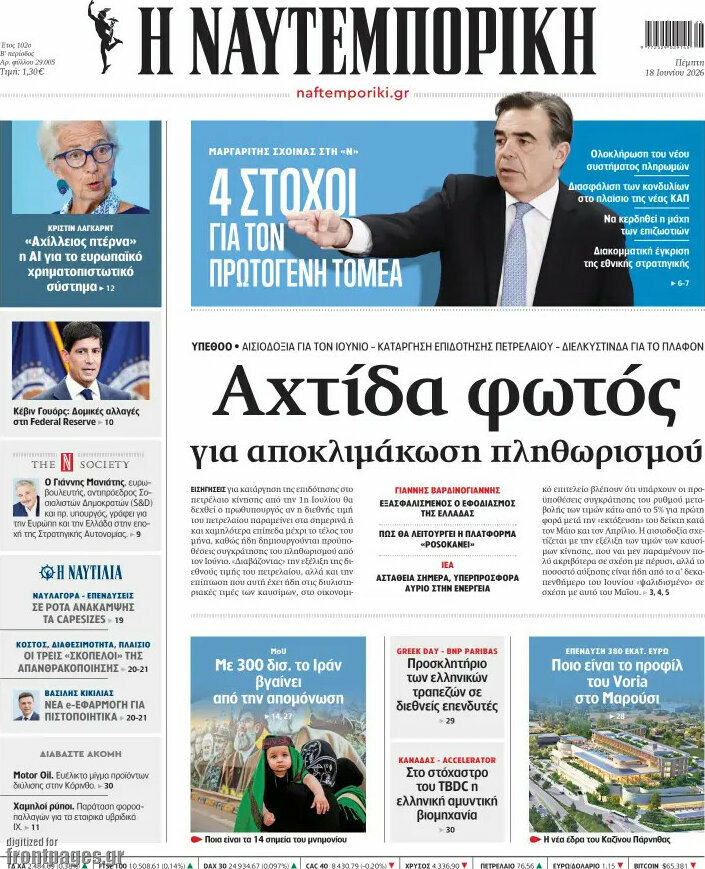
NAFTEMPORIKI: Ray of light for inflation de-escalation

DRIVING THE DAY
ENJOY YOUR MEAL: The EU’s 27 national leaders gather in Brussels this evening to kick off a dense two-day summit — and there’s plenty to chew through before Friday’s face-off on the bloc’s seven-year budget.
The schedule: Political families will gather this afternoon before the summit. Leaders convene at 6 p.m. for European Parliament President Roberta Metsola’s address, a handover update from the outgoing Cypriot presidency and a discussion with Ukrainian President Volodymyr Zelenskyy.
After that: The leaders sequester themselves for dinner, and the real summit action starts.
Hors menu: The discussion will officially focus on “global microeconomic imbalances,” but everyone knows it’s about China, as one senior diplomat told me. The main question: Should the EU toughen its stance against Beijing? “There’s a mood for a much firmer approach,” a second senior diplomat said, with member countries more aligned today than they had been a few years ago.
Ukraine is on the summit’s agenda for the usual reasons — military support and peace efforts. But several diplomats said they also expect Zelenskyy to bang the drum for Ukraine’s EU membership.
Seasonal special: Ukrainian Deputy Prime Minister Taras Kachka told Playbook’s Nick Vinocur he expects all clusters — the areas of reform countries must negotiate before joining the EU — to be opened soon after ministers formally launch accession talks with Ukraine and Moldova. “We saw a majority of member states support the idea of dealing with all clusters,” Kachka said. “Before the summer break is the commonly used deadline.”
Germany ready to serve: Two diplomats said they expect leaders to at least kick off discussions on Friedrich Merz’s idea of an associate membership status for Ukraine. But another said the conversation is more likely to wait until October’s enlargement-focused summit.
Side dish: Leaders may also want to talk about the news that a member of European Council President António Costa’s cabinet tried to establish a line of communication with the Kremlin.
Carbon market degustation: A discussion about competitiveness will give leaders a chance to talk about a perennial favorite: the Emissions Trading System. Critics say high carbon prices are putting pressure on manufacturers as they grapple with weak growth, high energy costs and competition from China and the U.S. Supporters counter that the carbon market remains the EU’s most effective climate tool and a key driver of clean investment.
The clash is over whether to mention the ETS in the summit conclusions. Ten countries led by Czechia, Italy and Poland stepped up attacks on the policy at the March Council meeting and want it in the final text now. One diplomat said Italy’s Giorgia Meloni and Czechia’s Andrej Babiš will push for it but encounter resistance from other capitals. Another official said the ETS doesn’t belong at the leaders’ table and any reference to it in the conclusions would have little bearing on the Commission’s upcoming review of the carbon market.
Still hungry? Zoya Sheftalovich’s curtain-raiser covers everything you need to know about the summit, including Friday’s budget fight … Gabriel Gavin highlights four things to watch … and Sebastian Starcevic looks at the four new prime ministers joining the fray.
BIG AND BREAKING
PEACE DEAL SIGNED: U.S. President Donald Trump and Iranian President Masoud Pezeshkian last night electronically signed their initial agreement to end the war in the Middle East. CNN has a breakdown of the 14-point MOU.
MACRON’S MAGIC TRICK: At the G7, the French president achieved what few European leaders have been able to: getting through to Trump.
AI CEASEFIRE: G7 leaders and tech bosses managed to keep the peace on AI during Wednesday’s talks, despite Washington’s increasingly aggressive posture on the technology.
ORBÁN’S FAVORITE: Former Hungarian Prime Minister Viktor Orbán has made his choice for France’s far-right standard bearer — and it ain’t Jordan Bardella.
PARLIAMENT’S TEST WEEK
METSOLA WANTS MEPS TO SHOW UP: The European Parliament is this week testing a new format for plenary debates. It’s all part of Roberta Metsola’s attempt to inject some life into dull discussions while claiming reformist cred ahead of her reelection bid in six months.
Concerns: When the president proposed the changes a month ago, a majority of group leaders pushed back. They said they needed more time to agree on the changes and warned that a hard 7 p.m. cutoff for starting debates would reduce lawmakers’ speaking time.
For the record: Metsola pressed ahead regardless, according to three people familiar with the talks. Two political groups later complained to the Parliament’s secretariat that their protests about the changes hadn’t been properly recorded in the confidential meeting’s minutes, according to two other people.
But it could pay off: Commissioners and MEPs are largely happy to have fixed start and end times for debates. They also welcome the fact that commissioners can speak not only at the beginning and end of debates, but also directly in response to MEPs’ statements.
May the questions flow: Committee on Constitutional Affairs Chair Sven Simon says the flashy new Q&A sessions with the European Commission on Tuesday afternoons “should be maintained” to ensure MEPs can hold the executive to account.
Bearing presence: With attendance at debates remaining low, Simon says there needs to be “a meaningful parliamentary audience in the chamber, and that in turn requires a critical mass of members to be present.”
Crack the whip: If incentives or voluntary pledges can’t lift attendance above 15-30 percent per group, then it’s time to consider mandatory attendance, Greens MEP Damian Boeselager said — a step groups have so far rejected.
More problems: The format’s tight time limits leave little room for extra debates without sacrificing others, The Left’s Manon Aubry warned. Groups also fear lawmakers will lose speaking time.
Will it stick? The success of Metsola’s procedural revamp will become clear before the July plenary, when group leaders decide what changes to keep.
20-SECOND PLAYBOOK PRIMER
EU leaders will be in Brussels today and tomorrow for a summit. But have these meetings always been held in the Belgian capital? The short answer is no. The Treaty of Nice, which came into force in February 2003, said Brussels should be the home for formal summits of EU leaders. Before that, summits took place in the different member countries. Informal summits (when leaders meet but there’s no final political statement) are still held at locations around the EU.
TALK TO PLAYBOOK: On the Brussels Playbook Podcast, Zoya asked for your best and worst AI stories. Whatsapp us on +32 491 050629 and listen from 7 a.m. to hear if we give you a shoutout.
BRUSSELS’ ENLARGEMENT HACK
EXCLUSIVE — AI ASSIST FOR POTENTIAL MEMBERS: Brussels has a plan for dealing with the flood of countries seeking to join the EU and the limited number officials processing their applications: artificial intelligence.
Robot to the rescue: Two Commission officials working on enlargement told Sebastian and me that staff have been speeding up one of the most labor-intensive parts of the accession process by using an internal AI tool. The technology assesses whether candidate countries’ laws comply with the EU’s acquis communautaire — the bloc’s body of law. .
Why now: Enlargement has returned to the top of the EU agenda. As Commissioner Marta Kos put it earlier this week, “in the last 16, 17 months, we have delivered more than in the 15 years before.”
Feeling the strain: That acceleration comes at a cost. Both officials said staff at DG ENEST — the Commission department handling enlargement — are under growing pressure as applications pile up and negotiations advance on multiple fronts simultaneously. The work falls under the unit headed by Thomas Hagleitner.
Made in-house: The tool is the Commission’s own creation. In 2024, the EU executive launched GPT@EC, a generative AI tool for its staff, amid privacy and security fears over American services such as ChatGPT and Claude.
Not everyone’s sold: One Commission official warned AI remains prone to mistakes and cautioned against overreliance, while officials from two candidate countries told Sebastian the technology should stick to routine tasks and translation.
DASHBOARD
EU EMISSION CUTS FLATLINE: The EU’s emission-slashing efforts have slowed down in recent years and planet-warming emissions actually went up a smidge last year, according to preliminary Eurostat estimates for 2025, writes Zia Weise. The long-term trend still points downward, with a 17 percent reduction in emissions between 2015 and 2025 and a 40 percent cut since 1990.
 |
6 MORE THINGS GETTING US TALKING
MELONI LOGS OFF: Italy won’t follow France, the U.K. and others in pursuing social media restrictions for teenagers, PM Giorgia Meloni said Wednesday.
GENERAL TROUBLE: But another political headache is emerging for Meloni ahead of next year’s election: a former army general with growing political ambitions.
NOT IN YOUR BACKYARD: MEPs are urging Albania to halt construction in protected areas, increasing pressure on Edi Rama over a Jared Kushner-linked luxury resort that has fueled the country’s biggest protests in decades.
HOT MIC SUMMER: The G7 delivered another bumper crop of accidentally public diplomacy. We revisit some of the greatest hot-mic moments ever caught on tape.
WASTEWATER FINALE: After months of twists, delays and lobbying, lawmakers finally vote today on the future of the Urban Wastewater Treatment Directive (for subscribers).
STEEL TALKS: London wants Brussels to sign up to a steel alliance before the July 1 quota cliff (for subscribers).