
Greece details measures aimed at ending farmer protests
Greece on Wednesday presented a detailed package of measures aimed at breaking a month-long deadlock with farmers protesting delayed EU subsidy payments, rising production costs and other grievances.
https://www.ekathimerini.com/economy/1291689/greece-details-measures-aimed-at-ending-farmer-protests
48-hour farmers’ and livestock breeders’ protests at customs and toll stations
Farmers from Ioannina and Northern Greece decided on mobilisations during the general assemblies held on Wednesday at the blockades, following the government’s announcements.
SYRIZA expels MEP Nikolas Farantouris from European Parliament group
Left-wing opposition party SYRIZA has expelled MEP Nikolas Farantouris from its group in the European Parliament. The move follows comments by Farantouris Tuesday in which he said he would “welcome” the formation of a new political party by Maria Karystianou, head of the association of families of the victims of the 2023 Tempe rail disaster, and did not rule out collaborating with the new party.
Minimum tax on freelancers is increasing
The minimum taxable income for Greece’s freelance professionals is set at 12,320 euros this year, up from €11,620 last year, with the tax increasing by €154.
https://www.ekathimerini.com/economy/1291632/minimum-tax-on-freelancers-is-increasing
ATHEX: Turnover soars, while index grows
The Greek stock market had a very busy day on Wednesday, following Tuesday’s day off, with the highest turnover of the last six weeks thanks to a number of share packages in banks that changed hands, while the main index of the market climbed to a new 16-year high. Amid the growth of banks and most other stocks, there was a notable decline for oil refineries, connected to geopolitical developments in the Atlantic.
https://www.ekathimerini.com/economy/1291727/athex-turnover-soars-while-index-grows


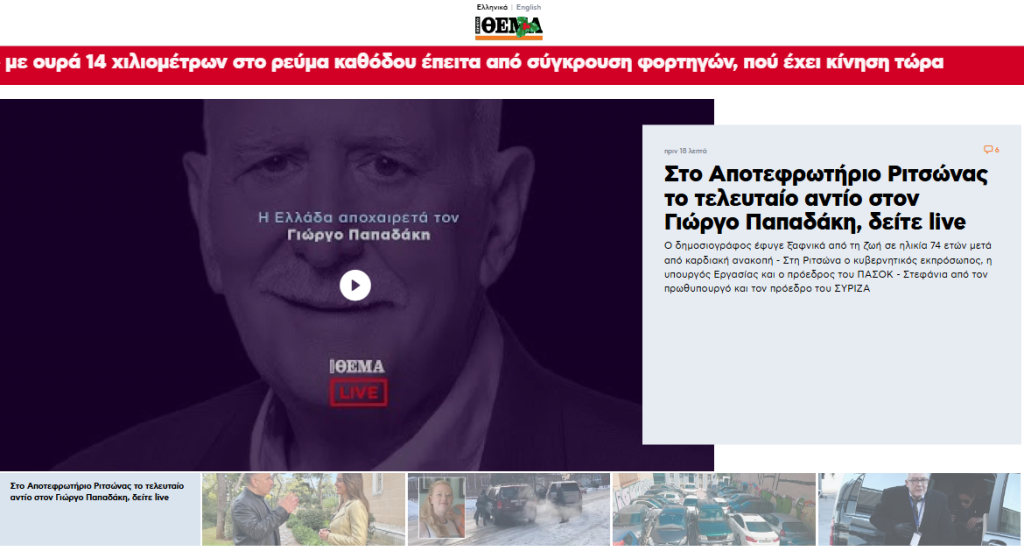
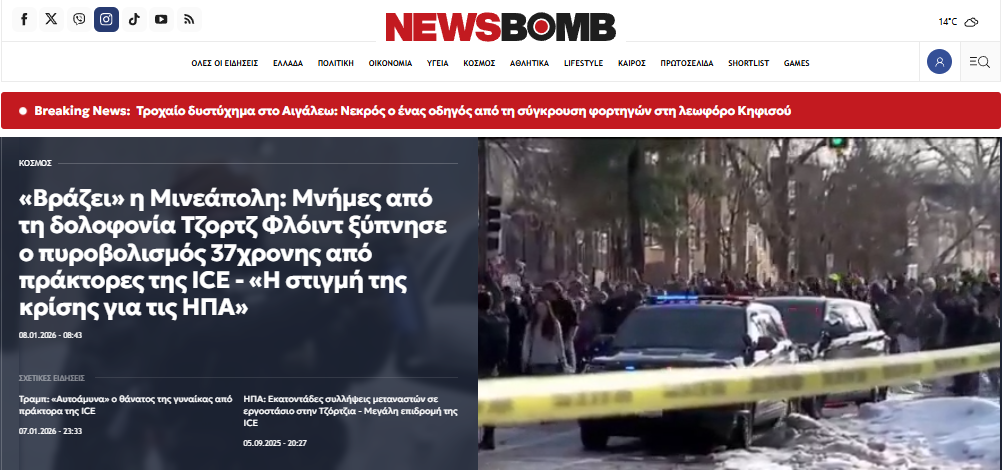
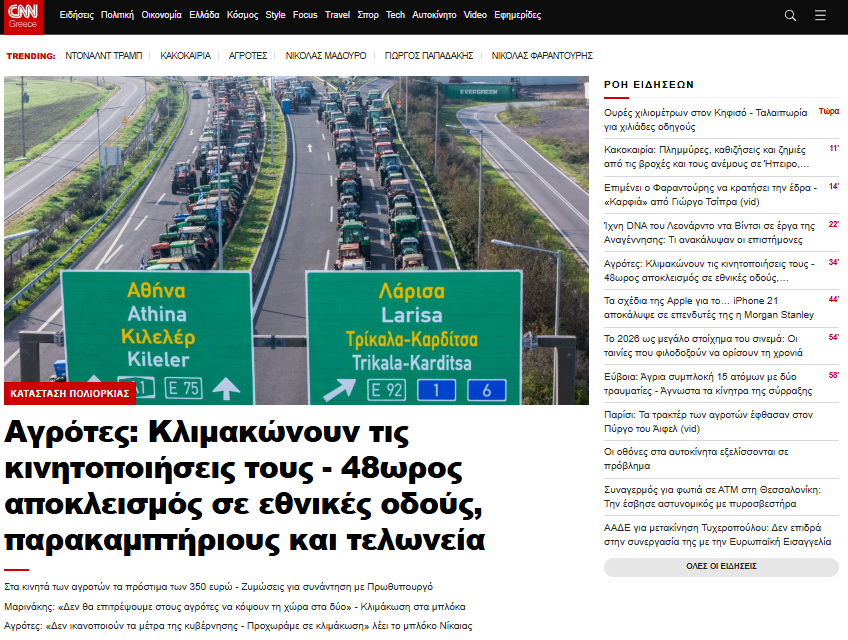
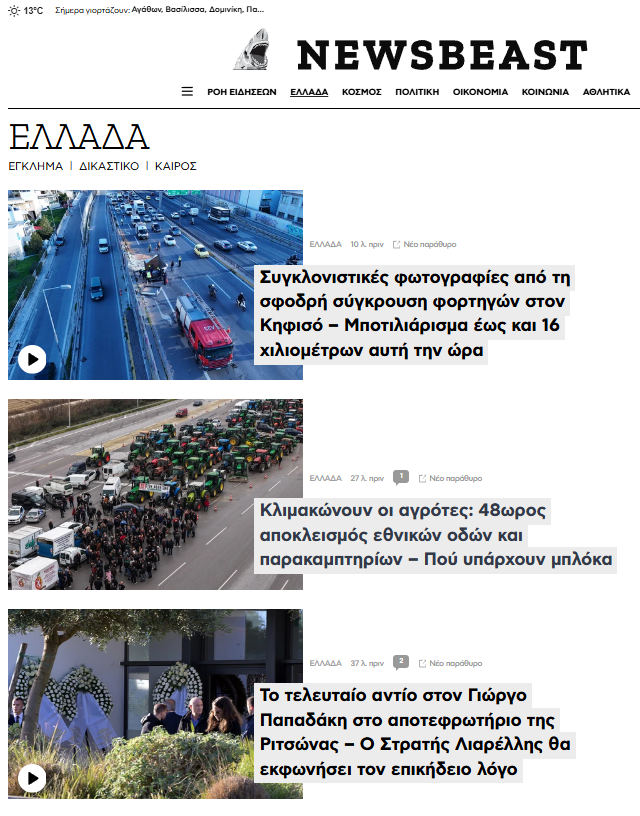

KATHIMERINI: First major blockade and then dialogue with farmers
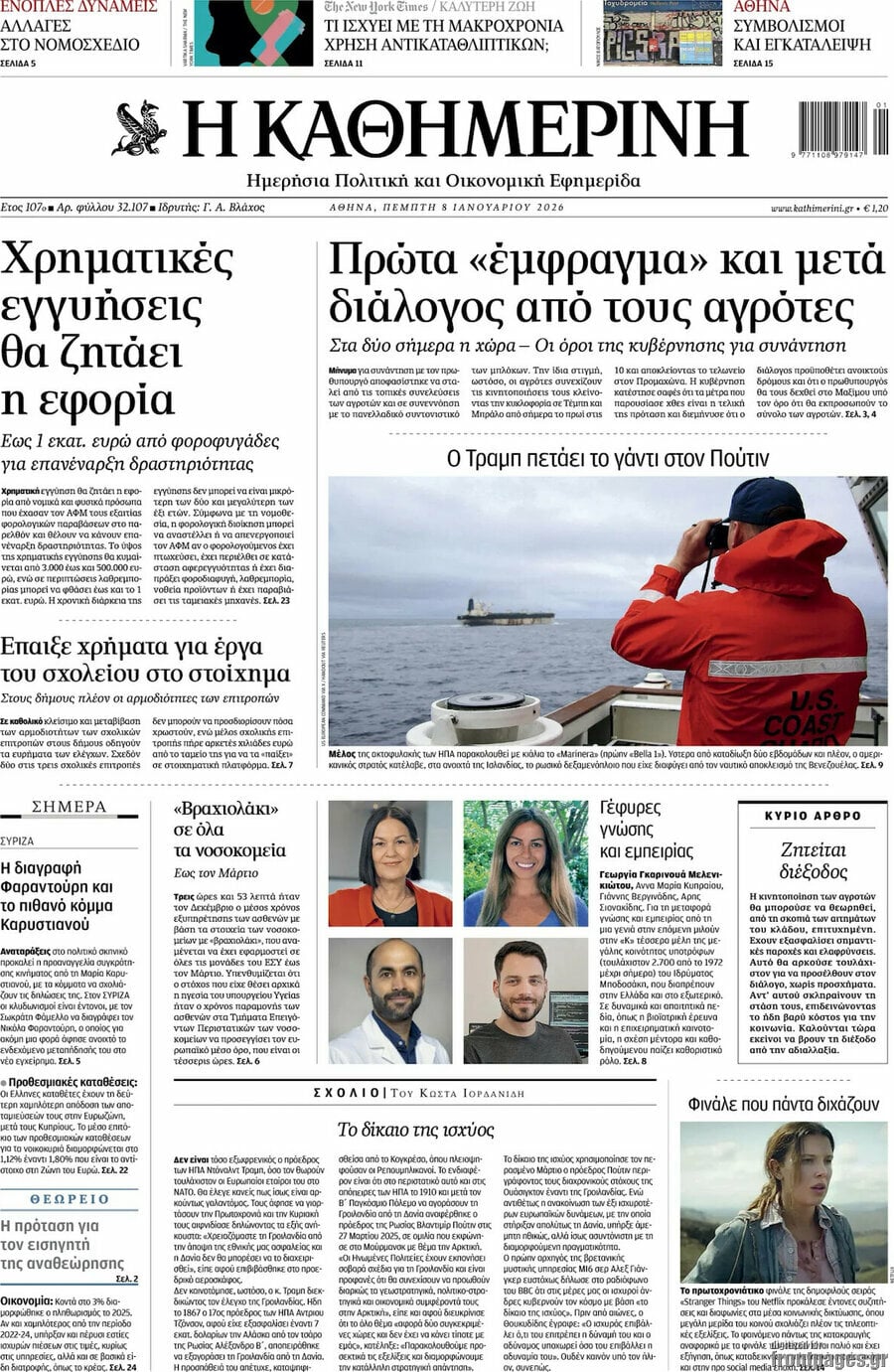
TA NEA: Fears of a missiles crisis Nr. 2: On a tight rope
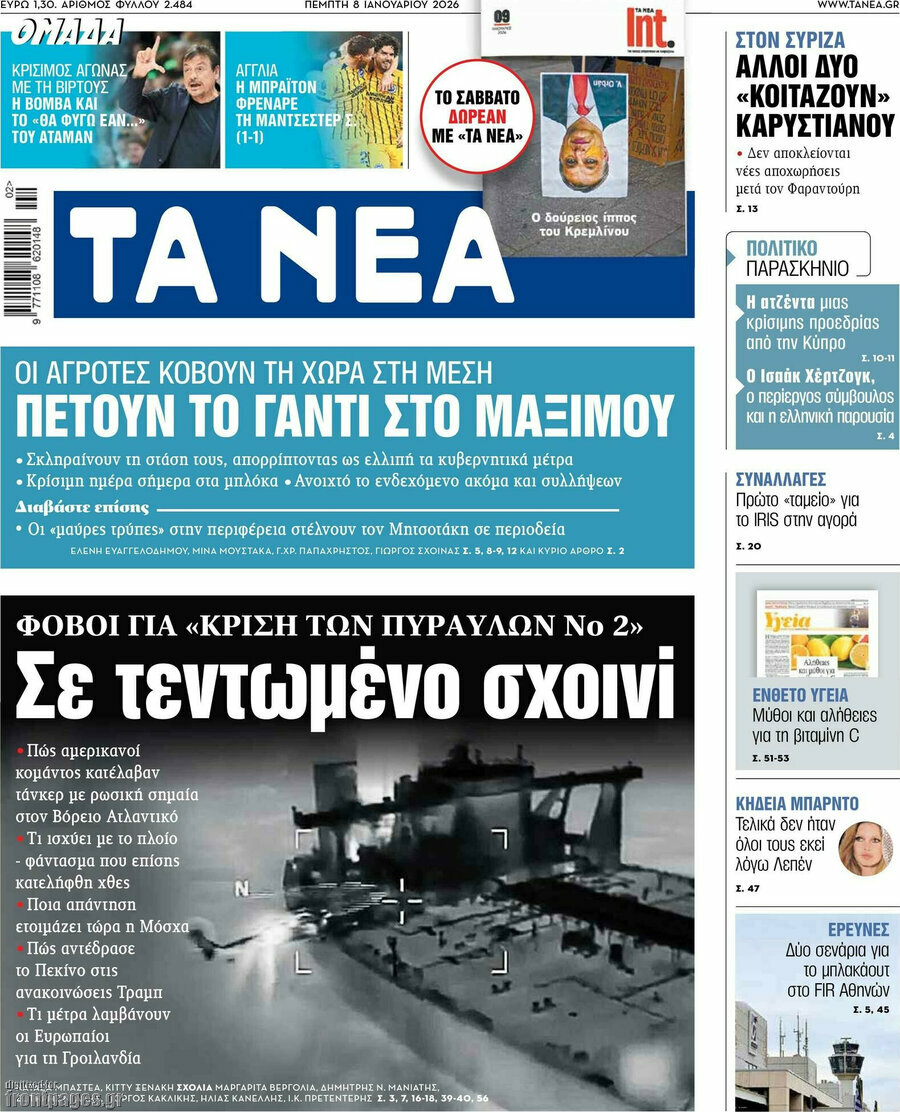
EFIMERIDA TON SYNTAKTON: The government’s ultimatum was rejected by farmers
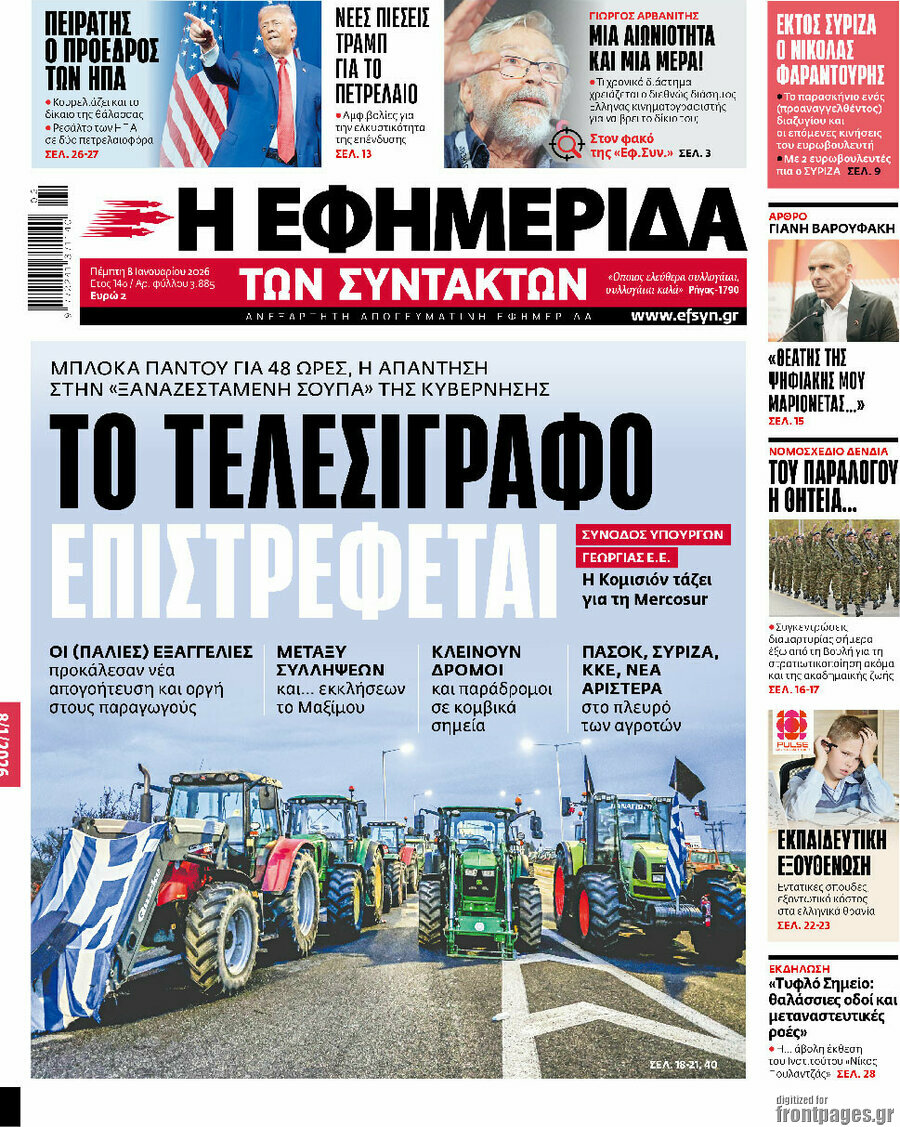
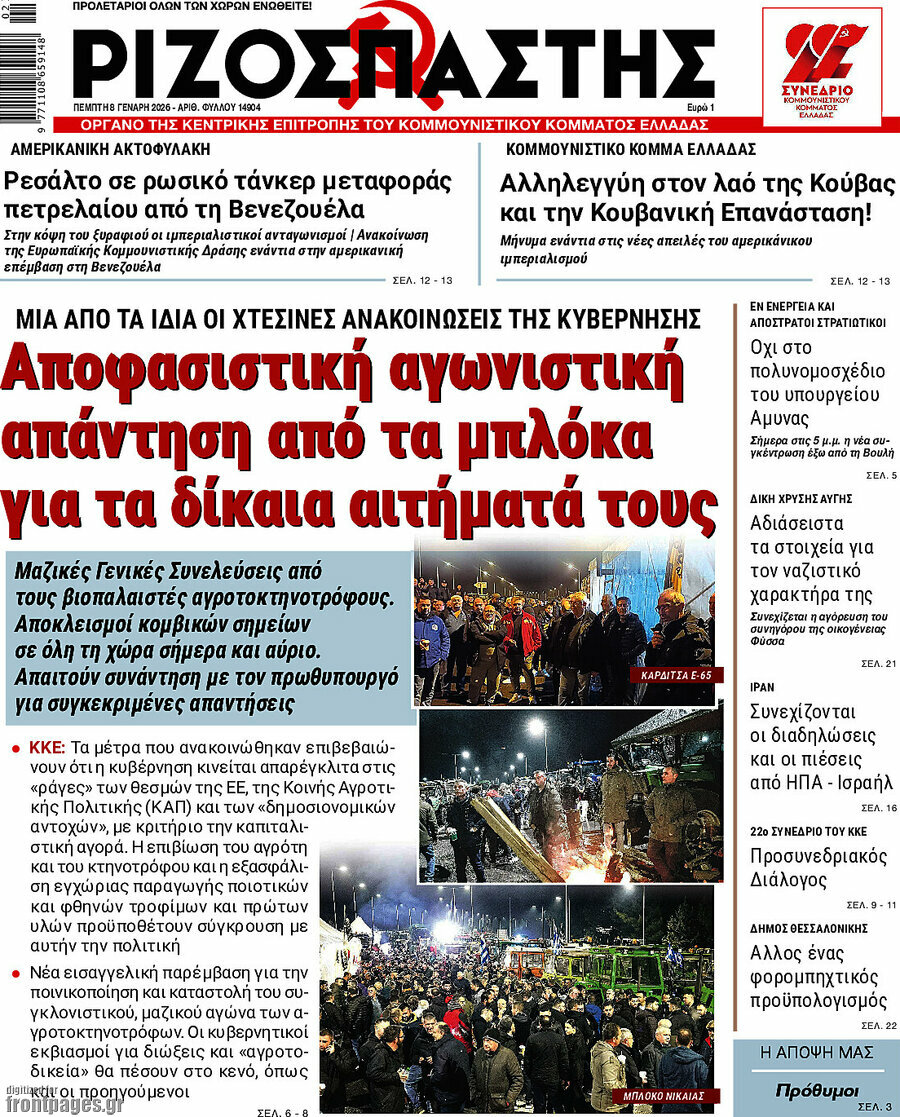
RIZOSPASTIS: Farmers’ respond to government announcements with rallies
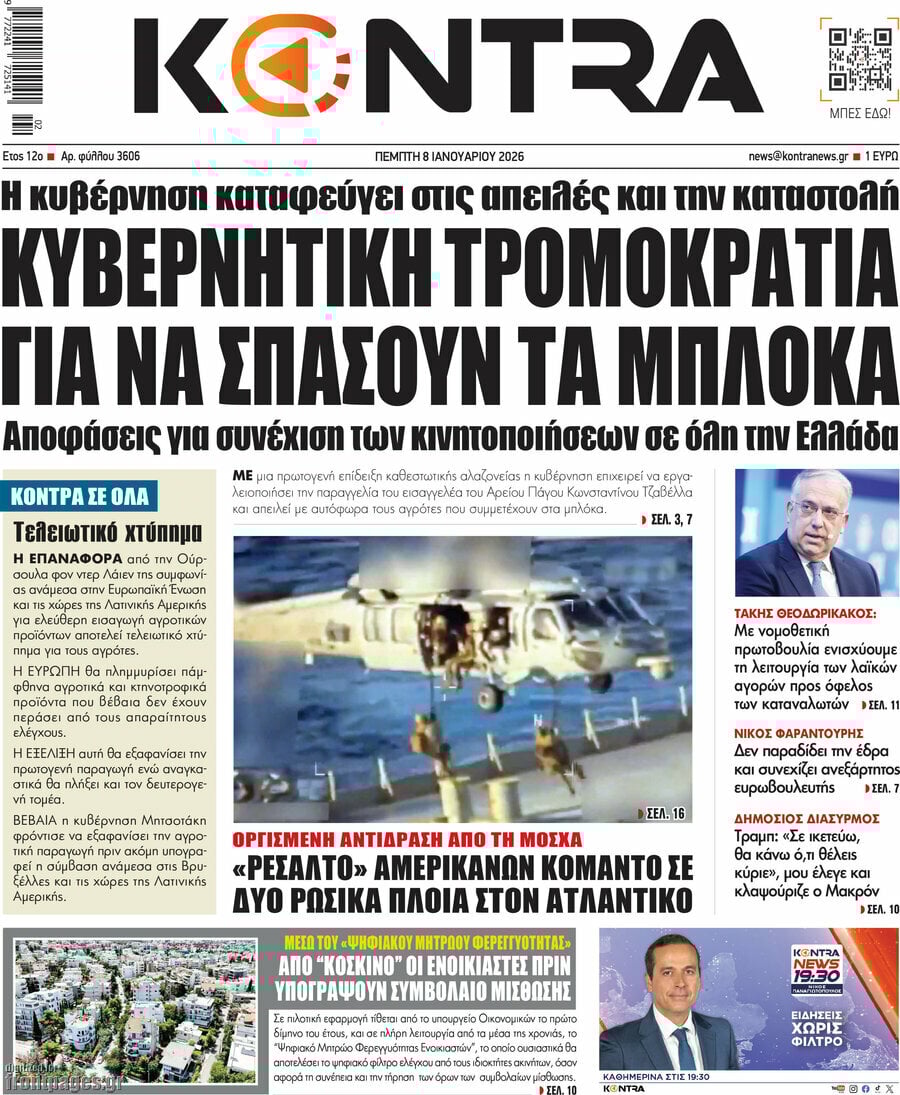
KONTRA NEWS: Government terrorism aims at breaking farmers’ blockades
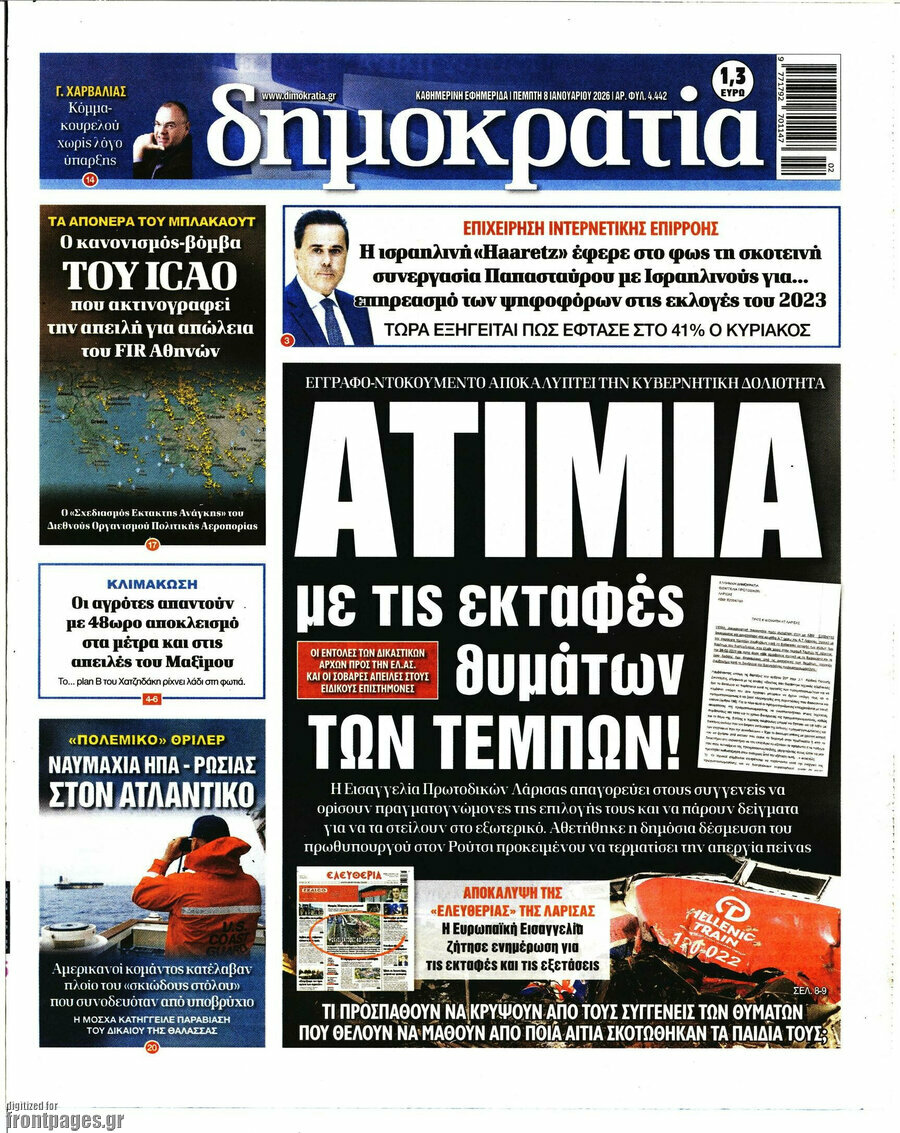
DIMOKRATIA: Foul play regarding the exhumation of Tempe victims
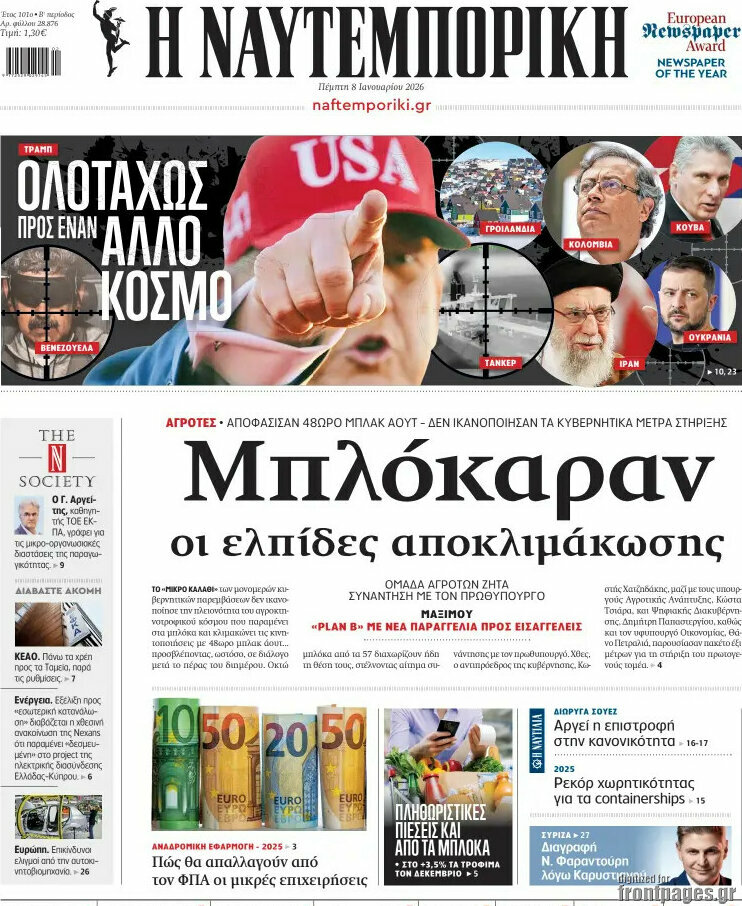
NAFTEMPORIKI: Farmers: hopes for de-escalation were blocked

DRIVING THE DAY
EUROPE EMERGES FROM HIBERNATION: Whether jolted awake by this cold weather, Donald Trump’s gambit in Venezuela or the American president’s expanding theory of a U.S.-dominated Western hemisphere — now stretching as far as Greenland — Europe is stirring after a long geopolitical nap. The response is still fragmented, but it is finally taking shape.
EU ambassadors are meeting today in the Political and Security Committee, the EU Council’s key preparatory body on foreign and security policy, to formally — and, some might say, finally — discuss the latest developments in Venezuela. That follows the U.S. capture of the country’s leader Nicolás Maduro at the weekend and its seizure on Wednesday of two oil tankers linked to Venezuelan oil exports, including a Russian-flagged vessel.
Venezuela surfaced briefly at Monday’s Coreper II meeting of EU ambassadors, but only in passing. Today’s discussion is expected to go further — not least because Trump has explicitly linked Venezuela to his Greenland ambitions, forcing Brussels to view both through the same strategic lens.
Greenland enters the room: Trump’s escalated rhetoric about the Arctic island has ended any remaining complacency in Brussels, where officials are scrambling to define red lines — and responses. “We must be ready for a direct confrontation with Trump,” one EU diplomat involved in these talks said.
Planning for the unthinkable: As Trump intensifies pressure over Greenland — and could, as we laid out Wednesday, plausibly take control of the territory in a few steps — Europe is quietly stress-testing scenarios of its own.
Officials, diplomats, experts and NATO insiders told my colleagues Zoya Sheftalovich, Nicholas Vinocur, Victor Jack and Seb Starcevic that there are several potential options: find a compromise with Trump … give Greenland a ton of cash … retaliate against the U.S. economically … and even put troops on the ground. (No, they wouldn’t be able to withstand an American invasion, but the thinking is that they could act as a deterrent.)
National diplomacy has ramped up as well. French Foreign Minister Jean-Noël Barrot said he and his counterparts from Germany and Poland have discussed a joint European response to Trump’s threats. “What is at stake is the question of how Europe can be strengthened to deter threats,” Barrot said.
As part of that response, Polish Foreign Minister Radosław Sikorski urged the U.S. Congress to weigh in on Trump’s ambition to control the Danish territory. Some senior Republicans expressed sympathy with the allies’ frustration Wednesday, breaking with the White House: “This is a topic that should be dropped,” said Senate Armed Services Committee Chair Roger Wicker.
At least they’re talking: U.S. Secretary of State Marco Rubio said Wednesday he intends to discuss a U.S. acquisition of Greenland with Danish officials next week. Rubio reportedly told lawmakers earlier in the week that the administration’s goal is to buy the territory from Denmark — and White House press secretary Karoline Leavitt said last night Trump and his advisers are “actively discussing” that possibility. Bloomberg reported overnight that American officials are scrambling to put together potential commercial deals that would give the U.S. a greater presence on the island, including rare-earth mining and hydroelectric power projects … but they’re not developed enough to satisfy Trump’s desire for dramatic results.
EU-alive? Yes, sir: The emergence from hibernation is not only diplomatic — it’s institutional, too. As noted in Wednesday’s Playbook, EU leaders initially stayed silent while national capitals had reacted to the Greenland threats. Cyprus’ presidency launch offered the executive a chance to break that silence — and it did.
European Council President António Costa said at the event Wednesday the EU “cannot accept violations of international law — whether in Cyprus, Latin America, Greenland, Ukraine, or Gaza.” On Greenland specifically, he reiterated what other European leaders stressed earlier, that the island belongs to its people and that “nothing can be decided about Denmark or Greenland without Denmark or Greenland.”
The EU as a promise: Commission President Ursula von der Leyen also weighed in briefly, stressing that while the bloc is not perfect, it represents a promise that cooperation is stronger than confrontation, and that law is stronger than force — principles that apply to Greenland as well as the EU.
FROM WASHINGTON, LITTLE CHANGE: Trump, meanwhile, cast fresh doubt on NATO’s reliability, saying he was not convinced the alliance would come to America’s aid in a crisis. Posting on Truth Social, he said the U.S. would still defend its allies, but questioned whether the collective defense clause would work in reverse.
Trump again accused Europeans of underpaying for security, arguing that NATO’s credibility rests solely on U.S. power. “Obviously untrue,” one NATO diplomat told my colleague Victor Jack. “We might not have the military power that the U.S. does, but we are stronger together.”
Brutal honesty: Belgian Defense Minister Theo Francken put it more starkly, telling lawmakers Europe is stuck calling Washington “daddy” because years of defense underinvestment have hollowed out its leverage — a diagnosis that aligns uncomfortably well with Trump’s critique.
As if to underline the transatlantic contrast, Trump said last night he’ll ask Congress for a defense budget of $1.5 trillion in 2027 — a $500 billion increase on this year’s Pentagon allocation.
MIDDLE EAST TRIP
EU LEADERS HEAD TO MIDDLE EAST: While the EU frets about Greenland, Ursula von der Leyen and António Costa head to the Middle East today to pledge deeper ties and more financial support for Jordan, Lebanon and Syria amid concerns about refugees and regional stability, Playbook’s Nicholas Vinocur writes in to report.
Eye to Gaza: The Commission and Council presidents will huddle with Jordan’s King Abdullah II at the first-ever EU-Jordan summit, where von der Leyen is expected to unveil additional funding for the Hashemite Kingdom. Part of the money (the amount will be disclosed today) will go toward training of Palestinian police officers in Jordan, per an EU official.
The duo then head to Lebanon and Syria, where further financial outlays are expected to bolster their respective governments.
Being a player: Speaking to Playbook ahead of the trip, two EU officials said the trip was aimed at strengthening Jordan’s position as one of the most stable countries in the Middle East; cementing the EU’s place in discussions about the future of Gaza; helping regional players manage refugees from various conflict zones; and showing support for Syria’s transitional government.
Divide and conquer: While von der Leyen is speaking in Jordan, the EU’s top diplomat Kaja Kallas will be in Egypt. She’ll hold a press conference with Egyptian Foreign Minister Badr Abdelatty to be broadcast at noon. Any overlap with von der Leyen’s schedule is coincidental, we’re told.
GERMANY REBUKED ON SCHENGEN
BRUNNER VS. BERLIN: EU Home Affairs Commissioner Magnus Brunner is pressing Germany to start rolling back its internal border controls, warning they cannot become a semi-permanent feature of Schengen. He made the case in an interview with POLITICO’s Rasmus Buchsteiner on the sidelines of a CSU party meeting in Bavaria.
What’s the issue: Germany reintroduced temporary internal border checks within the Schengen Area in September 2024, covering all nine of its land borders, including crossings with Poland, Austria and France. The controls target asylum-seekers and irregular entrants, allowing for immediate rejections or returns under EU Dublin rules.
“These are temporary measures available to member states, which Germany is now also making use of,” Brunner said. “And temporary means time-limited.”
Instead of internal controls, Brunner wants Berlin to lean into the EU’s overhauled asylum framework (GEAS): tighter external borders, faster procedures and, by extension, fewer checks between member states.
Brunner also backs stepped-up returns of Syrians. “Our asylum agency has found that the situation has improved,” he said, adding that the EU is primarily counting on voluntary returns.
TRADE DEAL(S) IN THE MAKING
CRUNCH TIME FOR INDIA DEAL: Few things Brussels love more than a free-trade deal — especially at a moment when diversification is seen as strategic ballast for the EU. That’s why Indian Commerce Minister Piyush Goyal, in Brussels today and Friday, is getting a warm welcome as both sides make a final push to clinch an EU-India trade agreement by the end of the month.
Why now: Brussels and New Delhi had aimed to wrap up talks by the end of last year, but several thorny issues delayed the finish. The new target is to have a deal ready for signature when von der Leyen and Costa travel to India as guests of honor for Republic Day on Jan. 26. An EU-India summit is expected around the celebrations.
The hardest files remain the EU’s carbon border tax, from which India is seeking exemptions, and Brussels’ new support measures for its domestic steel industry. Long-running disputes over car tariffs are also unresolved.
NEAR-COSUR: I may be running out of wordplay for the EU-Mercosur deal, but momentum on the landmark trade agreement with South American countries is suddenly real. A hastily convened, snow-hit meeting of agriculture ministers in Brussels on Wednesday left governments with a revised package of incentives for farmers and closer than ever to political agreement.
Italy flips: The mood shift is driven in large part by Italy — long the deal’s kingmaker — which blocked progress at December’s EU summit, killing any chance of a ceremonial signing by Costa and von der Leyen in Brazil. Rome now appears … completely fine with it.
Us, against it? Ma no! In an unusual press appearance, Italian Agriculture Minister Francesco Lollobrigida — a close ally of Prime Minister Giorgia Meloni — summoned reporters in Brussels Wednesday (including your Playbook author) to declare that “Mercosur is an excellent opportunity,” citing “major advantages for large parts of our agricultural system.” A few hours later, Foreign Minister Antonio Tajani echoed the message, praising the deal’s “enormous benefits.”
No more Parmesão, that’s why: Lollobrigida highlighted gains for wine, dairy and olive producers, particularly the protection of geographical indications. “It would mean no more ‘Parmesão,’” he said — a fixation of his when it comes to Italian-sounding knockoffs.
The political math: I spoke to the European Parliament’s Trade Committee chief Bernd Lange, who now sounds optimistic about securing a qualified-majority vote on the final outstanding safeguard clause, expected Friday.
Lange also endorsed the idea that the Mercosur deal serves as a counterweight to Donald Trump’s “Donroe Doctrine,” discussed in Wednesday’s Playbook, saying it gives a “clear signal” that trade should be based on equal partnerships, not contests of economic superiority.
PARLIAMENT CORNER
MEPS MOVE TO BLOCK U.S. TRADE DEAL: The dispute over Greenland has created a new potential flashpoint on trade, with Danish MEP Per Clausen urging colleagues to halt ratification of a deal with the U.S. unless Washington drops its claims to the territory, our Parliament correspondent Max Griera reports.
Clausen is collecting signatures to formally ask political group leaders to suspend the process, with a deadline set for next Wednesday. “If we accept this agreement while Trump is threatening the international order and making direct territorial claims against Denmark, it will be seen as rewarding his actions — and will only add fuel to the fire,” Clausen said.
And there’s more: Parliament Trade Committee Chair Bernd Lange confirmed to me that broader discussions are underway about whether to freeze the EU-U.S. deal signed in Scotland — particularly after Washington allegedly violated its terms in key sectors such as steel and aluminum, raising tariffs on those products from 15 to 50 percent just three weeks after the agreement.
“As long as this is not corrected, I see no reason why we should move ahead with zero tariffs for all U.S. industrial and agricultural products,” Lange told me.
SYRIZA SHRINKS AGAIN: Greece’s left-wing opposition party Syriza expelled MEP Nikolas Farantouris from its European Parliament delegation on Wednesday after he left open the possibility of joining a new political party expected to emerge in Greece.
Farantouris has refused to give up his parliamentary seat. It’s the second expulsion in under a month, following the mid-December removal of MEP Nikos Pappas over allegations he assaulted a reporter in a Strasbourg bar.
Game-changer for The Left: Syriza was due to assume leadership of the Left group under a post-election power-sharing deal. The loss of MEPs could now open the door for larger delegations — including Italy’s Five Star Movement and Germany’s Die Linke — to challenge for the post.
DE MASI SUES VON DER LEYEN: German MEP Fabio De Masi has filed a lawsuit against the European Commission at the EU’s General Court, accusing the Commission president of providing an unlawful and incomplete response to parliamentary questions about her contacts with the defense industry. De Masi argues the Commission breached Article 230 of the EU treaties by failing to fully disclose meetings, calls, emails and other correspondence between von der Leyen and arms companies since the 2024 European election.
IN OTHER NEWS
TRUMP PULLS OUT OF GLOBAL CLIMATE TREATY: The U.S. is withdrawing from the world’s overarching treaty on climate change, the White House said last night. The decision to exit the pivotal 1992 U.N. Framework Convention on Climate Change came as Trump ordered the U.S. to withdraw from 66 international organizations (including 31 under the U.N.) that “no longer serve American interests.”
U.S. RUSSIA SANCTIONS “GREENLIT”: U.S. Senator Lindsey Graham said after meeting with Trump Wednesday that the Senate could vote as early as next week on new “bone-crushing” sanctions aimed at pressuring Russia to end its war in Ukraine.
MAYOR UNDER FIRE: Berlin Mayor Kai Wegner is facing calls to resign after local media reported that he played tennis after being informed of Saturday’s blackout in the German capital.
“INTOLERABLE INTERFERENCE”: A senior French judge warned against “unacceptable” foreign interference after the U.S. reportedly considered sanctioning members of France’s judiciary who sentenced far-right leader Marine Le Pen to a five-year election ban over embezzlement of EU funds. (Le Pen, meanwhile, attended the funeral of French film star and far-right icon Brigitte Bardot Wednesday.)