
Government calm shattered by EU prosecutors case
Just as the government was basking in a rare positive moment – its handling of the Middle East crisis having enhanced its crisis-management credentials – the prime minister’s office has been plunged back into turmoil after the European Public Prosecutor’s Office forwarded a new case file linked to agricultural subsidies agency OPEКEPE, requesting the lifting of immunity for 11 sitting lawmakers.
https://www.ekathimerini.com/politics/1299876/govt-calm-shattered-by-eu-prosecutors-case
PASOK-KINAL: If European prosecutor has implicated ministers, their removal will be the only option
If there is confirmation of reports from media sources regarding the European Prosecutor’s latest case file on the management of OPEKEPE, the Greek agency handling payments of EU agricultural subsidies, Prime Minister Kyriakos Mitsotakis will be left with no option but to oust the ministers involved from his cabinet, main opposition PASOK-Movement for Change said in an announcement on Wednesday.
BoG governor Stournaras: ‘Early elections would be a huge mistake’
Bank of Greece (BoG) governor Yannis Stournaras on Wednesday replied that early elections would be a “huge mistake” for Greece, in response to questions put to him during a radio interview. “Holding elections today would be a huge mistake. Greece is considered a very successful example of emergence from a very severe crisis – perhaps the greatest crisis Europe has faced in recent years – and is doing very well. Why should we hold elections now, in the midst of a war and such widespread turmoil? Secondly, political stability is the greatest intangible asset a country can have. It allows it to make decisions under very difficult conditions.”
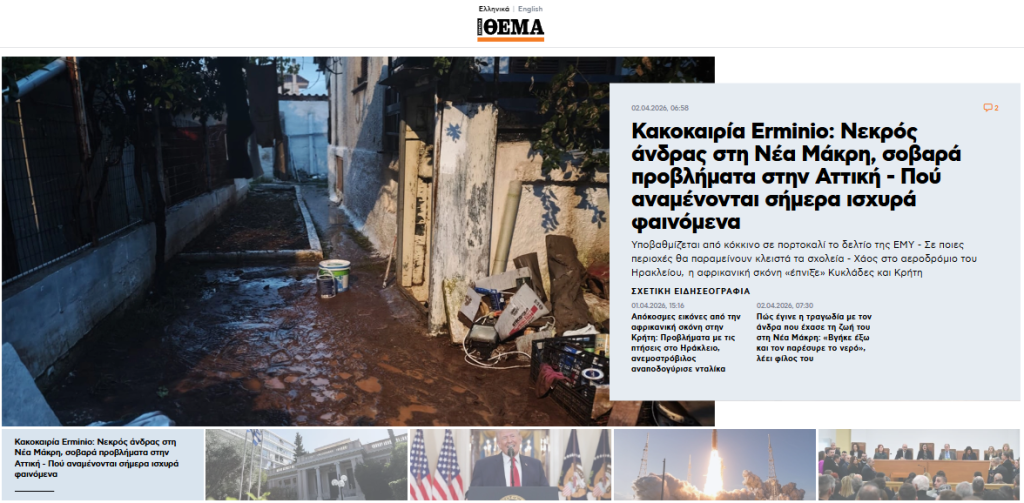
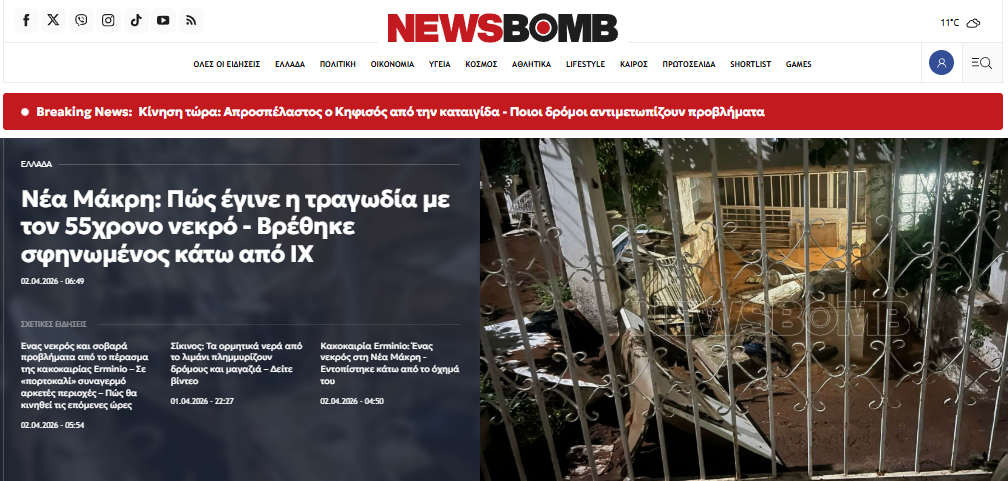
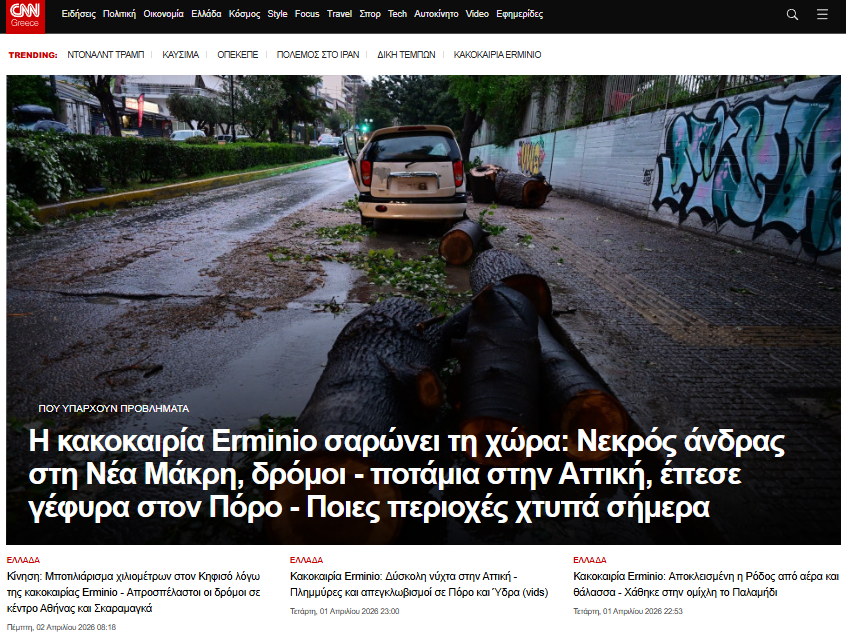
“ERMINIO”: One dead and serious problems in Attica
One person has died and serious damage has been reported in Attica following the sweeping impact of the severe weather system “ERMINIO”, which struck many regions across Greece. Heavy rainfall, thunderstorms, and gale-force winds that developed and intensified in the Attica region after 23:00 on Wednesday caused significant disruption and flooding, particularly in Eastern Attica and in areas such as Nea Makri, Stamata, Dionysos, Rafina, and Pikermi, as well as on the islands of Poros, Rhodes, and other parts of the country.
https://www.amna.gr/en/article/982480/ERMINIO-One-dead-and-serious-problems-in-Attica
ATHEX: MSCI fuels rebound in stock market
The upgrading of the Greek bourse to the category of developed markets by Morgan Stanley starting in May 2027, with the upcoming MSCI index rebalancing, gave a massive boost to Greek stocks on Wednesday, with the benchmark covering a significant part its recent losses in the last couple of days. The postponement of the upgrading from September 2026 is considered to give some much-needed time for adjustment, which the market received with relief and satisfaction.
https://www.ekathimerini.com/economy/1299861/athex-msci-fuels-rebound-in-stock-market

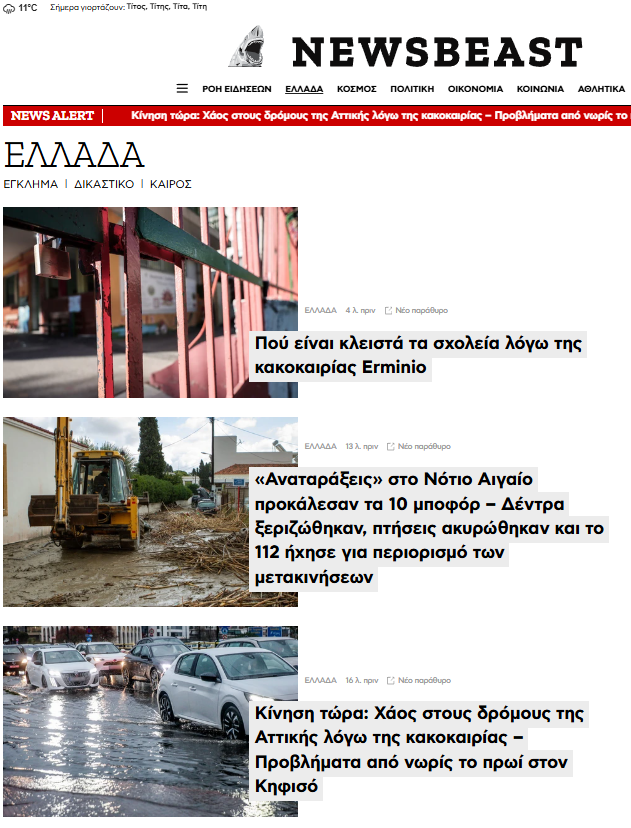

KATHIMERINI: Government reshuffle as a way out of the new case file regarding the OPEKEPE scandal
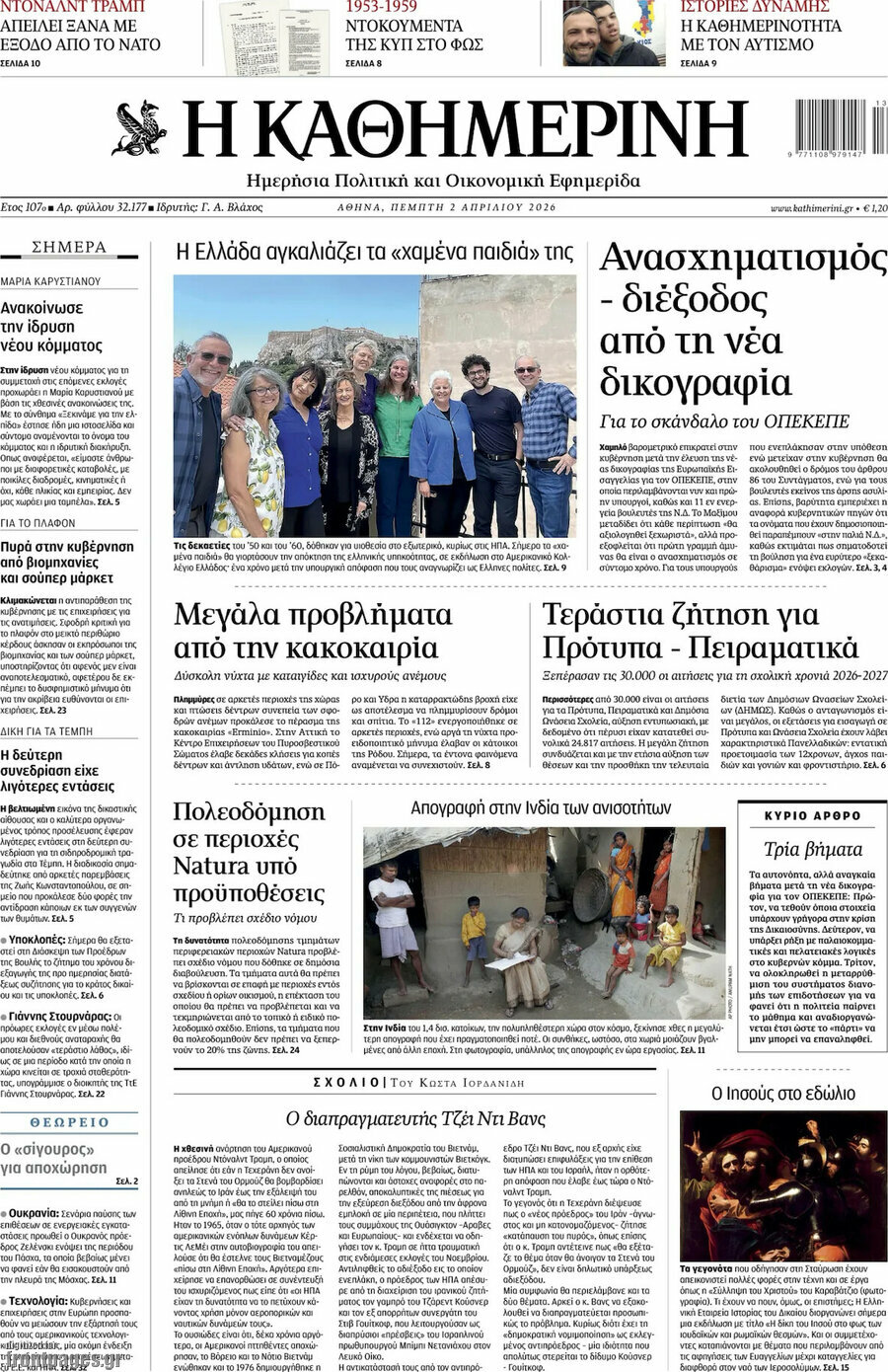
TA NEA: Fuel prices: Greece is the 9th most expensive country in the world
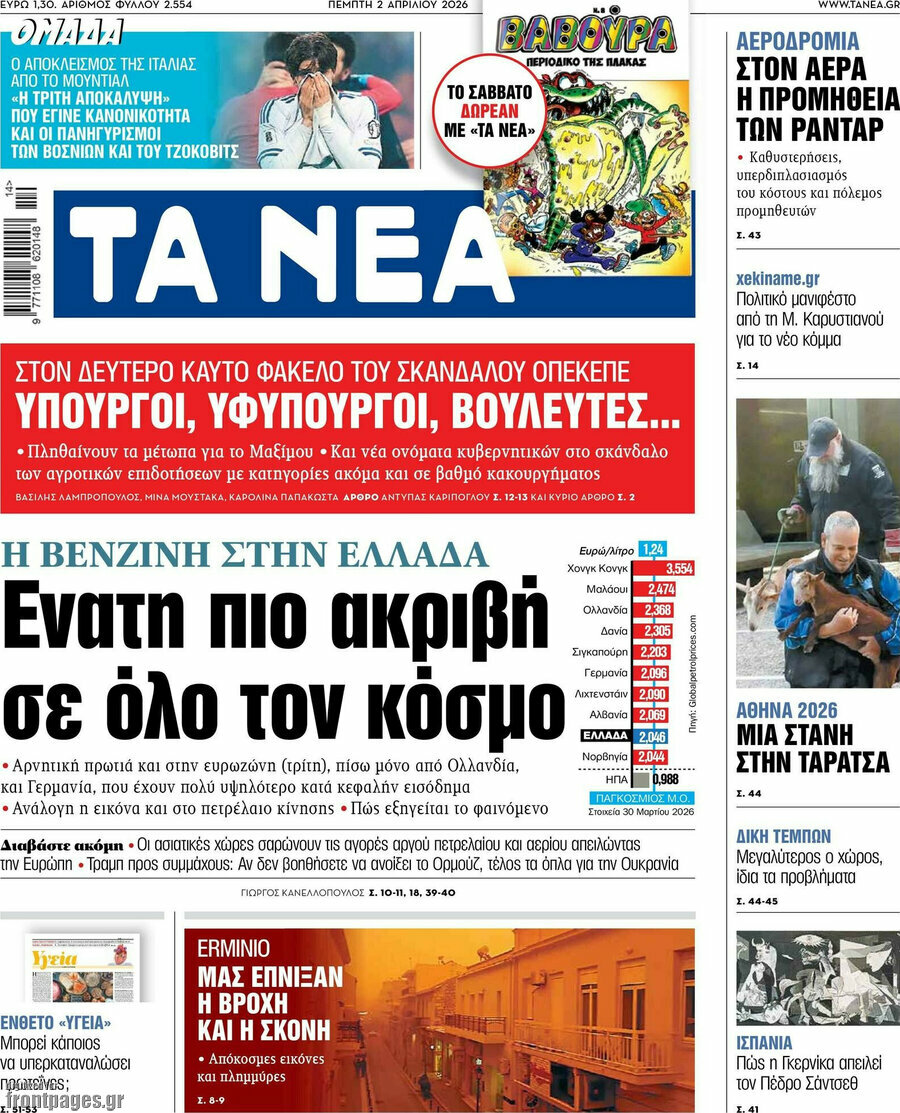
EFIMERIDA TON SYNTAKTON: A flock of scandals
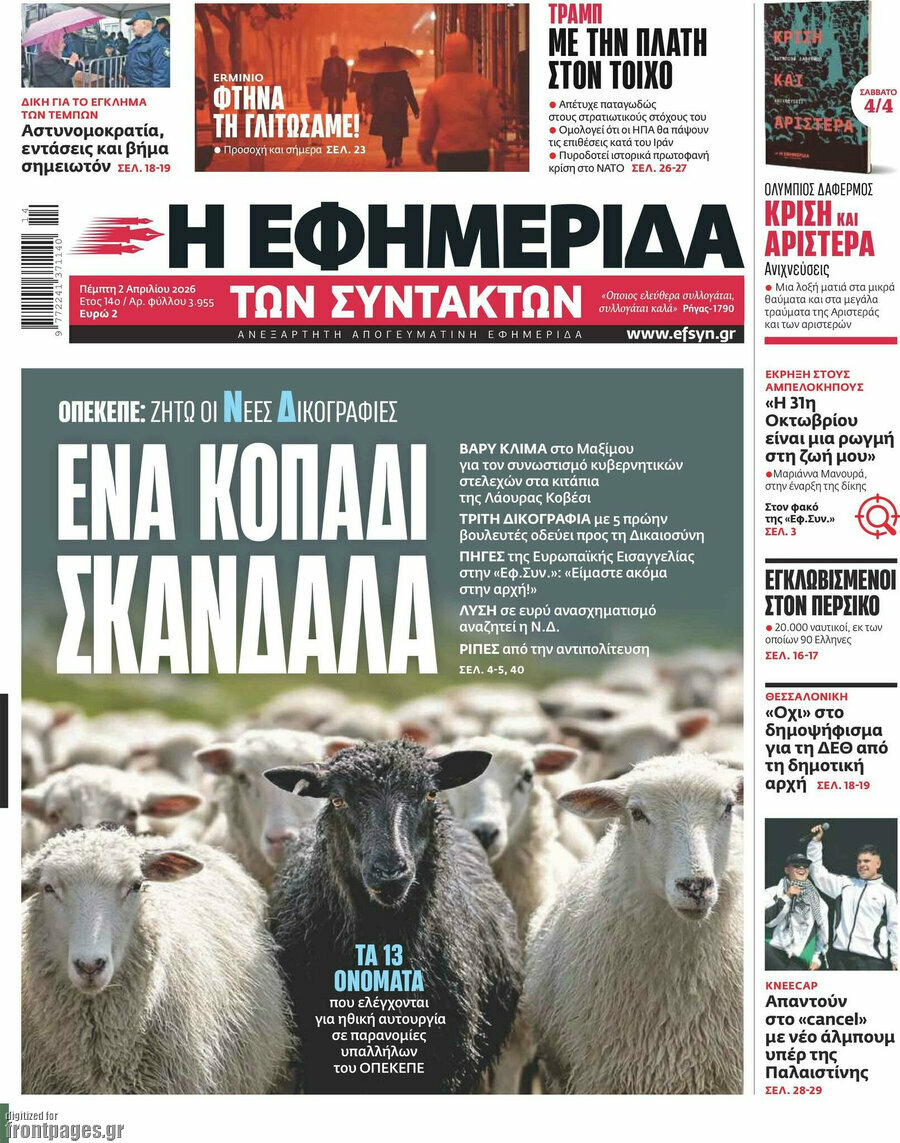
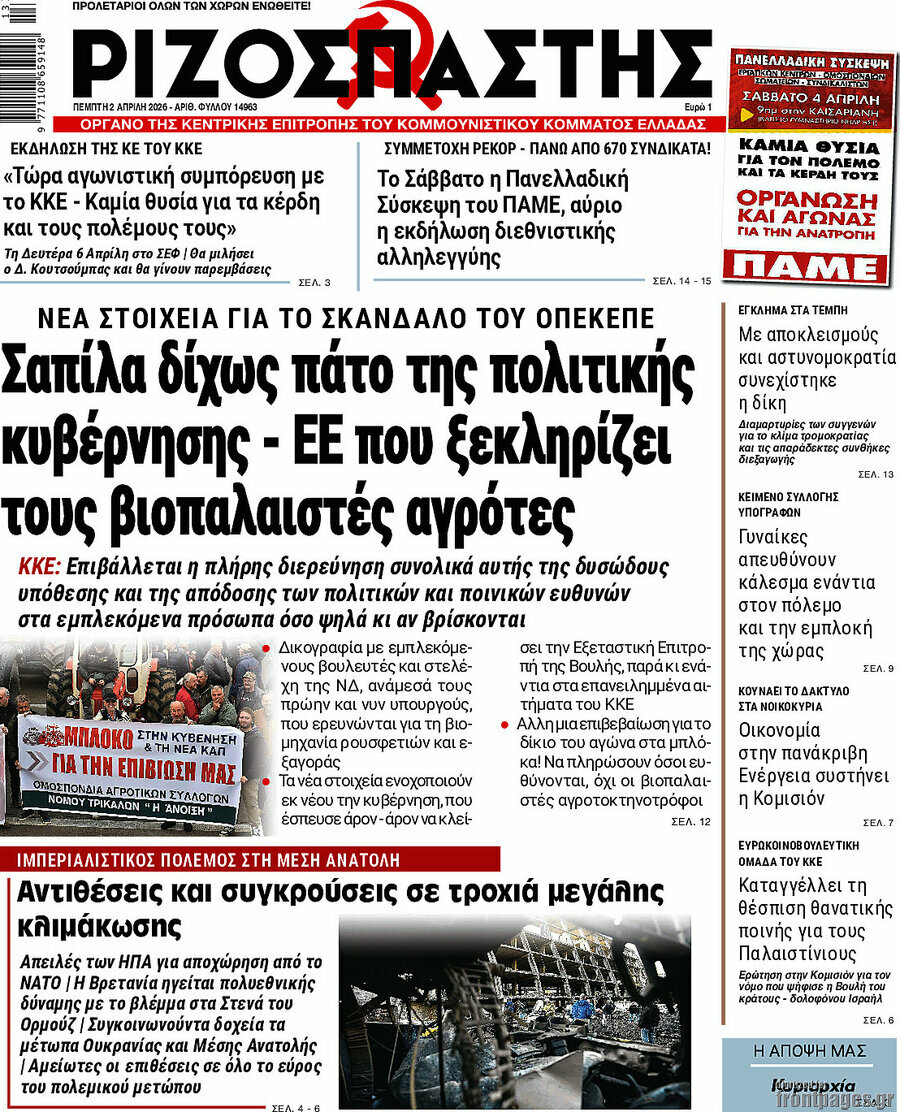
RIZOSPASTIS: OPEKEPE scandal: Endless degradation linked to the Government’s and the EU’s policies that eliminate farmers struggling to make a living
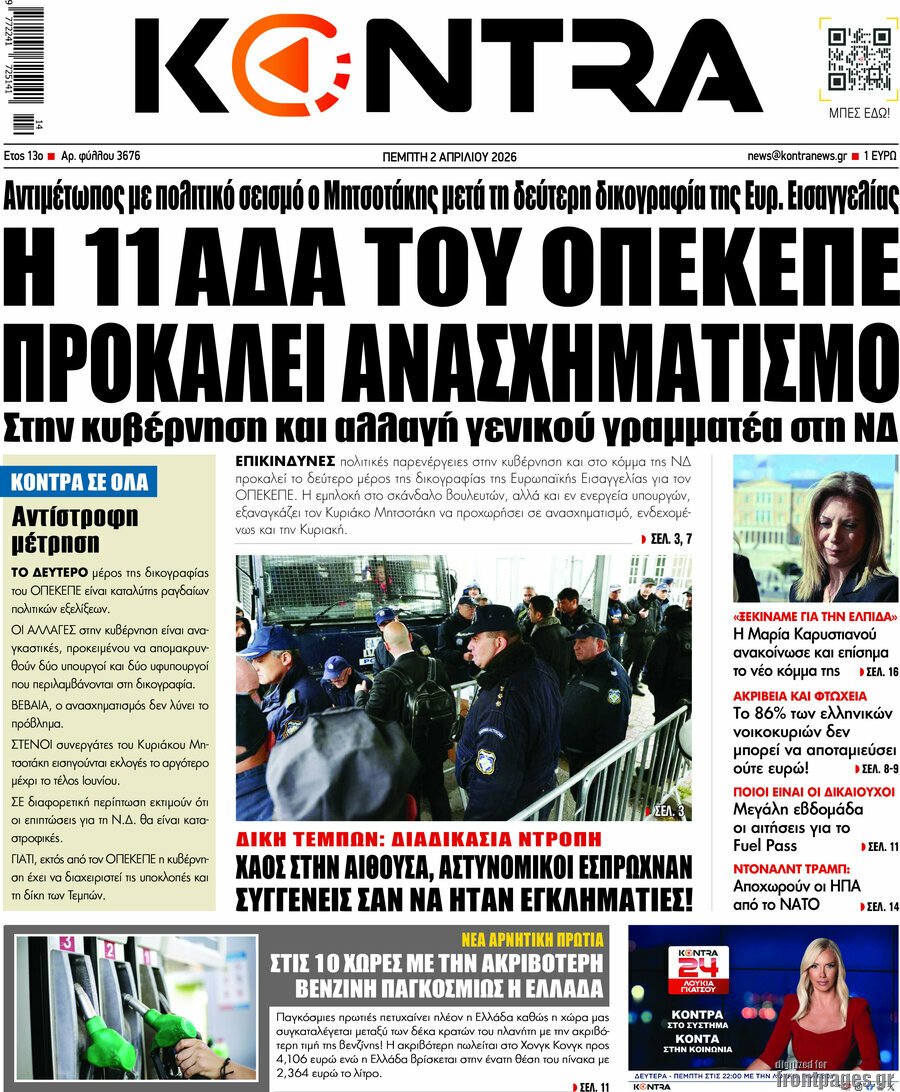
KONTRA NEWS: Government reshuffle due to the involvement of 11 political persons in the OPEKEPE scandal
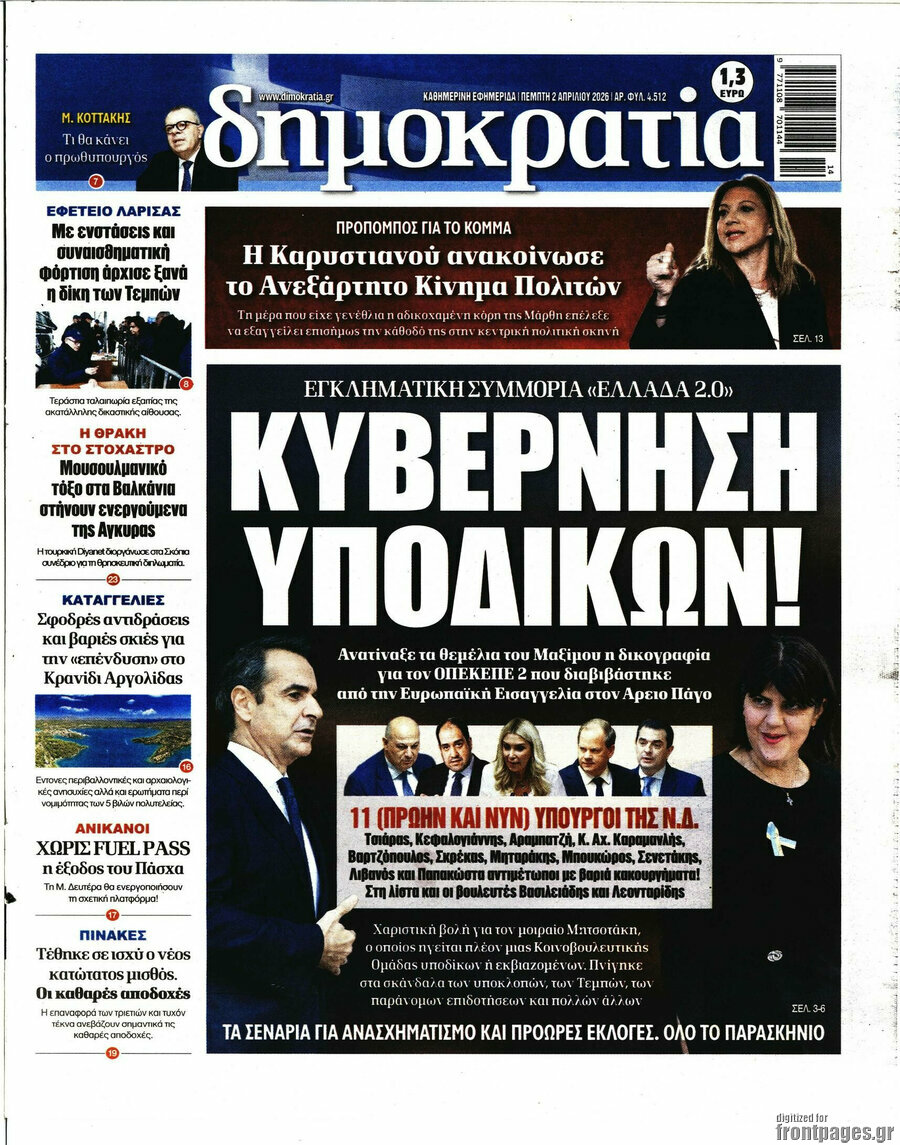
DIMOKRATIA: A government of ministers on trial
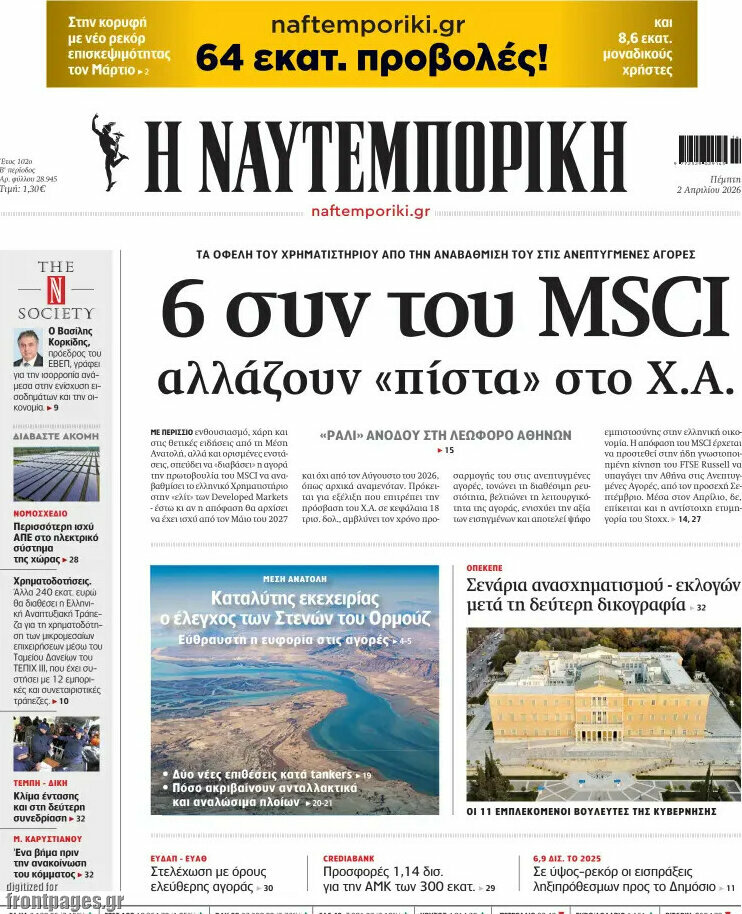
NAFTEMPORIKI: Six “pluses” of the MSCI change the level for Athens Stock Exchange

DRIVING THE DAY
RISE AND SHINE: U.S. President Donald Trump used his much-anticipated televised address to argue that the blockade of the Strait of Hormuz was no longer his problem. The 19-minute speech offered some bellicose rhetoric and a suggestion the U.S. was “very close” to reaching its military objective. There were also a few barbs directed at his allies — although there was little he hadn’t said before. The underlying message to the rest of the world remains this: If you need oil from the Middle East, go and get it yourselves.
Not over yet: “Because of the action we have taken, we are on the cusp of ending Iran’s sinister threat to America and the world,” Trump said. “And when we do, and when it’s all over, the United States will be safer, stronger, more prosperous and greater than it has ever been before.”
Walk in the park: “So, to those countries that can’t get fuel, many of which refused to get involved in the decapitation of Iran … I have a suggestion,” the president said. “Number 1, buy oil from the United States of America … And Number 2, build up some delayed courage [and] go to the Strait and just take it, protect it, use it for yourselves … the hard part is done. It should be easy.”
The same headaches: The speech didn’t change the situation on the ground and the EU is today waking up to the same conceptual problems it went to bed with. And there’s no sign Iran’s blockade is about to come to an end.
Hormuz on the line: It’s a scenario that will loom large over today’s talks, with EU foreign policy chief Kaja Kallas joining a call with a list of 35 countries — organized by the United Kingdom with France, Germany, Italy and the Netherlands dialing in. Kallas will explore a “coalition of the willing” to keep the Strait of Hormuz open, according to an EU diplomat. What’s not on the table: European countries joining the U.S.-Israeli war against Iran.
Transatlantic crisis: As Playbook’s Nicholas Vinocur tells us, the call comes as Trump ramped up his threats Monday to abandon NATO over allies’ refusal to send their warships into the Strait, whose blockage by Iran has set off a global energy crisis.
Strait can-do: That said, the European Union is now broadly supportive of efforts to open the Strait, short of joining the war, said the diplomat cited above.
Stubb-therapy: In a bid to defuse what looked like a ballooning transatlantic crisis, Finnish President Alexander Stubb held a call with Trump Wednesday, which he described as “constructive.” A senior official informed of the call said Stubb had impressed on Trump that Europe was making big strides to bolster NATO’s European pillar, pointing to an upcoming NATO summit in Turkey as a time to highlight the European efforts.
Closing ranks: For all the tension, Trump’s pressure may be having an unintended effect: uniting European allies against him, as colleagues Tim Ross and Eva Hartog note in their analysis.
Been here before: An EU diplomat and two senior national officials told Playbook that Europeans weren’t deeply alarmed by Trump’s comments to the Telegraph, in which he called NATO a “paper tiger”. “Nowhere do Trump or Rubio say: ‘We’re going to leave tomorrow’ … It’s not the first time [Trump] has made this sort of comment,” said an EU diplomat.
Look over there: Speaking to Playbook, French MEP Nathalie Loiseau sees a different logic: Trump, she argues, is deflecting from the fallout of the Iran war, choosing to hit European allies instead of targeting Israel or Russia.
Cry for help: A senior government official added that the increasingly inflamed rhetoric from the Trump Administration reflected the fact that the White House is “in a difficult place now.”
Mixed signals: Even staunch U.S. allies are struggling to work out what’s expected of them. Estonian Defence Minister Hanno Pevkur said Tallinn would be ready to help secure Hormuz — but only with clarity on what’s required. “In three days, we’ve had three different messages,” he noted: NATO should act with the U.S., the U.S. doesn’t need allies, or allies should act alone.
TOLD YOU SO — SOUTHERN EDITION: The EU’s favorite phrase “I told you so” is doing the rounds again. Eastern Europe warned about the threats posed by Russia, France warned about Trump and … now the South is warning about strategic blind spots. Defence Director at the Cyprus Ministry of Defence Panayiotis Hadjipavlis told a small group of journalists that the EU can’t stay “monothematic” on Ukraine while the Middle East burns.
“Of course we support Ukraine — it’s one of the priorities of our presidency,” Hadjipavlis said. But Cyprus, long pushing for a “360-degree approach,” now feels vindicated: “What is happening in the Middle East … actually confirms our position.”
FRENCH TROLLING: In more evidence that Trump is taking his allies’ reluctance to join the fight personally, he used an earlier press conference to ridicule French President Emmanuel Macron and the now infamous incident in which his wife, Brigitte, appears to shove his face before getting off a plane.
Meanwhile, the Financial Times reports that Trump threatened to stop weapons flowing to Ukraine if Europe refused to join the U.S-Israel military operation in Iran.
HUNGARY ELECTIONS
BATTLE OF THE OBSERVERS: There’s a new twist in Europe’s elections of the year: Rival groups are now competing to monitor Hungary’s April 12 vote.
OSCE under fire: Our man on the ground, Max Griera, reports that the traditional mission led by the Organization for Security and Co-operation in Europe, a regional security organization, has come under fire, accused by government voices of foreign interference. The attacks focus on Daria Boyarskaya, involved in coordinating the mission.
Cue the rival observers: Allies of Prime Minister Viktor Orbán are launching their own monitoring effort: the Liberty Coalition for a Free and Fair Election. It’s co-led by Anna Wellisz, of the Dutch-based Edmund Burke Foundation, a conservative organization, and Polish lawyer Jerzy Kwaśniewski, of the Ordo Iuris Institute.
What’s at stake: Competing observer missions could muddy the waters on election day, with dueling narratives over whether the vote was free and fair. This could increase the likelihood of a contested result.
Careful what you wish for: Orbán remains Brussels’ bane — but his challenger Péter Magyar is still something of an unknown quantity. On Ukraine, he’s walking a fine line: not hostile to Kyiv, but not offering overt support that could hurt him at the ballot box.
UKRAINE LOAN ON ICE: EU ambassadors had a smooth first discussion on the financial plan to back the €90 billion loan to fund Ukraine’s war effort, as previewed yesterday. The Cypriot EU presidency is pushing technical work forward so things are ready if Hungary lifts its veto. For now, though, EU ambassadors won’t revisit the file until that groundwork is done.
Unless Plan A … Kallas again floated using Russian frozen assets to finance the loan, to sidestep Budapest’s veto of joint borrowing. A Commission spokesperson hinted that route could bypass the EU’s long-term budget — and with it, Hungary’s opposition (although the spokesperson stopped short of confirming this would actually happen). Watch this space.
OFFICIALS TO LEAVE SIGNAL
FAREWELL, GROUP CHAT: There are those who foolishly think setting up yet another working group chat is a good idea. But when your bosses or colleagues drag you into one and there’s no escape — in fact, your only hope might be a hack attack. Enter stage left a group of EU officials.
Shut it down! My colleague Zoya Sheftalovich found out that some of the EU’s most senior staff were in a group chat, according to three officials with knowledge of the issue. Then the European Commission ordered them to end it over fears the chat could be a hacking target, two of them told us.
Paranoid Android: Zoya reports that the chat mostly involved Commission department chiefs and deputies wishing each other happy birthday — hardly top-secret material. There’s no evidence the group chat itself was compromised, but officials said the shutdown order reflected growing concern about messaging apps inside the institutions.
ICYMI: The development comes as the EU grapples with a string of spying concerns, with the Commission saying last week it was investigating a cyberattack on its websites, while a private telephone conversation between a POLITICO reporter and an EU official was intercepted and published online.
Signal still the go-to: Signal has long been seen in the Brussels bubble as the safest option. EU Council press officers migrated there years ago, ditching WhatsApp — although it never fully caught on. Many sources drifted back to WhatsApp, including rotating EU presidencies that continue to set up group chats on the Meta platform.
Targeted apps: The Commission’s official guidance still advises staff to avoid WhatsApp and use Signal instead, which cybersecurity experts consider more secure. WhatsApp users have been targeted — although two officials said attempted hacks were more frequent on Signal.
Phishing for eurocrats: Three Commission officials confirmed that members of commissioners’ cabinets and other senior bureaucrats received messages asking them to enter their Signal PIN codes, later identified as phishing attempts.
FITTO’S MISADVENTURE
CLASHING VIEWS ON A CLASH: We flagged yesterday that Executive Vice President Raffaele Fitto would visit the Belgian city of Charleroi, in what was billed by his team as a routine stop. It didn’t quite turn out that way: The visit ended in protests targeting both Fitto and Wallonia’s Minister-President Adrien Dolimont — although what exactly happened depends on who you ask.
There were protests: Fitto had been invited to CampusUCharleroi to showcase EU-funded projects (worth €23 million). Instead, a protest by professors, students and activists escalated, with Belgian media describing scenes that turned violent.
Using the f-word. A spokesperson for the Wallonian chief painted a picture of a large anti-fascist rally involving around 100 people, which blocked access to the campus for nearly an hour. The target of the protest was Fitto over his links to Italy’s right-wing Brothers of Italy. “He was there as a European Commissioner, not as a representative of any extreme right party,” the spokesperson said, adding the term “fascist” is used lightly in Wallonia.
Just unpleasant: An EU official downplayed the episode, saying there were around 20 protesters and Fitto knew what to expect. Yet the official described the situation as “unpleasant,” with posters of Fitto and Dolimont hung upside down and attempts to block the commissioner from speaking. At one point, Fitto pushed back: “You call yourselves anti-fascists — but I am the first anti-fascist!”
Relocated: Both sides agree on one thing: The visit didn’t go to plan. Whether or not he managed to speak, Fitto ended up being escorted out, with the planned bilateral relocated to Charleroi Airport Brussels South Charleroi Airport before his flight. Not your average Commission field trip.
COSTLIER FLIGHTS AND DELAYS
COME FLY WITH ME (WHILE YOU CAN): Heading off for Easter? Enjoy it while it lasts. Airfares are on the rise, jet fuel costs are spiking … and May is now shaping up as the start of a potential supply crunch that could ground flights, thanks to the war in the Middle East.
From denial to reality: After weeks of calming markets with talk of hedging, EU airlines are facing a harder truth: Europe’s aviation sector runs on Gulf crude. The system can absorb shocks — but only for a few months before cracks start to show. More from our aviation reporter Tommaso Lecca.
If Ryanair sneezes…: The budget airline’s Chief Executive Michael O’Leary warned Wednesday that up to 25 percent of Ryanair’s jet fuel supply “might be at risk.” If the war drags on, disruptions could start hitting Europe as early as May.
When it rains: The crisis hasn’t fully landed — but travel is already getting messier. Foreign passengers are waiting up to two hours to enter the Schengen area at peak times, according to airport and airline groups, with fingers pointed at the new Entry-Exit System.
Mug shooting tourists: The biometric system — replacing passport stamps — is due to be fully operational by April 10. But forcing non-EU travelers through fingerprint and facial scans is proving tricky. EU officials’ favorite hub,Brussels Airport, complained that nearly 600 passengers missed their flights in the four days leading up to March 30 alone, due to long lines.
Brussels blinks: The Commission had brushed off disruption concerns. Now, Internal Affairs Commissioner Magnus Brunner tells POLITICO the executive is “aware” delays may occur in some member states, while insisting safeguards are in place to keep traffic moving.
It’ll smooth out (eventually): “All non-EU citizens have to be registered upon first entry, meaning that processes will get better and better,” Brunner said. Most countries, he insists, are seeing no major delays. And, yes, suspending the system remains an option “especially during peak travel periods like Easter or summer holidays.”
By the numbers: Around 45 million registrations so far, according to the Commission’s DG HOME. Roughly 24,000 entry refusals linked to fraudulent documents and 6,000 cases flagged as security risks, including links to terrorist groups.