Athens weighing cable and water
Greece is weighing options provided by international law and the UN Convention on the Law of the Sea as it enters a period seen as critical for both the Greece-Cyprus electricity interconnection project, known as the Great Sea Interconnector (GSI), and its right to extend territorial waters to 12 nautical miles, particularly south and west of Crete. In both cases, Athens is assessing potential reactions from Turkey. On the interconnection project, those assessments are being made in coordination with France, as French companies Meridiam and Nexans are majority shareholders in the project. Developments on both issues could unfold before the end of the year, depending on broader regional and international circumstances. According to well-informed sources, Ankara has made clear in public discussion that it does not consider simple notification sufficient and wants to grant permission for the electricity interconnection project. Sources said Athens and Paris appear to have concluded that a “light redesign” of the cable route may be needed so it does not pass through areas of the so-called Fethiye-Kas national marine park, declared by Turkey south of Kastellorizo on August 15. The aim, according to the sources, is to prevent Turkey from claiming authority to impose a complete ban on activities in the area.
https://www.ekathimerini.com/politics/foreign-policy/1316449/athens-weighing-cable-and-water
Polls renew opposition contest
A new round of opinion polls published after the Thessaloniki International Fair has reignited competition between PASOK and Alexis Tsipras’ Greek Left Alliance (ELAS) over which party can emerge as the main challenger to the governing New Democracy in the next election. Across most surveys, a common pattern has appeared: ELAS has shown signs of stagnation or slight decline, while PASOK has recorded modest gains.
https://www.ekathimerini.com/politics/1316343/polls-renew-opposition-contest
Over a third of spending goes to food, housing
Last year’s average monthly household spending remained higher than in 2024, but lower than in 2010, the year Greece entered its fiscal adjustment regime. The Hellenic Statistical Authority figures show the forced expenditure restraint that households have to undergo in the midst of successive inflationary crises, especially since they have to devote 35% of their spending to food and housing. The increase in food and rent prices is even more painful for the poorest households, who are forced to direct more than half of their money (54.4%) to food and housing.
https://www.ekathimerini.com/economy/1316374/over-a-third-of-spending-goes-to-food-housing
Six dead after explosion and building collapse in Athens’ Plaka building, Fire Service reports
Six people who had been reported missing after an explosion and the collapse of a building in Athens’ Plaka district have been found dead, the Fire Service confirmed on Saturday afternoon. The incident occurred at 7:30 on Friday morning, when an explosion tore through the two-storey building on Lysikratous Street.
ATHEX: Friday swing brings week back to gains
The Euronext Athens (ATHEX) general index closed Friday at 2,665.93 points, adding 0.90% to Thursday’s 2,642.23 points. On a weekly basis it advanced 0.17%.
https://www.ekathimerini.com/economy/1316365/athex-friday-swing-brings-week-back-to-gains

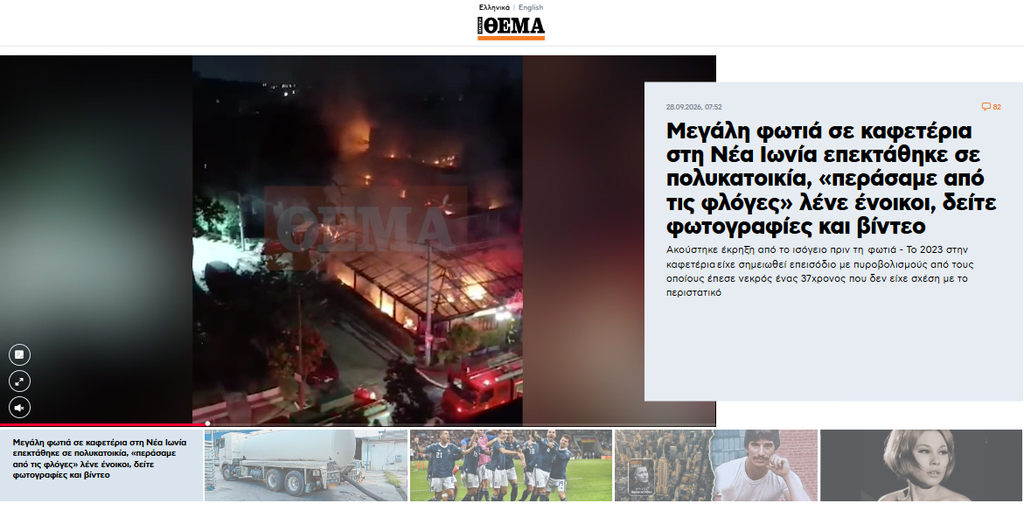
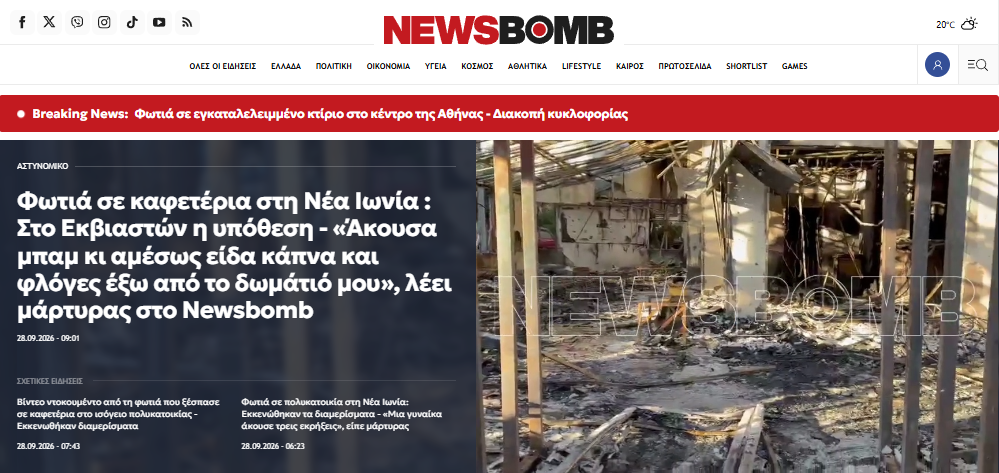
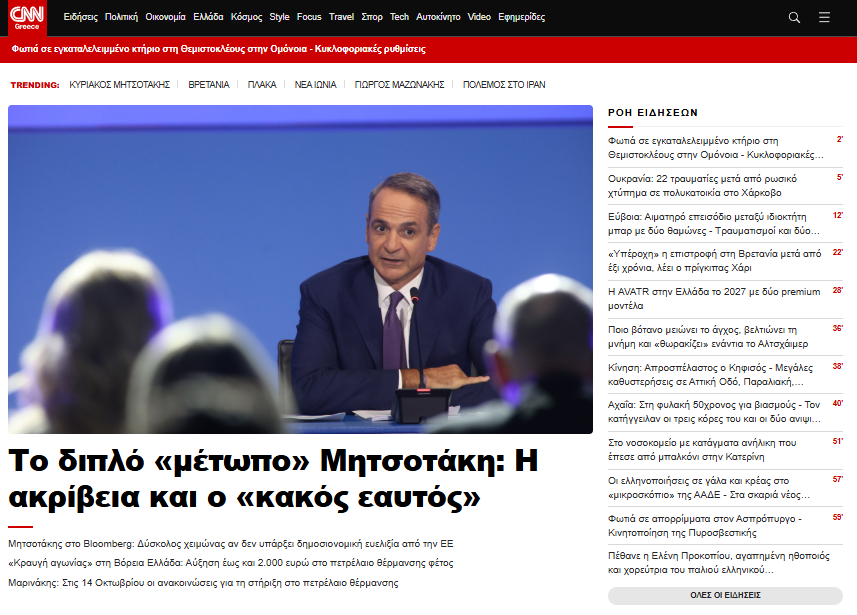
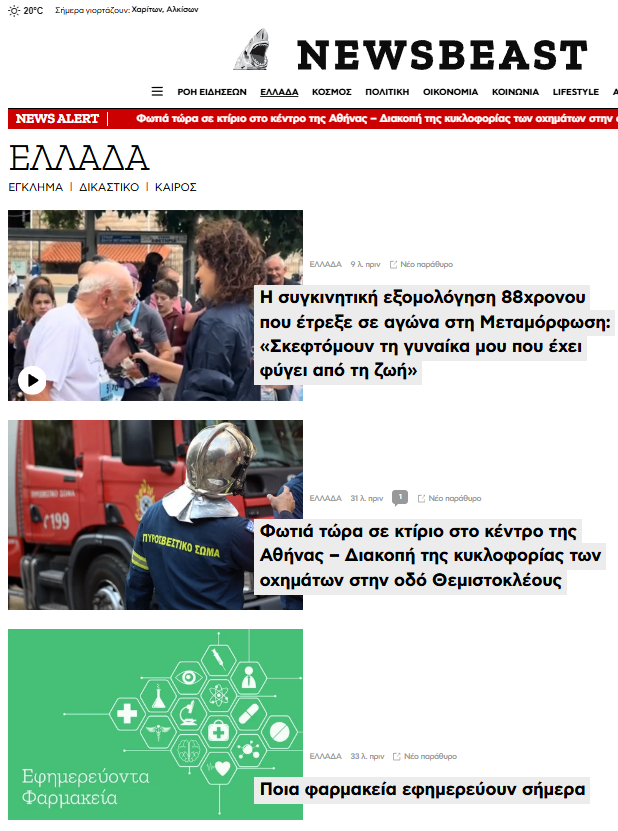

SUNDAY PAPERS
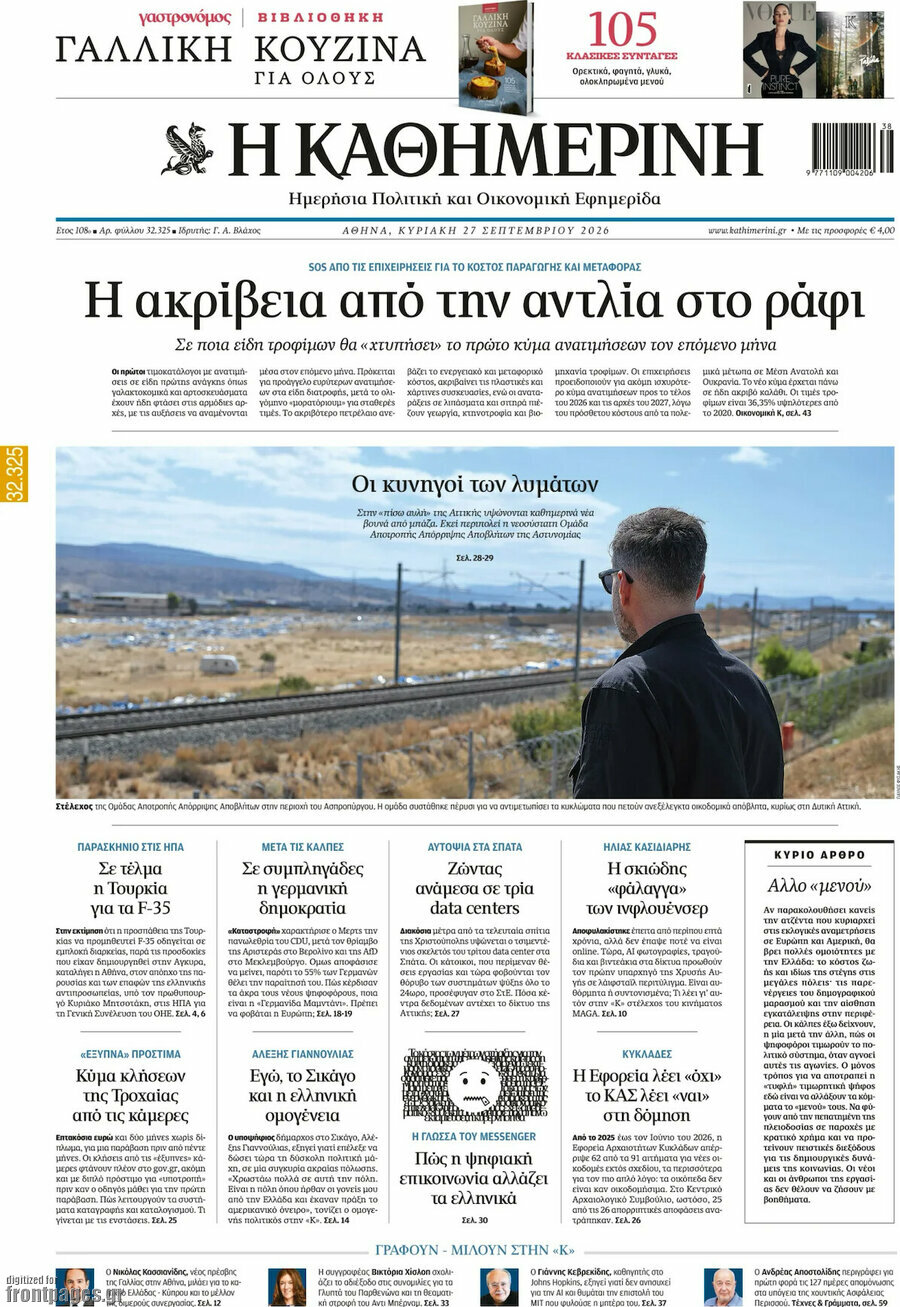
KATHIMERINI: Price hikes: from fuel stations to super markets
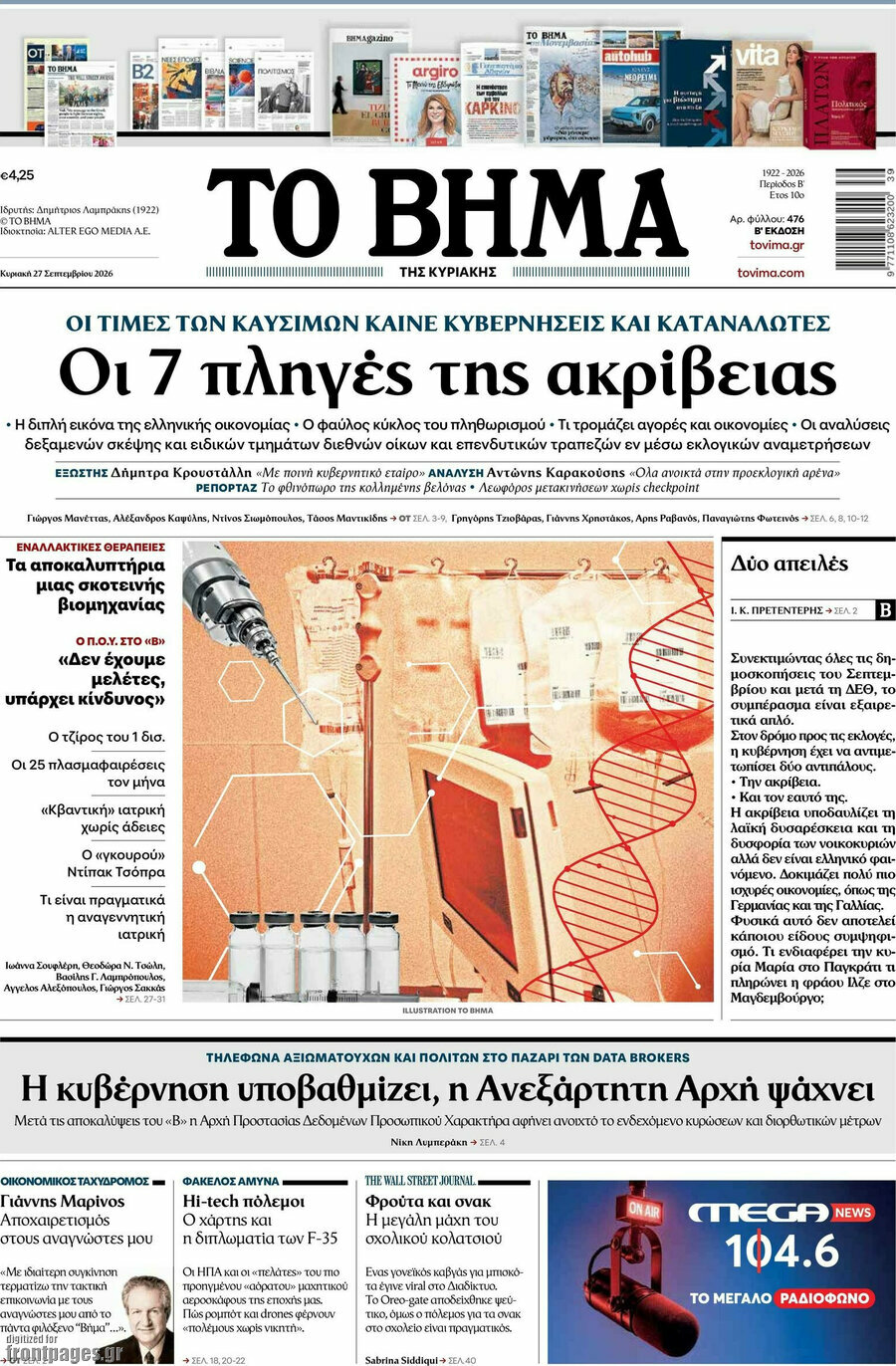
TO VIMA: The 7 plagues of price hikes
REAL NEWS: Erdogan paid Trump 40 billion dollars but left empty-handed
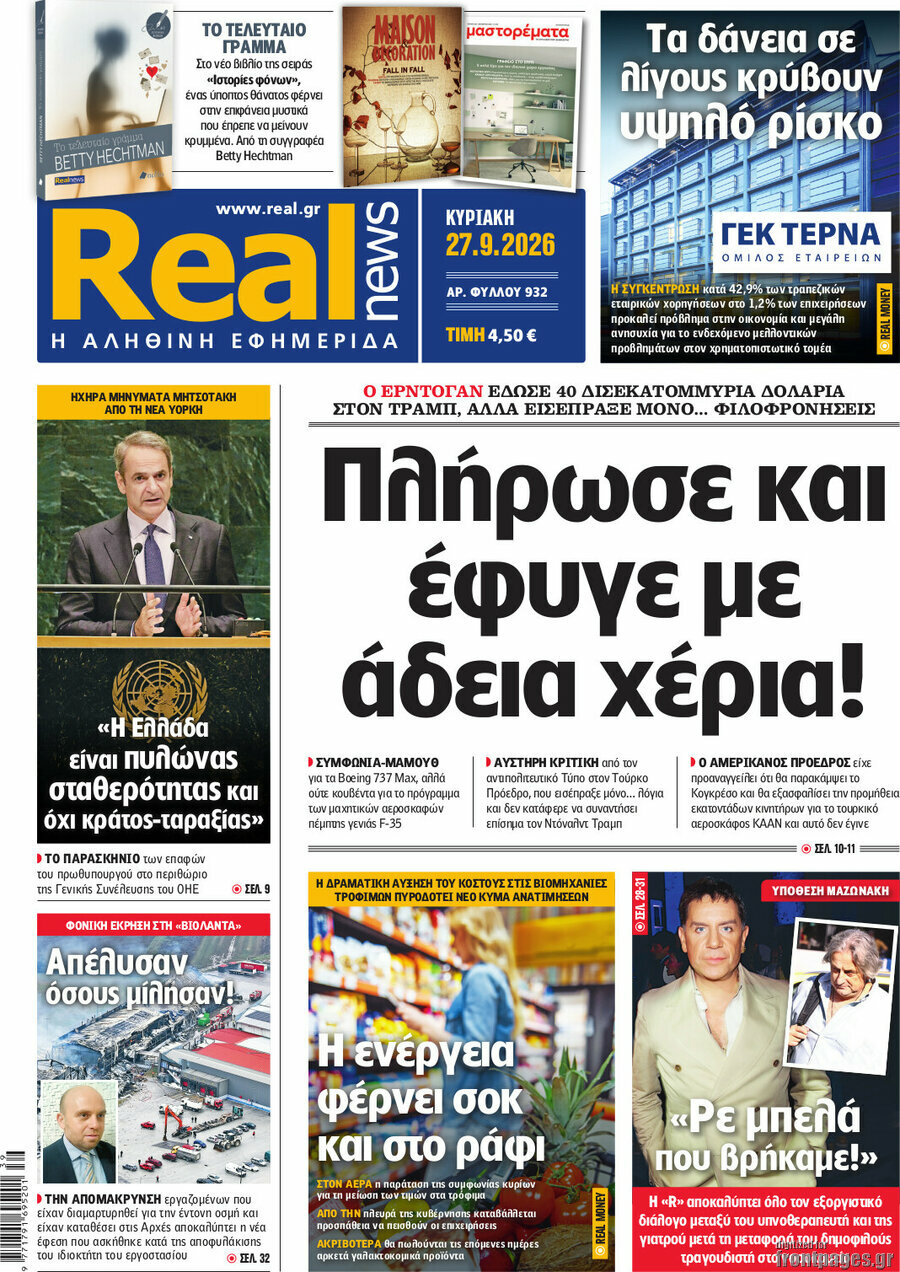
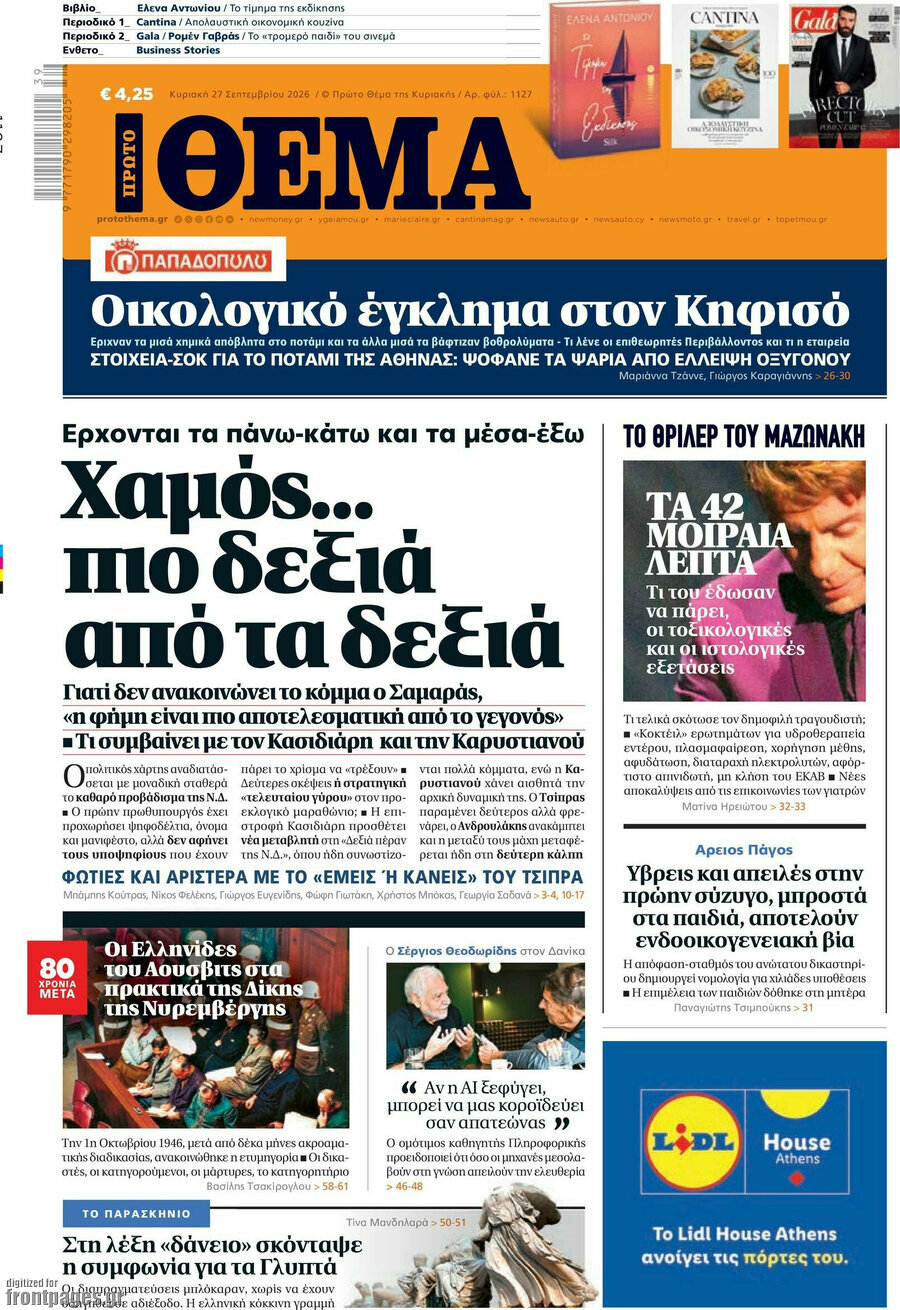
PROTO THEMA: Havoc in the far right political space
MONDAY PAPERS:
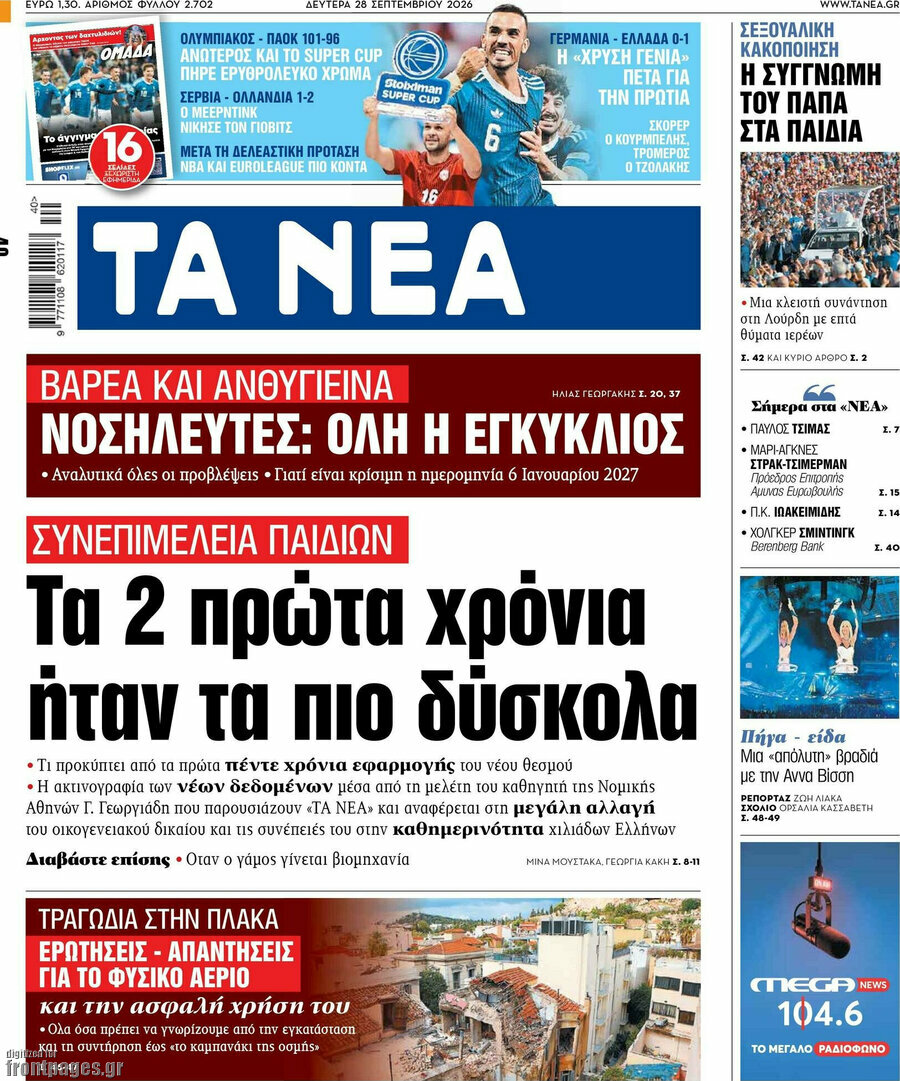
TA NEA: Joint parental custody: The first 2 years were the most difficult
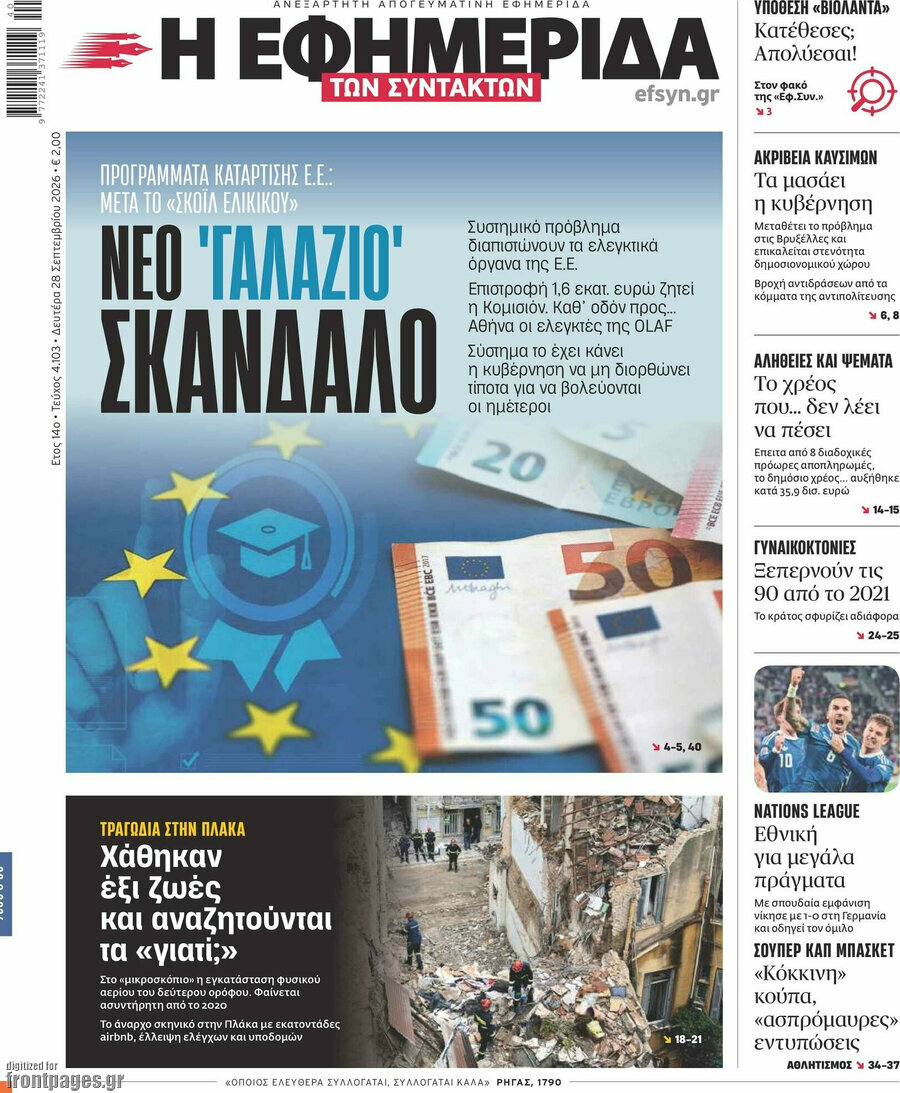
EFIMERIDA TON SYNTAKTON: New scandal involving New Democracy and EU funds for training programs
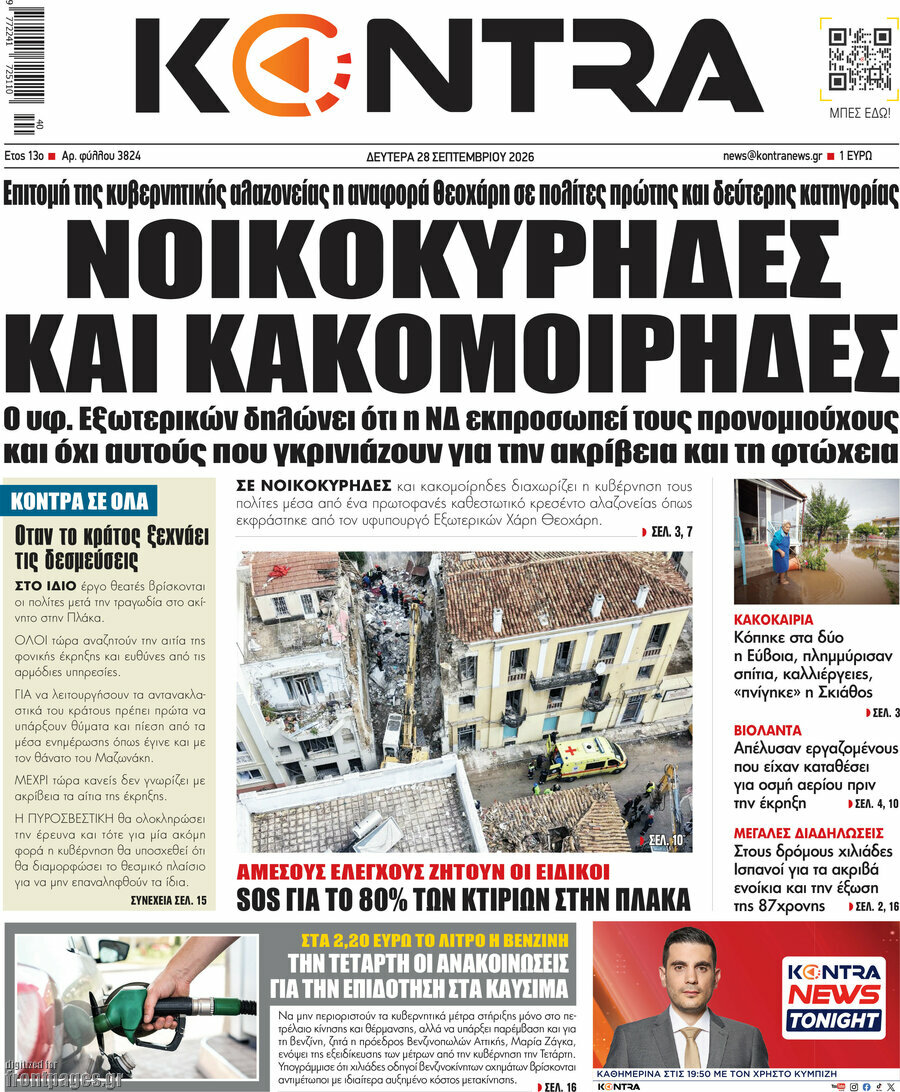
KONTRA NEWS: Citizens divided into 2 categories: the good ones and the poor ones
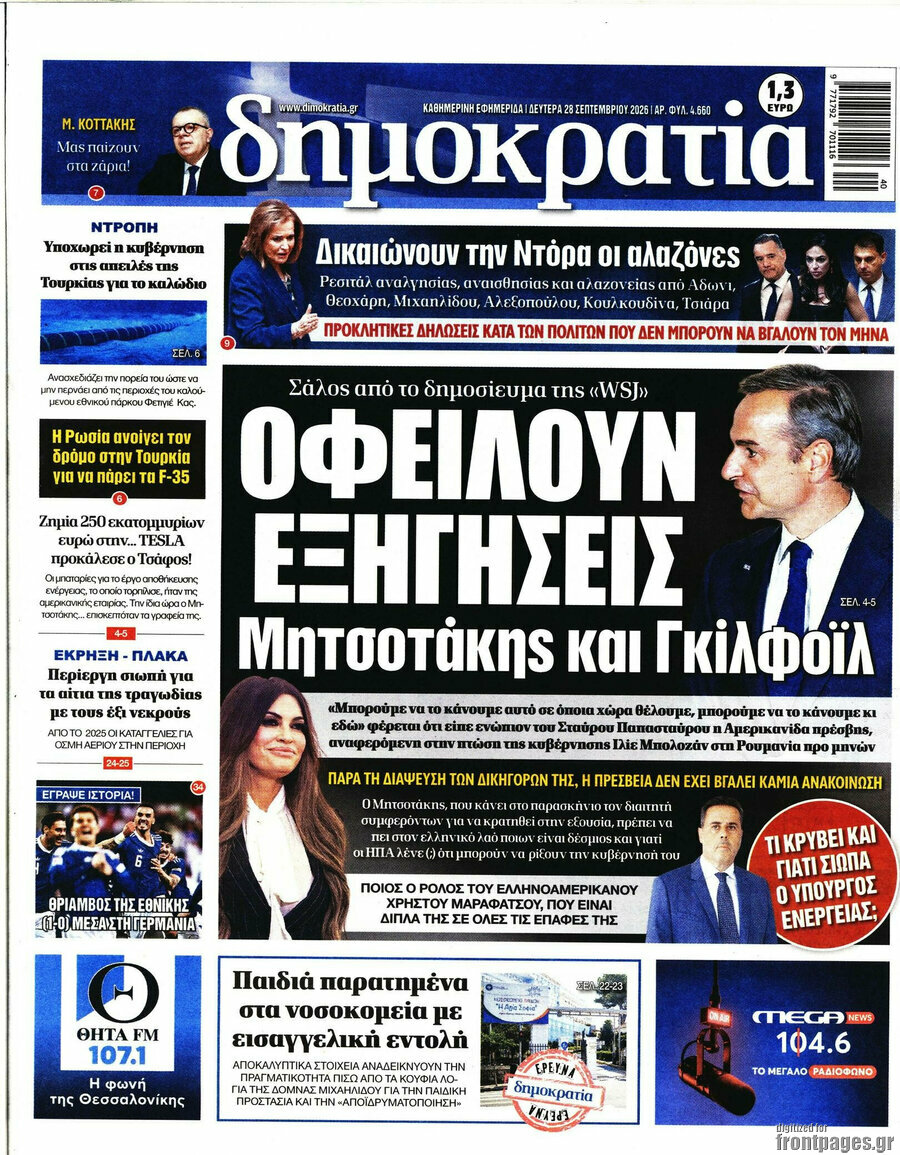
DIMOKRATIA: Mitsotakis and Guilfoyle must give answers regarding the report of WSJ
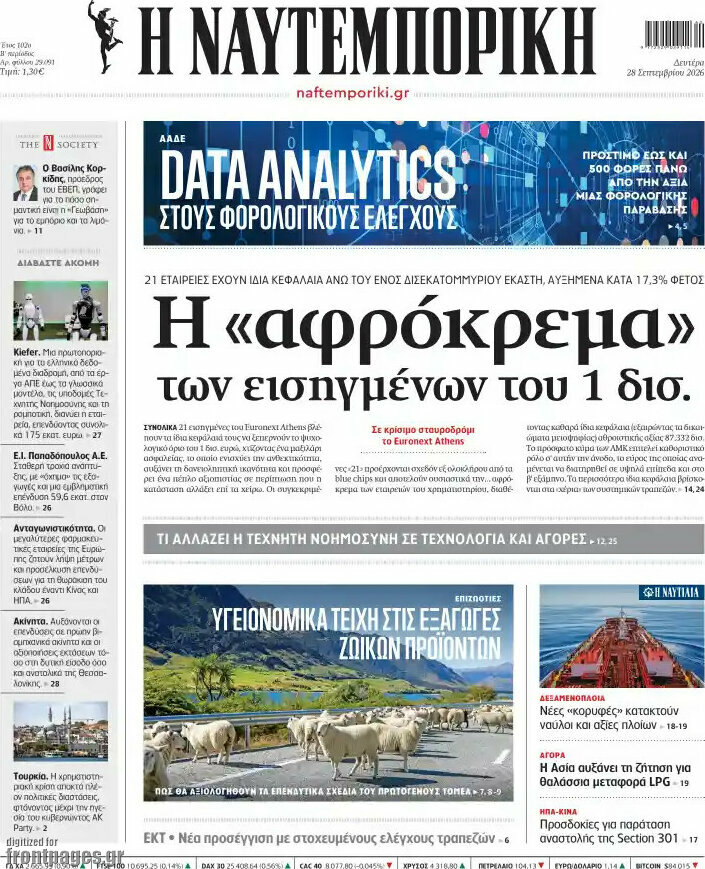
NAFTEMPORIKI: “La crème de la crème” of listed companies worth 1 bln

DRIVING THE DAY
LEAKED CABLE — NO ONE IS BUDGING ON THE BUDGET: EU capitals are hopelessly deadlocked over the bloc’s next long-term budget and the prospect of a deal this year is fading, according to a leaked German diplomatic cable seen by POLITICO.
“No potential areas for compromise were apparent” during a recent meeting of Europe ministers, said the Sept. 22 cable obtained by POLITICO’s Jasper Bennink in Berlin.
Reality check: The blunt assessment of the German diplomat who observed the meeting reveals a lack of tangible progress despite months of talks between ministers and diplomats on the Multiannual Financial Framework (MFF). And it ramps up pressure on EU leaders to start moving their red lines when they gather on Oct. 15 — or admit there will be no deal this year.
The “entrenched positions” show bilateral talks have revealed “no surprises,” the cable states — and that’s prompting Ireland, which holds the EU’s rotating presidency, to plead with envoys to start compromising.
Germany’s view: The cable suggests Berlin’s cost-cutting faction holds the upper hand, arguing that the MFF’s “financial leeway” would be determined by “net contributors,” or wealthier EU states.
Pity Dublin: Ireland is working to a deadline, due to produce its next negotiating document, or “negobox,” that will act as a basis for talks between leaders by early October. It’s a “delicate balancing act” on Ireland’s behalf, the cable’s author writes. (A spokesperson for Germany’s embassy to the EU declined to comment, saying Berlin never comments on “alleged leaks.”)
Step back: It’s no secret that MFF talks are deadlocked, but the cable shows it’s entirely up to leaders to solve the problem — a tall order considering German Chancellor Friedrich Merz and French President Emmanuel Macron have both been weakened politically. That makes concessions on either side less likely, despite the fact that a Paris-Berlin precursor deal is necessary for any agreement, per one senior national official who was granted anonymity to discuss the talks.
Et tu, Manu? Merz and Macron announced in July they would work closely together in the negotiations. But while Germany, the Netherlands, Austria, Denmark, Finland, Sweden and Belgium “emphasized the need for significant cuts,” France was merely “open to targeted cuts,” according to the report. France was also among the countries that said that “cuts in the areas of agriculture and cohesion are out of the question.”
Can new EU taxes save it? A founder of the Irish betting giant Paddy Power is suggesting an EU-wide gambling tax could be a way out of the deadlock — and he’s all in favor. Stewart Kenny told Playbook’s Gregorio Sorgi that if bookmakers “have to pay for the harm some of their products are causing … well, that is a very healthy thing.”
It’s up to Ireland to decide whether such a tax, which some estimates say could generate up to €5 billion a year, gets onto a shortlist of so-called own resources to be discussed by leaders in October. Malta — home to a big betting sector — and Italy are leading a push against the idea, per a senior EU official.
But Kenny, who says he has “huge regrets” that he didn’t do more to tackle gambling addiction while at Paddy Power, brushed off concerns that a tax could push gamblers into the illegal market. A tax is “part of the gig,” he said, noting that it could help curb online advertising and children’s exposure to gambling.
BIG AND BREAKING
PRESSURE POINT: Western allies are worried that Moscow could use the sprawling Arctic archipelago to test NATO militarily amid growing uncertainty over Washington’s commitment to European defense, Victor Jack reports.
SCOOP — THE EU’S GROWTH GAMBIT: Brussels is developing proposals that would give the four frontrunners for EU membership — Montenegro, Ukraine, Moldova and Albania — targeted “roadmaps” to bring them in sooner rather than later, my colleague Gabriel Gavin reveals. A landmark review will conclude that new rules can be put in place to stop new joiners backsliding without changing the bloc’s fundamental laws.
STOCKPILE SCRAMBLE: German companies are rushing to stockpile critical raw materials, alarmed by the risk that Beijing could restrict rare earth exports if next month’s trade talks between the EU and China break down, Frida Preuss and Carlo Martuscelli report.
RUSSIAN INFILTRATION: A U.S.-based data-extraction firm accused of being secretly run from Russia has worked on EU-backed projects and sold its services to European law enforcement agencies, according to documents seen by POLITICO.
TACKLING THE FAR RIGHT
THE EPP’S GREAT DILEMMA: The European People’s Party is already preparing its strategy to head off the far right at the 2029 EU election — but interviews and internal meeting records reveal deep internal splits over its approach, Max Griera reports.
Us against them: The next European Parliament election will pit “anti-European populists against the EPP parties,” EPP vice chair and Romanian PM nominee Siegfried Mureșan said. So the party needs to come up with an “attractive enough” program that can compete with the far right’s promises, EPP spokesperson Pedro López de Pablo said.
The choice ahead: National factions will need to bridge gaps over how to handle the far right — and decide whether to hold their ground or follow the populist parties on migration, climate, and gender and sexual rights to win back voters. “This is the political history, the historical dilemma EPP needs to decide … are we center-right or are we another right-wing party?” said Finnish EPP lawmaker Sirpa Pietikäinen.
Conversations will unofficially kick off today and tomorrow on the sidelines of the EPP’s political assembly in Toulouse. Formal work on the “Win2029” task force announced by Manfred Weber, which aims to shape the party’s policy program for the campaign in three years, will start in earnest at a retreat in Sicily in October and continue at the party congress in Rome in the spring.
More cuts: At the assembly,lawmakers are set to back a resolution calling for more simplification of EU rules, including “a rigorous application of the one-in, two-out principle, whereby every new obligation is quantified, including its full compliance cost, and matched by the removal of at least twice that burden elsewhere” in EU law, per a document seen by POLITICO.
20-SECOND PLAYBOOK PRIMER
The European Commission will publish recommendations today on how EU countries should monitor cardiovascular health as part of its Safe Hearts Plan.But what is that? It’s the EU’s first attempt to tackle the leading cause of mortality in Europe. The hope is to cut premature mortality caused by heart disease by 25% by 2035. The Commission wants everyone under 35 to receive at least one cardiovascular health check, with checks at least every five years for those between 35 and 64 and more regular checks for those over 65.
THE ‘EMERGENCY PROTOCOL’
BE MORE LIKE NATO? EU defense ministers will today for the first time tackle the question of whether the bloc needs its own version of NATO’s Article 4 — an “Emergency Security Protocol” — three EU diplomats and officials said.
Red alert: Emmanuel Macron and other EU leaders are sounding the alarm about the rising risks of a Russian attack, prompting European Commission President Ursula von der Leyen to pitch the emergency protocol during her State of the Union speech. The talks in today’s Defense Council are likely to bring up the tension between the EU’s plan and NATO, with some capitals arguing the military alliance has the bloc’s defense needs well covered.
If there’s a will: “If there is general agreement, then the EU can put quite a lot on the table” in terms of policy tools for hybrid attacks, including emergency response teams, and “pockets of money,” said a senior EU official who was granted anonymity to discuss the expectations.
What else to watch: Chief EU diplomat Kaja Kallas is likely to press countries to hand over Patriot interceptor missiles to Ukraine while they wait for new deliveries from the U.S., the official said. Kallas is also leaning on governments to contribute more ships to the ASPIDES maritime security mission in the Middle East.
4 MORE THINGS GETTING US TALKING
TERROR PROBE: British counterterror police are investigating whether Iran was involved in an alleged plot to attack an RAF air base used by the U.S. during its war in the Middle East, Sky News reports. Donald Trump said the five suspects arrested yesterday were looking to do “big damage” to the base.
LATEST IN THE MIDDLE EAST: Iran said it will push again for a diplomatic solution to its conflict with the U.S. after Trump rejected Tehran’s offer of a seven-day ceasefire in exchange for opening the Strait of Hormuz. Reuters has the write-up.
MUNICH MIGRATION MEETING: After migration ministers from 18 European countries gathered in Germany over the weekend, Commissioner Magnus Brunner told Playbook: “Illegal migration to the EU has dropped massively … Now we need to implement our new common rules, and build further on them by strengthening Frontex, creating a new emergency response framework and expanding our migration diplomacy with third countries.”
THE VOID AT THE HEART OF EUROPE’S CLIMATE RESPONSE: The EU has no shortage of climate crises to deal with — but there’s no one in charge of coordinating its efforts, Zia Weise reports.