
Phone surveillance row reignites
A new round of political confrontation erupted on Friday over the phone surveillance controversy after remarks by Tal Dilian of the company Intellexa prompted sharp reactions from opposition parties and a renewed call for a parliamentary debate. Dilian, who has been implicated and convicted in connection with the case, said the issue does not concern only private actors. “We provide technology only to governments and law enforcement authorities,” he said in an interview with Mega television.
https://www.ekathimerini.com/politics/1298058/phone-surveillance-row-reignites
A Greek-flagged ship was struck in the Black Sea – 24 sailors on board, including 10 Greeks, they are all in good health
The Greek government expressed strong concern about the escalation of tensions affecting international shipping, according to the Minister of Maritime and Island Policy, Vasilis Kikilias, referring to an attack that occurred on a Greek-flagged oil tanker outside the Russian port of Novorossiysk in the Black Sea.
Gov’t agreement with Chevron & Helleniq Energy for hydrocarbon exploration ratified by Parliament
A draft bill ratifying four energy agreements of Greece with the Chevron & Helleniq Energy consortium for hydrocarbon exploration and exploitation in southern Greece passed by majority vote in Parliament plenary.
Moody’s maintains Baa3 rating for Greece, with stable outlook
Moody’s on Friday announced that its credit rating for Greece will remain unchanged at Baa3 with a stable outlook, noting that the country’s fiscal performance following the coronavirus pandemic continues to exceed expectations, and that Greece’s macroeconomic performance remains strong.
https://www.amna.gr/en/article/977830/Moodys-maintains-Baa3-rating-for-Greece–with-stable-outlook
ATHEX: Minor growth for bourse at week’s end
The Greek stock market is these days proving to be a battlefield between optimistic and pessimistic investors, and between conservative and opportunist traders, with strong fluctuations even during the same day for the main index, and considerable changes in the mood of the market within minutes. This was Friday’s context, too, with the morning decline giving way to gains, and the session closing with minor growth for the benchmark, a clear dominance of rising stocks, as well as a decline for bank stocks.
https://www.ekathimerini.com/economy/1298044/athex-minor-growth-for-bourse-at-weeks-end


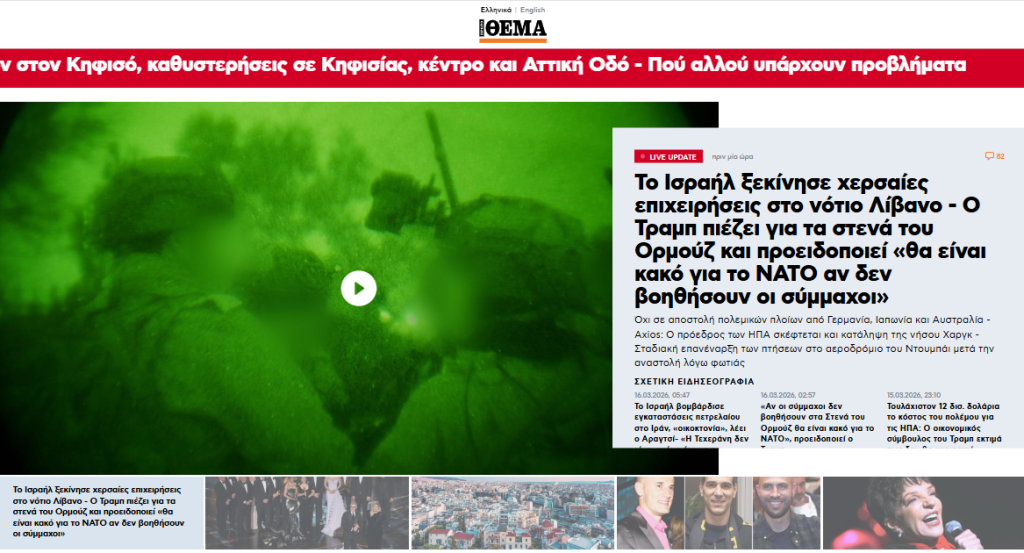
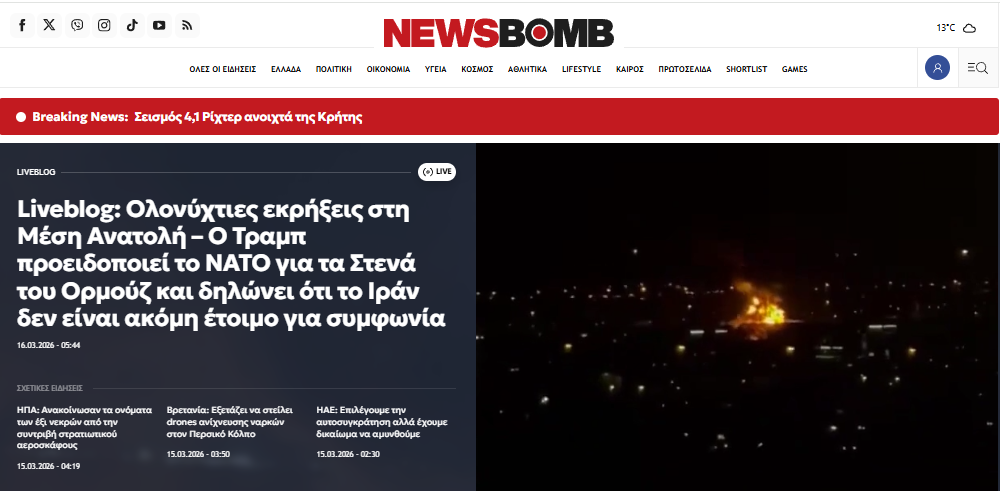
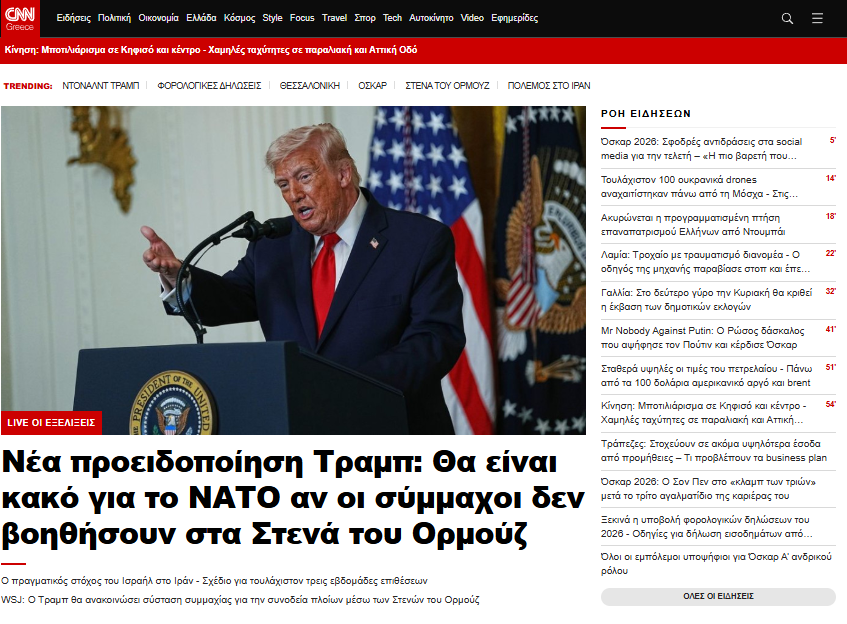
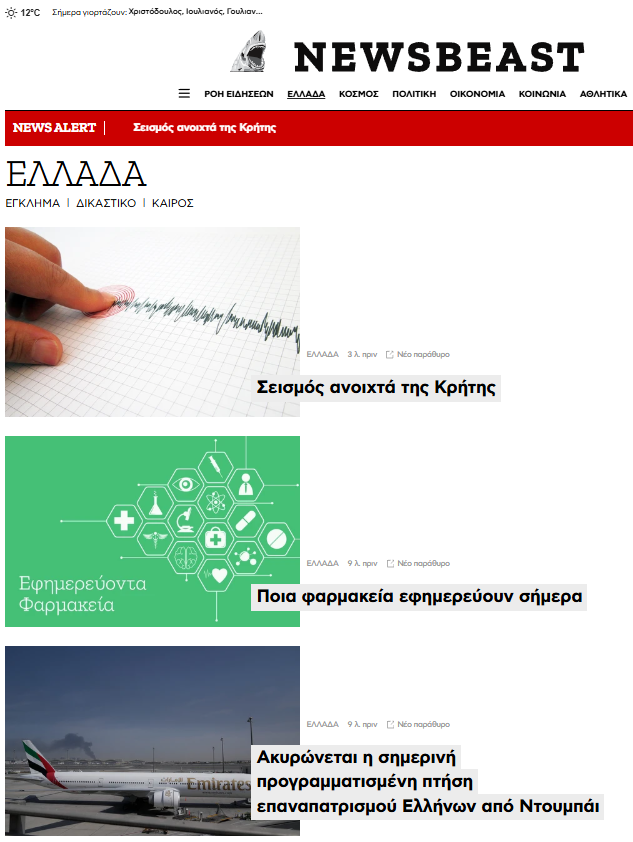

SUNDAY PAPERS
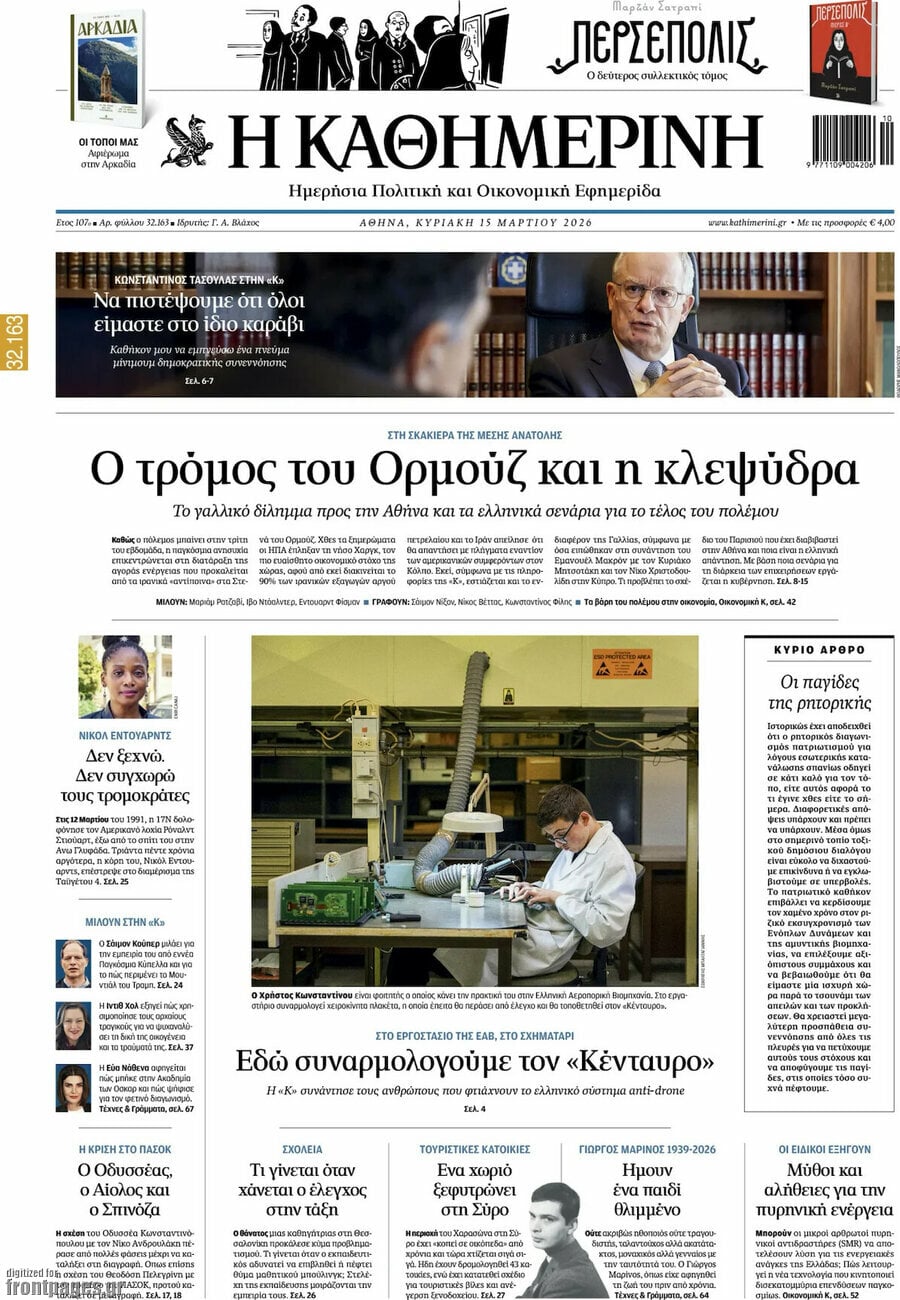
KATHIMERINI: The terror of Hormuz and the hourglass
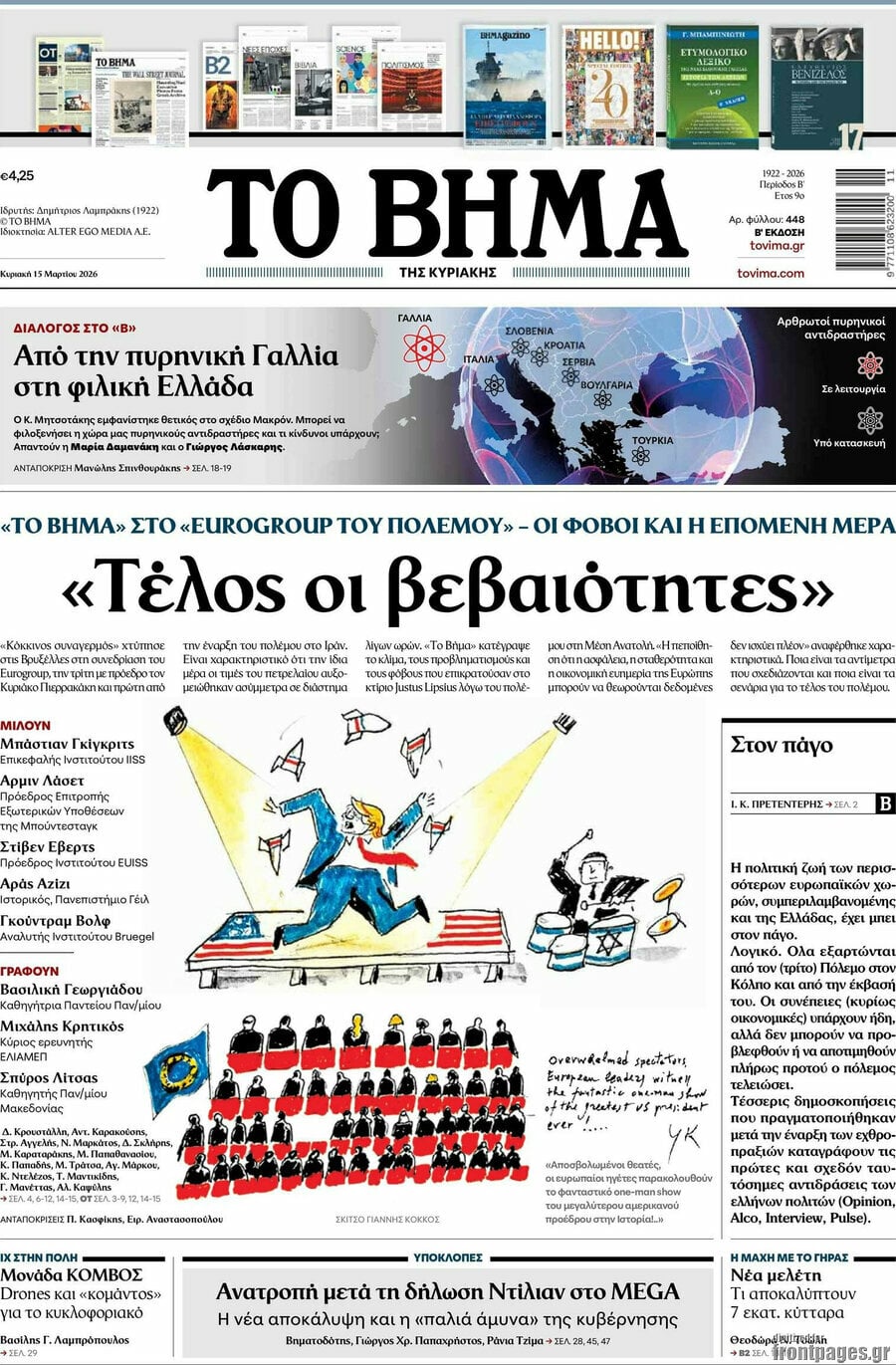
TO VIMA: “No more certainties”
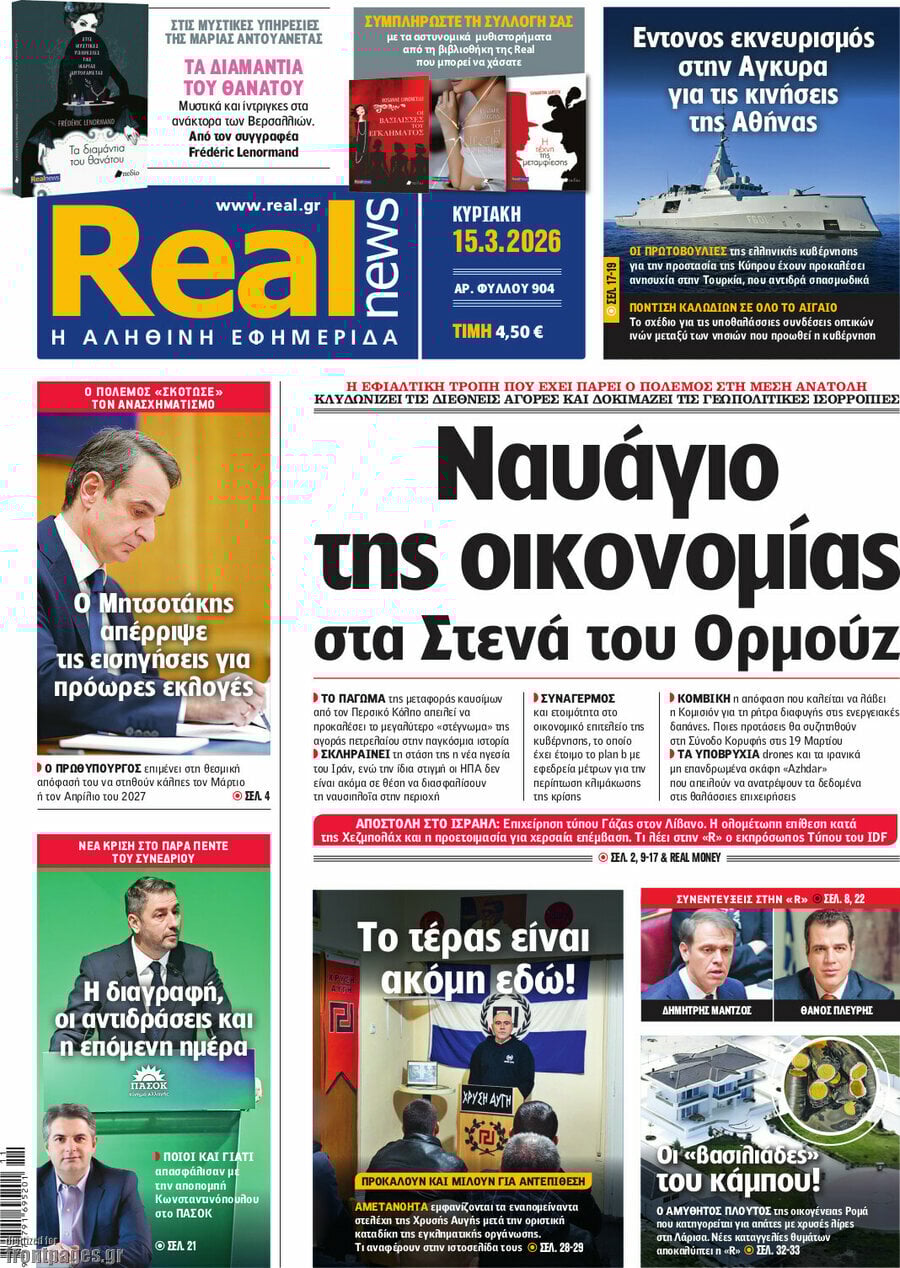
REAL NEWS: The economy “sank” in the Hormuz straits
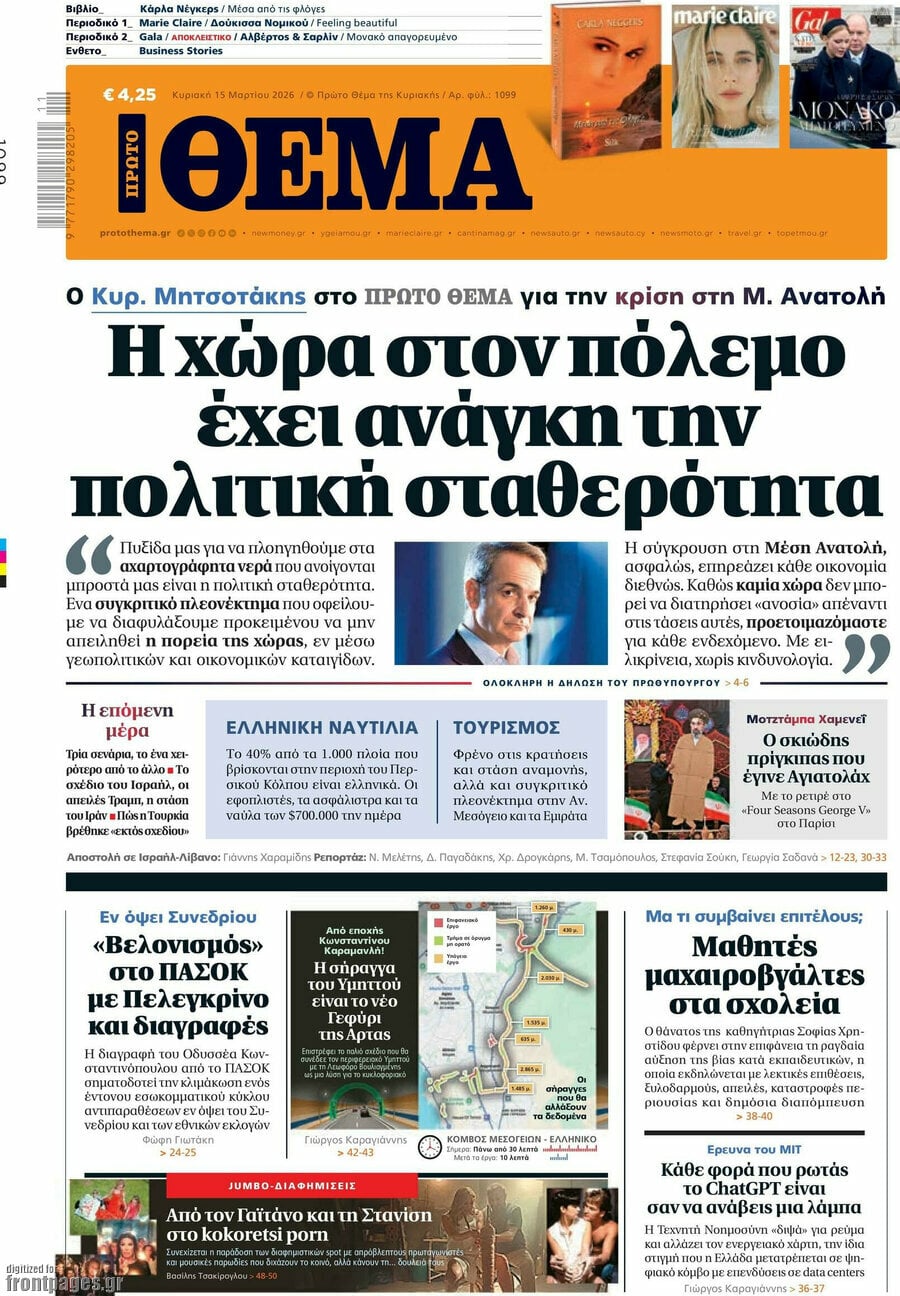
PROTO THEMA: PM on the Middle East crisis: “Greece needs political stability amid the war”
MONDAY PAPERS:
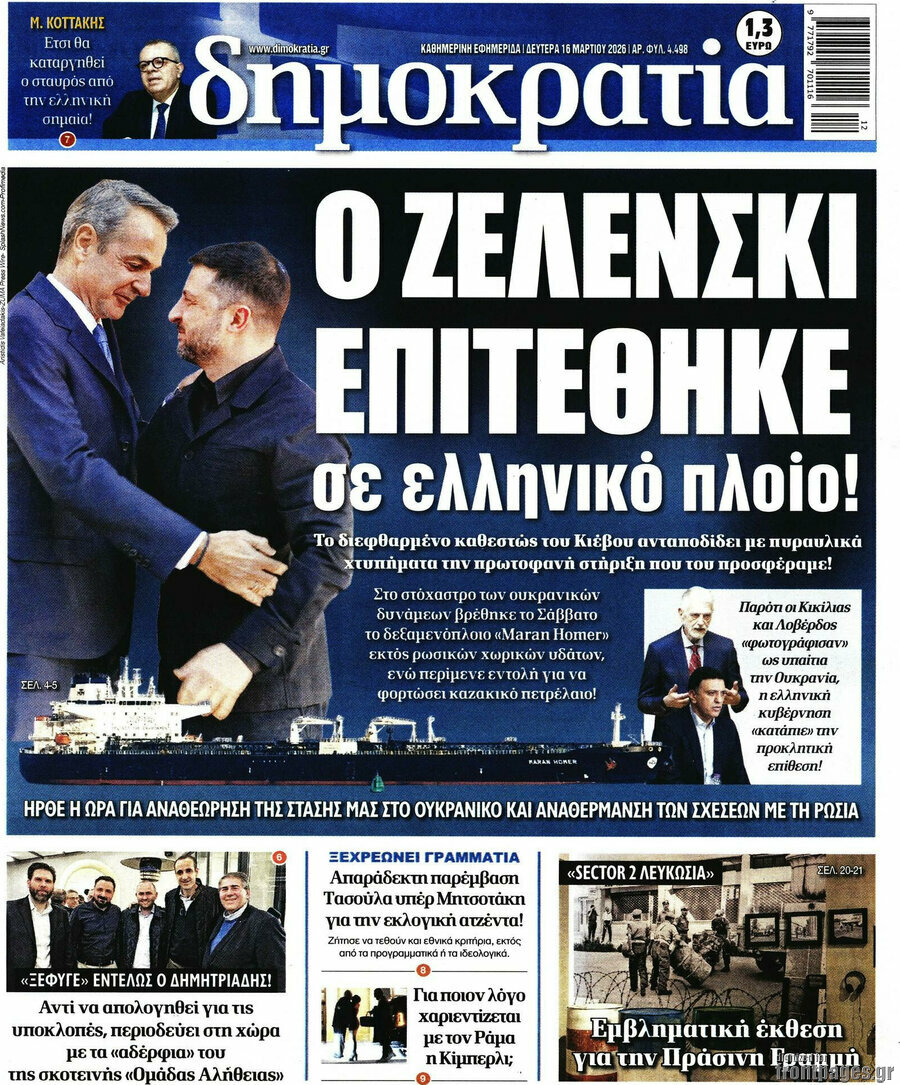
TA NEA: Underground spaces are being legalized
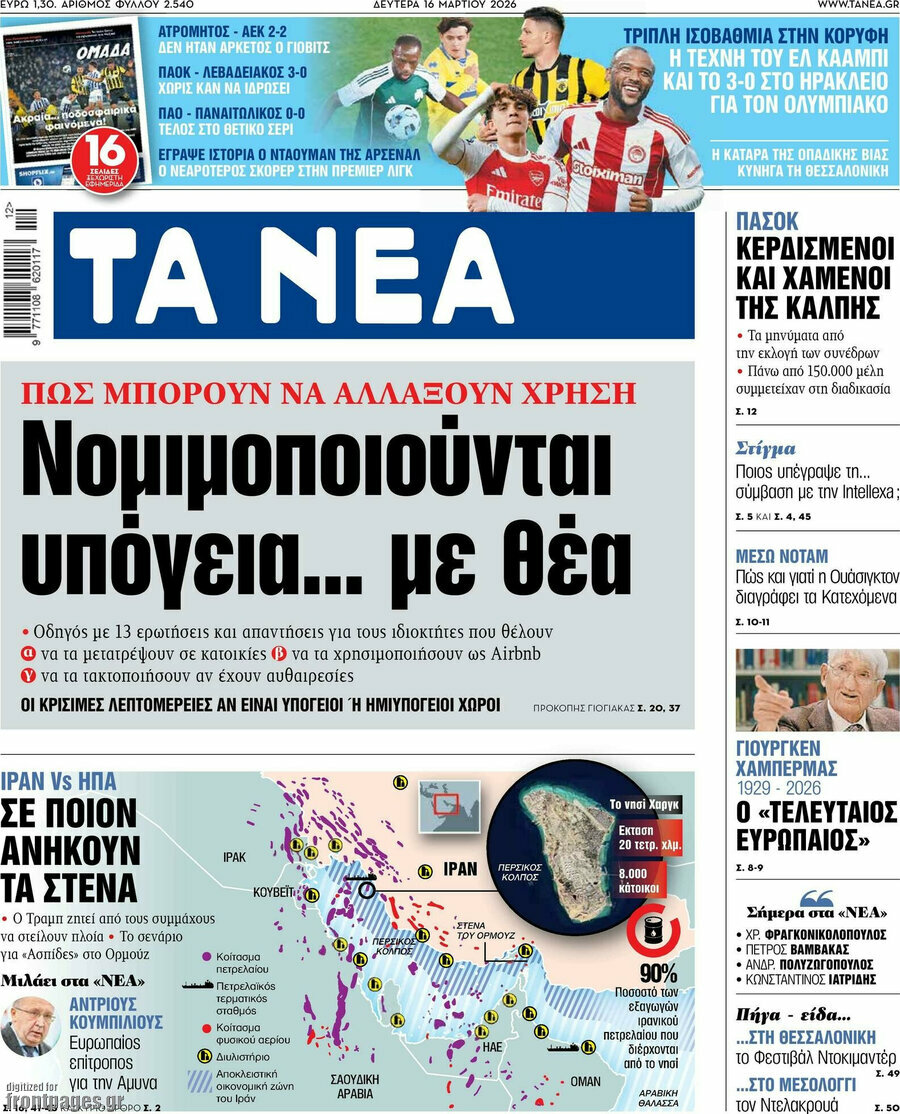
EFIMERIDA TON SYNTAKTON: The big heist regarding EU programs
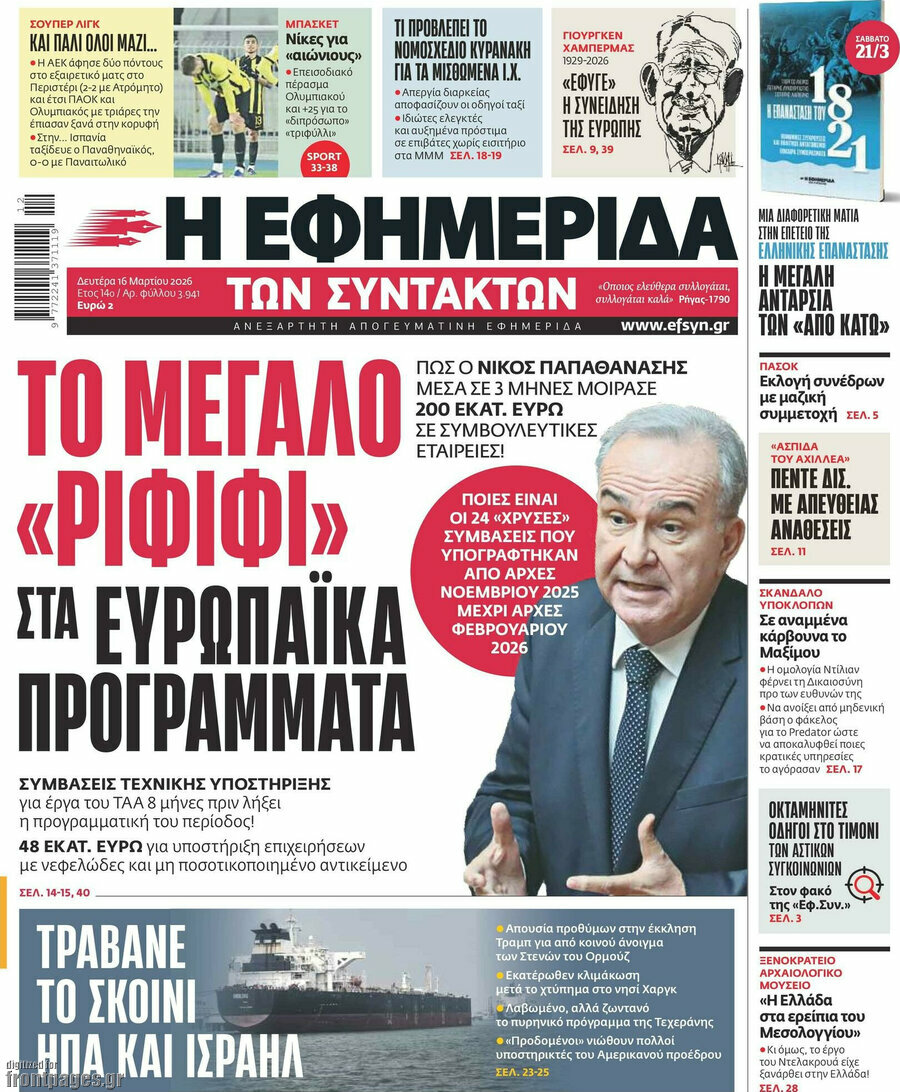
KONTRA NEWS: The EU enters the war
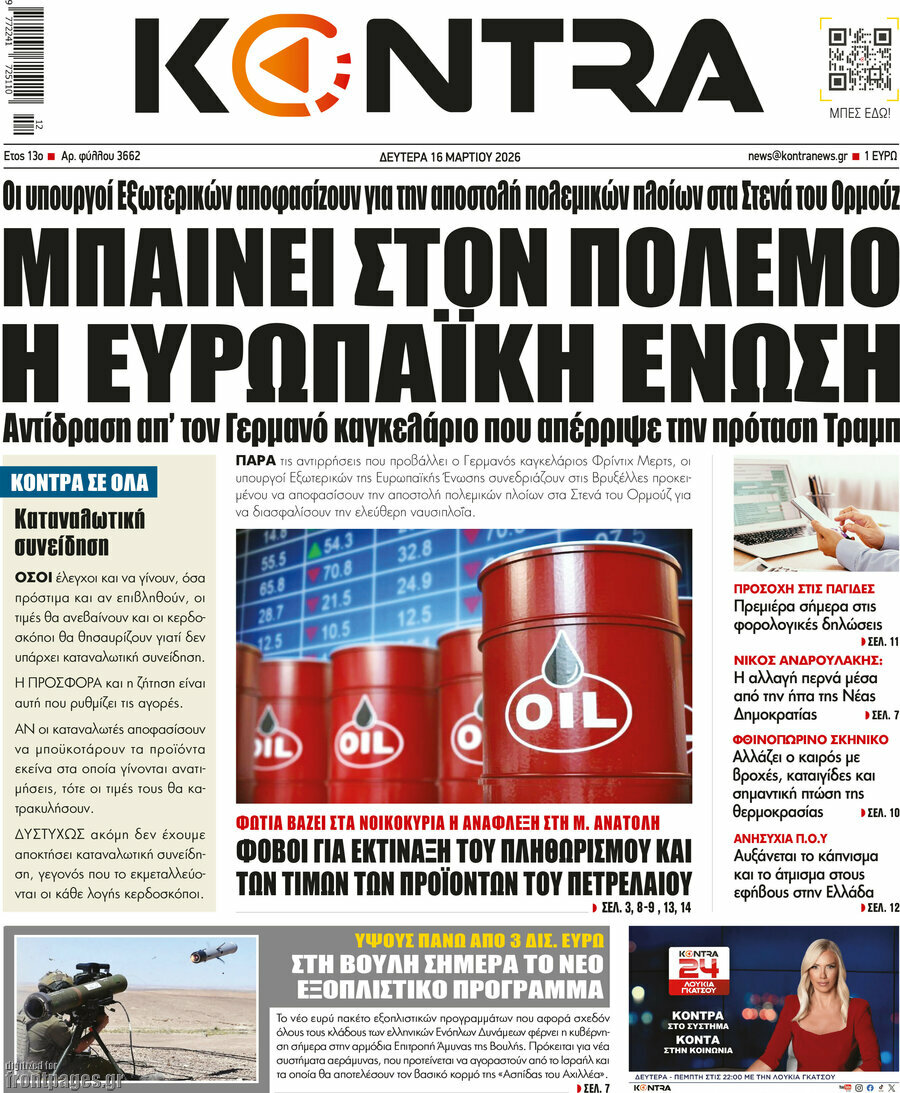
DIMOKRATIA: Zelenskyy attacked a Greek vessel!
NAFTEMPORIKI: Landmine worth 11 trillion threatens the world economy


DRIVING THE DAY
ALL EYES ON THE GULF: European diplomats and politicians are in Brussels today attempting to limit the impact of the war in the Middle East, which has already brought economic chaos and energy-supply uncertainty to the continent. Top of the agenda for foreign ministers is how to get ships flowing through the strategically vital Strait of Hormuz.
U.S. President Donald Trump told reporters on Air Force One last night that his administration has asked seven countries for assistance securing the waterway so oil and gas tankers can get through. He didn’t name them, but had earlier mentioned France and the U.K. as among those he hoped would send ships. Trump told the FT yesterday it would be “very bad for the future of NATO” if allies don’t respond to his call to reopen the strait.
Wrong place, hands tied: A senior EU diplomat said earlier this month that the EU has boosted its Operation Aspides maritime safety mission by two vessels, provided by Paris. But these ships aren’t located in the crucial area where ships most need protection — and they face restrictive rules of engagement under the terms of an operation launched in 2024 to shield international shipping from Houthi attacks.
Awkward request: “The mission is lacking capabilities to be able to have an active role in that region. In current circumstances … you probably need more assets,” said a senior EU diplomat granted anonymity to discuss non-public summit preparations. “I think it’s safe to assume that going forward … the European Union will be looking at ways to, at one point, see where we can contribute to guaranteeing freedom of navigation in the region.”
On the table: The conversation at today’s Foreign Affairs Council, hosted by top diplomat Kaja Kallas, will be about “trying to have more member states contribute further capacities to the operation,” said a high-ranking European External Action Service official. “It isn’t just about France … we’re also looking to other member states to provide that capacity too … whether that will be part of a different coalition or whether it’s part of Aspides.”
Nein von mir: But German Foreign Minister Johann Wadephul shot down that suggestion ahead of the meeting, saying Sunday that his country doesn’t want to play “an active part” in the conflict and that Aspides is “not effective.”
What they can agree on: Approving new economic restrictions on the Iranian regime … and discussing further sanctions geared at boosting freedom of navigation.
Worth the pain: U.S. Energy Secretary Chris Wright told NBC News Sunday that the war will likely go on for “a few more weeks,” but that soaring oil prices would settle after that. He argued the short-term disruption is worth it and that American consumers won’t feel the oil price spike as acutely as those in other countries. The Wall Street Journal reported last night that top U.S. oil executives have warned the White House prices will keep rising if the Strait of Hormuz isn’t reopened.
The EU’s Energy Commissioner Dan Jørgensen — who also hosts ministers in town today for an Energy Council — told Playbook that Europe is again facing “challenging times” and that the Commission is working “on targeted and temporary measures to bring relief to those in need.” No word yet on what those measures could include … but countries are pushing for a short-term fix.
MORE ON THE FALLOUT: EU capitals are divided on whether the price shocks mean the bloc should go green faster, or slash its climate-saving policies … and your food could become more expensive as the war drags on, with higher energy and fertilizer prices having knock-on effects on transportation and food prices, Ketrin Jochecová reports.
FRIENDLY FIRE
BORRELL ATTACKS: The EU’s former top diplomat, Josep Borrell, has fired a broadside at the bloc’s current leadership — including his former boss Ursula von der Leyen and his successor, Kallas. The former high representative for foreign affairs told Playbook that Brussels had not done enough to stand up for international law in the wake of Trump’s military attacks on Iran — making Borrell the latest of von der Leyen’s Spanish socialist allies to turn on her.
“This war is illegal under international law,” Borrell blasted. “We are suffering the consequences in terms of energy prices, while Trump gloats that this is good for the U.S. because they are oil exporters.” The former commissioner said von der Leyen has “continued to overstep her functions” by increasing her involvement in the bloc’s foreign policy, echoing criticism of the Commission president from national capitals in recent days. “She is systematically biased in favour of the U.S. and Israel,” he said in a written statement.
Trading blows: Borrell called for the trade deal signed by von der Leyen and Trump to be suspended. “The deal was unfair from the beginning,” he said, and now looks even more one-sided against the backdrop of the U.S. National Security Strategy, Trump’s threats against Greenland and Spain and the energy crisis from the war with Iran. “Plus, even the U.S. Supreme Court declared the tariffs unconstitutional, and I think the new 15 per cent surcharge is also not legally sound either.”
ABOUT THAT TRADE DEAL … Trump’s tariffs face another round of legal challenges that could complicate the situation further. And in case you were wondering if the president is still aggrieved about the Supreme Court ruling against his tariffs, this 488-word Truth Social post overnight should answer any questions.
WAR IN UKRAINE
CASH FOR KYIV: Today’s Foreign Affairs Council is also a key test of whether the EU can convince Hungary and Slovakia to back down from threats to veto a much-needed €90 billion loan to Ukraine. Diplomats are hoping a deal can be agreed at Thursday’s European Council summit of presidents and prime ministers. Lithuanian Foreign Minister Kęstutis Budrys told Playbook the situation is “intolerable” and merits a discussion of veto rights.
“I expect there will be pressure around the table on Hungary and we will be very open and straightforward that the Hungarian veto is not something that we should just live with. We have to put pressure [on Hungary] to review their veto,” Budrys said. At the same time, he said, “we are not looking for the alternative solutions” — because there’s no alternative to finding agreement among member countries, even if decisions have to be taken by qualified majority vote.
ET TU, BART? Meanwhile, Belgium’s government is split after Prime Minister Bart de Wever suggested Europe should negotiate an end to the war in Ukraine as part of a return to Russian oil and gas — a line more commonly associated with the likes of Hungarian Prime Minister Viktor Orbán. “We must normalize relations with Russia and regain access to cheap energy. It is common sense,” De Wever told L’Echo.
He went there: “In private, European leaders agree with me, but no one dares to say it out loud. We must end the conflict in the interest of Europe, without being naïve towards Putin,” De Wever said.
His own foreign minister, Maxime Prévot, moved to quickly shut down the suggestion. “The door to dialogue must remain open,” he said, “but normalization with Russia is not for tomorrow.”
EUROPEAN SECURITY
SECURITY STRATEGY: Also in focus at the FAC is the planned European Security Strategy. Kallas will be presiding over a breakfast devoted to collecting EU countries’ views on threats facing the bloc, which will be folded into the final document.
What is it? Announced by von der Leyen in January, the Security Strategy is meant to provide a snapshot of the EU’s key security priorities and its threat assessment. A senior EU diplomat said the hope was that it would be a “snappy, readable document” comparable to the National Security Strategy published by the Trump administration. Others are questioning the value of the EU version.
Skepticism: The senior diplomat conceded that the EU had produced “a lot of paper already in the last year.” But this strategy may have a purpose: “I do think it doesn’t harm if we have an overarching strategy that combines all the things that we’ve already done,” the diplomat said.
MATTER OF TRUST: With trade wars and real wars looming large, POLITICO has surveyed a total of over 8,000 people from key American allies Canada, France, Germany and the U.K. The poll found a majority believe it’s better to depend on China than on the U.S. under Trump.
There are other options: India’s Foreign Minister Subrahmanyam Jaishankar, in Brussels today, told Playbook’s Nick Vinocur he’s “bullish” about the future of India’s ties with the EU. The minister said he wants the relationship to change dramatically as both sides seek “mutual de-risking” amid increasing wars and trade conflict around the world. He will hold meetings with Kallas, von der Leyen and European Council President António Costa while he’s in town.
Defense love-in: Jaishanker emphasized India’s interest in deeper defense ties, with New Delhi seeking an agreement on “security of information,” which the minister said would allow India to “forge deeper defense industry linkages.” That would involve ammunition, tech transfer on plane construction and “drone and counter-drone technology, with the nature of warfare itself changing.”
IN OTHER NEWS
POSTCARD FROM BUDAPEST: Hungary’s March 15 national day became a fierce numbers contest, with both Prime Minister Viktor Orbán and opposition leader Péter Magyar claiming to have attracted larger crowds to their respective rallies, Max Griera reports.
Disputed: Orbán’s “peace march” drew 180,000 people, compared to the opposition’s 150,000, according to the government tourism agency (controlled by Fidesz). Its estimate was based on the number of cell phones connected to antennas near the rally. People close to Tisza estimated for POLITICO that the party had mobilized 350,000 attendees.
“We will not be a Ukrainian colony,” was the pro-government protest slogan, as Orbán’s Fidesz sought to gain voters by raising the specter of Hungary being drawn into the war. Foreign Minister Péter Szijjártó took the stage to claim Brussels, Kyiv and Berlin “want to bring Europe to war.”
Post-election targets: Magyar is putting together a team of business leaders in an attempt to dismantle a network of companies and state institutions loyal to Orbán, should the opposition leader win next month’s election.
COUNCIL CONCERNS: Thursday’s European Council summit was supposed to find ways to crisis-proof the bloc. Instead, it has been derailed by yet another global crisis, Nicholas Vinocur explains.
INCUMBENCY FACTOR: Pedro Sánchez’s Socialist Party defied the polls to secure a good second-place finish in the Castilla y León regional election after the Spanish PM’s strong opposition to the Iran war, Aitor Hernández-Morales reports.
POLEXIT? Polish Prime Minister Donald Tusk said on Sunday that his country leaving the EU is now a “real threat” and accused nationalist President Karol Nawrocki and right-wing opposition parties of steering the country toward leaving the bloc.