
Nationwide disruption continues as farmers reinforce roadblocks
Nationwide farmers’ protests continue across Greece, with roadblocks on national highways and major roads. The Panhellenic Blockade Committee is expected to meet this week to coordinate actions nationwide and decide on an escalation strategy. Farmers are demanding the immediate payment of all outstanding subsidies and compensations, the establishment of minimum guaranteed prices that reflect real production costs, and a substantial reduction in production expenses – including tax-free diesel at the pump and a cap of 7 cents per kilowatt-hour for agricultural electricity. They are also calling for a complete overhaul of ELGA’s regulations to ensure 100% compensation for production and capital losses from all risks.
Greece-US cooperation reshaping Europe’s energy future, minister says
Minister of Environment and Energy Stavros Papastavrou has told Fox News that his recent meetings in the United States underscored strong US-Greece cooperation and the central role Greece is poised to play in Europe’s energy transition. Interviewed on the Fox News Weekend Show, Papastavrou said the two countries “are reshaping Europe’s energy future through close and decisive cooperation,” citing leadership from President Donald Trump’s administration and Prime Minister Kyriakos Mitsotakis.
Turkish FM says yes to a High-Level Cooperation Council meeting
The Greece-Turkey High-Level Cooperation Council will take place soon, Turkish Foreign Minister Hakan Fidan has told Kathimerini, responding to Prime Minister Kyriakos Mitsotakis’ statement Friday that conditions are “mature” for a meeting to take place. Fidan told Kathimerini correspondent Manolis Kostidis Saturday that Turkish President Recep Tayyip Erdogan would be happy to host the Council and preside over it.
Tsipras’ return divides the Greek left
Former prime minister Alexis Tsipras’ fiery book presentation has exposed deep fractures within Greece’s fragmented center-left, complicating efforts to unite opposition forces against the ruling conservatives.
https://www.ekathimerini.com/politics/1288795/tsipras-return-divides-the-greek-left
ATHEX: Strong finish to the week for bourse
Greek stocks continued to edge upward on Friday, with the benchmark at Athinon Avenue regaining the 2,100-point level and ending the week with respectable growth. Observers discern a window-dressing effort as the year draws to a close, with a number of stocks edging upward regardless of political or economic developments in other countries. As the local bourse prepares to enter the new year it will formally revert to the family of developed markets.
https://www.ekathimerini.com/economy/1288945/athex-strong-finish-to-the-week-for-bourse


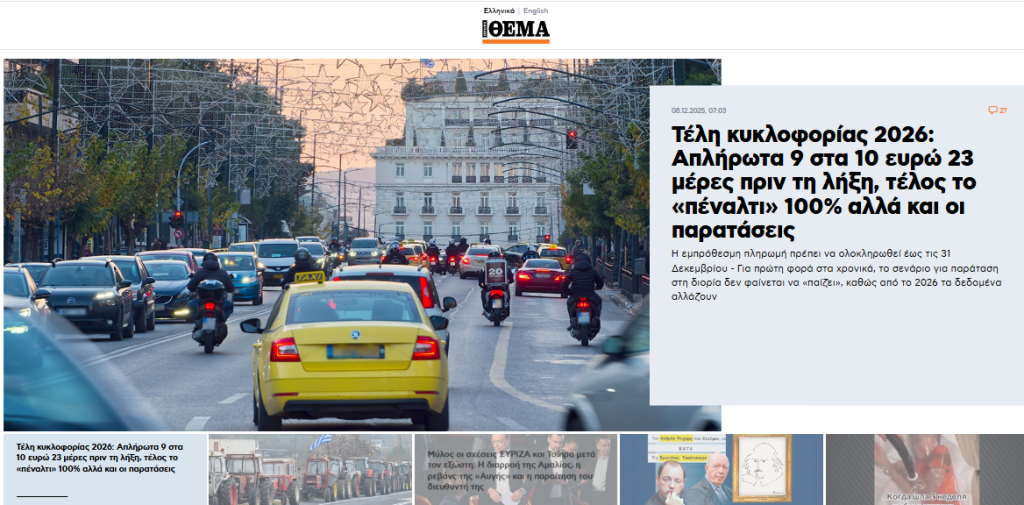
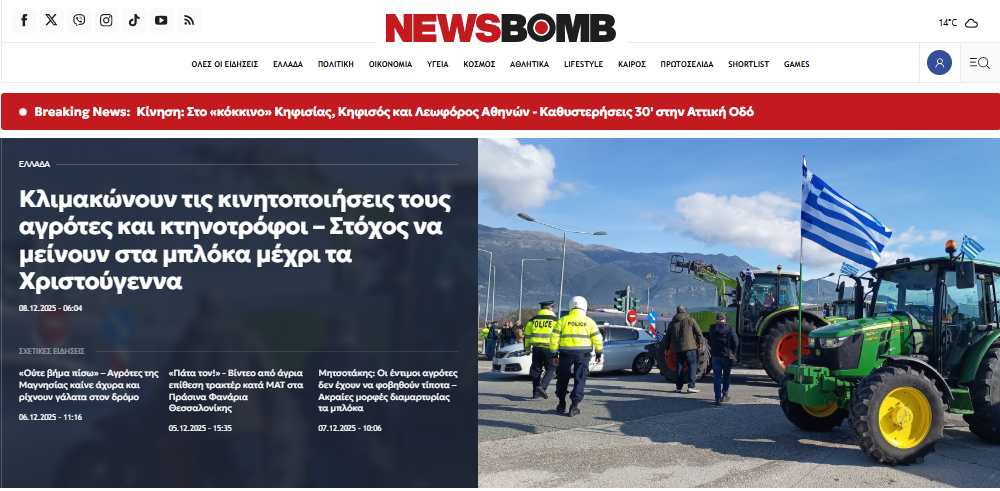
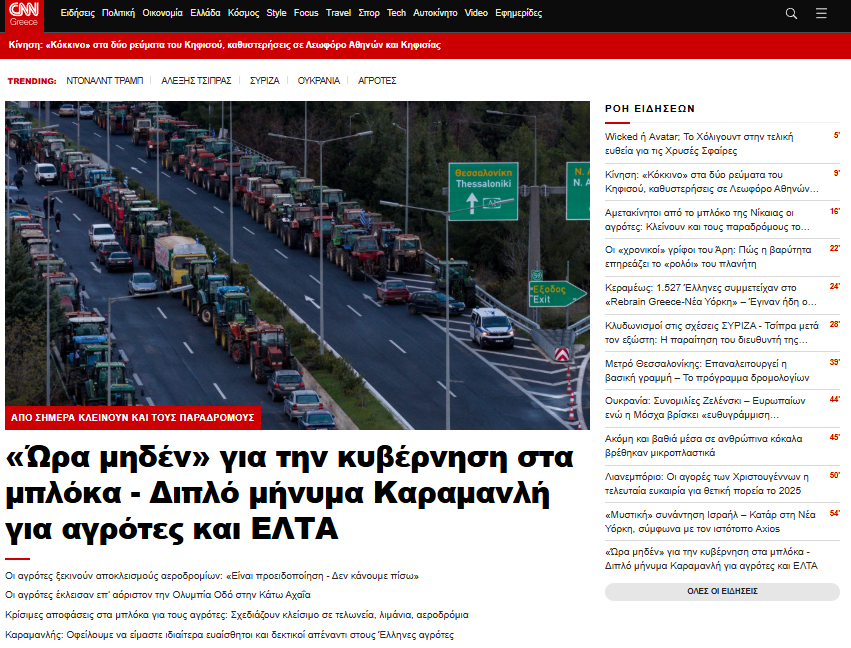


SUNDAY PAPERS
KATHIMERINI: Where did subsidies worth 180 bln end up
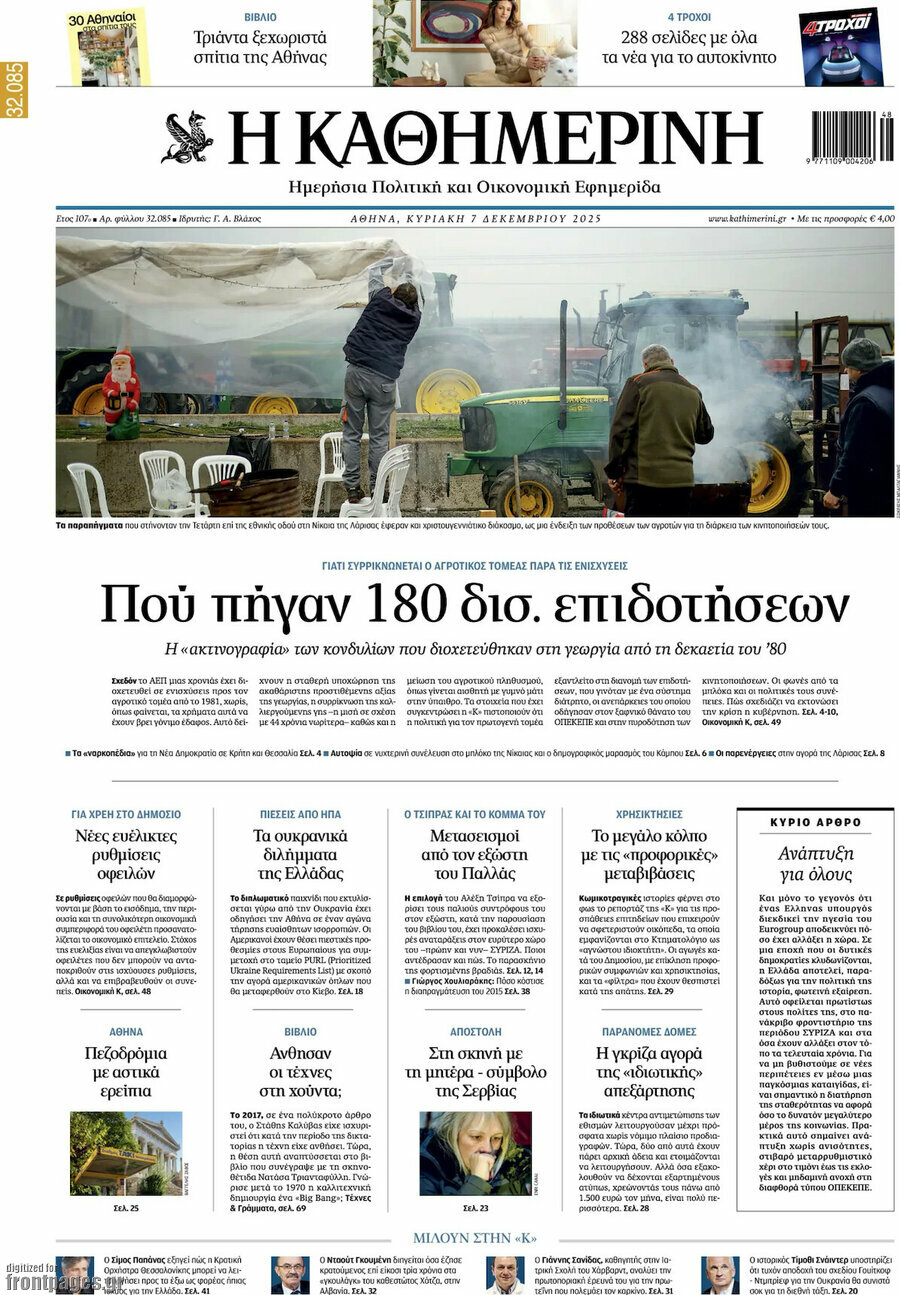
TO VIMA: Mitsotakis rejects the idea of toying with Greece’s foreign policy alignment
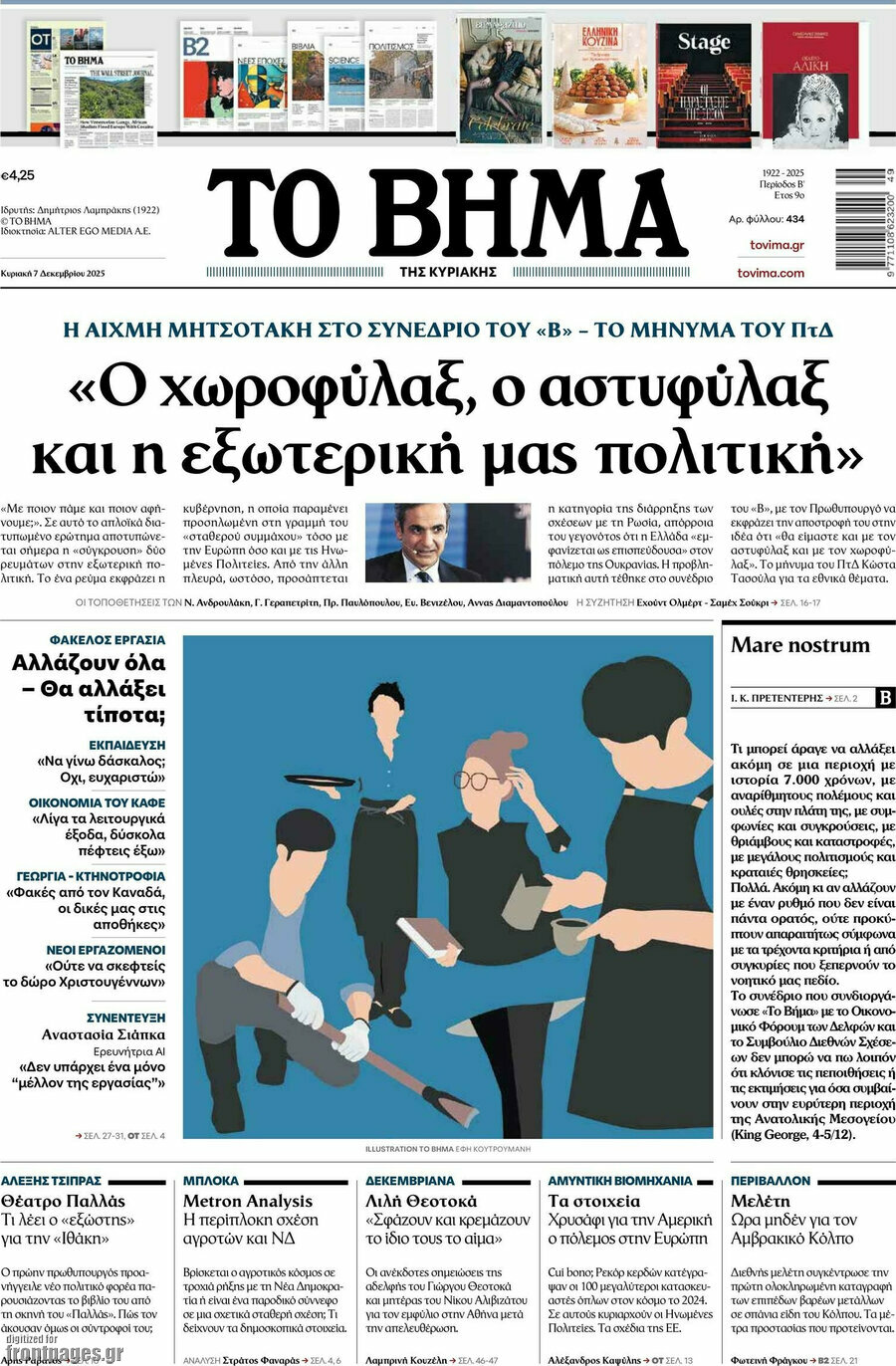
REAL NEWS: Program for the upgrade of old properties: How “closed” apartments will return to the market
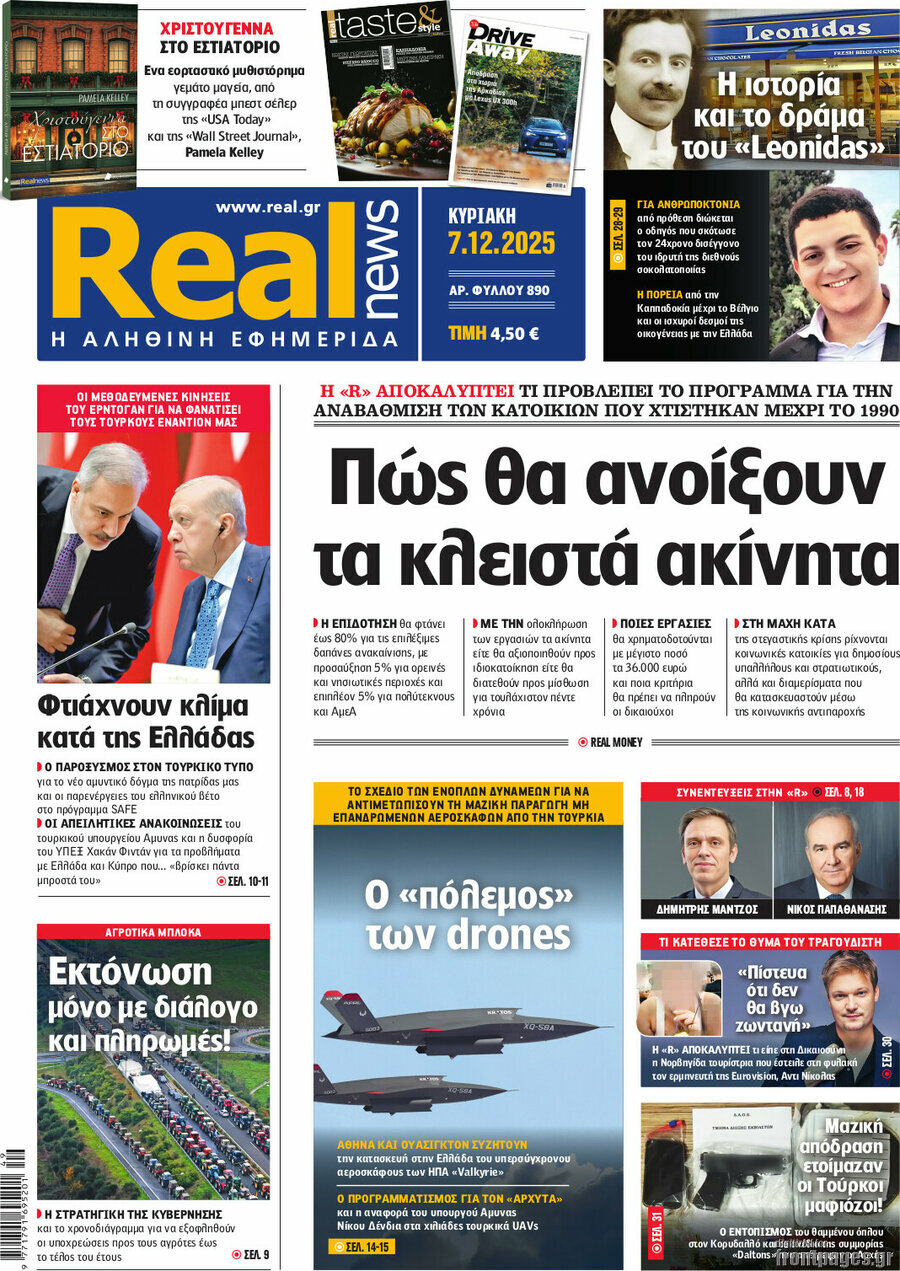
PROTO THEMA: “Mitsotakis” package for housing needs

MONDAY PAPERS:
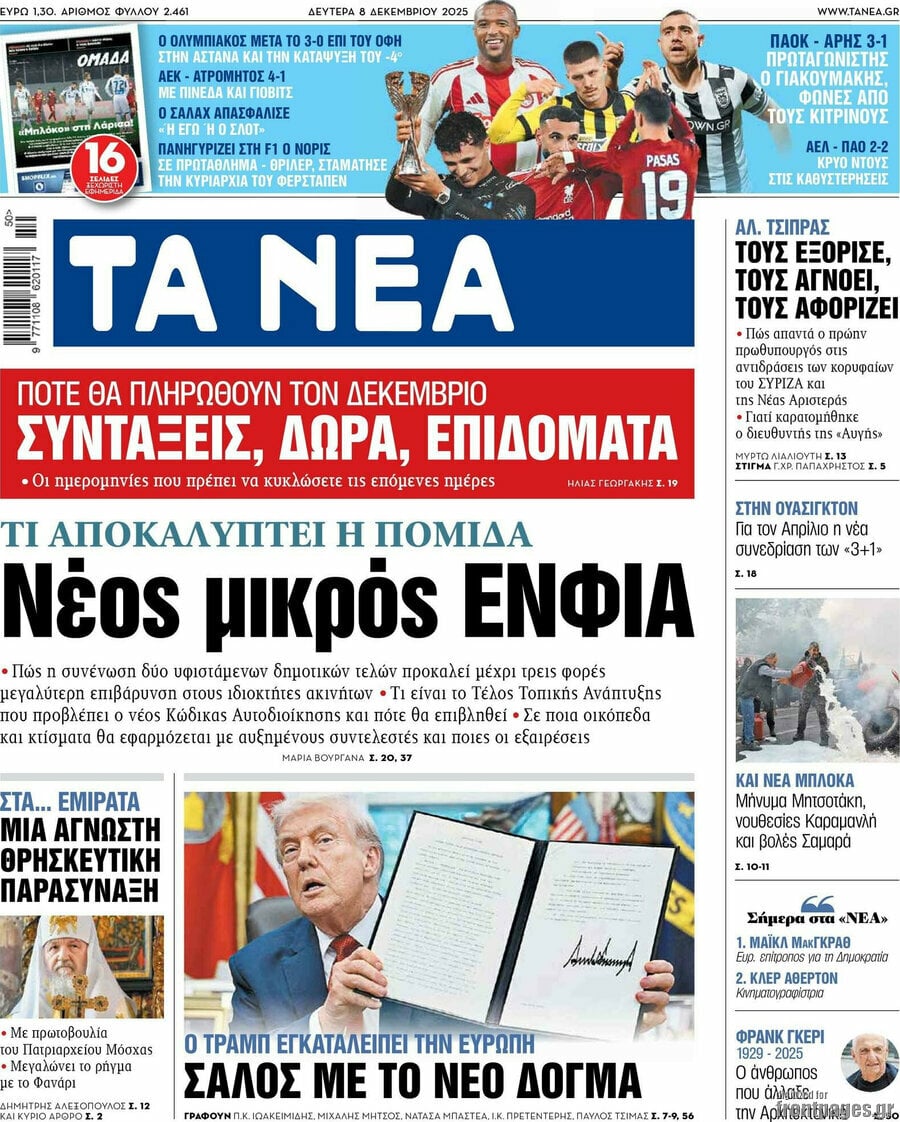
TA NEA: New, small levy for real estate assets
EFIMERIDA TON SYNTAKTON: The single social security fund EFKA owes 10 billion euro to the Public Employment Service

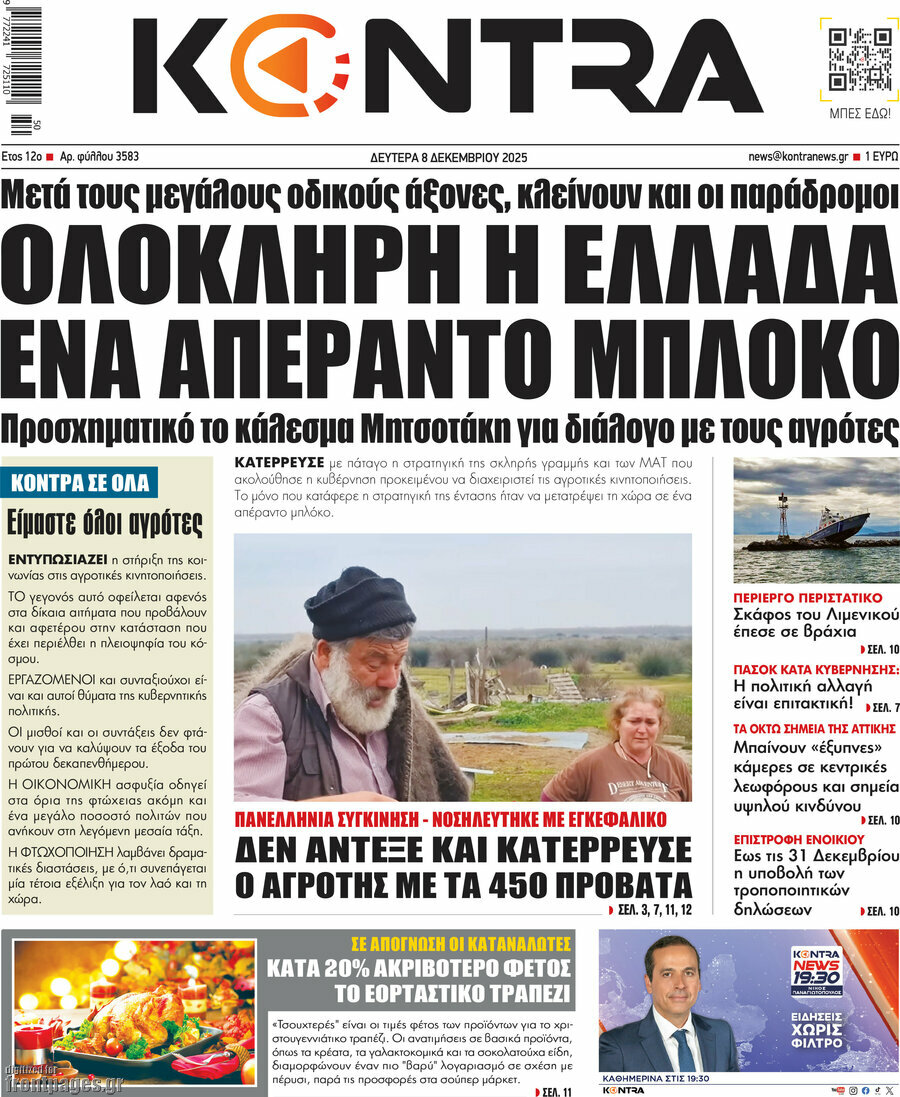
KONTRA NEWS: The whole of Greece has become an endless blockade
DIMOKRATIA: Double slap by former PMs Karamanlis and Samaras against Mitsotakis

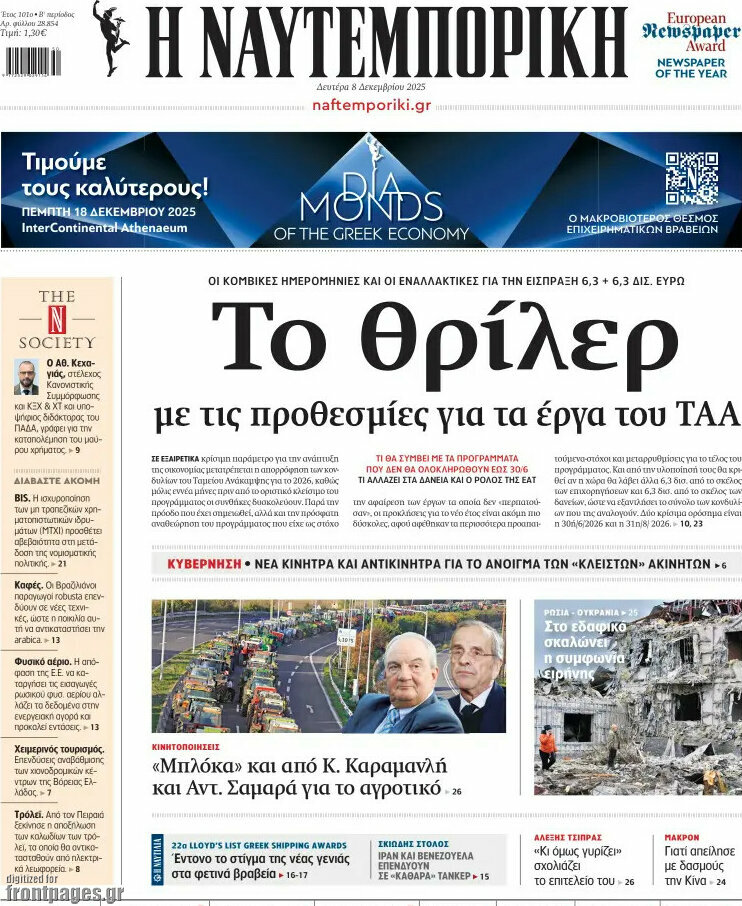
NAFTEMPORIKI: Thriller regarding the deadlines for the RRF projects

DRIVING THE DAY: BORDER FORCE
PARADIGM SHIFT: Ministers from all 27 EU member states are in Brussels this morning, ready to hammer out a deal on an unprecedented overhaul of the bloc’s migration policies. The idea is to reduce the number of irregular migrants and return those already here to their countries of origin.
Three key proposals are on the agenda for the Justice and Home Affairs Council: a list of countries deemed safe from which most asylum applications would be swiftly rejected; a “safe third country” concept allowing for the creation of asylum processing centers abroad; and a return regulation that gives capitals new powers to repatriate unsuccessful applicants through a system of detentions, entry bans and return hubs.
A new “solidarity pool,” whereby countries accept their share of migrants or pay into a relocation scheme (unless exempted), is also expected to be agreed.
Targeting smugglers: “We have a very high influx of irregular migrants, and our European countries are under pressure,” said Rasmus Stoklund, Danish minister for immigration and integration, who has overseen the new policies during his country’s presidency of the Council of the EU. “Thousands are drowning in the Mediterranean Sea or are abused along the migratory routes, while human smugglers earn fortunes.”
Stoklund told Playbook the new rules “will allow member states to make agreements with safe countries outside the EU on asylum processing,” preventing people from absconding or working illegally while waiting for a decision. The “first ever” list of safe countries of origin, meanwhile, “will help to create faster and more efficient asylum procedures and return of those without a need for protection.”
The Commission is also on board with the proposals, which have been years in the making, and now wants capitals and MEPs to support them. Migration Commissioner Magnus Brunner told POLITICO that the bloc has reached “a turning point of the European migration and asylum reform … These are all measures that will help process claims more effectively and reduce pressure on asylum systems. And they all send the same signal — Europe will not tolerate any abuse of its systems.”
Meeting expectations: “The Commission has delivered with speed. We are now supporting the Council and the Parliament to do the same. Because that is what Europeans expect.”
Easier said than done: A handful of countries, including Spain, are hesitant about the new measures, meaning tough talks will have to be held. And, in contrast, Slovakia on Sunday said it would vote against the measures in the EU Migration Pact because it doesn’t want to be on the hook to accept migrants through the scheme. However, negotiators are hopeful the measures will go through regardless.
Tooling up: “A deal … would be a significant step forward and make it easier for governments to be in a position to deliver on other important topics such as European defense, competitiveness and economic growth,” said one EU diplomat, granted anonymity to speak frankly. “It will add a whole new set of tools to address the migration challenge. It’s a turning point.”
EUROPEAN SOVEREIGNTY
A NEW TRANSATLANTIC CRISIS: Attacks from U.S. President Donald Trump’s administration are raining down on Brussels thick and fast. First, there’s been the unveiling of a strategy to take on “civilizational erasure,” supposedly happening in Europe, that was welcomed by the Kremlin … then the furious verbal pummeling in response to the EU’s latest fine against American social media platform X.
Rising tension: U.S. Ambassador to the EU Andrew Puzder said over the weekend that the $140 million penalty against Elon Musk’s X for breaching the Digital Services Act (DSA) was “regulatory overreach targeting American innovation.” It comes as the Commission dispatches a team to Washington for three days of talks to try to ease tensions over regulatory hurdles and steel, smoothing the passage of their planned trade deal.
Open wound: “The issue on the table is European sovereignty,” Italian center-left MEP Brando Benifei told Playbook. “The American discourse is hitting on an open wound because the EU is still fragmented, still weak, and they know they can threaten us on the DSA,” added the lawmaker, who is the chair of the Parliament’s delegation for relations with the U.S.
Divided continent: “We are still a contradictory union and don’t have the necessary political and institutional unity when confronted with a world like this,” Benifei said.
EU response: On Saturday, the EU’s top diplomat, Kaja Kallas, struck an unusually compromising tone, refusing to condemn the American interventions and agreeing “we should be more self-confident.” Commission President Ursula von der Leyen is yet to respond publicly to the attacks, but will sit down with POLITICO Europe’s Executive Editor Carrie Budoff Brown for the headline interview at our P28 Gala in Brussels on Thursday. Watch this space …
Lashing out: Musk isn’t happy about the penalty and quickly suspended the Commission’s advertising account on his X platform, which is required to format certain types of posts even if not used for paid promotion. The Tesla boss spent the weekend questioning whether Europeans face a “genocide” as a result of migration, comparing the EU to Nazi Germany and calling for it to be “abolished” — a message that won support from the Russian regime.
Passing the popcorn: Hungarian Prime Minister Viktor Orbán has used the transatlantic clash to renew his tirades against “unelected [Brussels] bureaucrats deciding what we can read or say.” Meanwhile, the co-head of the Greens in the European Parliament, Bas Eickhout, told my colleague Max Griera that the Commission isn’t going far enough and needs to argue that Europeans are “ proud of our policies … we are the only ones fighting American Big Tech.”
Sovereign shopping: Meanwhile, another uphill battle on sovereignty lies ahead. The EU’s “buy European” plans, designed to limit the bloc’s reliance on foreign products, faces pushback from nine separate countries that fear it may mark the start of a protectionist push, Pieter Haeck and Aude van den Hove report.
Who’s in charge anyway? A tiny group of advisers runs Trump’s increasingly combative foreign policy, according to this must-read look inside the room by Diana Nerozzi and Eli Stokols in Washington.
TRADE TALKS
MERCOSUR MUDDLE: A last-minute effort to get the EU’s flagship trade deal with South America over the line is underway, amid worries the agreement may not be ready to be signed before the end of the year as planned.
Last-minute footnote: Brazil, which holds the presidency of Mercosur, is seeking to get its fellow bloc members on board with an extra note, in which they would commit to respect extra safeguards designed to prevent their agricultural exports harming European farmers, four people familiar with the letter told POLITICO’s Camille Gijs and Hans von der Burchard.
Intended to reassure skeptics like France and Poland, the Commission presented additional safeguards in early October, which still need to go through the EU’s approval process. The additional letter has been in the works for over a month and comes in case the EU doesn’t manage to approve the safeguards in time for the signature ceremony, penciled in on Dec. 20, a Mercosur diplomat said.
MEPs will get their say on that part of the deal, with the Parliament’s trade committee gearing up for a fraught vote. However, even if lawmakers back the safeguards plan, the version of the text they are agreeing to is significantly different from the one developed by member states. This paves the way for another round of tough negotiations with the Council before capitals give von der Leyen the green light to fly to Brazil and sign the pact.
The Parliament wants stricter conditions for activating safeguard measures in the trade deal, according to compromise amendments obtained by my colleague Max Griera, halving the thresholds that would trigger Commission investigations into surging imports from Mercosur countries. POLITICO has covered the ins and outs of recent developments.
RUSSIAN ASSETS
HURRY UP AND FIND A DEAL: A group of seven leaders has written to von der Leyen and Council President António Costa, piling pressure on the two leaders to negotiate a solution to the saga over whether to use Russia’s frozen assets to underwrite a much-needed loan for Ukraine. The document, obtained by Playbook’s Nick Vinocur, is signed by Estonia, Finland, Ireland, Latvia, Lithuania, Poland and Sweden.
“Time is of the essence,” the letter says. “By reaching a decision on the reparations loan at the European Council in December we have the opportunity of putting Ukraine in a stronger position to defend itself and a better position to negotiate a just and lasting peace.”
Next up: The leaders of the E3 group — British Prime Minister Keir Starmer, German Chancellor Friedrich Merz and French President Emmanuel Macron — will meet with Ukrainian President Volodymyr Zelenskyy in London today about the future of support for the country.
ABOUT THAT DEAL: Von der Leyen and Merz have remained tight-lipped after their three-way dinner with Belgian Prime Minister Bart De Wever on Friday night, leaving the bubble to wonder whether they made any progress towards a solution.
If EU member countries agree to guarantee the funds in case of Russian litigation, they will need to put up billions of euros that could be made available at a moment’s notice, according to my colleague Bjarke Smith-Meyer, who obtained internal documents showing how much individual capitals will be expected to contribute.
WHILE YOU WERE SLEEPING: Donald Trump suggested Zelenskyy is holding up talks about the U.S.-backed peace proposal, telling reporters at a function in Washington: “I’m a little bit disappointed that President Zelenskyy hasn’t yet read the proposal, that was as of a few hours ago … Russia is, I believe, fine with it, but I’m not sure that Zelenskyy’s fine with it. His people love it. But he isn’t ready.” That was after Trump’s eldest son, Donald Jr., told a forum in Doha Sunday that the president may walk away from Ukraine if it doesn’t make peace with Russia.
IN OTHER NEWS
IN THE DOCK: Court hearings begin this Friday in the Qatargate cash-for-influence case, three years after Belgian investigators first carried out raids and arrests and just a week after a separate corruption case rocked the EU’s diplomatic service.
Why it matters: If the Belgian court rules that the investigation holds up, prosecutors could move to wrap up the probe, filing indictments, and — at long last — opening a trial. But if the judges find reported procedural flaws serious enough, the entire prosecution could be tossed out as inadmissible.
TIMES OF TROUBLE: Don’t Let Me Down by banning the use of terms like “burger” and “sausage” for vegetarian products, The Beatles’ Paul McCartney has urged the EU. The musician, whose wife Linda founded a company supplying meat-free alternatives, is among a group of British MPs and industry figures who have Come Together to fight the proposals.
EXCLUSIVE CLUB FOR BOYS: The European Central Bank (ECB) must have better representation of women in its top team, President Christine Lagarde told my colleagues Johanna Treeck and Carlo Boffa. Lagarde is one of just two women on the six-seat board, with the next round of vacancies opening up from May.
HUAWEI EMPLOYEE LOGS OUT: Chinese tech giant Huawei has begun an investigation after one of its staff allegedly obscured his lack of expertise to get onto an influential international Wi-Fi standards board, according to correspondence reported by Francesca Micheletti. The incident is the latest in a string that has seen Western security services probe the firm.