Athens seeks to be India’s EU gateway
Prime Minister Kyriakos Mitsotakis met with his Indian counterpart Narendra Modi in New Delhi on Thursday, underscoring the “mutual will” to strengthen and deepen the Greece-India strategic partnership, officials said.
Turkey says Greece-Chevron activity off Crete unlawful
Turkey said on Thursday it opposed Greece’s “unilateral activities” in hydrocarbon fields south of Crete with a consortium led by US oil major Chevron, opens new tab as a violation of international law and good neighborly relations.
Androulakis: PASOK is returning to its factory settings
“PASOK is returning to its factory settings: It is the party that opposes conservatism, the progressive pole, which is good for the quality of our democracy,” the main opposition party’s leader Nikos Androulakis, said on Thursday in an interview with radio station Real Fm.
Public debt reduced to 362.8 billion euros in 2025
Public debt stood at 362.8 billion euros at the end of 2025, down 2.15 billion euros compared to 364.95 billion euros at the end of 2024.
https://www.amna.gr/en/article/971819/Public-debt-reduced-to-3628-billion-euros-in-2025
ATHEX: Middle East worries see stocks decline
Greek stocks are proving more volatile than expected, as the prospect of a new flare-up in the Middle East, this time in Iran, has sent many markets tumbling. That meant that the major rise recorded on Wednesday at the local bourse was followed on Thursday by a selling spree for the vast majority of stocks. Some traders understandably rushed to act preemptively, given also that the local market will be closed on Monday, unlike the foreign ones.
https://www.ekathimerini.com/economy/1295854/athex-middle-east-worries-see-stocks-decline


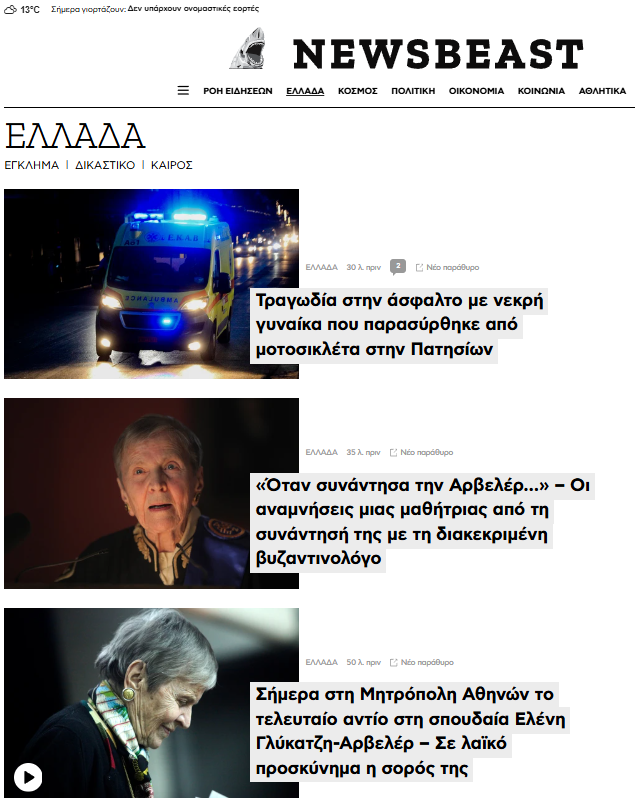

KATHIMERINI: Irregular migrants from Greece to be transferred in structures located in Africa
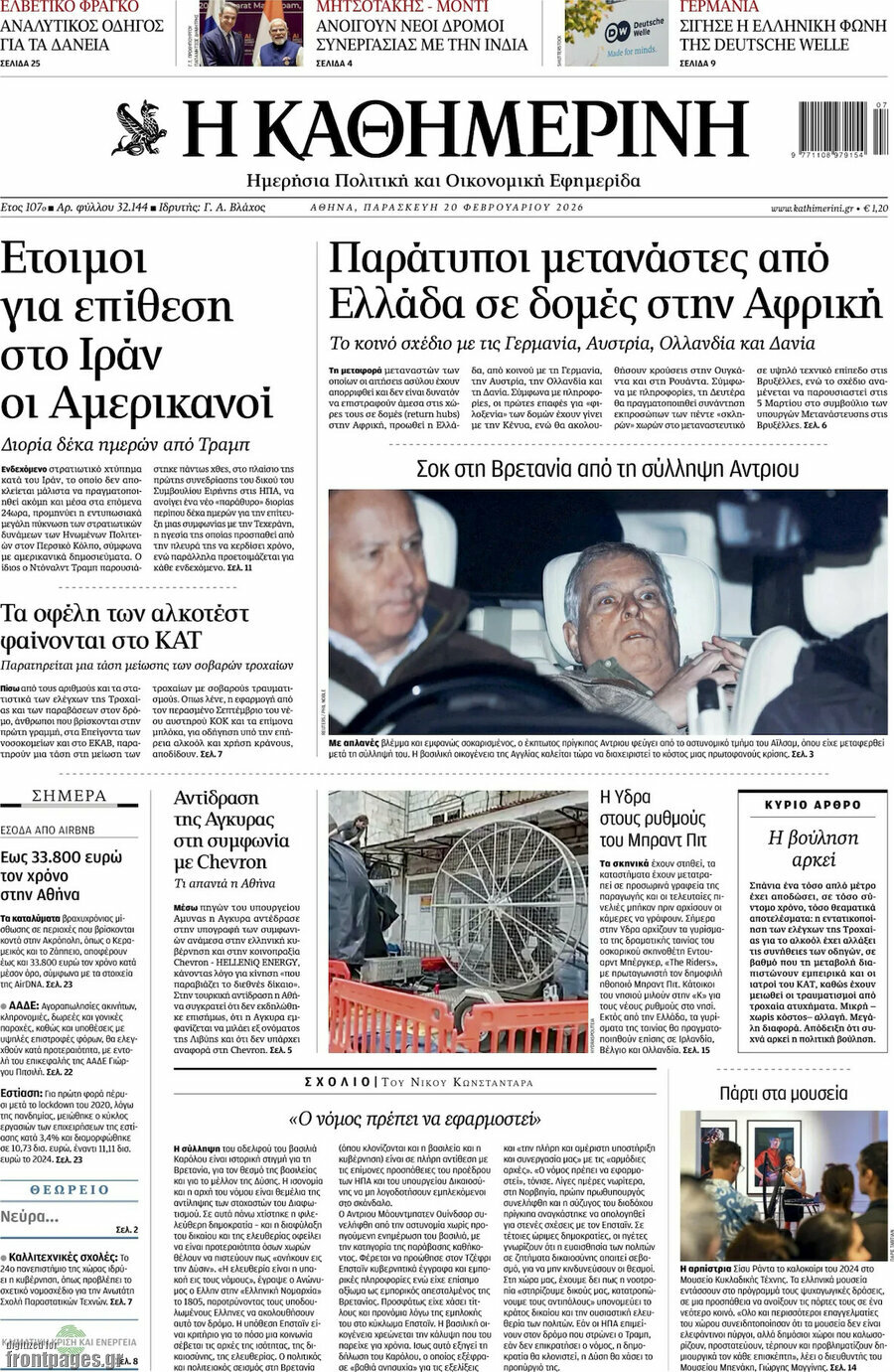
TA NEA: Micro-loans for public employees
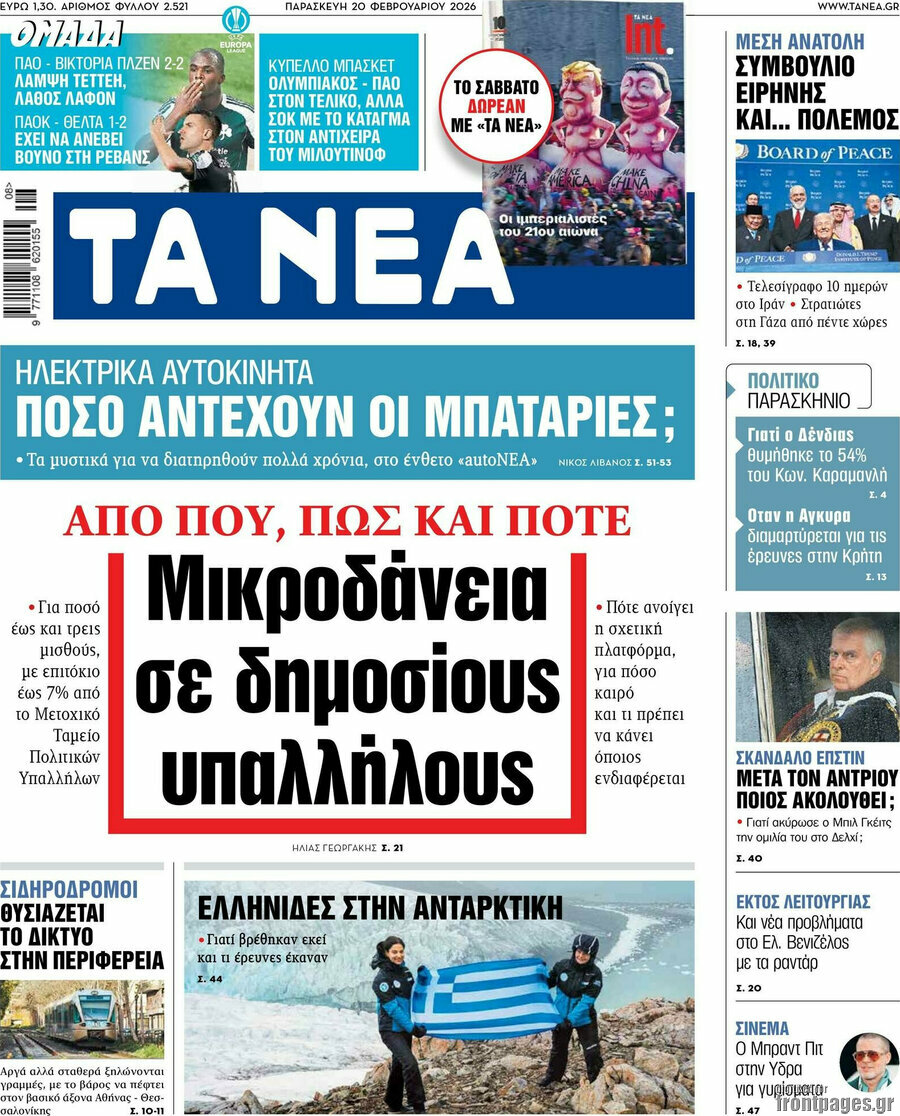
EFIMERIDA TON SYNTAKTON: Failure to drag to the surface the sunk vessel: They “lost” the valuable evidence of the deadly incident involving refugees
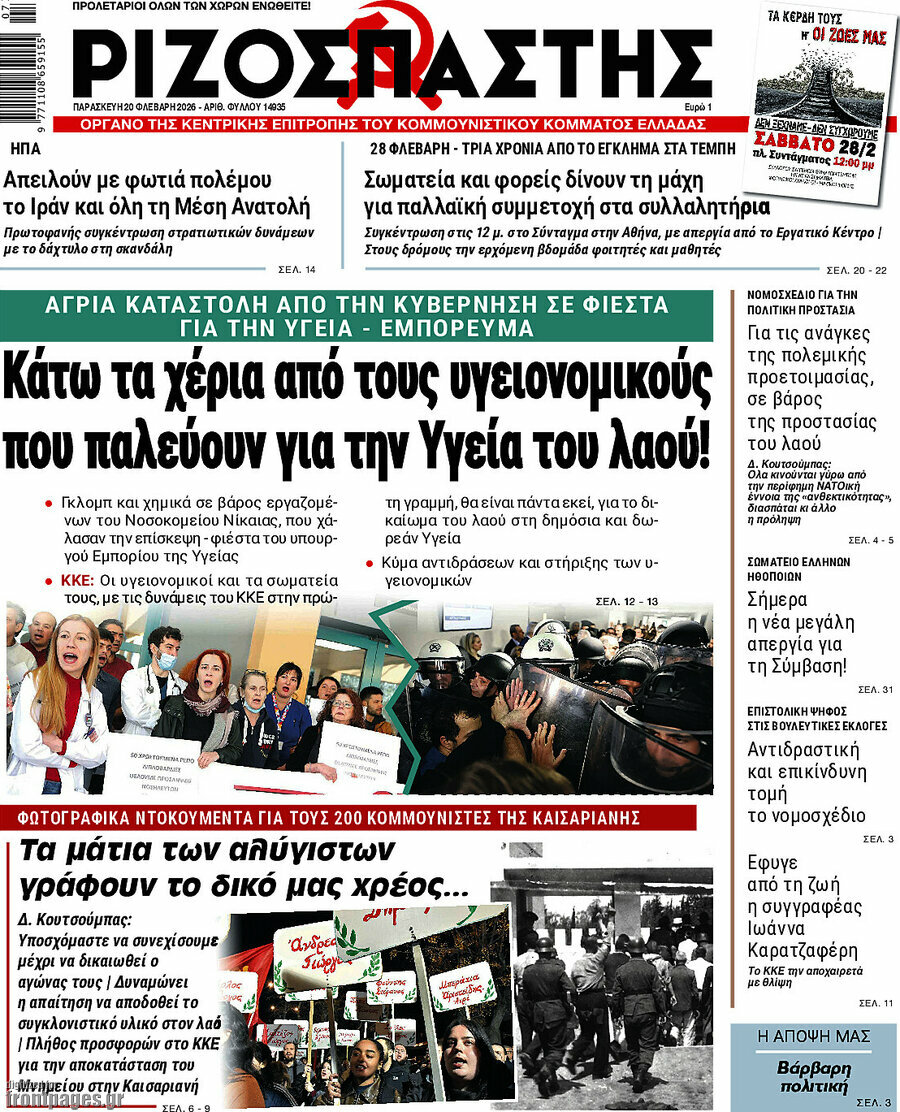
RIZOSPASTIS: Hands off from healthcare workers fighting for simple folks’ health!
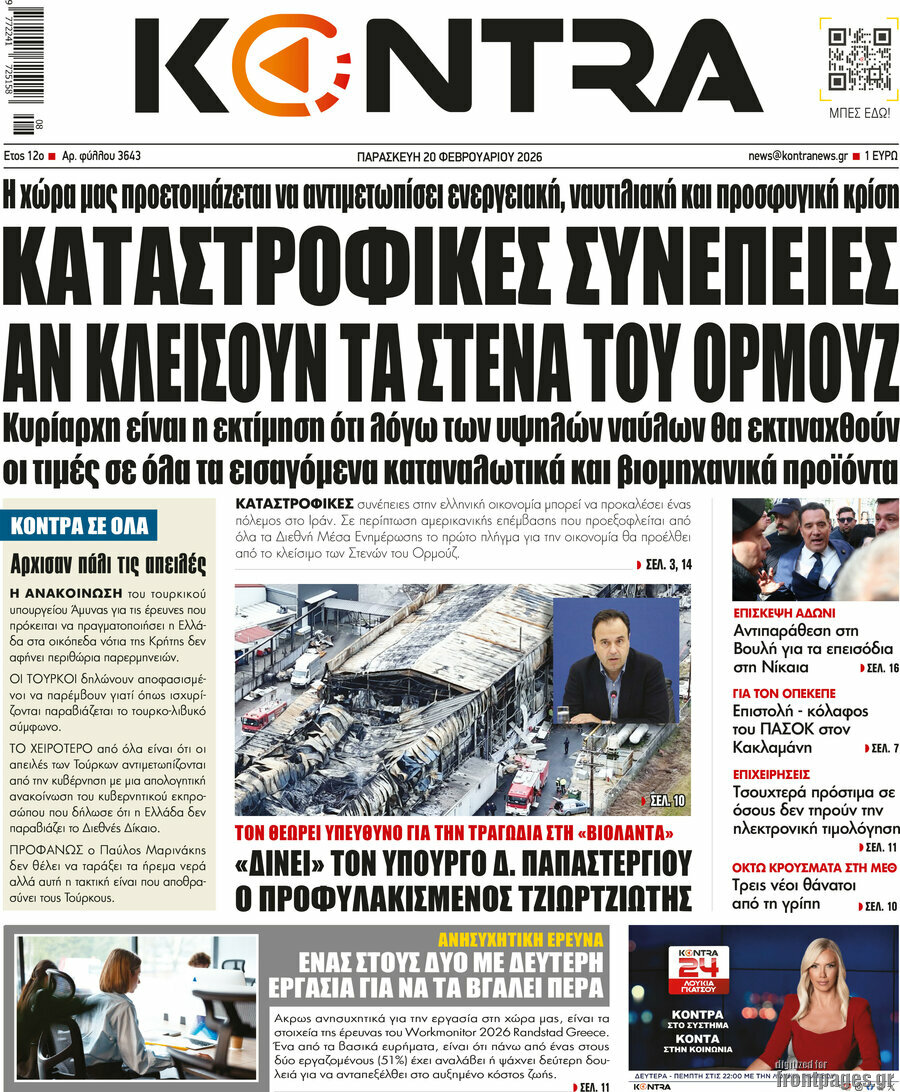
KONTRA NEWS: Destructive consequences if the Strait of Hormuz shuts down
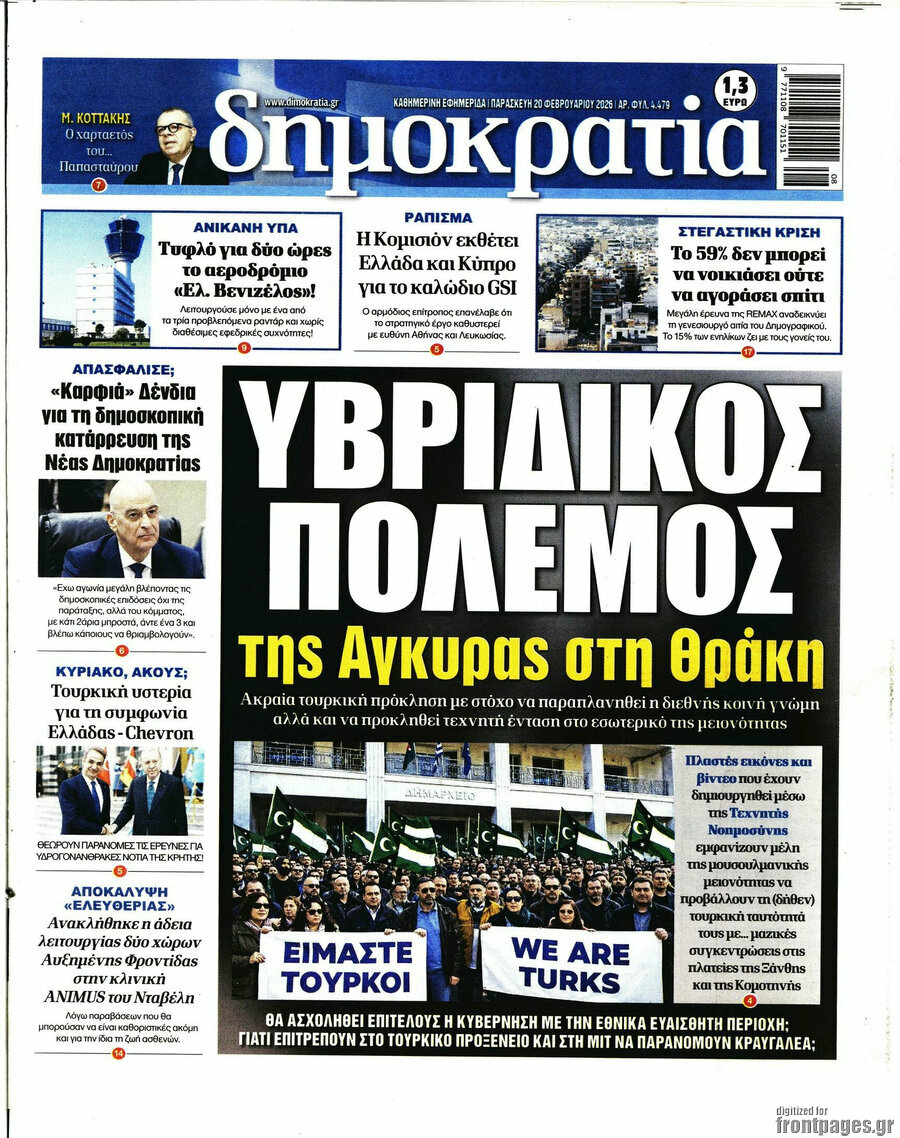
DIMOKRATIA: Ankara wages hybrid war in Thrace
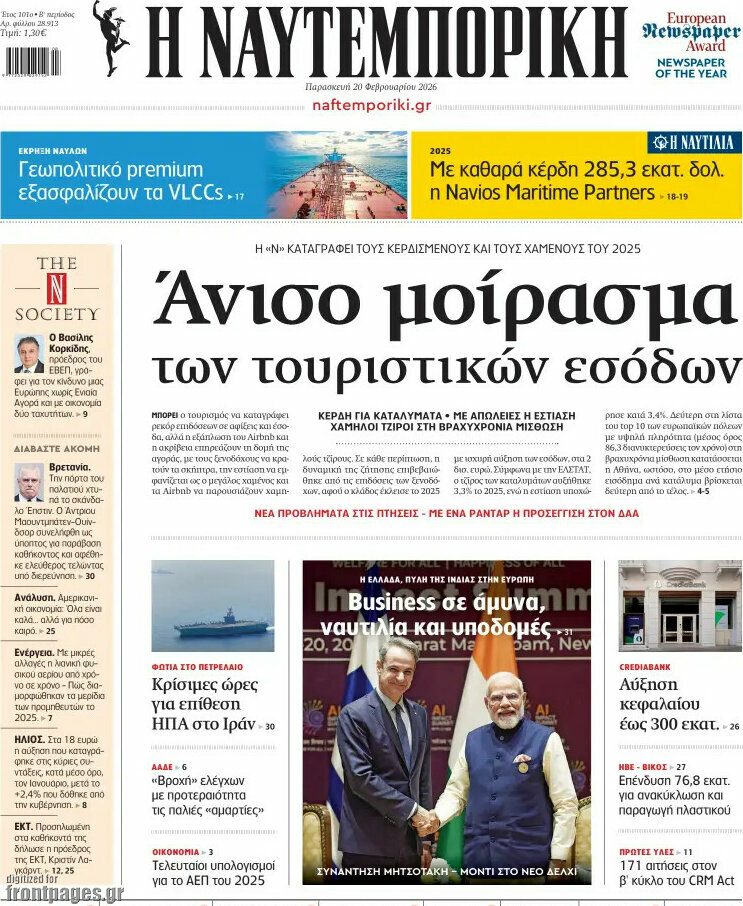
NAFTEMPORIKI: Uneven distribution of tourism revenue

DRIVING THE DAY
COREPER’S MISSION CREEP: It’s a subtle but significant change: EU members are increasingly relying on their Brussels-based diplomats to handle the bloc’s trickiest policymaking tasks. Some of the thorniest issues are now being hashed out in more regular Coreper meetings — including one this morning, the third formal session of the week. With history coming at the EU fast, ambassadors are working harder than ever.
Tough times: There was a time when the opaquely named Committee of Permanent Representatives, specifically Coreper II, was a preparatory body used by diplomats to pave the way for ministerial and leaders’ meetings. Today, Coreper is synonymous with the EU’s response to some of the most explosive issues facing the bloc and its 27 member countries.
“Up to a year or two ago, [Coreper] only had to deal with one crisis at a time: migration, Brexit, the financial crisis,” said one diplomat who has attended the secretive talks. “Now, you see the curse of the change in the geopolitical situation and Coreper is being convened to handle multiple crises at once.”
The uptick in Coreper responsibilities has seen a rapid increase in the number of weekly meetings. “Even before the start of our presidency, I had told colleagues we would be holding two Corepers a week — up from the usual one,” said Polish ambassador Agnieszka Bartol, who chaired the sessions last year during her country’s six months at the helm of the legislative agenda.
Team of rivals: “It’s a very active meeting,” said a second diplomat, granted anonymity to shed light on the processes. Ambassadors are frequently on their feet, moving to consult the experts and advisers sitting behind them on technical aspects. “It’s a tight group. They know each other very well,” that diplomat said. “But they are passionate when defending their interests — they are friends, but that doesn’t mean they are always friendly.
Bunkered down: Sensitive talks are held variously in the basement “bunker” beneath the Council’s headquarters and in a newly renovated super-secure space at an undisclosed location on the premises.
Power play: Officially, Coreper is not a decision-making body. But those who have been inside the room say the lines have been increasingly blurred in recent years. “If we’re honest, it really is a place where decisions are made,” said a third diplomat. That’s especially true since António Costa became president of the European Council in 2024, winning plaudits from capitals for ensuring regular leaders’ summits are run with brutal efficiency, with ambassadors sewing up delicate issues beforehand.
Big personalities: With politics moving fast and decisions that can’t be put off for months awaiting the meetings of presidents and prime ministers, ambassadors have unprecedented scope to negotiate and compromise without constantly referring back to their capitals. They also regularly quiz Commission officials, including Commission President Ursula von der Leyen’s chief of staff Bjoern Seibert, on the executive branch’s plans.
Ambassadorial skirmishes: EU officials have noticed the rise in diplomatic involvement and the more frequent bust-ups with capitals on files. “When we were negotiating the U.S. trade deal, there was a Coreper constantly,” said one Commission staffer. Just this week, ambassadors traded blows over the Berlaymont’s decision to send a representative to the American-led Board of Peace meeting on rebuilding Gaza.
Growing remit: Coreper II historically focused on foreign relations, economics and home affairs. But with increasingly politicized issues like energy and climate change muscling their way into the European Council agenda, ambassadors in Coreper II are now hashing those out too.
On the agenda today: Ambassadors meeting at 11 a.m. will discuss the EU’s 20th package of sanctions to be imposed on Russia since the start of its full-scale invasion of Ukraine, and follow up on last week’s meeting of defense ministers, according to notes shared with Playbook.
PLAYBOOK INTERVIEW
CALL FOR A DEMOCRATIC CAUCUS: Liberal democracies worried about the erosion of human rights and the rule of law, led by Europe, need to take a leaf out of autocrats’ book and join forces in a new coalition, Human Rights Watch Executive Director Philippe Bolopion told Playbook.
“Autocratic regimes around the world have developed these incredible networks of mutual support,” Bolopion warned during a visit to Brussels, pointing to Russia’s links to China and Iran, and even U.S. Secretary of State Marco Rubio’s recent visits to Hungary and Slovakia, as examples of autocratic solidarity.
The EU and like-minded middle-power partners, such as Australia and Canada, should be embracing the same networking model and using it to uphold human rights, Bolopion says. By themselves, they are “are obviously very weak,” he said. But “all of them together, they actually have a lot of power that individually they cannot exercise.”
Anti-sanction tool: Bolopion said one way the EU could prove its commitment to shared values is by activating its blocking statute — a legal mechanism shielding entities in member countries from sanctions imposed by non-EU countries — to protect the International Criminal Court from American sanctions.
Shake what you’ve got: “The U.S. use their tools, the EU should use its tools as well … to protect an institution which is on EU territory.“
ABOUT THOSE MIDDLE POWERS: Washington may have abandoned its leadership of the rules-based world order, but former U.S. Ambassador to NATO Ivo Daalder is hopeful the likes of Canada, the EU and Japan will take up the leadership mantle instead, he writes in an op-ed for POLITICO.
MONEY MATTERS
SCOOP — HOSTILITY TO COMMISSION STAFF PLANS: Nine EU countries, led by Austria, have joined forces to urge the Berlaymont to scrap plans to hire an additional 2,500 staff at the same time that the EU executive is calling on capitals to cut costs. A letter sent to Budget Commissioner Piotr Serafin and seen by Playbook’s Nick Vinocur blasts the bloc’s multi-year financial plan, which would increase the Commission’s payroll by €1.4 billion.
Ah, Vienna: “The proposed increase of 2,500 posts as well as the overall significant increase of heading 4 (administration) runs counter to the stated objectives of efficiency, restraint and reform,” the letter says. The missive is signed by ministers from Austria, the Czech Republic, Denmark, Estonia, Finland, Germany, Latvia the Netherlands and Sweden.
POPULAR PIGGY BANK: The Savings and Investments Union is becoming sexy. Yes — really! But what on earth is it and why has it been at the top of the political agenda? Kathryn Carlson has the answer to all your questions.
KEEPING THE U.S. AT ARM’S LENGTH: The Trump administration has threatened to retaliate if the EU gives preferential treatment to European arms manufacturers in its push to rearm the continent, Laura Kayali reports.
COSTING US BIG? Europe’s regulatory push to control AI companies means it is losing out on a massive and growing industry, delegates at a summit in India told the EU this week. We have the story from the ground in New Delhi.
BOARD OF PEACE FALLOUT
BOARD OF GRIEF: Paris has gone public with its objections to Mediterranean Commissioner Dubravka Šuica’s presence at the launch of U.S. President Donald Trump’s Board of Peace in Washington yesterday, having previously raised concerns behind closed doors at Coreper, Gerardo Fortuna writes in.
The Commission “should never have attended,” French Foreign Minister Jean-Noël Barrot posted on X late Thursday. “Beyond the legitimate political questions raised by the ‘Board of Peace,’ the Commission must scrupulously respect European law and the institutional balance in all circumstances.”
And the Commission continues to come under fire in Brussels. Iratxe García Pérez, leader of the Socialists and Democrats group in the European Parliament, European socialist faction that supports von der Leyen, posted on X: “Commissioner Šuica, no ‘Board of Peace’ can decide Gaza’s future without Palestinians and the UN. By attending, you legitimise a unilateral initiative that serves Trump’s interests.”
TRUMP WARNS IRAN: The U.S. president told the peace board meeting Thursday that Tehran must strike a deal on its nuclear program with Washington soon or “bad things will happen.” Trump later elaborated to reporters that he expects a resolution in the next 10 to 15 days “maximum.” His warning comes amid the biggest U.S. buildup in the Middle East since the invasion of Iraq in 2003.
IN OTHER NEWS
LEAVING ON A JET PLANE: The EU is set to increase spending on private jet trips for its top executives, with €16 million budgeted over the next four years, according to a tender document seen by Mari Eccles. That’s an increase of €3 million from the previous four-year period and 50 percent higher than the period before that — an expenditure Green MEP Rasmus Andresen described as “embarrassing.”
CIRCLING THE WAGONS ON ENLARGEMENT: EU capitals are increasingly concerned about the push by Ukraine’s allies to ensure the country can start receiving some of the benefits of EU membership even before it has formally joined. Several delegations have written to European Council President António Costa for clarity on his plans ahead of a summit in March.
One EU diplomat texted Playbook: “There is great support for accession of Ukraine to the European Union. But it is also true that almost no member state supports accession before the negotiations will have been finished (in a regular way).” A second diplomat confirmed that capitals are questioning what the Ukraine accession plan would mean in reality and want more information.
NO, I’M THE NATIONALIST: Hungarian opposition leader Péter Magyar is looking to outflank Prime Minister Viktor Orbán on patriotism as they battle over who really represents Hungary’s interests, Ketrin Jochecová reports.
TRANSALPINE GLASS JAWS: Italian Prime Minister Giorgia Meloni’s comments about the death of a young man at a far-right protest in the French city of Lyon has sparked an unpleasant war of words with Emmanuel Macron. The French president took exception to Meloni saying that the death of the 23-year-old Quentin Deranque was “a wound for the whole of Europe.” It went downhill from there, Giorgio Leali and Clea Caulcutt report.