
PM clashes with opposition in heated House debate
In a heated debate in Parliament on the rule of law on Thursday, Greek Prime Minister Kyriakos Mitsotakis accused the opposition of seeking to sow political division and called on the European Public Prosecutor’s Office to speed up its probe into the OPEKEPE farm subsidy scandal and desist from making “selective leaks” that undermine stability.
Mitsotakis discusses ceasefire deal with Israeli, Lebanese leaders
Prime Minister Kyriakos Mitsotakis has held separate phone calls with the leaders of Israel and Lebanon Thursday following the announcement of the ten-day ceasefire deal between the two countries. Mitsotakis’ office said that during his conversations with Benjamin Netanyahu and Joseph Aoun, the PM stressed the need for the Lebanese government to acquire full control over the entire expanse of the country.
Pierrakakis sees higher surplus; possibility of support measures
National Economy and Finance Minister Kyriakos Pierrakakis expressed the view that the primary surplus is expected to move upward. At the same time, he left open the possibility of additional support measures for households, depending on the available fiscal space and the evolution of the energy crisis. Speaking to public broadcaster ERT on the sidelines of the IMF Spring Meetings in Washington, the minister noted that final fiscal outcomes are expected to exceed initial estimates, while clarifying that a more accurate picture will emerge in the coming period.
IOBE releases forecast on Greek economy: Growth at +1.8% in 2026
Greek growth in 2026 is expected to stand at +1.8%, revised downwards according to its basic forecast, the Foundation for Economic & Industrial Research (IOBE) said on Thursday. In a presentation on the Greek economy, IOBE said that its alternative scenario sees a significant slowdown of the Greek economy to +1.4% in 2026, resulting mainly from a milder acceleration of overall consumption (decline of private consumption to +1.4%), yet without affecting public consumption (maintaining the forecast for +0.9%) and fixed assets (+10.2%). A possible downturn of the global geopolitical climate would further burden the already negative trade balance of a small open economy like Greece’s, undermining the growth rate of both exports (+1.5%) and imports (+3.5%).
https://www.amna.gr/en/article/985763/IOBE-releases-forecast-on-Greek-economy-Growth-at-18-in-2026
ATHEX: Banks’ drop brings losses to benchmark
The war fatigue apparently settling among the states involved in the Middle East conflict is like music to the ears of investors, with the main sentiment across most eurozone markets being that of relief. Before this gets reflected on bourses with a major jump in prices, traders at Athinon Avenue pocketed some of their recent gains on Thursday, focusing on banks, with the main indexes closing near their day lows. Even so, mid-caps remained in positive territory, so rising stocks outnumbered decliners in the end.
https://www.ekathimerini.com/economy/1301118/athex-banks-drop-brings-losses-to-benchmark


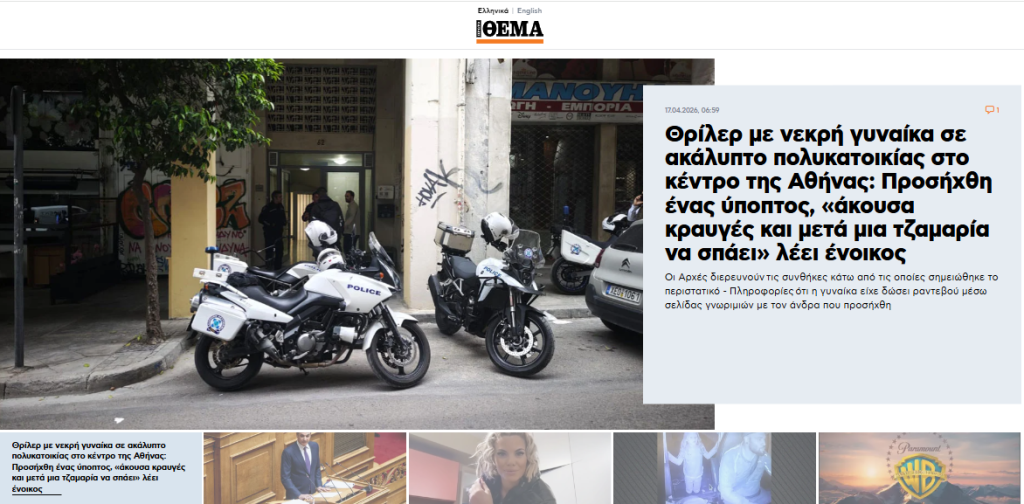
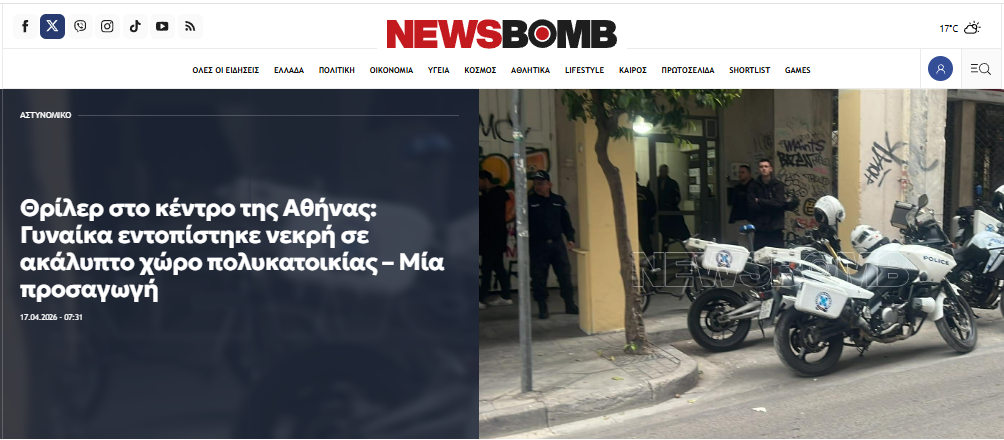
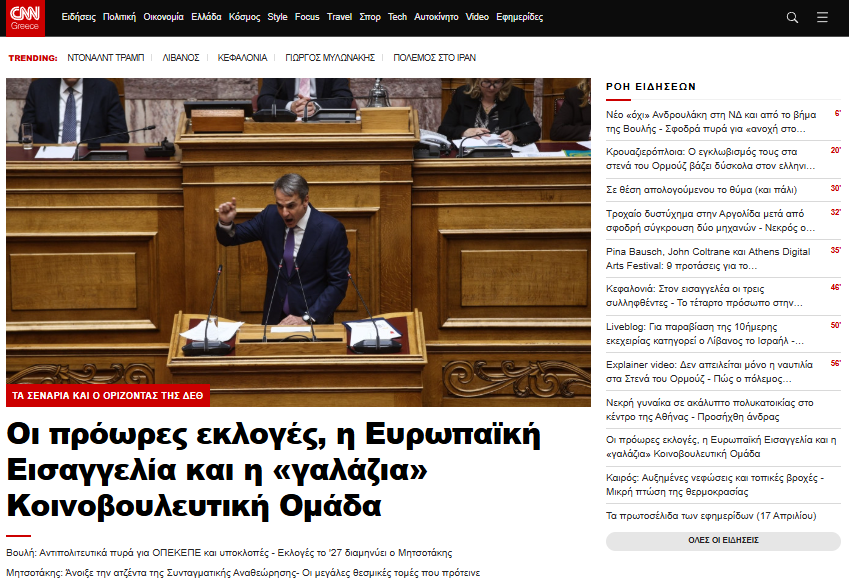
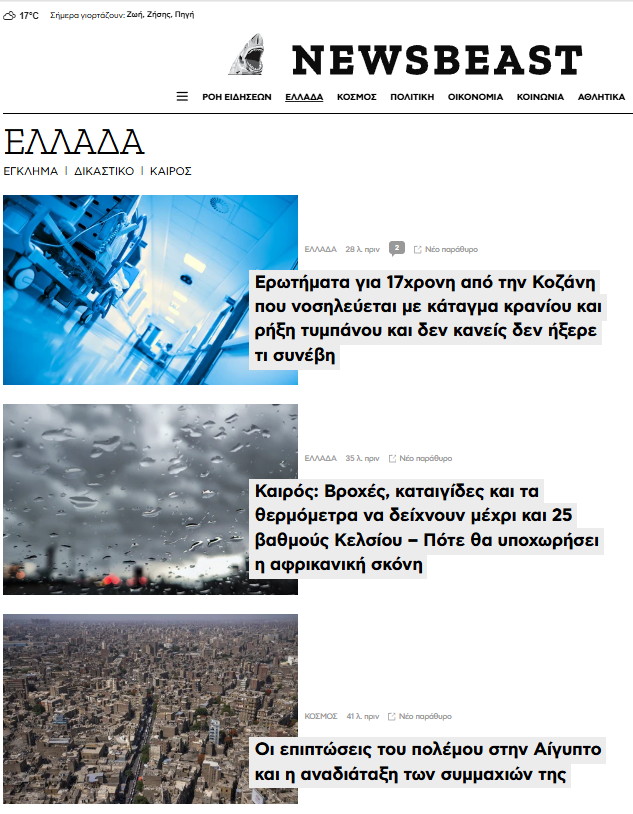

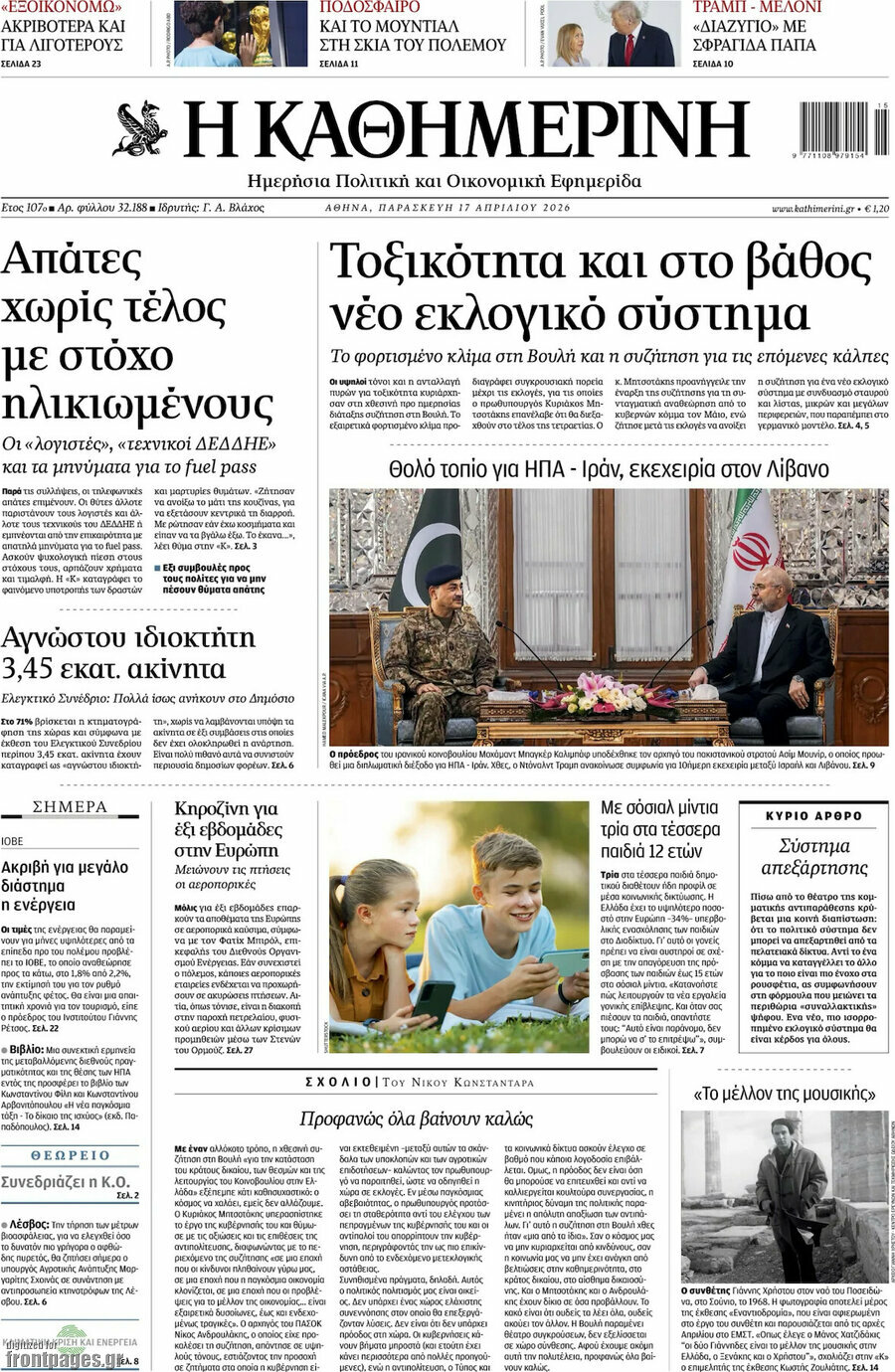
KATHIMERINI: Toxicity and new electoral system ahead
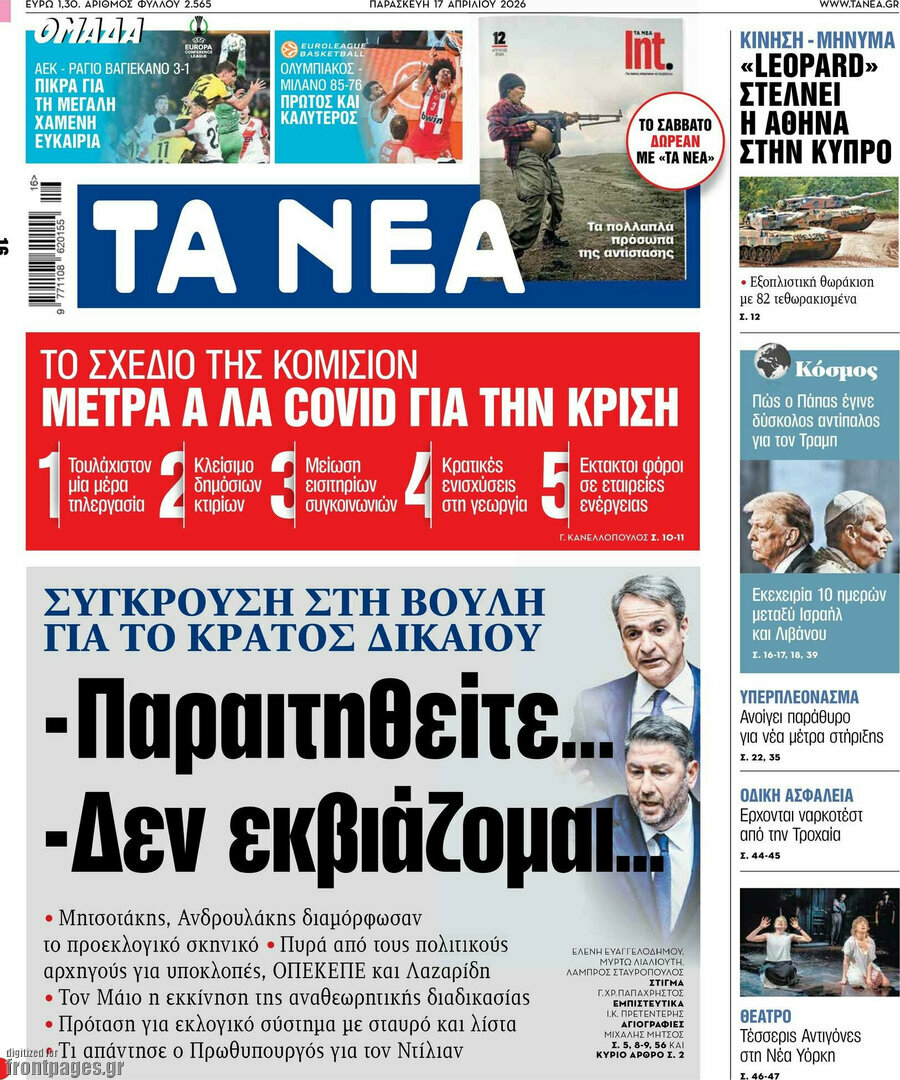
TA NEA: Parliament clash on the rule of law: – Resign! – I am not being blackmailed
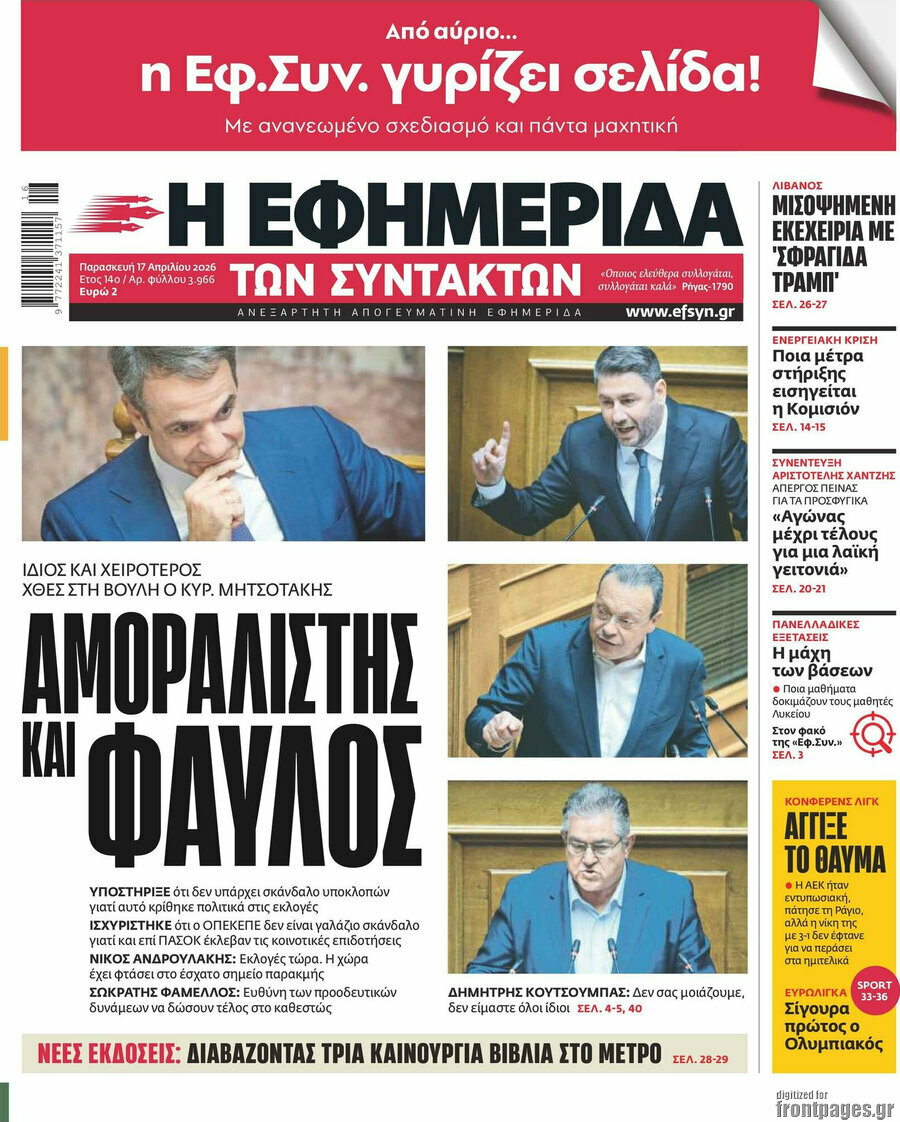
EFIMERIDA TON SYNTAKTON: Mitsotakis: amoral and corrupt
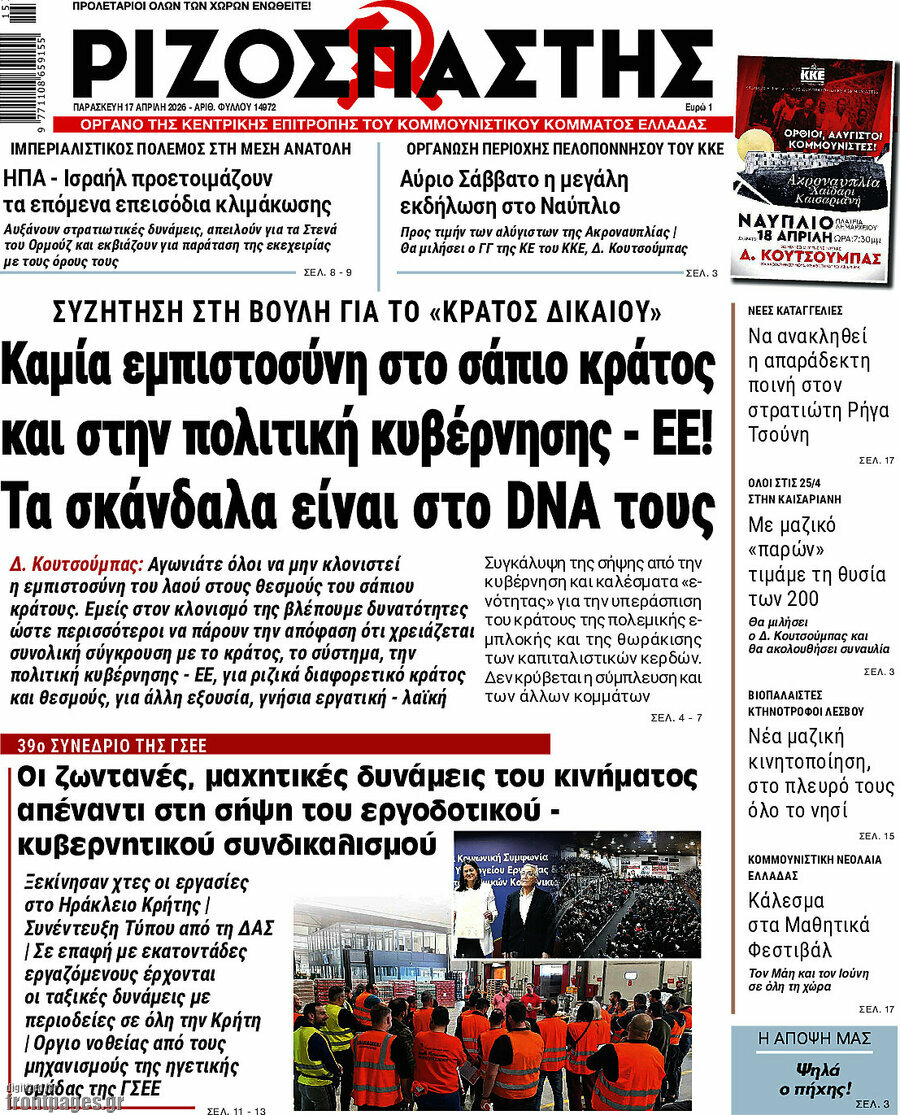
RIZOSPASTIS: No trust towards the decaying state and the government’s policies
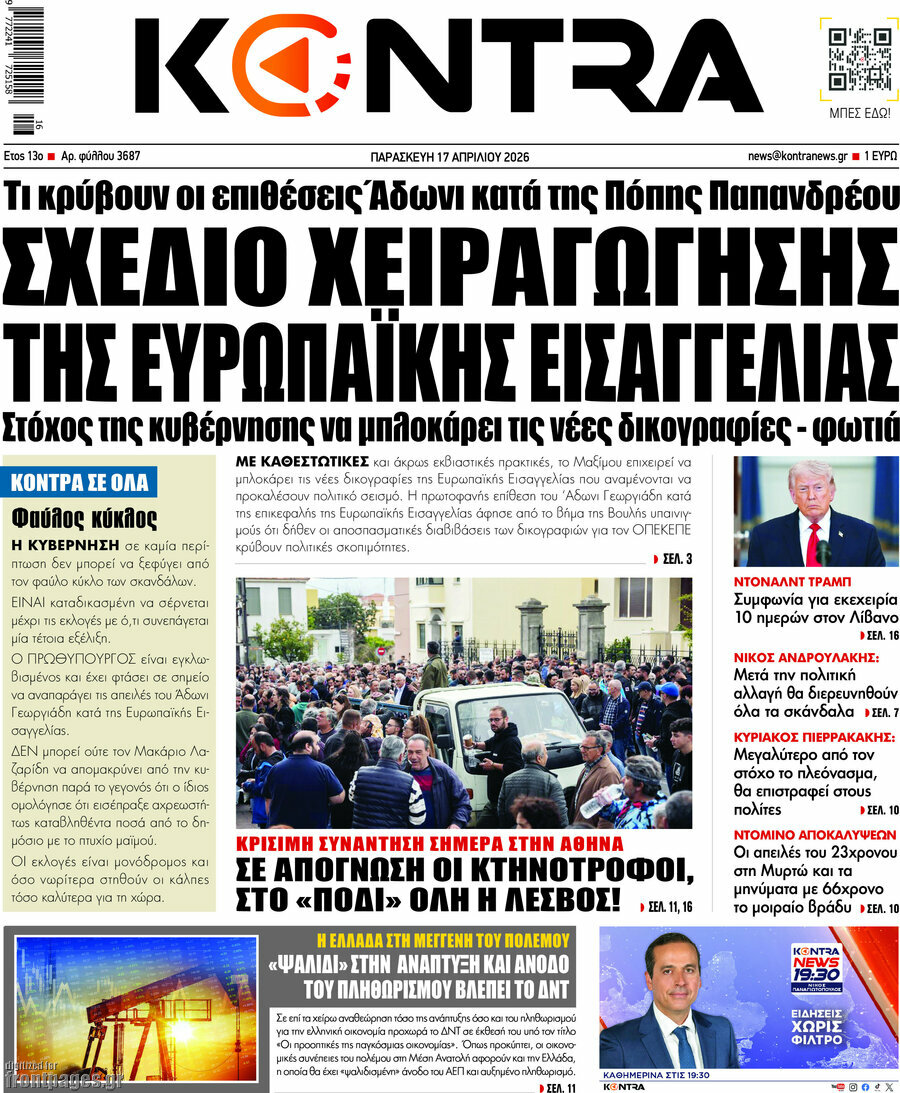
KONTRA NEWS: Government plan to manipulate the European Public Prosecutor’s Office
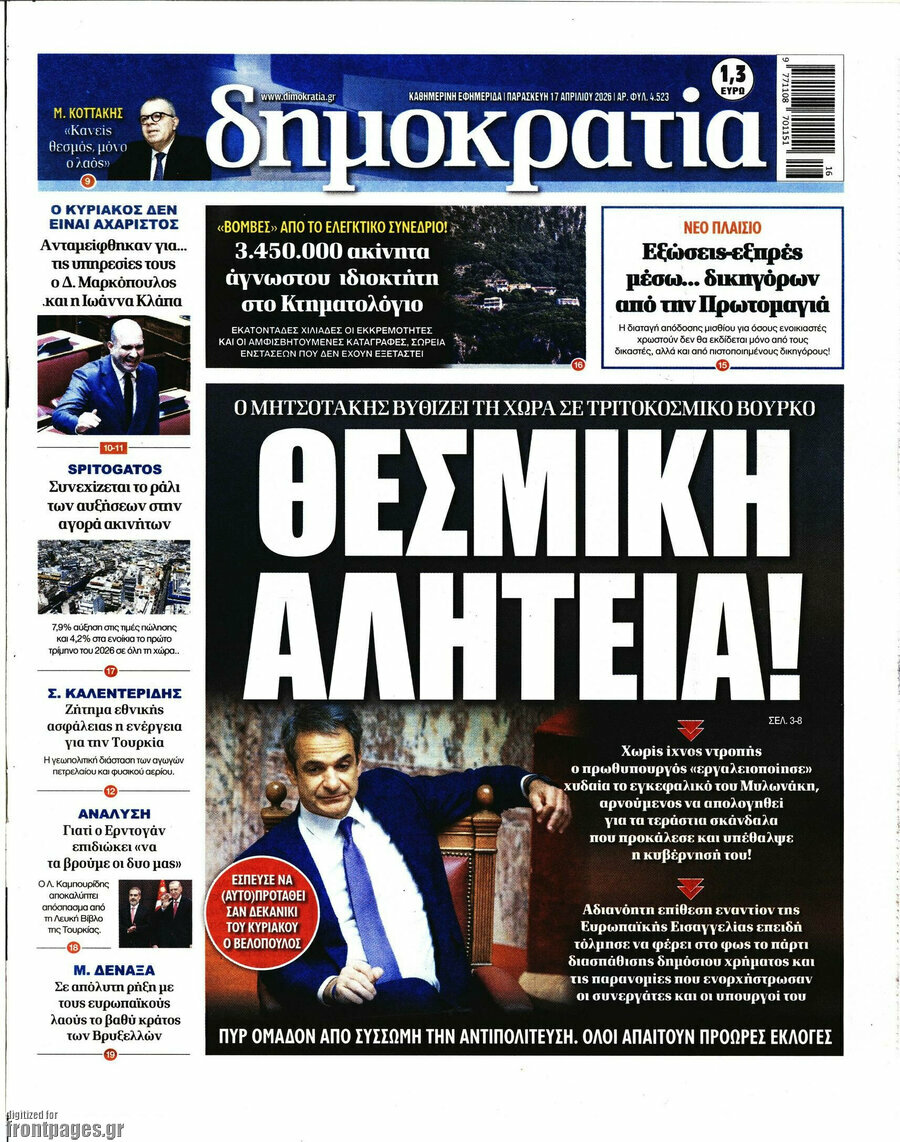
DIMOKRATIA: Institutional hooliganism by the PM
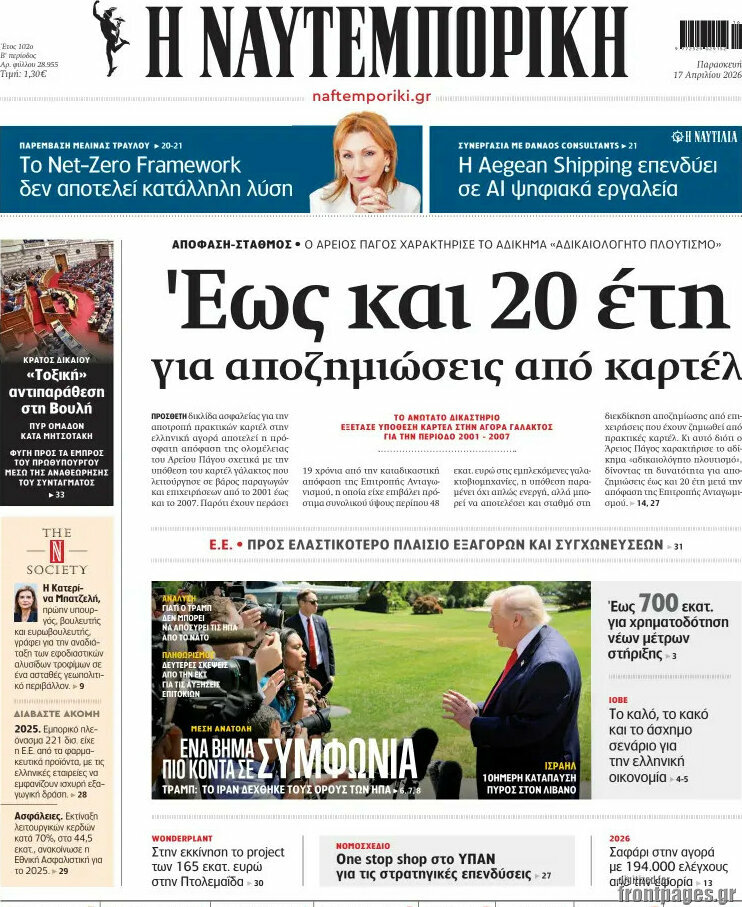
NAFTEMPORIKI: Statute of limitations of up to 20 years for compensation by cartels

DRIVING THE DAY
BULGARIA VOTES: The EU’s awkward squad might be losing a member after Orbán’s historic defeat last Sunday, but it could gain a new one after Bulgaria’s parliamentary elections this weekend. According to POLITICO’s Poll of Polls, the country’s former president, Rumen Radev, is on track to win around a third of the votes.
Coming in hot: Radev has pledged to tackle chronic corruption and bring stability to a country that has had seven prime ministers in the past five years. If the former air force officer emerges with the 31 percent currently predicted, the party he founded in March, the center-left Progressive Bulgaria, will be able to form a coalition government next week.
Pals with Putin? Radev has raised eyebrows in Brussels for his staunch pro-Russian views, echoing Moscow’s talking points on Ukraine and hinting that he wants to import Russian energy. He’s also criticized Bulgaria’s decision earlier this year to enter the Eurozone, claiming Europe is “culturally depersonalized” and “demographically disintegrating.” Bulgaria also joined President Donald Trump’s controversial Board of Peace.
One in, one out: Bulgaria is already the second-least free nation in the EU after Hungary, according to Freedom House, and the prospect of another Orbán has some officials and diplomats worried. But others say that’s an unlikely prospect.
Coalition considerations: Bulgarian political expert Dimitar Bechev says the shape of a future coalition is the biggest question. Radev can either align with the reformist bloc or the right wing, says Bechev, an Oxford University lecturer. “[Radev will] need to make a clear choice on the rule of law,” he says, either siding with allies to make his clampdown on corruption possible or defending vested interests.
He’s no Viktor: Radev is in a “much different league” to Orbán when it comes to his ability, and desire, to disrupt policy, said a senior EU diplomat. He and others like Slovak PM Robert Fico “don’t come close [to Orbán] in experience, tenacity, network and ideas — so this [result] could be of crucial importance for the EU’s ability to support Ukraine and counter Russia.”
Although … “Don’t underestimate him,” a Bulgarian official warned. “He is smart, he is ambitious.”
NOW READ THIS: If recent votes in Europe tell us anything, it’s that Trump has become toxic for the continent’s far right. “Proximity with the United States in the current context did not go down well with Hungarian voters,” a senior official from France’s National Rally party told Clea Caulcutt and Nette Nöstlinger.
Meanwhile, in Budapest … “A political era has ended,” a contrite and downbeat Orbán acknowledged late last night in his first interview about the defeat. Speaking with pro-government outlet Patrióta, Orbán said this: “This is a clear defeat … The degree of defeat is great.” He also admitted that he felt “pain and emptiness” when the results came through.
ACROSS THE CHANNEL
BREXIT OR BREGRET? The British government is pushing for a major reset in relations with the EU, but just what it wants to achieve — and whether anyone in Brussels even cares — remains a mystery.
Sir Ivan Rogers, the former British ambassador who oversaw preparations for Brexit, told Playbook there is increased appetite in the U.K. for stronger ties “given the [World Trade Organization] is blowing up and the Americans are deliberately blowing up the multilateral rules-based order.” But the affection isn’t mutual. “In Brussels, it’s not in the top 20 issues — probably not in the top 50. It’s not on leaders’ agendas at all,” Rogers said.
Moving quickly? Speaking at the EU/UK Forum in Brussels Thursday, British Minister for EU Relations Nick Thomas-Symonds defended the progress. “I have a wry smile on my face whenever I see coverage … that somehow negotiations are going badly or they’re going slowly,” he said. “We’re actually ahead of schedule on some things.” For example: The two sides agreed to partner on Erasumus+ Wednesday.
A little slower: The Brits are eyeing a landmark summit with the EU this year. But officials in Brussels have said that no date has been set, although July is seen as most likely.
Not so fast! Responding to a question from POLITICO on the podium, Commission spokesperson Balazs Ujvari also hinted that “part of the negotiations is the topic of dynamic alignment” — a U.K. plan to adopt EU rules automatically. He was quickly cut off by chief spokesperson Paula Pinho, who said the bloc is simply assessing the suggestion.
EU ALLY: European Parliament President Roberta Metsola said the government of U.K. Prime Minister Keir Starmer has shown “a great deal of political courage” in its push for a reset. Metsola has “also built a direct working relationship with Prime Minister Starmer,” an EU official said, adding that the president was “positioning [parliament] as a pragmatic but influential actor in shaping the next phase of the relationship.”
MONEY, MONEY, MONEY: Speaking at a roundtable with my colleague Kathryn Carlson, British Chancellor Rachel Reeves played up her talks with “European counterparts.” London, she said, is considering how to work with allies to support Ukraine “including the U.K. playing its part in the €90 billion loan that is now back on the table now that the Hungarian government has changed.”
SPOTTED: The great and good of cross-Channel relations (including this London-born Playbook author) gathered in the garden of the British ambassador’s residence Thursday night for champagne, fish and chips and talk of the future. Raising a glass were: Caroline Read, deputy U.K. ambassador to the EU; Patrick Child, deputy director-general, DG Environment; EU/UK Forum’s Paul Adamson; Boeing President Sir Jeremy Quin; Airbus comms chief Ian Middleton; European Movement CEO Sir Nick Harvey; Slovak Perm Rep Spokesman Pavol Kucharovic.
MIDDLE EAST
MACRON VS. MERZ: Germany and France are at odds over whether to help police the Strait of Hormuz. Paris is proposing a “strictly defensive” mission that “doesn’t include the U.S.,” while Berlin backs joining Trump’s efforts to secure the strategic waterway against Iran’s threats. Clea Caulcutt, Chris Lunday and Hans von der Burchard have the story.
Lebanon ceasefire: There was growing optimism overnight that a peace deal signed between Israel and Lebanon could pave the way for further diplomatic efforts to secure a deal to end the U.S. war with Iran, the FT reports. Trump said the 10-day ceasefire between Israel and Lebanon was agreed after he spoke to leaders of both countries and that Iranian-backed militant group Hezbollah would be bound by the agreement.
Trump claims he’s holding all the cards he needs for an Iran peace deal. But he may have to give some ground, as this analysis by Eli Stokols and Phelim Kine suggests. While any deal could take months to finalize, according to Bloomberg.
A GREAT moment for PEACE: Trump later took to Truth Social to say he hoped Hezbollah “acts nicely and well during this important period of time. It will be an GREAT moment for them if they do. No more killing. Must finally have PEACE.” Although you may have missed the post on Trump’s feed, given the avalanche of invective leveled against the judge who ordered a delay in the construction of a White House ballroom.
Confused about America’s own blockade of Hormuz? Martina Sapio has the full story on what it means for shipping. The key takeaway: While Trump may be calling for a halt to all traffic, the U.S. Navy is in fact imposing a more limited blockade that appears to conform to maritime warfare law and to avoid antagonizing China.
STOP THE IRAN ECONOMIC FALLOUT, G7 SAYS: Finance ministers and central bank governors from the Group of Seven said they are “unanimous” on the need to stop the economic fallout from the Middle East war, Kathryn writes in from Washington.
Urgent: In a statement released on Thursday by the French finance ministry, which currently holds the G7 presidency, finance chiefs said it is “urgent to limit the cost to the global economy of an enduring conflict” and that they “reaffirmed the pressing need to move toward a lasting peace.”
GROUNDED: European airlines are already canceling flights over jet fuel shortages caused by the disruption. Tommaso Lecca reports that although an actual shortage of jet fuel has yet to materialize, the high price is prompting airline groups to cut less-profitable routes and ground less-efficient older aircraft.
LET’S GET COMPETITIVE: Amid fears the Middle East crisis will derail next week’s leaders’ summit on the economy, there’s finally some good news for those worried about money, Tommaso Lecca reports. Today’s Coreper II meeting of ambassadors will discuss the Commission’s roadmap on competitiveness, three diplomats told POLITICO, paving the way for it to be discussed by presidents and prime ministers in Cyprus.
CLUB MED: Meanwhile, Commissioner for the Mediterranean Dubravka Šuica is hosting a meeting this afternoon on implementing a new regional pact with counterparts from North Africa — and is coming under fire for the timing of the event. The Friday meeting “shows how insensitive institutions are,” an EU diplomat told my colleague Jacopo Barigazzi, referring to the fact that Friday is a day of prayer in Muslim countries.
No time to waste: An EU official rejected the accusation: “The aim is to get the action plan presented in the run up to the leaders meeting next week, which comes with time constraints.”
TECH TROUBLE
COMPUTER SAYS NEIN: Digital weapons are the future of war, the defense industry is betting. But a €2 billion system designed to take Germany’s armed forces into the online battlefield is so plagued with problems that the country is looking for analog workarounds, as Chris Lunday reports.
MISANTHROPIC: The EU isn’t equipped to scrutinize Anthropic’s worrying new AI hacking tool, digital safety groups are warning. In a letter to the European Commission, a coalition of safety advocates argued that “an appropriately resourced regulator is needed to address” the threats posed by new hacking AI, Pieter Haeck and Sam Clark report.
TECH WARRIORS COME TO TOWN: The Washington-based Open Markets Institute, which supports strengthening antitrust laws to clamp down on monopolies, will announce a major expansion of its Brussels team today. The group will be focusing on competition and tightening regulation for tech companies, the group told Playbook.
Going global: “Big Tech and other monopolists are coordinating their lobbying, legal strategies and political influence campaigns across borders, and our movement to defend open markets and democratic accountability has to be international as well,” said Europe Director Max Von Thun. They will bring in Giorgos Verdi as policy and advocacy lead and George Colville as an analyst.
IN OTHER NEWS
MANDELSON FALLOUT CONTINUES: The appointment of former EU Commissioner Peter Mandelson as British ambassador to the U.S. has claimed another scalp, with one of the U.K.’s most senior civil servants dismissed late Thursday. Our London colleagues report Starmer lost confidence in Olly Robbins after new details emerged of his role in Mandelson’s security vetting, which failed to take into account the Labour Party powerbroker’s relationship with the late convicted sex offender Jeffrey Epstein.
CYPRUS’ PRESIDENCY TOURISM HOPES: Nicosia is hoping that its presidency of the EU Council will provide the island’s tourism industry with a much-needed shot in the arm, after an Iranian missile attack on a British military base sparked a raft of booking cancellations. Sebastian Starcevic explains how an upcoming gathering of European political heavyweights may help rescue rattled tourist operators.