
Mitsotakis sets 25% leadership threshold
Prime Minister Kyriakos Mitsotakis has set an election result of around 25% as the threshold at which his leadership could face serious questions, responding publicly to speculation about his possible replacement before the next government is formed. “If I got 25% in the elections, they would be right to say all that,” Mitsotakis said in an interview with Skai 100.3 radio, referring to reports circulating behind the scenes about replacing him “mid-course.” He reiterated his goal of securing an outright parliamentary majority, arguing that the central issue was whether Greece could be governed stably during difficult circumstances.
https://www.ekathimerini.com/politics/1317771/mitsotakis-sets-25-leadership-threshold
AP: Trump, Rubio weigh firing Guilfoyle
US President Donald Trump and Secretary of State Marco Rubio are considering firing US Ambassador to Greece Kimberly Guilfoyle after a series of reports alleging she has engaged in improper and possibly illegal conduct before and during her tenure in Athens. A senior US official said Sunday that Trump and Rubio are “extremely pissed off” by Guilfoyle’s reported conduct and would likely decide on what action to take this week after Monday’s Columbus Day holiday. In a series of stories, The Wall Street Journal has reported questionable conduct by Guilfoyle, including an alleged threat to a host country official, accepting improper gifts and services and offering to use her influence inside the administration in return for the payment of a large credit card bill.
https://www.ekathimerini.com/politics/foreign-policy/1317885/ap-trump-rubio-weigh-firing-guilfoyle
LAOS leader, wife among five jailed in €5 million social security fraud case
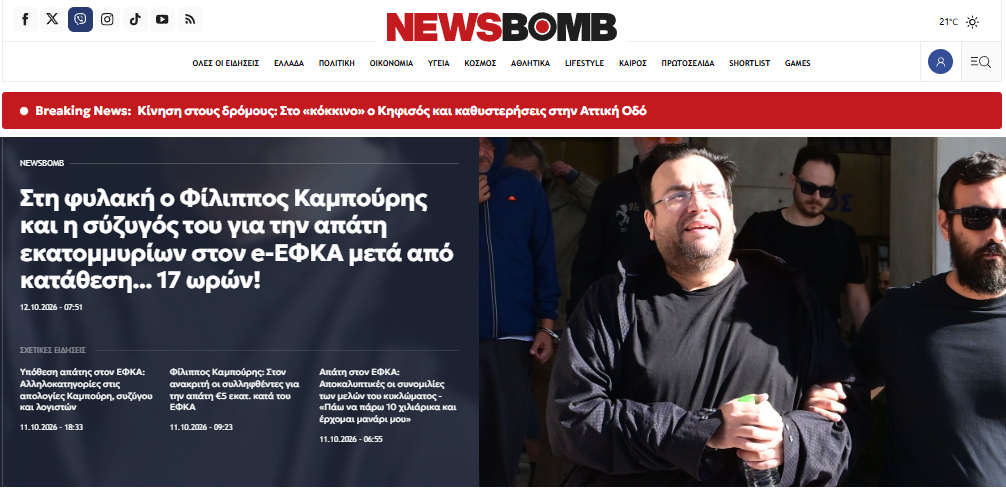
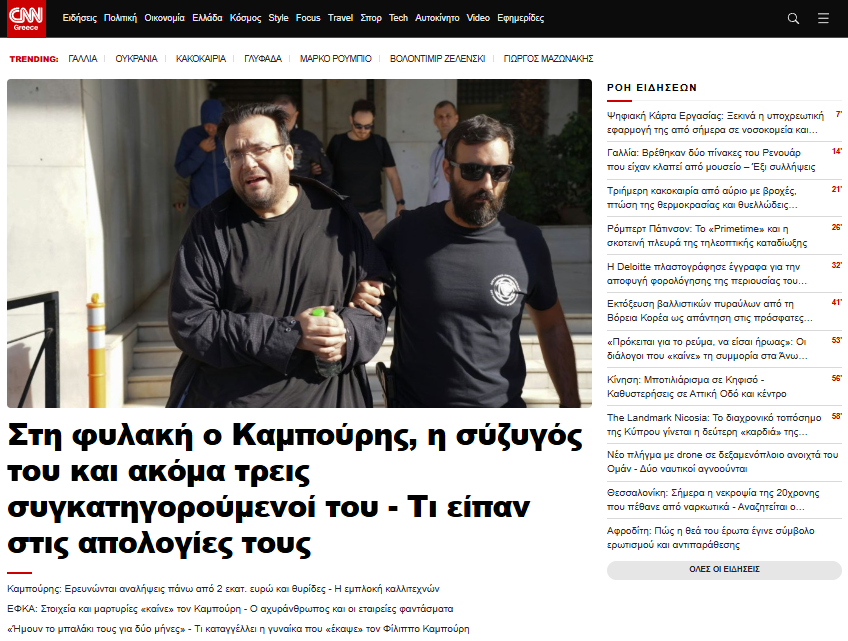
Five of 11 suspects have been remanded in custody in a case involving an alleged fraud scheme targeting Greece’s e-EFKA social security agency. Those jailed include LAOS party leader and television presenter Filippos Kambouris and his wife, who are accused of playing leading roles in the scheme. According to court documents, the alleged losses to e-EFKA amount to 1.5 million euros, while the total loss to state funds is estimated at nearly 5 million euros.
One arrest following industrial fatality at Motor Oil refinery
Police have made one arrest over the industrial accident that occurred on Friday morning at the Motor Oil refinery in Agioi Theodoroi (a town in the Corinthia prefecture), which left a 44-year-old man dead and a 50-year-old man hospitalised in critical condition. The two men were subcontracted workers carrying out maintenance operations at the refinery facilities, when the accident took place.
ATHEX: Week shaves nearly 3% off benchmark
The Euronext Athens (ATHEX) general index closed Friday at 2,559.18 points, shedding 0.35% from Thursday’s 2,568.05 points. On a weekly basis it declined 2.93%.
https://www.ekathimerini.com/economy/1317794/athex-week-shaves-nearly-3-off-benchmark



SUNDAY PAPERS
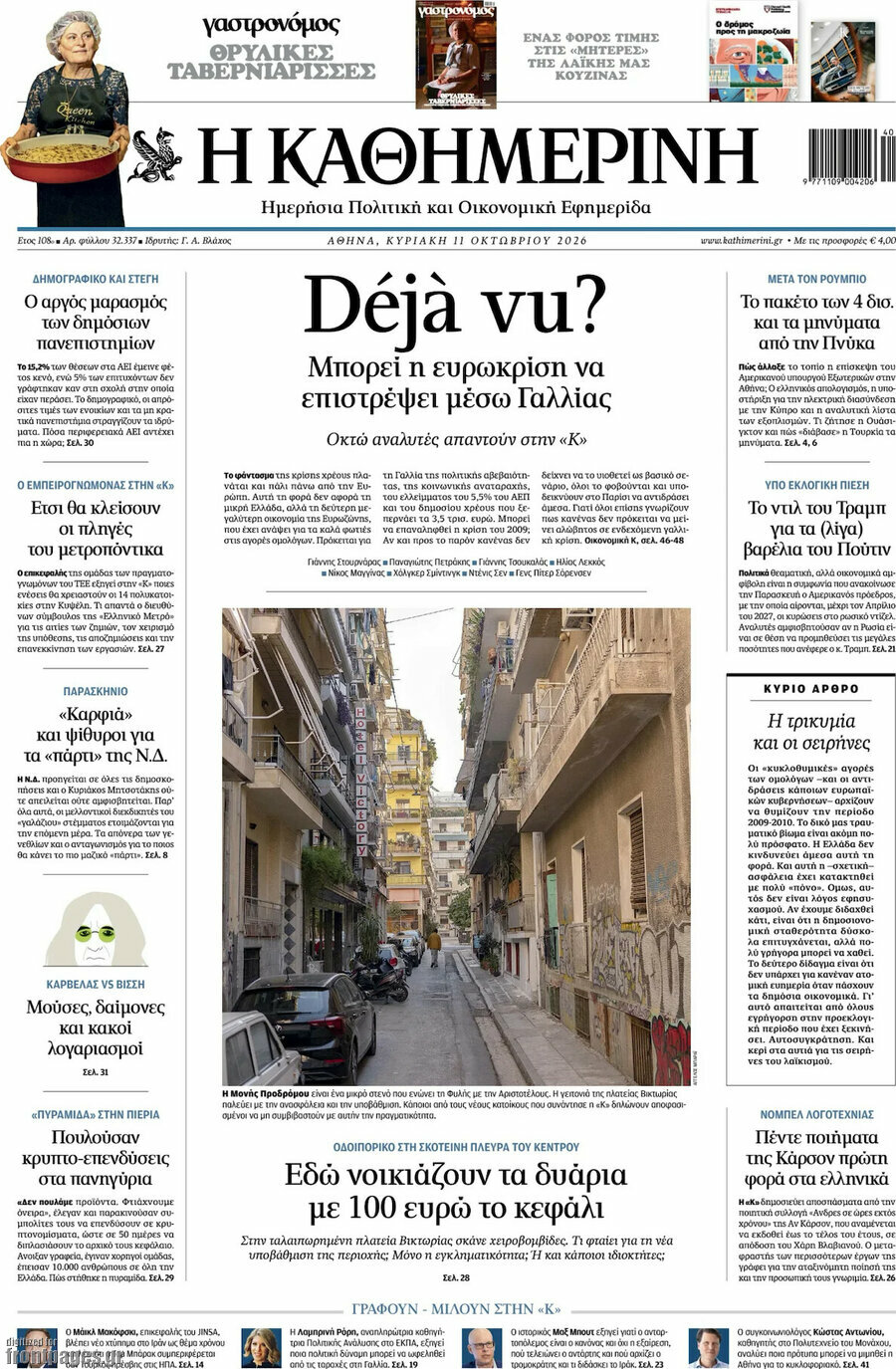
KATHIMERINI: Deja vu? Could the euro-crisis return via France?
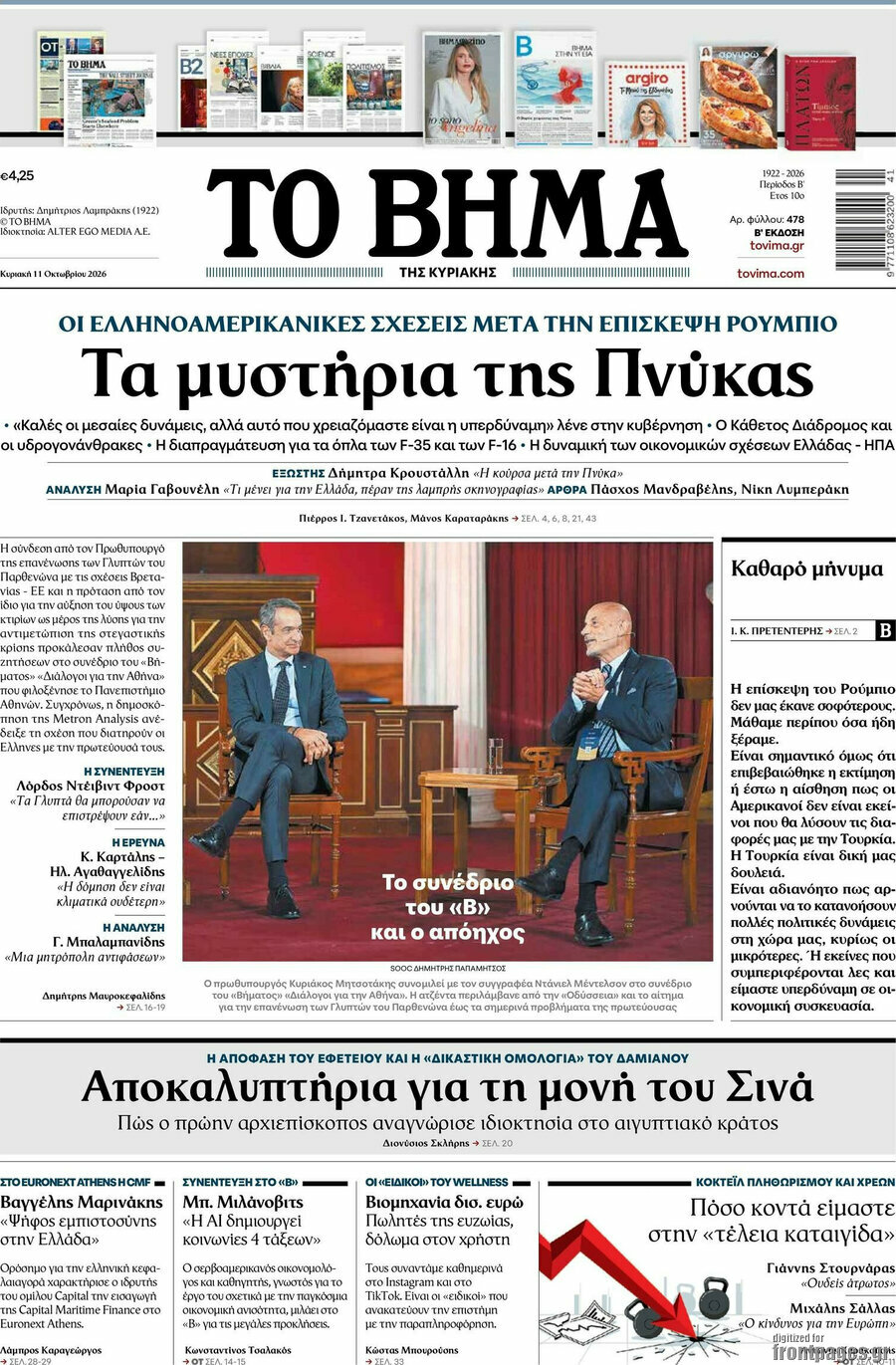
TO VIMA: Greek-US relations: the mysteries of Pnyx
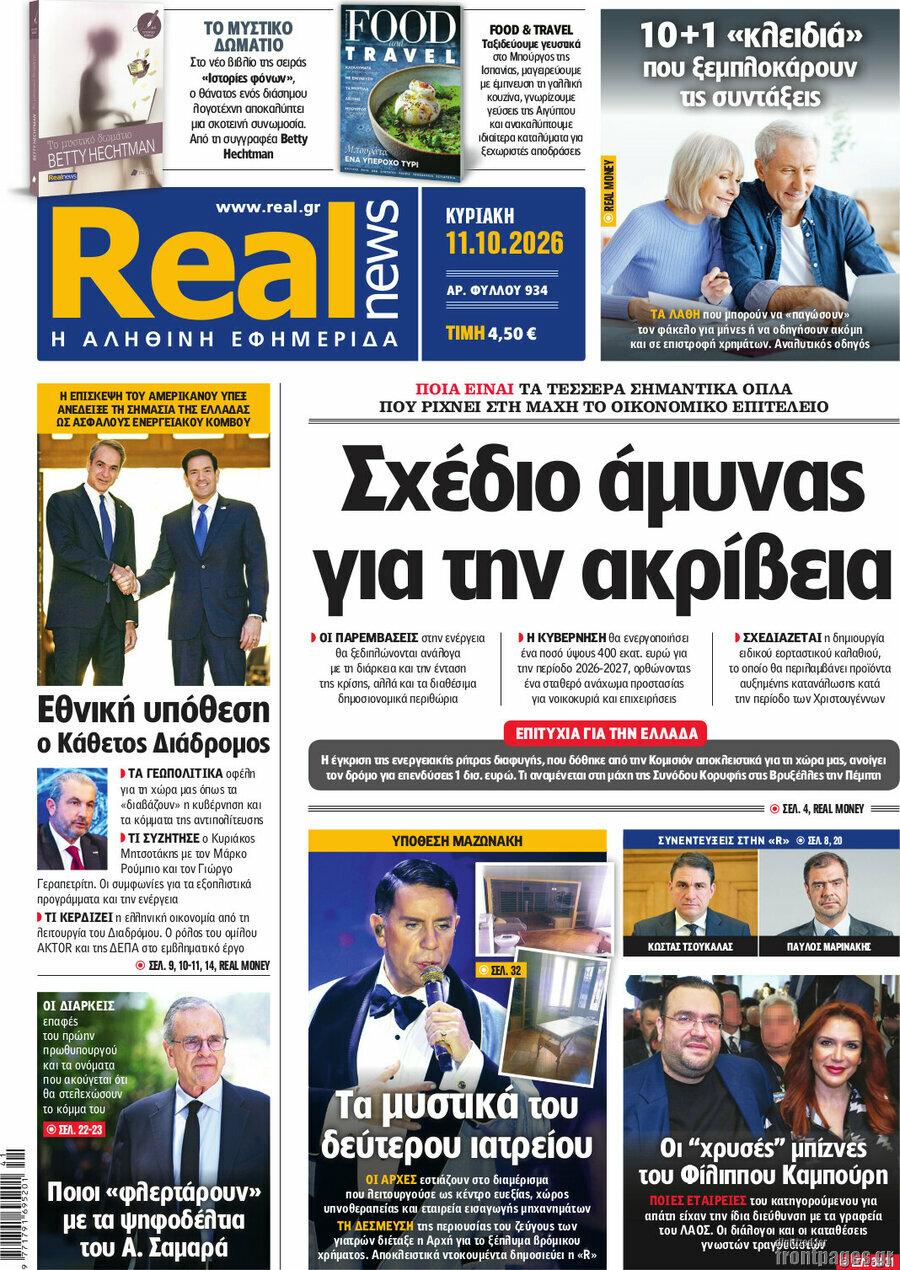
REAL NEWS: Defense plan against price hikes
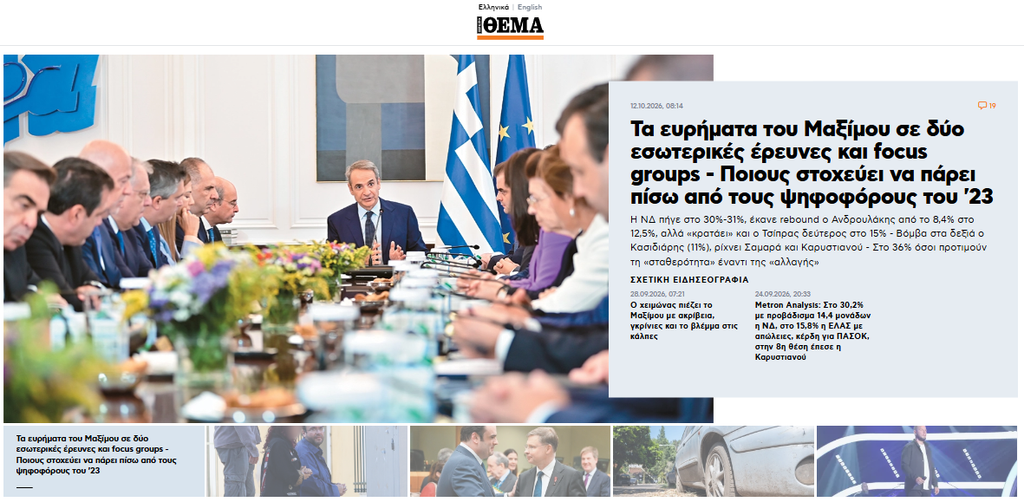
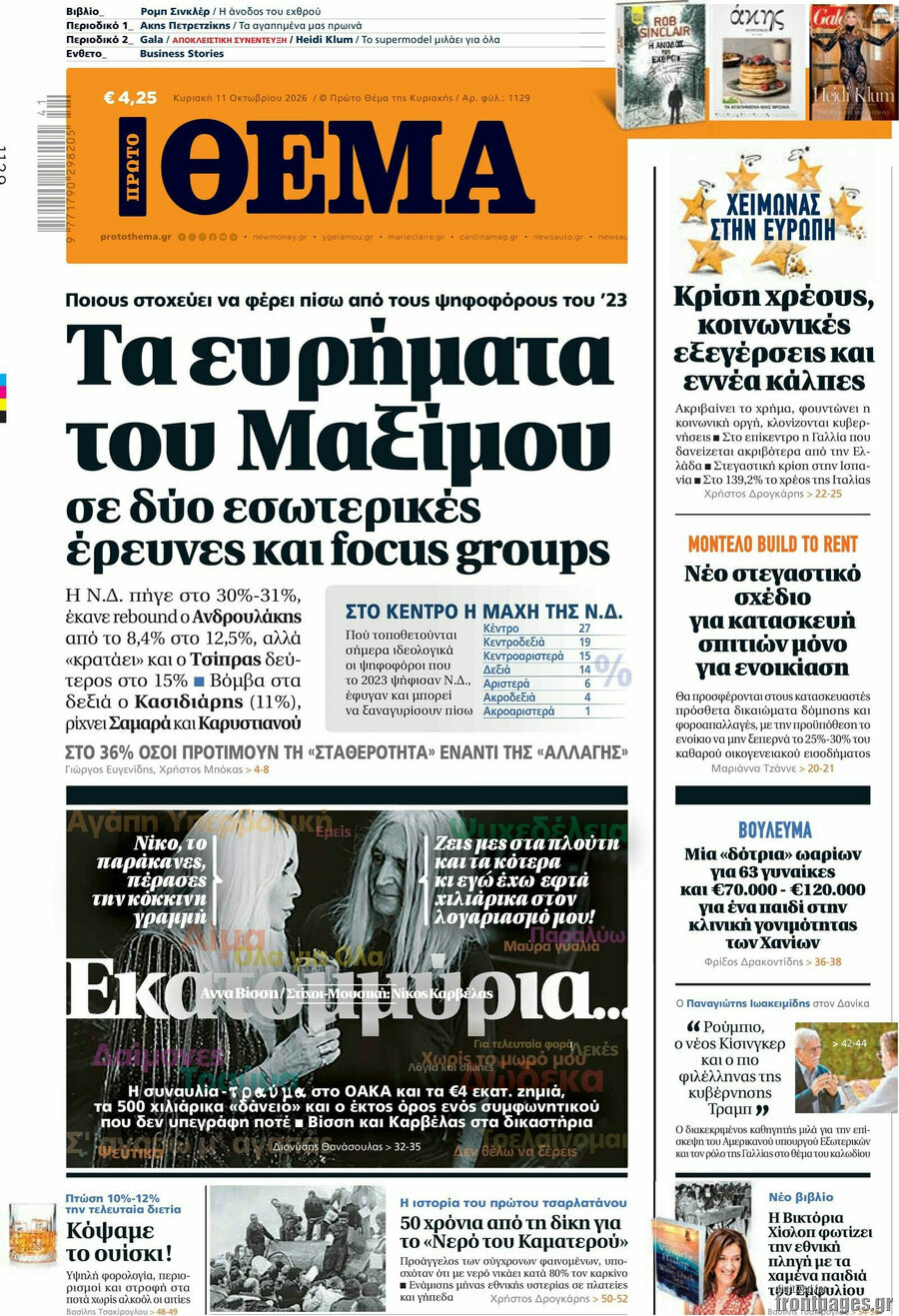
PROTO THEMA: The findings of polls and focus groups ordered by the PM’s office
MONDAY PAPERS:
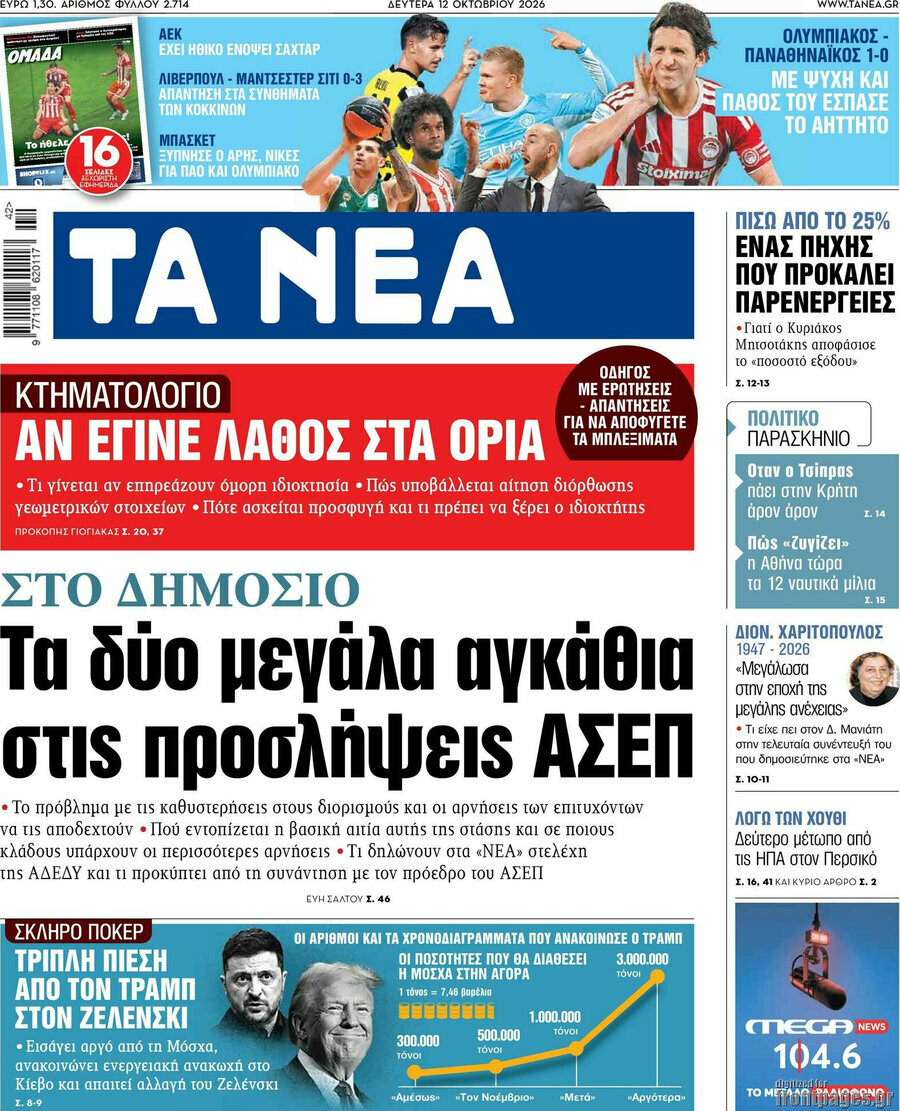
TA NEA: Two big thorns for recruitments in the public sector via ASEP
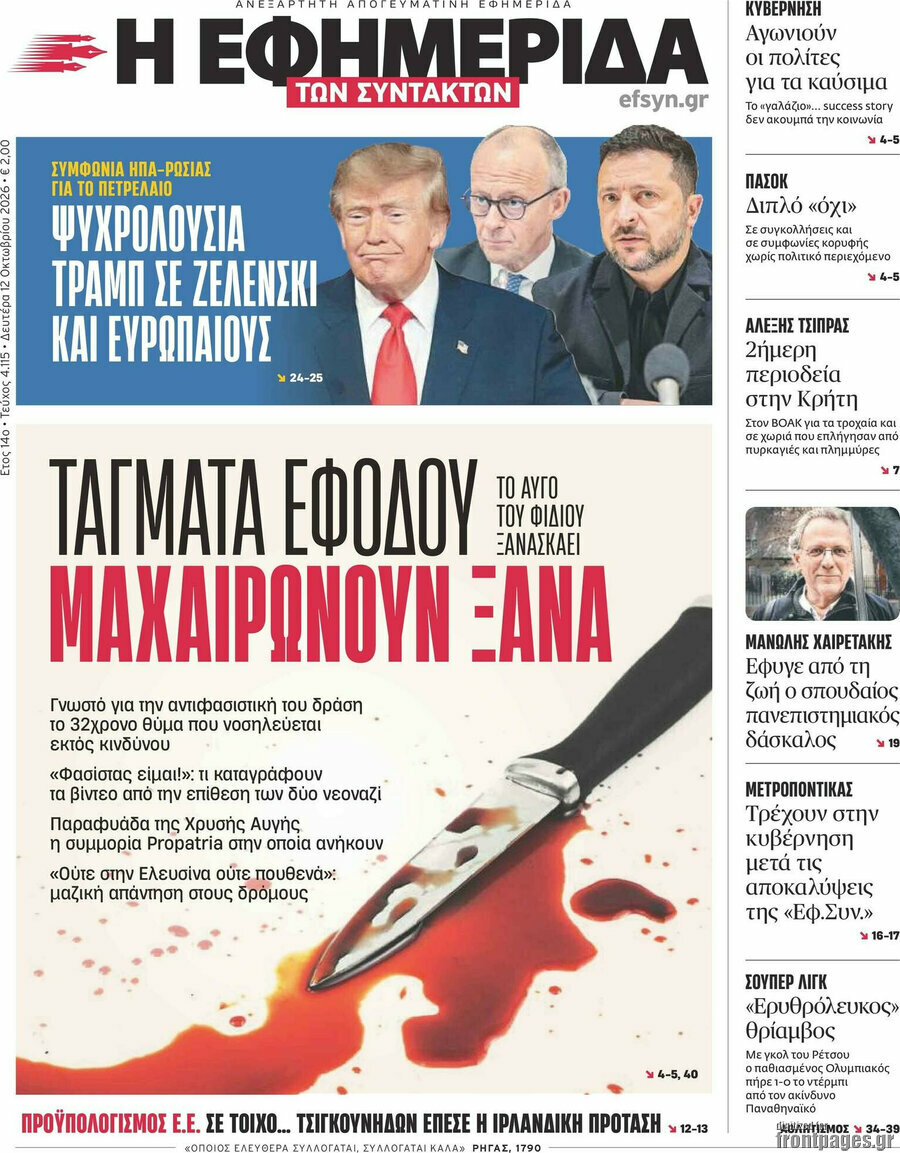
EFIMERIDA TON SYNTAKTON: Far right militia are stabbing people again
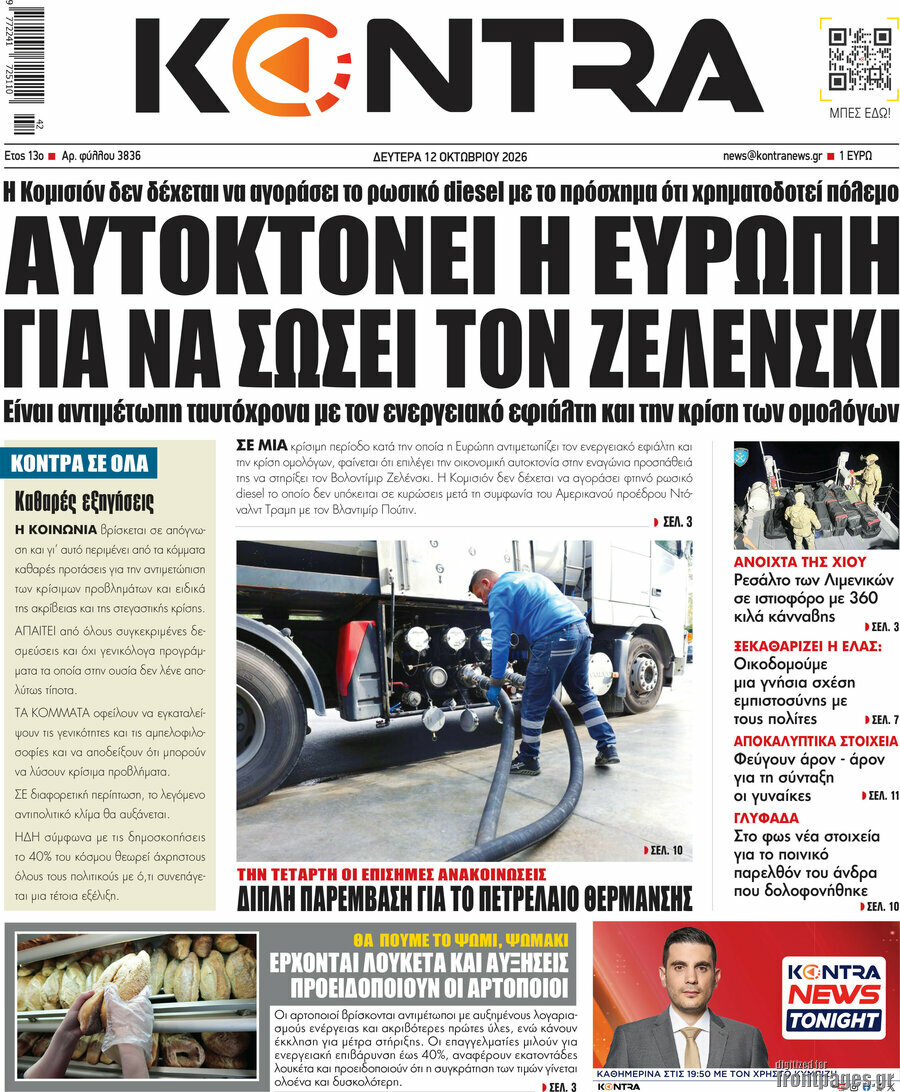
KONTRA NEWS: Europe commits suicide to save Zelenskyy
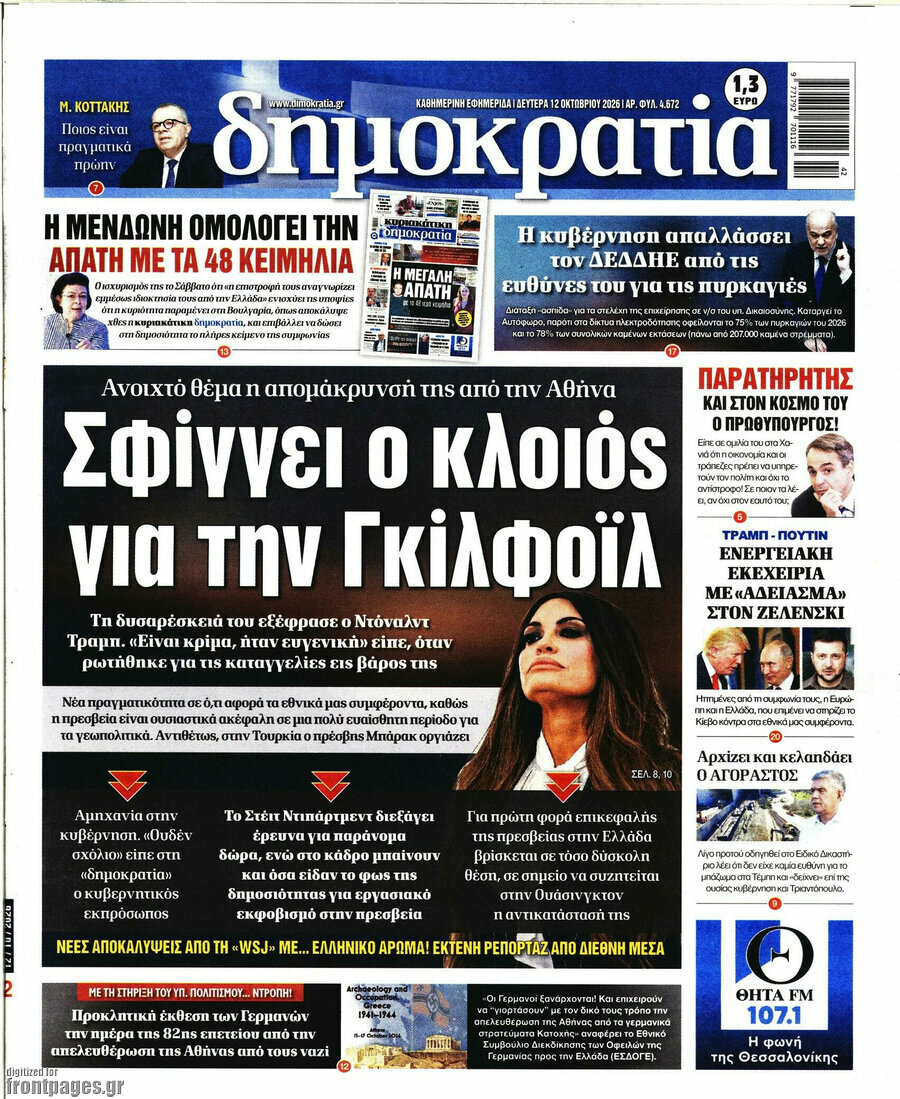
DIMOKRATIA: The noose tightens for US Ambassador Guilfoyle
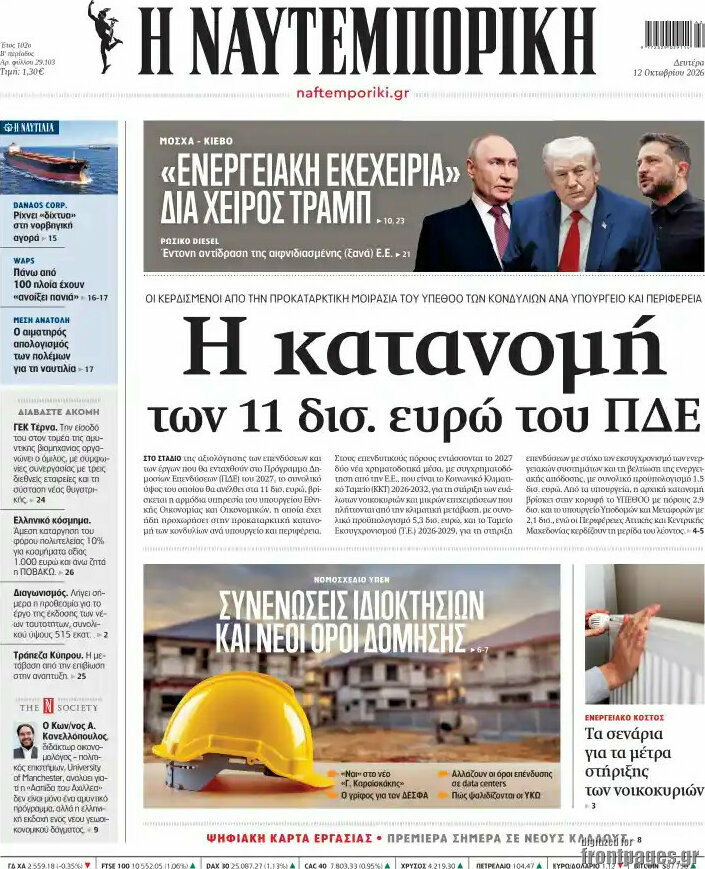
NAFTEMPORIKI: Distribution of 11 bln euro included in the Public Investment Program

DRIVING THE DAY
THE NO-GO BOX: The European Commission has come out strongly against Ireland’s proposed cuts to the EU’s next seven-year budget, days before the bloc’s leaders are set to meet in Brussels for a summit on Thursday and Friday.
During a meeting of EU ambassadors on Sunday, the Commission’s top budget official Stéphanie Riso warned that cutting over €22 billion from rainy-day funds would make Europe less equipped to deal with future crises, four EU diplomats briefed on the talks, granted anonymity to speak freely, told Gregorio Sorgi.
The Commission is “very concerned about cuts to flexibility,” one of the EU diplomats said. As a result of the changes, “we will have no ways left to help farmers and regions when crises hit, because of climate change or geopolitical tensions,” they added.
Pushing back: Ireland’s Europe Minister Thomas Byrne disputed that claim, saying in a press conference on Saturday that “each heading, under this negotiating box, offers increased flexibility throughout the proposal.”
The Irish presidency of the Council of the EU, which is steering the budget talks, cut €159 billion in current prices from the Commission’s proposal to appease a German-led group. But that’s not enough for Berlin and its allies, who sent an email on Sunday to European Council President António Costa’s team to complain about the proposal, according to two EU diplomats.
Frugal view: “We will definitely have to cut cohesion and agriculture” in the next draft of the budget, as it “doesn’t make sense to cut in all the priority topics the EUCO is discussing this week,” an EU diplomat from one of the so-called frugal states told Playbook.
Ireland focused cuts on competitiveness, foreign aid and emergency funds, while leaving untouched traditional policies such as farmers’ subsidies and regional payouts, known as cohesion policy.
That was in response to 17 countries, known as the Friends of Cohesion, asking the Irish presidency to shield agriculture and cohesion from cuts. Most governments preferred reducing flexibility to preserve politically sensitive payouts to regions and farmers.
The big loser: But these changes are a major setback for the Commission, which tried to “modernize” its own budget by steering billions towards new priorities and creating more flexibility to cope with crises. The EU executive warned that Ireland’s proposal will make the next budget more rigid than the current one — and potentially require a midterm review to respond to future crises.
In a further blow for the Commission, Ireland also watered down the link between EU payouts and economic reforms in the next budget — which is unpopular among most governments.
All roads lead to EUCO: These tensions set the scene for a fraught European Council, where leaders will react to the Irish proposal and try to make progress toward securing a deal before the end of the year. “Every day you come close to the French election they will be less willing to pay for cohesion,” said the EU diplomat.
BIG AND BREAKING
CLIMATE SPLIT: The Socialists and Democrats, Renew Europe and Greens are determined to fight an EU proposal to relax carbon pricing rules — but that could push pro-business conservative lawmakers to seek a deal with the far right, Ben Makuch reports
WHY THE FAR RIGHT IS WINNING: Germany’s far right has emerged from the shadows and pushed into the mainstream in large part by radicalizing the country’s youth, according to a deep dive by WELT’s Alexander Dinger and Lennart Pfahler. (WELT is owned by Axel Springer, POLITICO’s parent company.)
RACE FOR THE ELYSÉE: MEP Raphaël Glucksmann won France’s center-left presidential primary on Sunday, formally securing the backing of the Socialist Party and its allies for next year’s election with more than 66% of the vote.
TROUBLE DOWN UNDER: Australia’s trade minister has warned opposition lawmakers that Brussels won’t offer better terms if parliament rejects the EU-Australia free trade deal. “There is no room for negotiation here. The deal is done,” Don Farrell said. My colleagues in Canberra have the latest. My colleagues in Canberra have the latest.
RUSSIA SANCTIONS
BRUSSELS TURNS THE SCREWS ON MOSCOW: EU ministers will today sign off on the bloc’s biggest package of sanctions against Russia since the start of its full-scale invasion of Ukraine, targeting Moscow’s ability to produce missiles in a show of force amid escalating hybrid attacks, four EU diplomats and officials said.
That’s not all: Foreign ministers gathering in Luxembourg will also push ahead with plans to restrict visas for Russian tourists and ex-combatants, while examining ways to limit the movements of Russian diplomats inside the bloc, per the same officials.
What it’s about: The EU is flexing its legal muscles just over a month after Germany formally blamed Russia for a thwarted drone attack in Leipzig. The bloc will target more than 1,600 individuals and “entities” (mainly companies supporting Moscow’s war effort).
Hitting the chain: Those sanctions — more than half of which target Russia’s ballistic missile production chain — will be locked in for three years, the officials said.
Hey, Moscow! The package is a “clear response from the EU” to hybrid attacks, said a senior EU diplomat, granted anonymity to discuss confidential sanctions. “We certainly hope this will further hamper the ability for Russia to produce missiles.”
Trump trouble: Yet any hope that Europe and the U.S. would join forces to sanction Moscow seemed to have been dashed after U.S. President Donald Trump announced on Friday he’d struck a deal with Russia’s Vladimir Putin to purchase Russian diesel — and then called on Ukraine to install a new leader.
European politicians rallied behind Volodymyr Zelenskyy over the weekend, with Polish PM Donald Tusk posting on X that the Ukrainian president can count on “Europe’s full solidarity.” Trump’s surprise diesel deal has also sparked a bipartisan backlash in Washington: One group of senators has urged the president to “immediately reverse course,” saying the decision was illegal and risks giving Putin a “financial lifeline while Russia continues to kill Ukrainian civilians.”
But Trump wasn’t done with the surprises, announcing yesterday that Kyiv and Moscow had agreed to an energy ceasefire, “effective immediately” — though it wasn’t clear if both sides had, in fact, agreed. Zelenskyy said last night that Kyiv wants to see more details. American officials have been ringing around European capitals to persuade Kyiv to stop striking Russian refineries, and Ukraine could be cut off from weapons supplies and intelligence if it doesn’t play ball, the Financial Times reports.
Reasons to be skeptical: Kyiv’s former Foreign Minister Dmytro Kuleba earlier told the Axel Springer Global Reporters Network that Russia is gearing up to attack other European countries. “We [Ukrainians] don’t have to drag you — Putin will drag you into the war,” Kuleba warned. (Axel Springer is POLITICO’s parent company.)
ALSO ON THE AGENDA IN LUXEMBOURG: Alongside talks on Ukraine, foreign ministers are due today to green-light a new EU mission to train and advise Lebanon’s security forces.
Top EU diplomat Kaja Kallas, who’ll preside over the Foreign Affairs Council, will also press countries to stump up more ships to the EU’s Aspides maritime policing mission, an issue that’s only grown more urgent in the wake of deadly Houthi attacks on a Saudi airport, said a second EU official. (One person was killed and 11 injured in a strike on Riyadh airport yesterday, a day after an attack there killed 13, the BBC reports.)
Ministers will also discuss Trump’s decision to impose sanctions against the International Criminal Court in The Hague. EU diplomats have hinted that the Netherlands will seek to use the next six months before the sanctions are enforced to negotiate a solution with Washington.
Bonus: Kallas will also issue a “no tolls, no fees” declaration coordinated by the EU’s diplomatic arm and backed by 60 countries calling to protect freedom of navigation around the world.
20-SECOND PLAYBOOK PRIMER
There’s a Tripartite Social Summit later this week …but what is that? It’s a meeting between the EU institutions (Irish PM Micheál Martin and Commission chief Ursula von der Leyen will be there) and what are described as European social partners (in this case that’s the likes of BusinessEurope and the European Trade Union Confederation). These meetings take place twice a year and they discuss economic, employment and social policy issues.
CHRISTMAS AT THE AIRPORT?
DO BETTER, ZAVENTEM: Brussels Airport was singled out for criticism by Migration Commissioner Magnus Brunner as he said EU countries and airports need to “do their job” so travelers aren’t stuck in airports over the Christmas holidays.
The EU’s Entry/Exit System “has to work,” Brunner told Zoya Sheftalovich. “The member states had enough time to prepare themselves for this system.”
Happy anniversary, now wait: A year ago today, Europe began rolling out the EES, which digitally registers the fingerprints and photos of non-EU visitors. Since it became fully operational in April, travelers have been plagued by long waits at some airports — including at Brussels Airport, where people were stuck for up to five hours last month.
“Some member states are a bit behind,” Brunner acknowledged. “We have some challenges, like Zaventem for instance, in Belgium, but also in other member states. And they have to do their job. They agreed on the new system.” The Commission has offered support from border agency Frontex and funding to countries to help implement the system, Brunner said, insisting he’s “very confident” the issues will be ironed out.
Infrastructure at Brussels Airport “cannot cope” with the number of passengers coming into Zaventem and the Brussels Airport Company must “make significant changes,” said a spokesperson for Belgian Interior Minister Bernard Quintin. The airport can process 500 to 600 non-Schengen travelers an hour, compared with nearly 3,500 who arrive between 6 a.m. and 10 a.m. on busy days, he said.
Brussels Airport didn’t directly respond to the criticism, instead saying in a statement that “all parties involved” were working to fix the delays, including by testing new e-gates and pre-registration kiosks and training more police. “The need for additional infrastructure is also being assessed,” the statement said.
DASHBOARD
The Commission’s budget proposal earmarked almost €218 billion in cohesion funding for the bloc’s poorest regions. According to Eurostat figures, the latest year available, most of those regions would be in the east and south of the bloc.
 |
4 MORE THINGS GETTING US TALKING
LACK OF INFLUENCERS: Journalist associations were up in arms about the EU’s decision to invite social media influencers to the bloc’s gatherings earlier this year — but there won’t be any content creators present at this week’s European Council summit, Mari Eccles reports.
MESSAGE TO PUTIN: France is trying to sharpen its air force’s nuclear arm to be a credible deterrent to Russia, its commander told Laura Kayali in a rare interview.
SETBACK FOR TUSK: Independent Łukasz Gibała nabbed the mayoral runoff in Krakow on Sunday, dealing a fresh blow to PM Donald Tusk’s governing Civic Coalition party.
BANKS VS. BOTS: Bank failures, shoppers losing money and cyber attacks are just some of the things that could go wrong as the use of agentic AI ramps up in finance, Eleanor Myers writes.