
Belgian authorities issue arrest warrant for MP Avramopoulos in Qatargate probe
Belgian authorities have reportedly issued a European arrest warrant for former European Commissioner and current Greek MP Dimitris Avramopoulos, a member of the ruling New Democracy party, as part of the ongoing investigation into the Qatargate corruption scandal. According to reports, Avramopoulos faces allegations of participation in a criminal organization, with investigators examining a financial benefit estimated at approximately €73,000.
Four convicted over ministry leak of diaspora Greeks’ emails
An Athens court on Monday convicted a former European Parliament lawmaker with the governing New Democracy party and another three people of privacy and confidentiality breaches over the leak of data belonging to diaspora Greeks. All four defendants were given suspended sentences of up to 20 months over the incident, in which an Interior Ministry list of email addresses was passed on to former MEP Anna Michelle Asimakopoulou for use in canvassing just before the June 2024 European Parliamentary elections. Asimakopoulou was sentenced Monday to 20 months in prison, suspended for three years, and a former Interior Ministry secretary-general, Michalis Stavrianoudakis, received an 18-month suspended sentence.
PM Mitsotakis: Threats increasingly hybrid; priority is strengthening national defence
Prime Minister Kyriakos Mitsotakis has said that the country’s security is no longer defined solely by traditional theatres of operations but increasingly by the digital domain. His remarks came during the inauguration of the new Cyber Command building of the Hellenic National Defence General Staff at the Ministry of National Defence.
FinMin Pierrakakis: New National Investment Fund to act as catalyst for growth
The Minister of National Economy and Finance Kyriakos Pierrakakis, announced the renaming of Growthfund to the National Investment Fund during a speech at a Hellenic Corporation of Assets and Participations conference titled “Greece at the centre of the international investment dialogue.” He said the Growthfund was created during a period of crisis, when public assets were discussed in terms of fear, supervision and constraint, adding that today’s Greece is no longer the same country and that this shift should be reflected institutionally.
ATHEX: Benchmark climbs above 2,500 points
The main index of the Greek bourse mounted on Monday the psychologically important level of 2,500 points for the first time since November 2009, as it gained another percentage point after last week’s advance to historic highs. The diversification of investment interest and of targeted purchases served to increase optimism, although the mid-caps index suffered losses. This was done with the lowest daily turnover of the last month.
https://www.ekathimerini.com/economy/1307421/athex-benchmark-climbs-above-2500-points

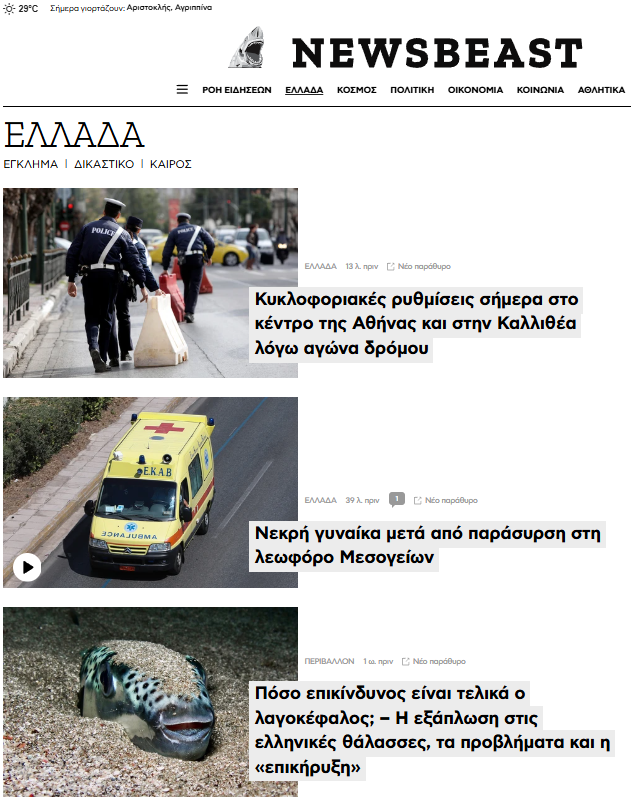

KATHIMERINI: Independent Authority for State Revenue (AADE) places bank transfers to children under scrutiny
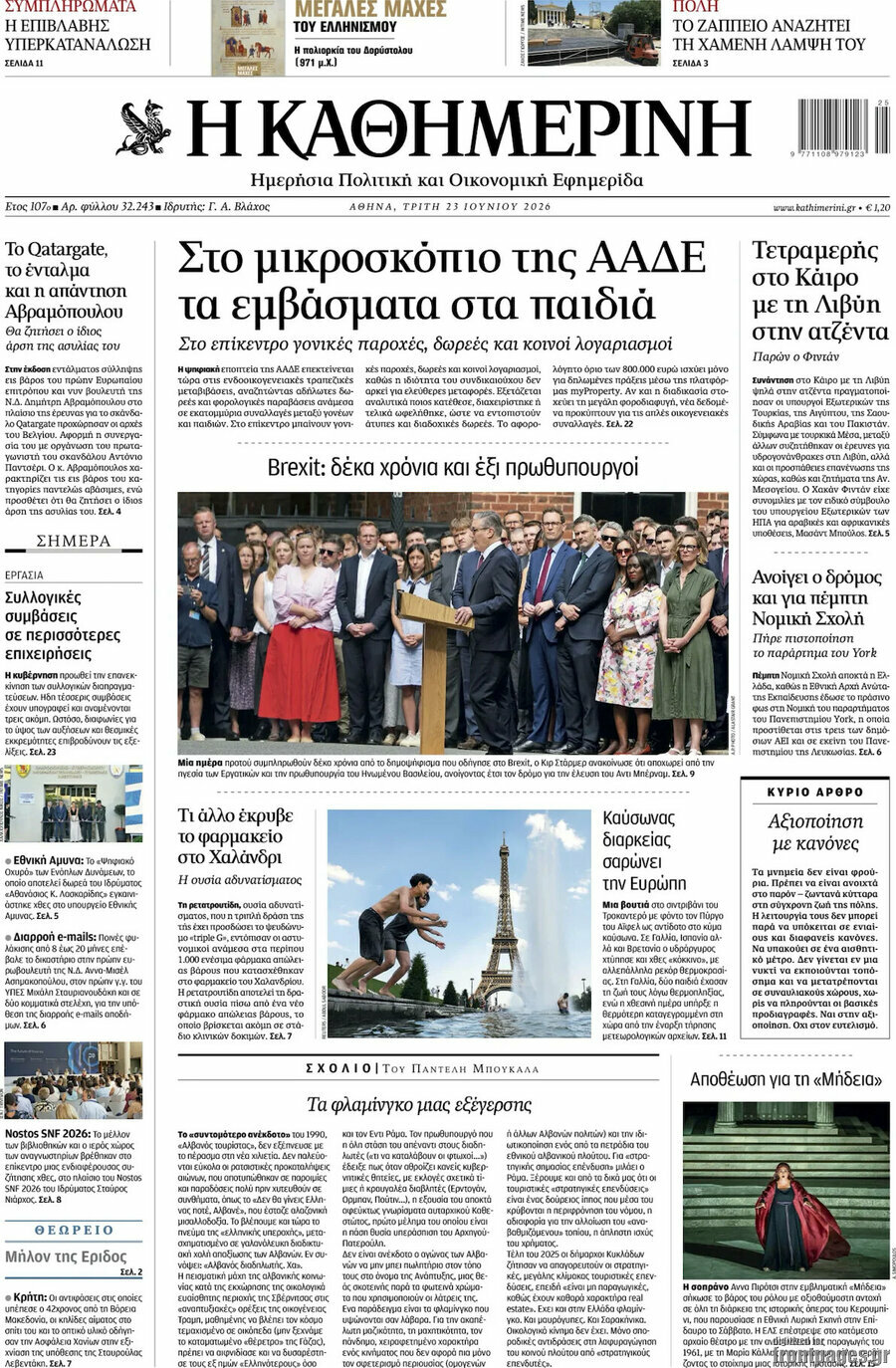
TA NEA: Emailgate and Qatargate: Double blow
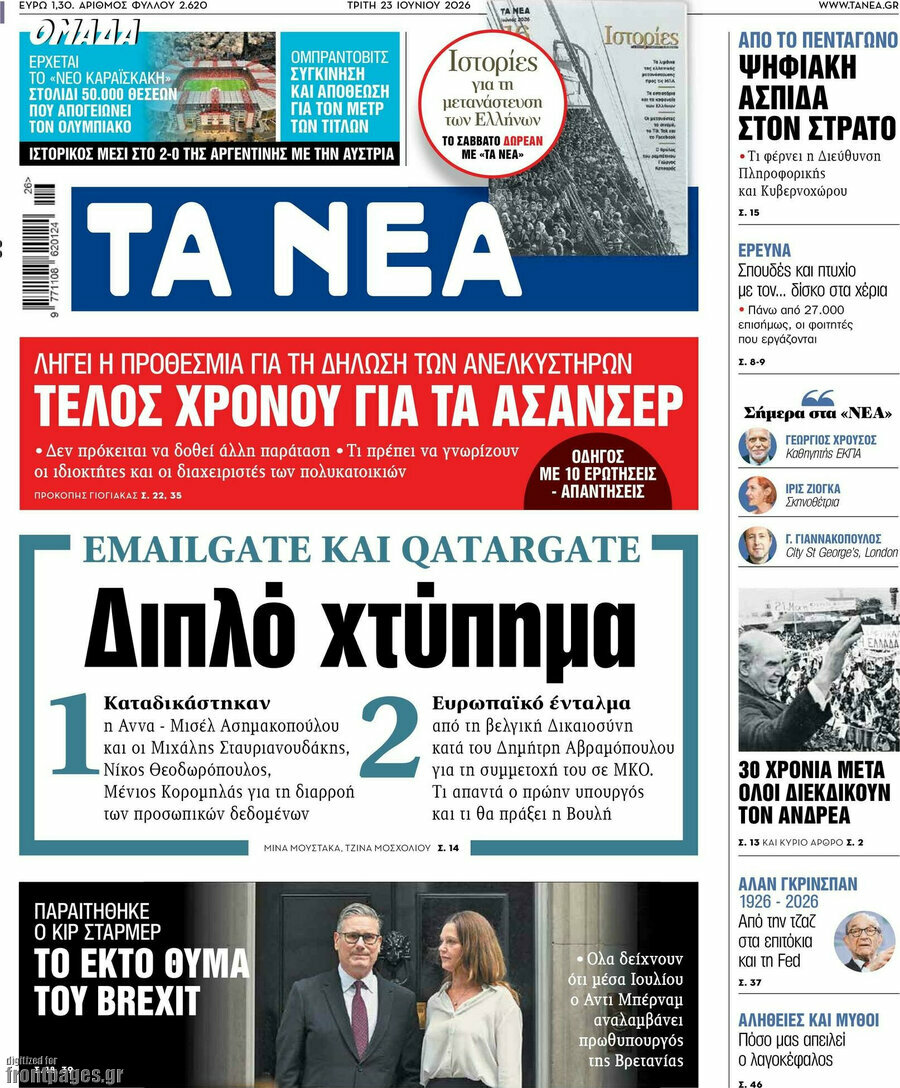
EFIMERIDA TON SYNTAKTON: New headache for New Democracy
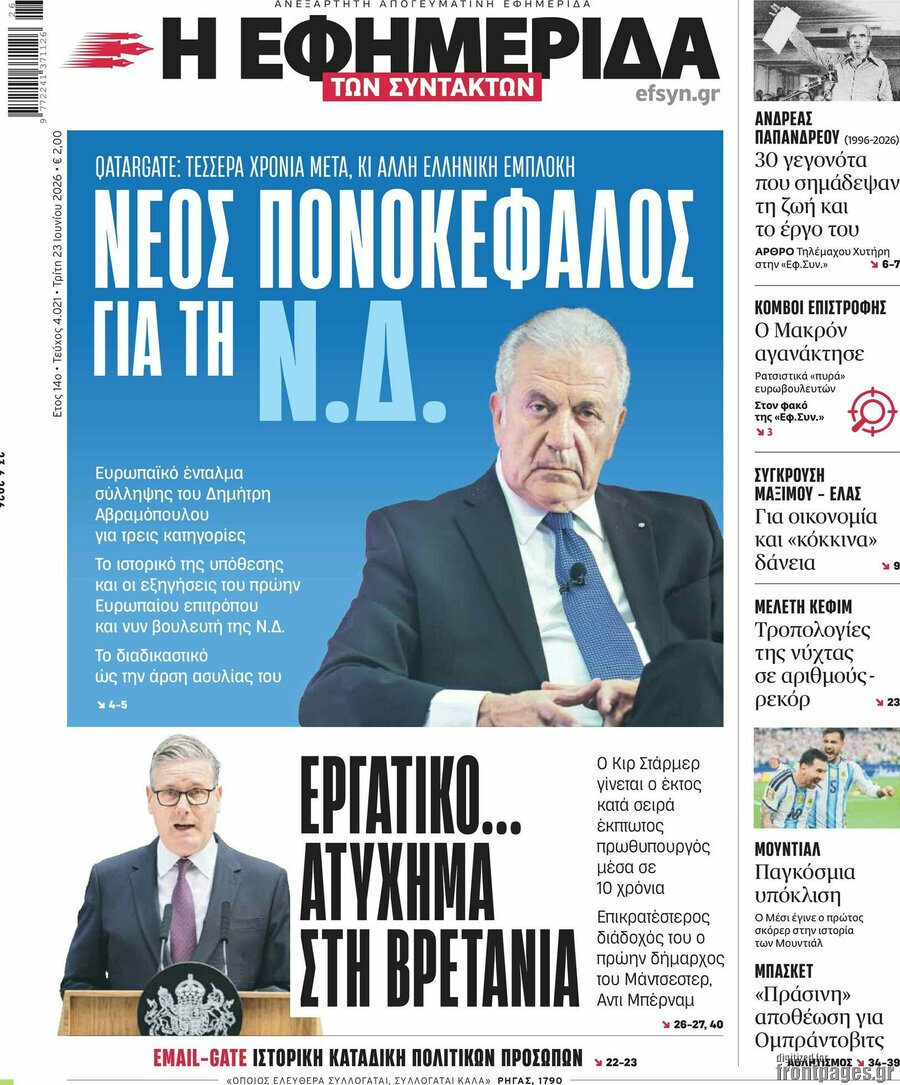
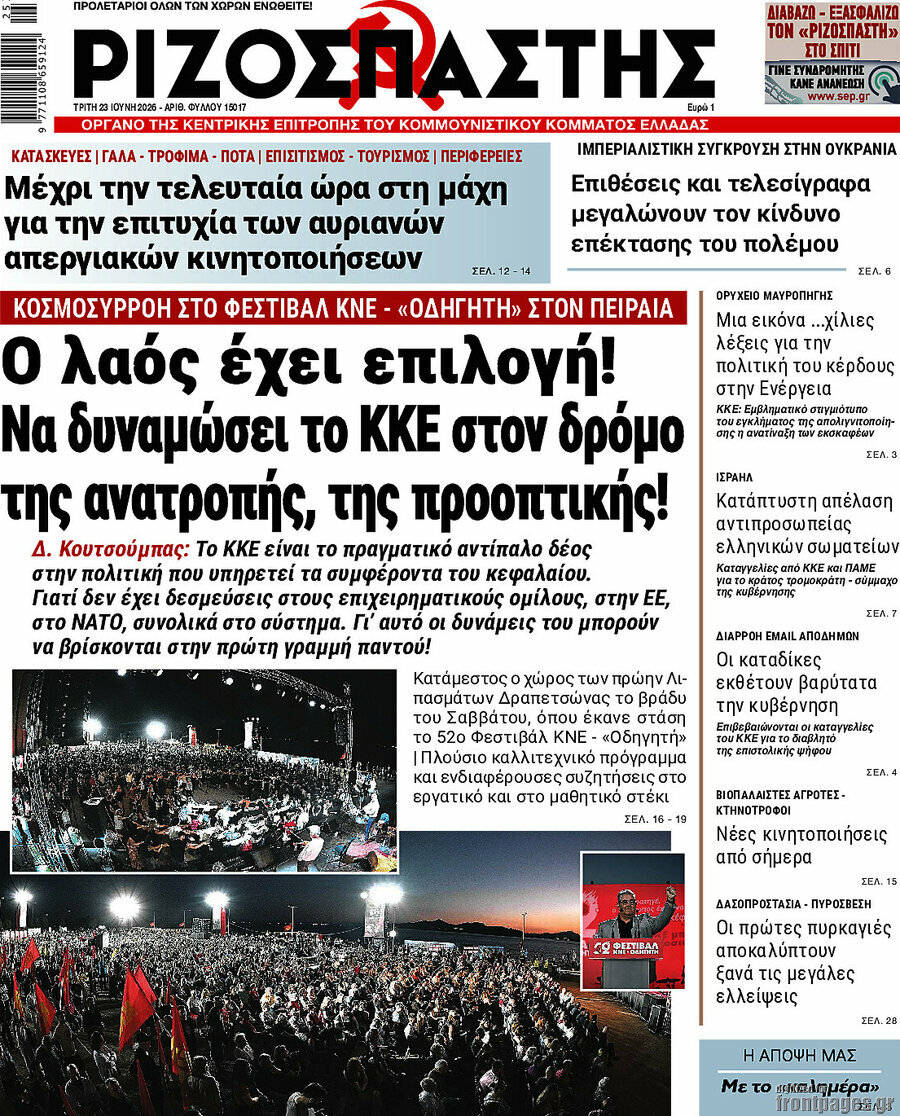
RIZOSPASTIS: The people have a choice! Reinforce the Greek Communist Party
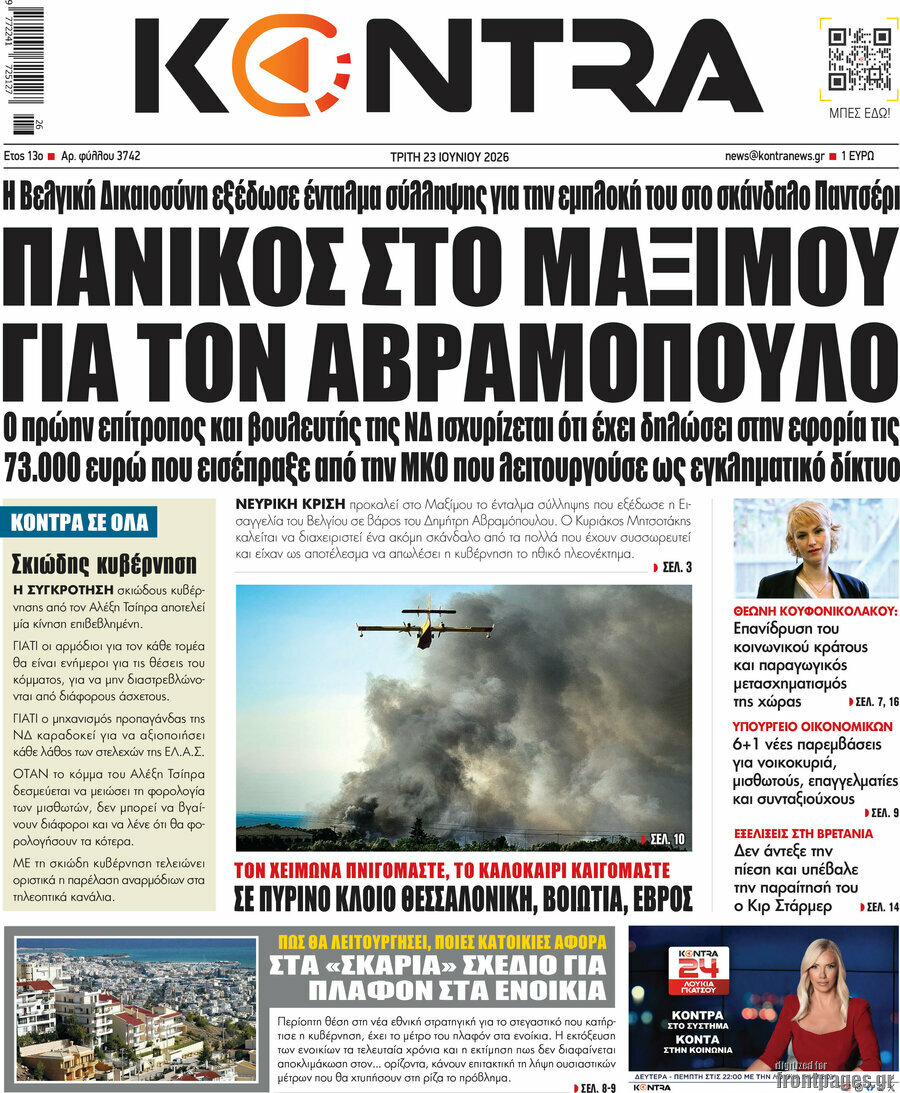
KONTRA NEWS: PM’s office in panic regarding Avramopoulos
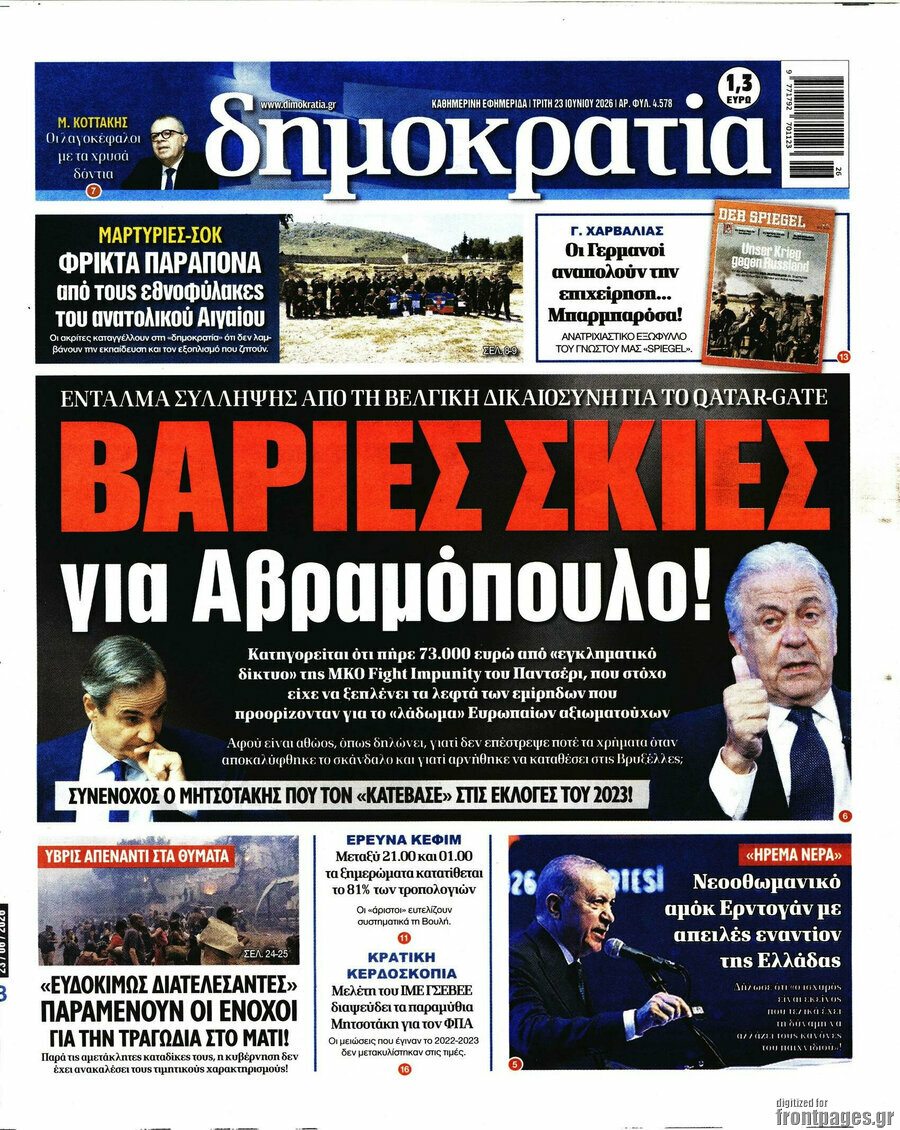
DIMOKRATIA: Heavy shadows over Avramopoulos
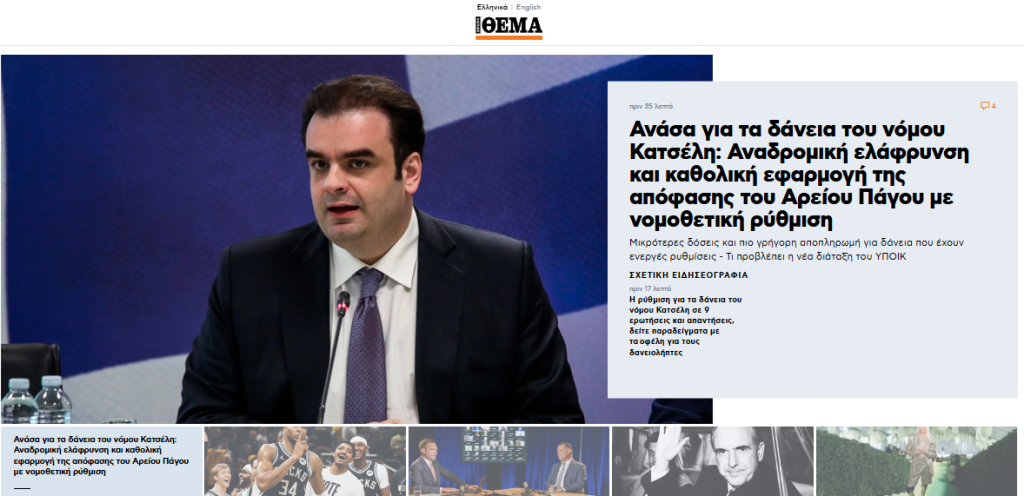
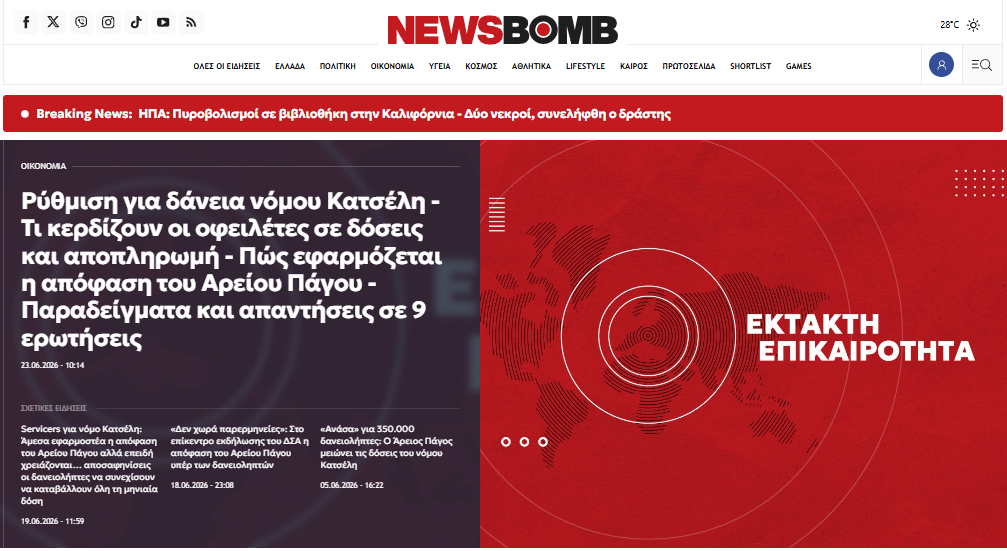
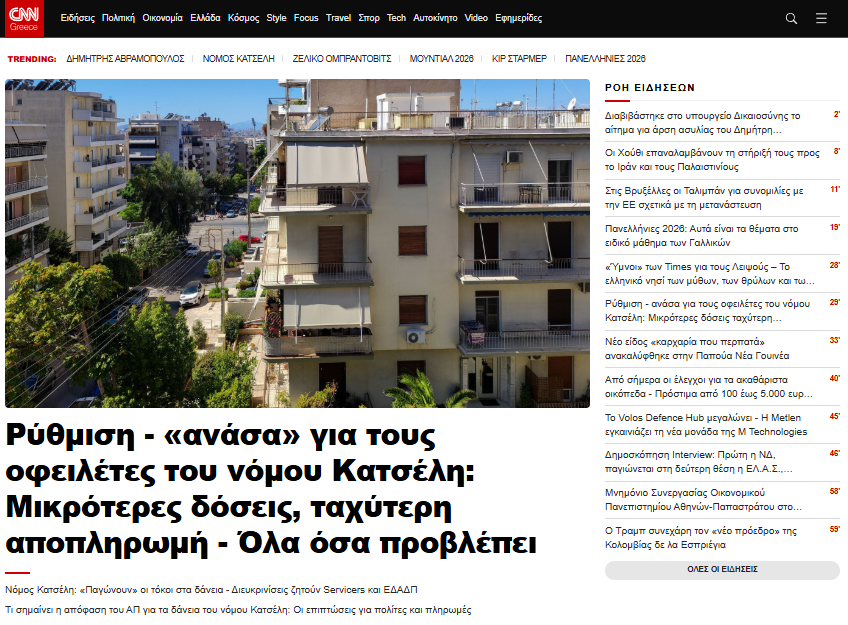
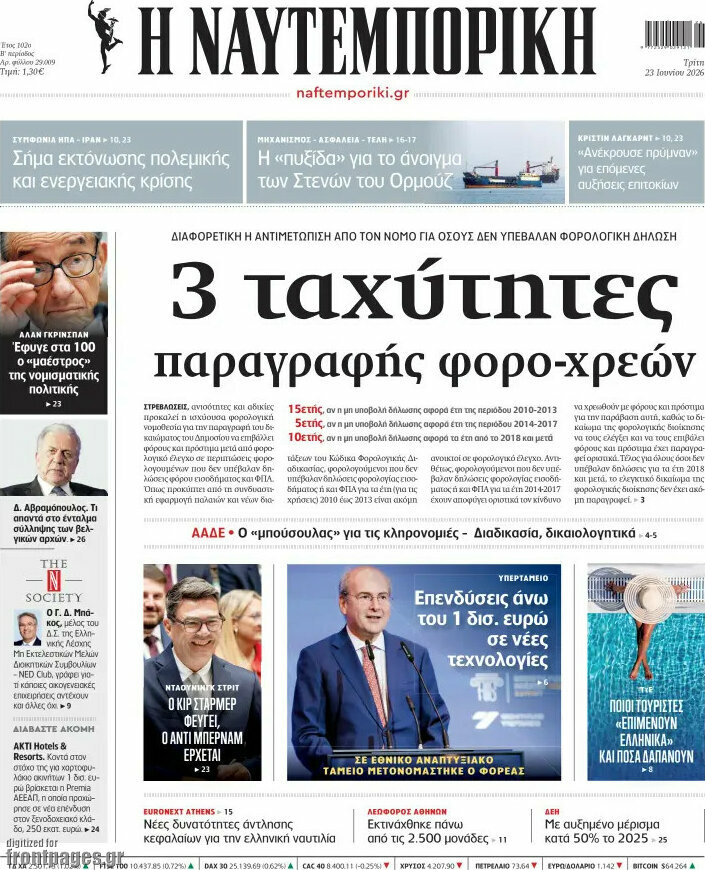
NAFTEMPORIKI: 3 gears for the statute of limitations regarding tax-debts

DRIVING THE DAY
A REBEL BLOC RETURNS: Hungary’s Péter Magyar is hosting the first Visegrád Four summit in two years as the Central European quartet looks to claw back influence over EU policy.
Their new mission: The V4 — which also includes Czechia, Poland and Slovakia — once wielded outsized influence by banding together against Angela Merkel’s open-door migration policy. Now that their hardline stance on migration is closer to the European mainstream, they’re shifting focus to the EU’s long-term budget and Green Deal measures, particularly pushing back against the Emissions Trading System (ETS).
What to watch: The summit takes place today on Magyar’s home turf in Budapest and nearby Gödöllő. While the leaders have met informally in recent weeks, this marks the first proper V4 summit since 2024. It is largely about political signaling and identifying areas of common ground.
One EU diplomat compared the gathering to a first date: “They need to see on which areas they can work together, what their common interests are, and what their ‘hobbies’ [shared priorities] are. It’s about sniffing each other out — to what extent they can still coordinate ahead of important votes.”
What they share: Skepticism toward ambitious green policies … support for a larger EU long-term budget … and a tough approach to irregular migration. And a cautious approach toward EU enlargement — with several members in no rush to grant Ukraine full membership to the bloc.
Together, Magyar, Polish Prime Minister Donald Tusk, Czech Prime Minister Andrej Babiš and Slovak Prime Minister Robert Fico can pull the rest of Central and Eastern Europe along, according to Milan Nič of the German Council on Foreign Relations: “Once you have these four together, the rest of the CEE will not stand against them.”
The driving force is the budding relationship between Tusk and Magyar. Both belong to the European People’s Party family, and Magyar made Poland his first foreign visit after taking office in May.
But but but … times have changed since the group’s peak influence in the mid-2010s. It’s not just the V4’s position on migration that is now shared widely across the EU. Complaints about the ETS are also spreading across the union. (The European Commission is expected to publish a review of the carbon pricing scheme in July after a push by 12 countries.) It will be harder for the V4 to stand out.
And there are bigger differences between the four now — namely on Russia. Fico is among the European leaders friendliest to Vladimir Putin. Magyar, though he has distanced himself from his predecessor Viktor Orbán, leads a country that still relies on energy imports from Russia. Czechia and Poland are more hawkish toward Moscow.
The bottom line: The V4 is keen to get its swagger back. But in an era of proliferating diplomatic formats — from Nordic-Baltic groupings to the E3 — it still has to prove it can once again wield real leverage.
BIG AND BREAKING
TURNING AWAY FROM TRUMP: Donald Trump’s support was once seen as an asset for the EU’s populist politicians — but the likes of Giorgia Meloni and Jordan Bardella are now rethinking their association as the American president’s brand sours in Europe. Meloni’s recent spat with Trump looks set to boost her hopes of re-election.
THE STARMER FALLOUT: U.K. Prime Minister Keir Starmer is stepping down but will limp on as a lame duck for a few more weeks, leaving Britain’s “reset” with the EU up in the air. Next month’s summit has been postponed, the European Council said.
Andy Burnham looks likely to take over, but he’ll inherit a country still deeply fractured by the Brexit referendum … and there’s no easy way to close the divide. Finally: read how Starmer’s dramatic resignation unfolded.
LET US HELP WRITE THE RULES: European tech CEOs are seeking the ear of Commission President Ursula von der Leyen to push policies they think will benefit the EU’s industrial leaders.
SÁNCHEZ ALLY JAILED: Spanish Prime Minister Pedro Sánchez is under pressure after his former Transport Minister José Luis Ábalos was sentenced to 24 years in prison for corruption on Monday.
MISSION TO ISRAEL
ŠUICA STEPS IN: Mediterranean Commissioner Dubravka Šuica is leading a sensitive EU mission to Israel, just days after the bloc’s chief diplomat Kaja Kallas had a public blowup with her Israeli counterpart, Gerardo Fortuna and I report.
Šurprise! The trip was kept tightly under wraps — so much so that the European Commission only confirmed it once Šuica had already landed in Israel on Monday. Then came the reveal: She was meeting with Israeli Foreign Minister Gideon Sa’ar, who last week cut off all ties with Kallasover reports that the chief EU diplomat had compared Israel’s treatment of Palestinians to apartheid-era South Africa.
Nothing to see here: Commission spokesperson Markus Lammert told Playbook the visit was “a long-planned diplomatic mission” disclosed late for security reasons. But an EU diplomat said the optics of the trip — which coincides with Kallas’ visit to Jordan to meet Arab League leaders — were odd. “If it was long scheduled, it could have been canceled after Sa’ar’s tweet,” they said.
What’s Šuica up to? Two EU officials said that Šuica was in Israel to ink a three-month extension to the EU’s two missions in the region: EUBAM Rafah, the EU border assistance mission at the Rafah crossing, and EUPOL COPPS, which supports the Palestinian Civil Police. They’re set to expire on June 30.
“This is an important trip, with important results,” one of those officials said. The missions weren’t the only deliverable: Two projects on water and waste management in Gaza also secured provisional clearance after talks with Sa’ar, the official told Playbook exclusively.
But shouldn’t that have been Kallas’ job? Two other EU officials said the high representative’s office had requested the missions’ extension. “It was supposed to happen anyway,” one of them said, adding that it was a technical matter that fell under the competence of the European External Action Service.
Others defended sending Šuica: “It’s not random that the positive outcome came today,” one official argued. “What cannot be denied is that behind Kallas there is a service that has difficult relations with Israel.”
The takeaway: After Šuica attended Donald Trump’s Board of Peace meeting earlier this year, the Croatian commissioner is increasingly looking like Ursula von der Leyen’s go-to for sensitive matters involving Israel.
20-SECOND PLAYBOOK PRIMER
European Parliament President Roberta Metsola has received complaints about alleged “hate speech” by MEPs, but how does the Parliament police such matters? All MEPs have to sign up to a code of conduct, introduced in 2012, that covers issues such as conflicts of interest. But behavior in the hemicycle is governed by the Parliament’s rules of procedure (rule 10). In these cases, Metsola decides if penalties should be handed down, including reprimands, suspension of the daily allowance or restrictions on participation in parliamentary activities.
TALK TO PLAYBOOK: On the Brussels Playbook Podcast, Zoya asked for your thoughts on work from abroad policies. Whatsapp us on +32 491 050629 and listen from 7 a.m. to hear if we give you a shoutout.
ANTI-PUTIN JAMBOREE
HOW TO BRING DOWN THE KREMLIN: The European Parliament is today hosting the second edition of a mostly closed-door conference bringing together figures from Russia’s democratic opposition. The event aims to provide a platform for “dialogue and cooperation” among civil society groups and pro-democracy activists, according to the program.
Don’t leave us behind: With peace talks between Russia and Ukraine stalled, Ilya Yashin — one of Russia’s leading opposition figures since Alexei Navalny’s death and a participant in the conference — told POLITICO the EU should play a more “decisive” role in those negotiations. He wants Brussels to demand that the Kremlin “legalize political opposition in Russia” and allow exiled critics to return, and to push for democratic change. “We must all understand that the only lasting guarantee of Europe’s security is a democratic Russia,” he said.
Russian society has been “intimidated into silence” and opposition figures have been killed or exiled, Yashin said. Even so, he reckons “it is obvious that we are now reading the final chapter of Putin’s rule in Russia.” The president is increasingly viewed as a source of instability and elites are chafing under sanctions, while Ukrainian drone strikes are creating “a tense psychological atmosphere” and depriving people of their sense of security.
Other notable attendees: Defense Commissioner Andrius Kubilius; Enlargement Commissioner Marta Kos; Dirk Schuebel, head of the EEAS’s Russia division; Mariana Katzarova, U.N. special rapporteur on human rights in Russia; foreign affairs officials from Germany, Sweden and the Netherlands; Russian opposition activist and economist Yulia Navalnaya; Mikhail Khodorkovsky, co-founder of the Russian Anti-War Committee; Natalia Arno, founder and president of Free Russia Foundation; Galina Timchenko, co-founder of Meduza.
3 MORE THINGS GETTING US TALKING
ROMANIA’S CRISIS DEEPENS: Romania’s Centrist President Nicușor Dan will have to nominate a new prime minister after Adrian Veștea failed to win a vote of confidence in parliament yesterday, Reuters reports.
FORMER COMMISSIONER FACES ARREST: Belgian authorities issued a European arrest warrant for Greek former European Commissioner for Migration Dimitris Avramopoulos in connection with the Qatargate scandal.
POLISH LEADERS TRADE BLOWS: Donald Tusk’s center-right government has accused nationalist President Karol Nawrocki of making a strategic blunder by stripping Ukrainian President Volodymyr Zelenskyy of Poland’s most prestigious medal.