PM Mitsotakis to stress that citizens’ purchasing power must underlie Euro Summit decisions
Citizens’ purchasing power, which is the other side of competitiveness, is expected to be underlined by Prime Minister Kyriakos Mitsotakis at the Euro Summit meeting in Brussels on Thursday, as a rule to go by, government sources said on Wednesday.
Mitsotakis says tourism not affected by Gulf crisis, Greece a safe country
Prime Minister Kyriakos Mitsotakis said Wednesday there is “no reason at all to worry” about visiting Greece due to the Middle East crisis, and voiced hope that by the key summer tourist season disruptions to long-haul flights via the Persian Gulf will have ended. Speaking to the Neos Kosmos Greek community newspaper of Australia, Mitsotakis insisted that Greece is a safe country for tourists, on whose presence the economy largely depends.
PASOK’s strategy is to defeat ND, bring about political change and implement its program,’ Androulakis says
“PASOK is in favor of reducing VAT and the special consumption tax on fuel for as long as the emergency situation lasts, because the state should not profit from the rise in energy and fuel prices,” main opposition PASOK-Movement for Change leader Nikos Androulakis said on Wednesday in an interview with MEGA TV. The leader of the main opposition also stressed that PASOK has a strategy: to defeat New Democracy, bring about political change, and implement its program.
Greece among 10 EU states pressing Brussels to keep giving industry free carbon permits
Ten European Union member states, including Greece, have called on the bloc to keep handing out free carbon permits to industry to help curb costs as the US-Israeli war on Iran sends energy prices soaring.
ATHEX: Stocks swayed by the winds of Iran war
The constant expansion of the conflict in the Middle East continued on Wednesday and reversed the early gains of stocks at Athinon Avenue. The benchmark and all main indexes of the market closed the day with losses, mainly due to news of fresh strikes on the Iranian energy infrastructure that sent energy commodities soaring again. Because of this, domestic developments appear to garner minimal interest and the stock market stays at the mercy of geopolitics.
https://www.ekathimerini.com/economy/1298501/athex-stocks-swayed-by-the-winds-of-iran-war


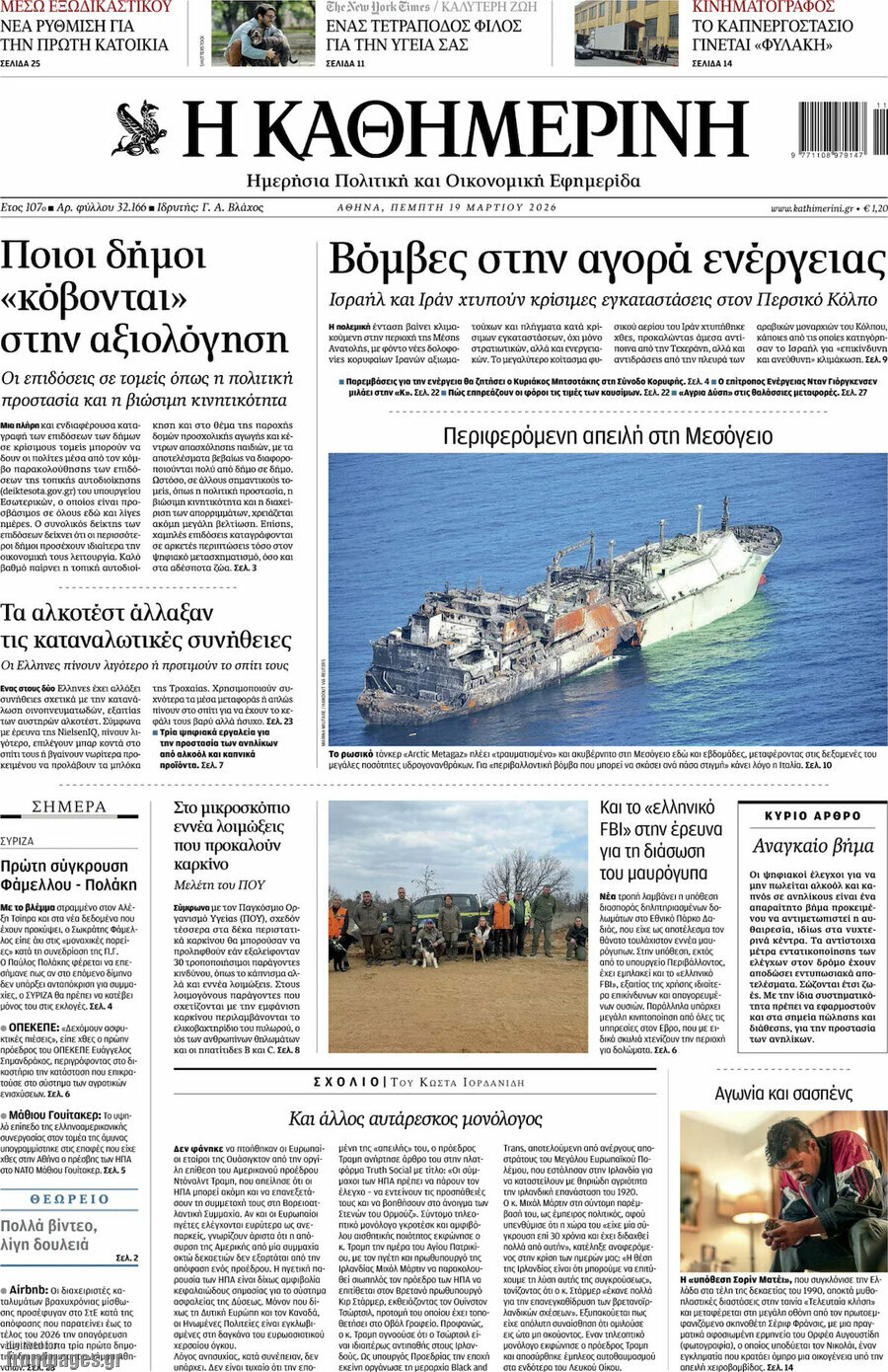
KATHIMERINI: Bombs hit the energy market
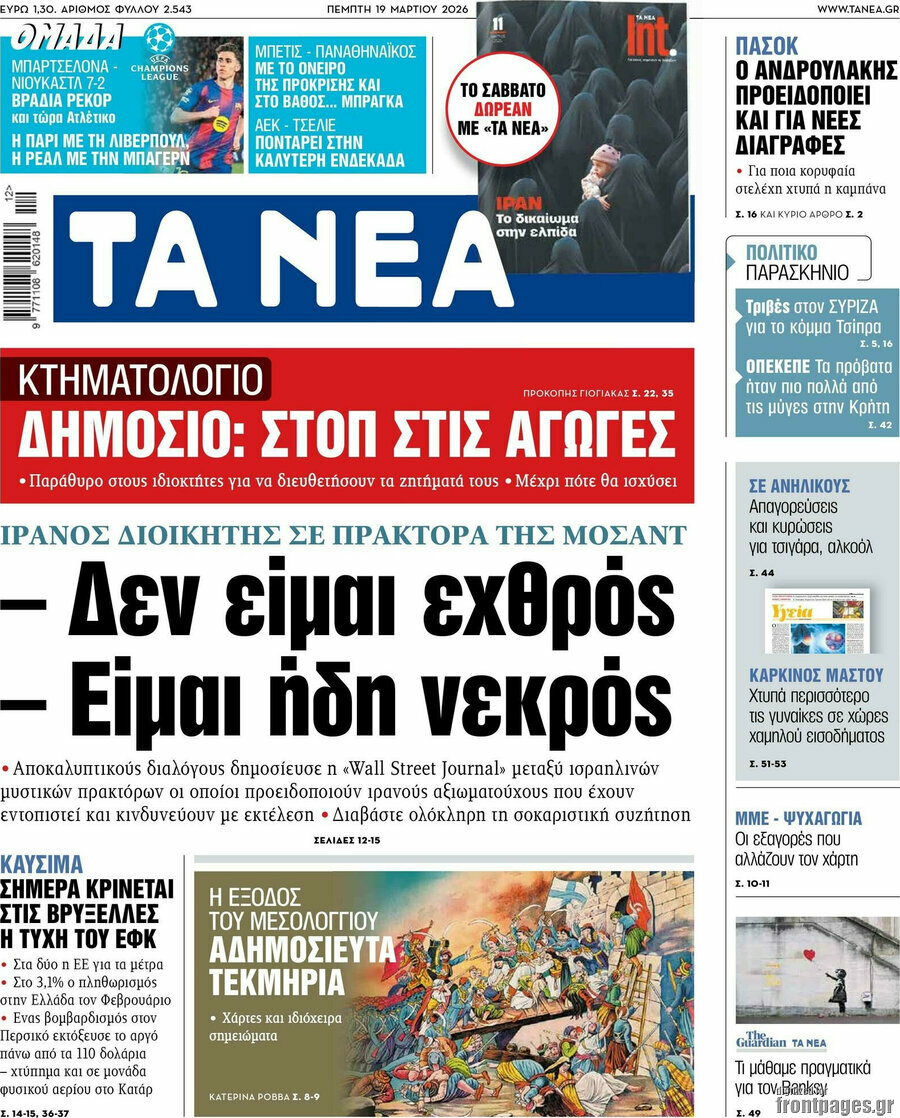
TA NEA: Iran commander to Mossad agent: “I am not an enemy”, “I am already dead”
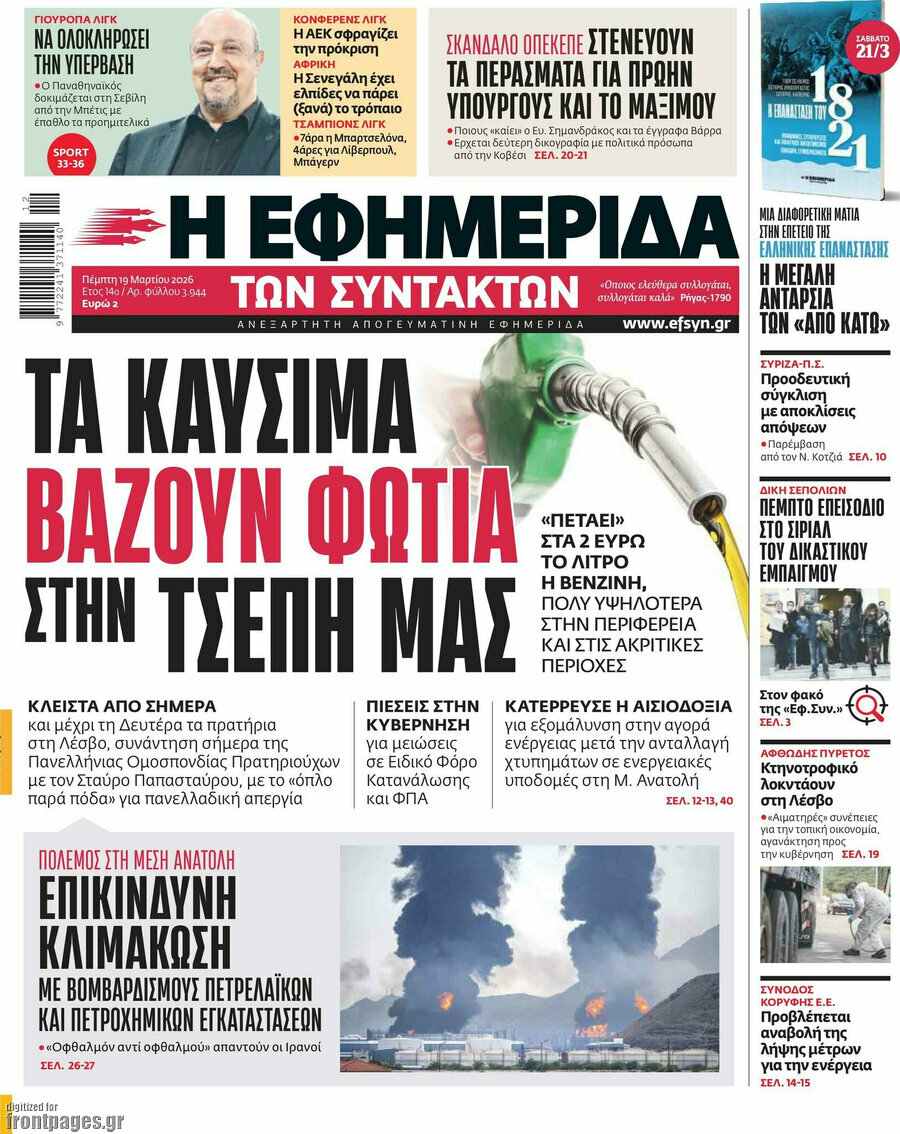
EFIMERIDA TON SYNTAKTON: Fuel prices set our pockets on fire
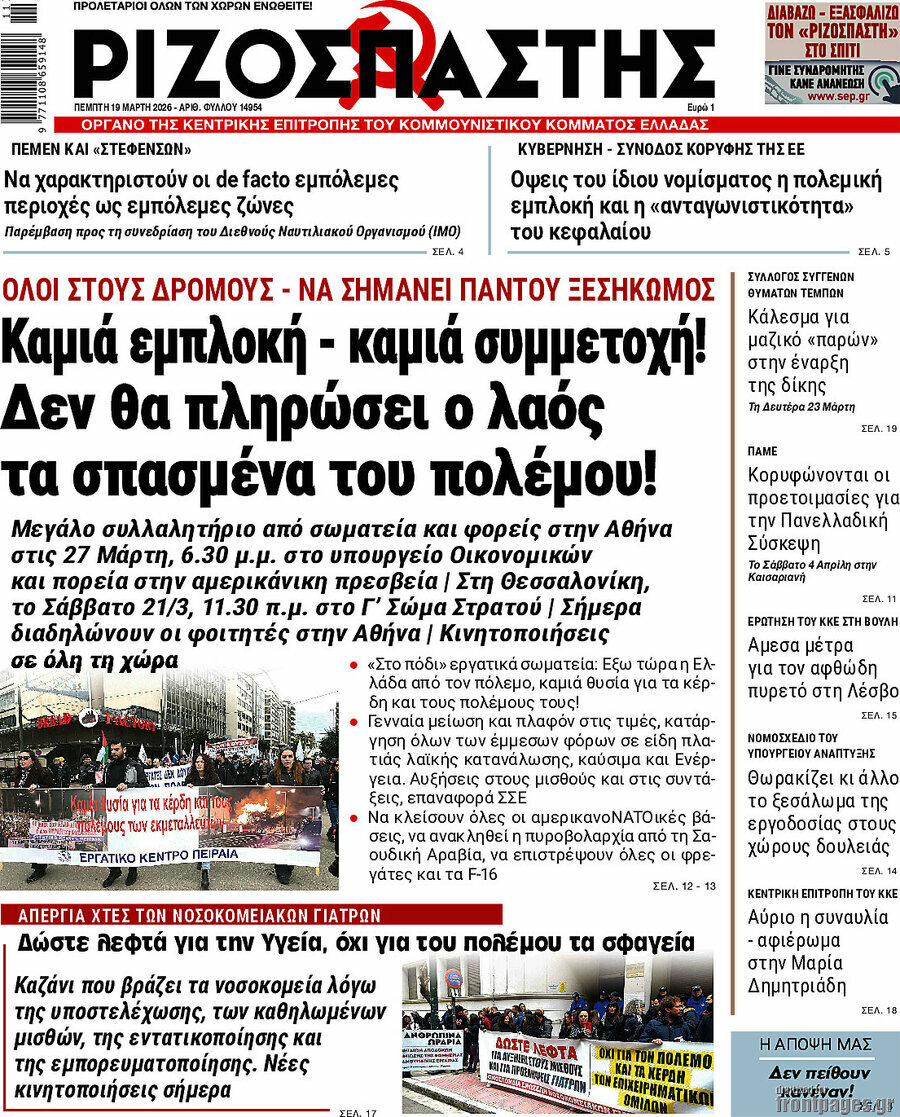
RIZOSPASTIS: Rallies against the war: No involvement, no participation!
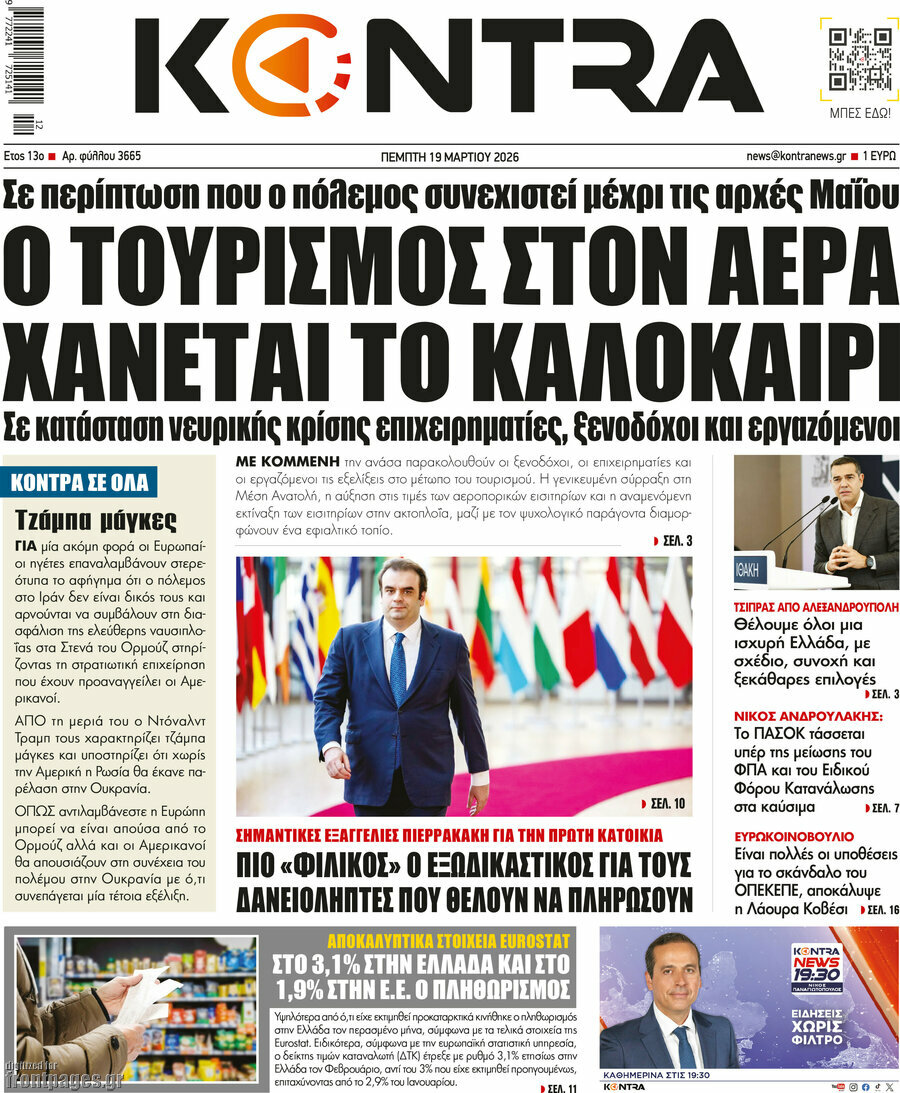
KONTRA NEWS: Tourism hangs in the balance – The summer is being lost
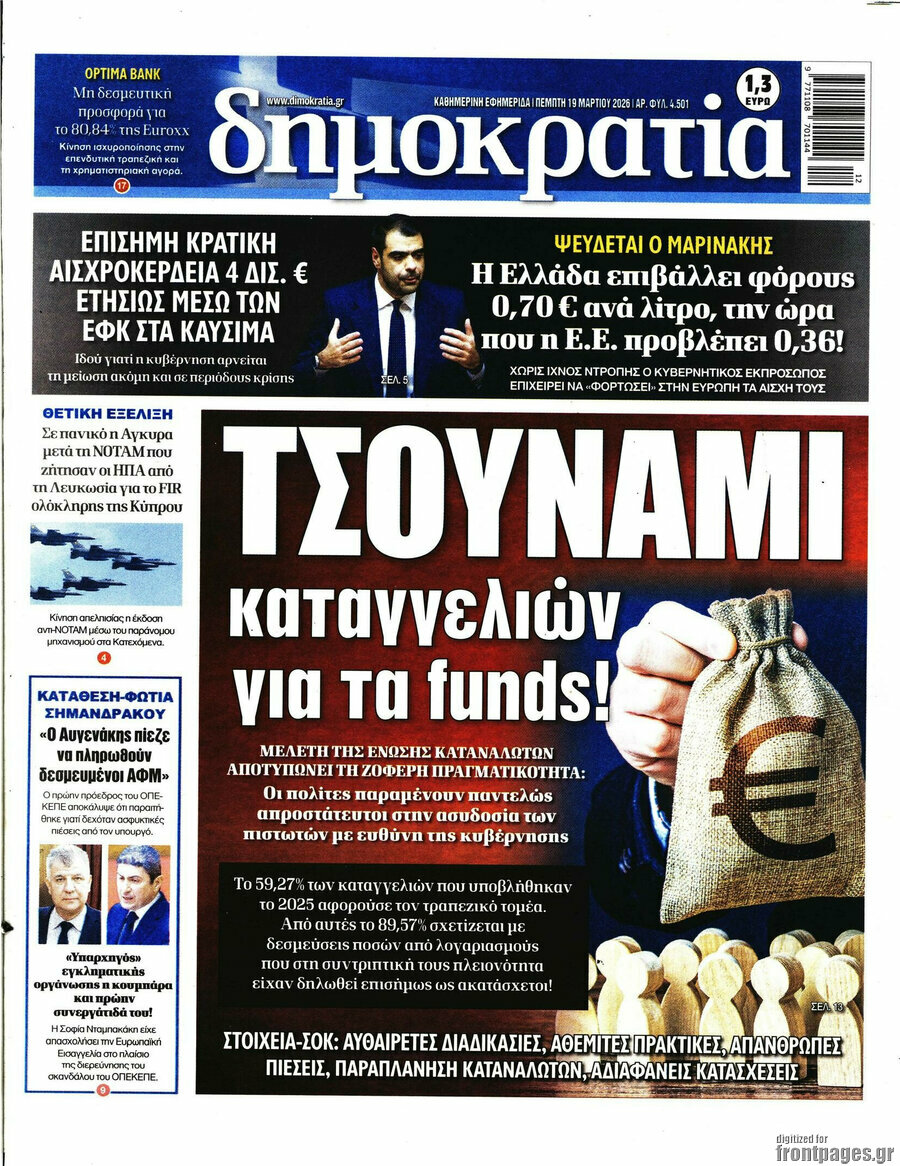
DIMOKRATIA: Tsunami of complaints against funds/servicers
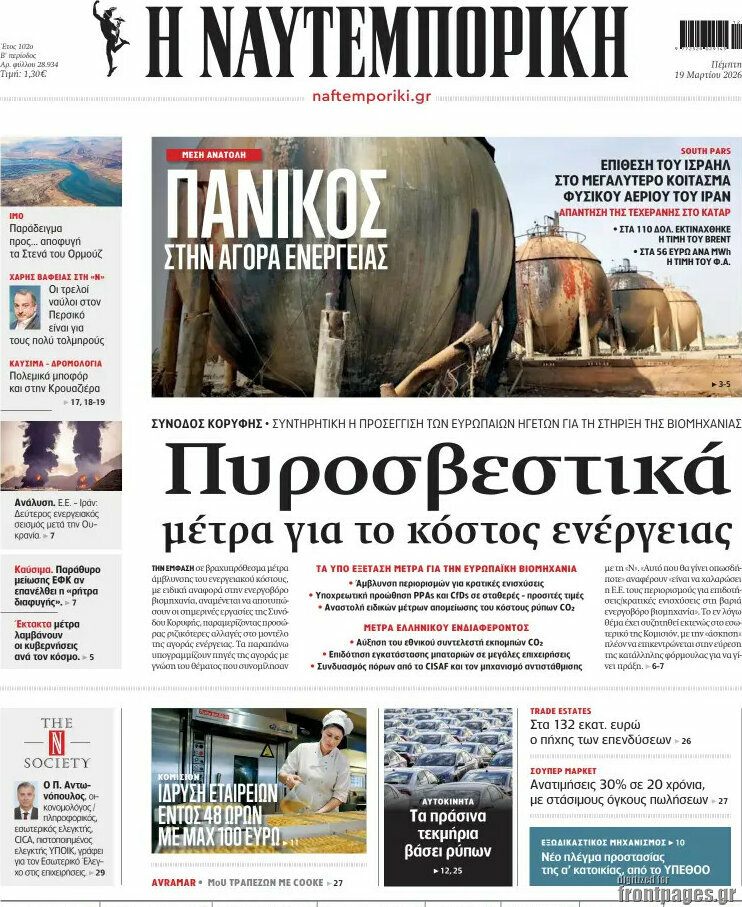
NAFTEMPORIKI: EU summit: Support measures against energy price hikes

DRIVING THE DAY
BEST LAID PLANS: Three weeks ago, this looked like a textbook European Council meeting focused on competitiveness — and then came the war in the Middle East. Now old-school geopolitics, with a spiraling energy crisis and Europe’s global role once again in question, will dominate a packed agenda at today’s EU summit.
An ever-expanding day: Leaders start arriving at 8:30 a.m., with doorsteps ahead of the formal kickoff … Then there’s the traditional address by European Parliament President Roberta Metsola … Ukrainian President Volodymyr Zelenskyy will beam in via video link, followed by a leaders-only discussion on Ukraine … Lunch will turn to the Middle East with U.N. Secretary-General António Guterres … Then it’s down to the core agenda of competitiveness, with energy set to loom over the conversation … As evening falls, the Euro Summit will get underway with European Central Bank President Christine Lagarde … before dinner focuses on the EU’s long-term budget.
Word tsunami: It’s one of the densest summits in recent memory — and that’s a high bar to clear. The latest draft conclusions — obtained by POLITICO’s Bartosz Brzeziński — run to 24 pages and 70 paragraphs across eight sections. One seasoned diplomat called the text “oceanic.”
Costa’s one-day rule under pressure: The intention is still to wrap in a single day, given that stretching into a second would go against European Council President António Costa’s golden rule. Still, diplomats warn the agenda remains “fluid,” which in this town usually means: Don’t hold your breath waiting for an early finish.
Three summits in one: Strip it down to its essentials and the summit is on three parallel tracks: energy (closely tied to competitiveness); Ukraine and its much-needed loan package; and the overarching situation in the Middle East.
Hardest nut to crack: Energy and the evolving situation in the Persian Gulfare now deeply intertwined. This is the first summit since the military escalation and leaders face mounting pressure to keep energy prices in check. Diplomats and EU officials all agree energy is the most complex file on the table — and that steps taken here could shape EU policy for years.
Is there a doctor in the house? The situation is reminiscent of the 2022 energy crisis that dominated earlier summits. Officials stress today’s context is less severe — and that Europe is better prepared, after diversifying its supply. Still, as one senior diplomat put it: “There is shared concern, but not yet a shared prescription.”
Two flashpoints in the text: Despite the sprawling draft, two issues could still be rewritten by leaders in the room: the Emissions Trading System (ETS) and the notion of “European preference.”
Flashpoint No. 1 — carbon clash: The EU’s carbon market — a cornerstone of climate policy but also a contributor to energy bills (around 11 percent on average) — is dividing capitals. The Commission, for its part, is walking a tightrope amid these competing positions.
The skeptics: Polish Prime Minister Donald Tusk and nine others have urged the Commission to overhaul the ETS to ease pressure on electricity prices. Italian Prime Minister Giorgia Meloni is going further, calling for a full suspension of the mechanism.
The defenders: A coalition of eight countries warns that reopening the ETS risks derailing the energy transition and weakening efforts to cut fossil-fuel dependence.
Flashpoint No. 2 — Industrial policy headache: Leaders will also tackle the “Made in EU” controversy and the proposed Industrial Accelerator Act, with tensions rising over how far the notion of “European preference” should go in strategic sectors. The familiar French-German divide is resurfacing: Paris is pushing to broaden the scope proposed by the Commission beyond energy-intensive industries, cars and clean tech to include areas like digital and health. The Germans object to policies they consider protectionist.
MIDDLE EAST — LOW EXPECTATIONS: Proposals are being curtailed by diplomats stressing there’s no political appetite for military involvement — notwithstanding Estonia’s recent suggestion that it may be open to lending the Americans a hand in the Strait of Hormuz.
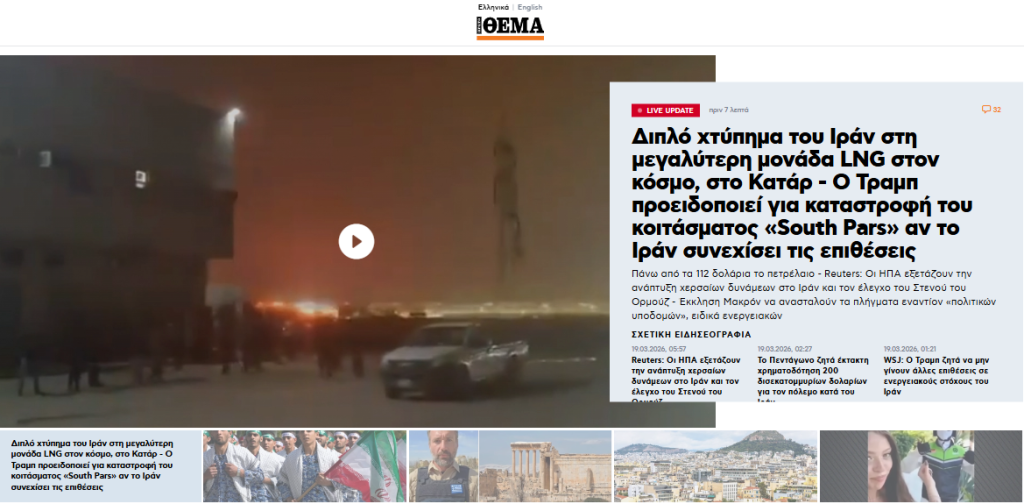
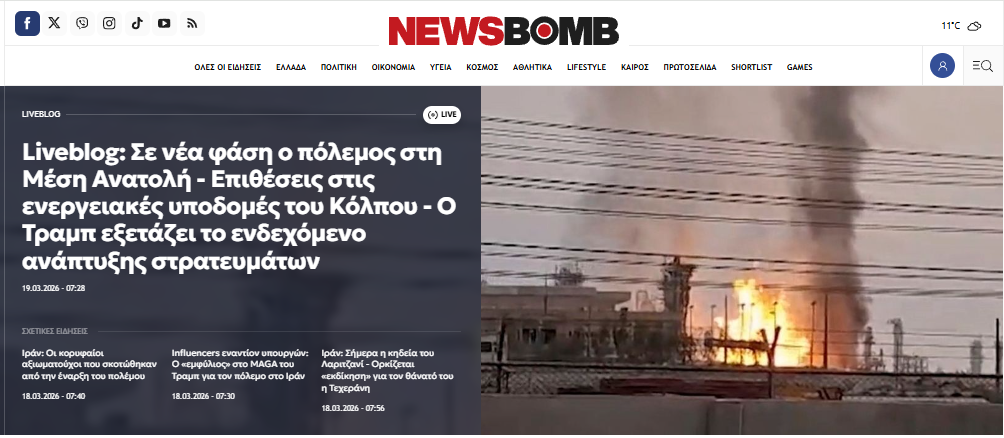
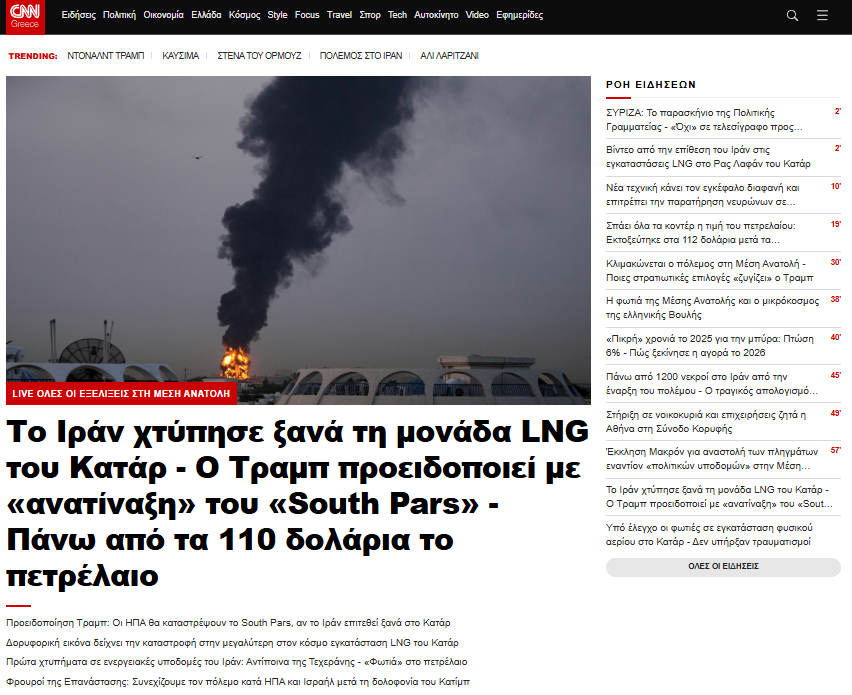
That’s after … a significant escalation in the Persian Gulf overnight, with Iran responding to an Israeli strike on its crucial South Pars gas field by causing “extensive damage” to a major LNG facility in Qatar … and Donald Trump warning Tehran he’ll “massively blow up the entirety of the South Pars Gas Field” if it attacks Qatar again. French President Emmanuel Macron called for a “moratorium on strikes targeting civilian infrastructure, particularly energy and water supply facilities.”
EU leaders today will touch on the bloc’s Aspides naval mission and possible contributions to safeguarding navigation in the strait, but their priority remains de-escalation and diplomacy — albeit with no diplomatic initiatives currently in motion.
Madrid takes a victory lap: Spain was initially an outlier in condemning the U.S.-Israeli attacks against Iran, but other EU leaders are expected to follow today with a call for all countries to respect international law. “Europe is finally standing up — as Spain did from the start,” Spanish Foreign Minister José Manuel Albares tells Aitor Hernández-Morales.
FOLLOW THE SUMMIT HERE: My colleague Seb Starcevic has a rundown of the five key battles to watch … and you can keep up with all the action through the day on our live blog.
UKRAINE LOAN
ORBÁN VS. EVERYONE — THE SHOWDOWN: Today’s biggest political test: Can EU leaders convince Hungary’s Viktor Orbán — firmly in campaign mode — to lift his veto on the €90 billion loan Ukraine needs to stay financially afloat over the next two years?
More than a dispute: This has moved well beyond technicalities, since Orbán is blocking a package he endorsed in December, turning the standoff into a question of credibility: do European Council decisions actually stick?
Frustration builds: Diplomats aren’t hiding their irritation. One senior EU official described Orbán’s stance as “an act of desperation and weakness.” Another warned of a growing “crisis of trust” around the table if agreed deals can simply be reopened. “The behavior from Hungary is a new low,” Sweden’s Europe Minister Jessica Rosencrantz told my colleague Nicholas Vinocur in a must-read piece on Orbán’s last stand.
What’s in the pipeline: European Commission President Ursula von der Leyen and European Council President António Costa tried to ease tensions ahead of the summit by securing Volodymyr Zelenskyy’s agreement to host an EU investigation into disruptions in the Druzhba pipeline — which Budapest claimed Kyiv deliberately halted. So far, that concession hasn’t moved the needle.
Pressure, and little else: After days of pre-summit briefings, the main strategy today remains blunt: political pressure in the room. The argument is simple — commitments must be respected. As one diplomat put it, this is also the line most likely to make Orbán uncomfortable, because “he knows it’s justified.”
And if that fails? Options are limited. Several diplomats expect no breakthrough before Hungary’s election next month — and even that offers no guarantees, with Orbán likely to remain in office until June if he loses elections and any successor’s position uncertain.
One idea floated in preparatory talks was to include language on repairing the Druzhba pipeline in the summit conclusions — effectively committing the EU to push Kyiv on the issue. For now, diplomats say, that option has been put on ice.
Technicians on the ground: Meanwhile, the EU technical team has already arrived in Ukraine and is awaiting security clearance to inspect the pipeline and assess the extent of the damage and timeline for repairs.
The clock is ticking … even if Ukraine’s situation is slightly less urgent than previously thought, with Kyiv’s war chest now likely to last until early May. Once agreed, disbursement could follow within roughly two weeks.
TURNBERRY DEAL
ONE SMALL STEP: The Turnberry Agreement is up for review by the European Parliament today, when the Committee on International Trade finally votes on the two legal texts implementing last year’s transatlantic trade truce. The voting session starts at 10 a.m., though it starts with a different file. You can follow it online here.
Will they, won’t they: The fact that the vote is finally on the agenda says a lot, my colleague Camille Gijs points out, since it’s one of those votes that would only be scheduled when there’s a clear majority. Bernd Lange, the Socialists and Democrats MEP who chairs the INTA committee, pushed to put the vote on todays’s agenda — right before he flies to Washington. The S&D is critical of the agreement, but is confident that its push to attach several strings to the deal will make it less risky.
Hard work: In a press release, the party underlined that today’s vote isn’t a blanket approval of the Turnberry deal but an endorsement of the safeguards it secured. Still to come: a decision on when to hold a final plenary vote (which could be even next week in Brussels, during the mini-plenary).
Washington offer: In a bid to persuade the Parliament to back the transatlantic deal, the Trump administration has said it plans to shorten a list of items containing steel that are subject to high U.S. tariffs. That message was conveyed to Lange in a phone call by U.S. Trade Representative Jamieson Greer on Saturday.
“Baseless speculation”: But the Trump administration has not publicly confirmed any changes. A White House official told my colleague Ari Hawkins: “We are always examining ways to ensure our sectoral tariffs are most effectively safeguarding our country’s national and economic security, but unless announced by the Administration, discussion about tariff or derivative adjustments is baseless speculation.”
PRE-SUMMIT DIPLOMACY
THE SUMMIT STARTED EARLY: European Councils are notorious for running late into the night, but there’s also a growing trend of leaders front-loading diplomacy and packing in side meetings before the official start.
Late night at the Amigo: Germany’s Friedrich Merz and France’s Emmanuel Macron held a two-hour meeting last night at the Hotel Amigo, just off the Grand Place — as spotted by Berlin Playbook’s Hans von der Burchard. Reports before the summit said they’d be meeting to talk about the troubled FCAS fighter jet program. A German government spokesperson declined to comment on their chat, citing “confidential discussions.”
Merz later appeared in the hotel bar, where he was joined by Meloni around 11 p.m. The Italian PM left after about half an hour, with Merz calling it a night soon after.
Breakfast diplomacy: Meloni is also co-hosting one of the summit’s now-established rituals — the migration breakfast — with Denmark’s Mette Frederiksen. Diplomats say it’s on again this morning.
Party before sunrise: There’s also the usual round of party gatherings this morning ahead of the European Council. The European People’s Party meets as usual at the Sofitel on Place Jourdan from 7 a.m. The Socialists will be at their headquarters on Rue Guimard with arrivals from 8:15 a.m.
Liberals back in force: And the Renew camp is showing up in numbers again, with six country leaders — Macron, Slovenia’s Robert Golob, Bulgaria’s Andrey Gyurov, the Netherlands’ Rob Jetten, Ireland’s Michéal Martin and Estonia’s Kristen Michal — gathering at the beautiful Bibliothèque Solvay in Parc Léopold.
Will it all start on time? With diplomacy stretching late into the night and restarting at breakfast, schedules may slip — which won’t please António Costa, who has been visibly irritated at delays during past meetings.
IN OTHER NEWS
ACROSS THE CAUCASUS: EU Enlargement Commissioner Marta Kos is in Armenia today in a push for closer ties with a country she described as “an island of stability in a turbulent neighborhood, squeezed between Russia and Iran.” Her visit comes ahead of a crucial national election in June in which the pro-Western government faces a tough test from Kremlin-aligned opponents.
Big pledge: Kos welcomed the prospect of peace between Armenia and neighboring Azerbaijan, telling Playbook’s Gabriel Gavin the EU “wants to support these developments. We are investing in transport links, energy cooperation and digital connectivity across the region.” She added that “Armenians have chosen a democratic path” and the EU will help the country protect the integrity of its elections.
Back in Brussels … Kos is facing fresh pressure at the European Parliament, where the EPP on Wednesday called for a hearing over historic allegations that she collaborated with Yugoslavia’s secret police, Seb Starcevic reports. People close to Kos dismiss the accusations as politically motivated and aimed at “scoring points” ahead of Slovenia’s national election.
WATCH OUT, POLAND: Hungary’s EU Affairs Minister János Bóka told POLITICO’s Max Griera that Brussels will have to pursue Poland for as much as €137 billion if it claws back €10 billion of EU funds controversially disbursed to Hungary in 2023.