A thorny Greek-Turkish get-together
Turkish President Recep Tayyip Erdogan and Greek Prime Minister Kyriakos Mitsotakis are finally set to meet in Ankara on Feb. 11 or 13, but in less auspicious circumstances than the last meeting of the bilateral High-Level Cooperation Council, in Athens, on December 7, 2023. The relatively low-key climate prevailing since February 2023 is ostensibly still on with the two sides regularly communicating, but tensions have been piling up that could one day lead to the bad climate that prevailed in 2020-21.
https://www.ekathimerini.com/politics/foreign-policy/1294004/a-thorny-greek-turkish-get-together
Mitsotakis: The Vertical Corridor is an important and strategic investment
“I want to underline the importance of the Vertical Corridor. It is a significant and strategic investment for both countries as we seek to move away from Russian natural gas,” Prime Minister Kyriakos Mitsotakis said on Saturday, among other things, during his meeting with former Bulgarian Prime Minister Boyko Borisov. “In my mind, the Vertical Corridor is not only about energy. It is also about highways, it is about trade, as well as the full interconnections between Greece, Bulgaria, Romania, Moldova and Ukraine. And this significantly increases the geopolitical value of our countries,” the prime minister stressed.
Two leaky tanks caused deadly cookie factory blast
A basement that appears nowhere in the building blueprints and two undeclared propane tanks are at the center of investigations into the causes of the explosion that destroyed the Violanta cookie factory near the city of Trikala, killing five women workers and injuring the seven others present on the premises when the explosion occurred shortly after 4 a.m. last Monday. Investigations have determined that the two outside tanks – there were also four inside the basement – or, rather, the pipes connected to them, had been leaking gas for several months.
https://www.ekathimerini.com/news/1294007/two-leaky-tanks-caused-deadly-cookie-factory-blast
Next milestones for the vertical gas corridor and the advantages for Greece
Developments regarding the Vertical Corridor are being initiated by the commercial agreement of the ATLANTIC SEE LNG TRADE consortium for the supply and sale of Liquefied Natural Gas (LNG) from the USA as early as 2026, accelerating the implementation of this major project. Last Friday, the consortium, in which the AKTOR Group participates by 60% and DEPA Commerce by 40%, signed the first agreement for the sale of American LNG to Ukraine with BP as the supplier and the Ukrainian Naftogaz as the buyer.
ATHEX: Seven weeks of growth for benchmark
The Greek bourse saw its benchmark complete its seventh consecutive week of gains despite the decline in prices on Friday. Profit taking continued after Wednesday’s historic highs, but Coca-Cola, HBC and some energy blue chips held firm and contained the drop of the main indexes which ended the session at the day’s low. The medium-term direction remains unclear internationally, so this is a good time for short-term speculation, observers agree.
https://www.ekathimerini.com/economy/1293948/athex-seven-weeks-of-growth-for-benchmark

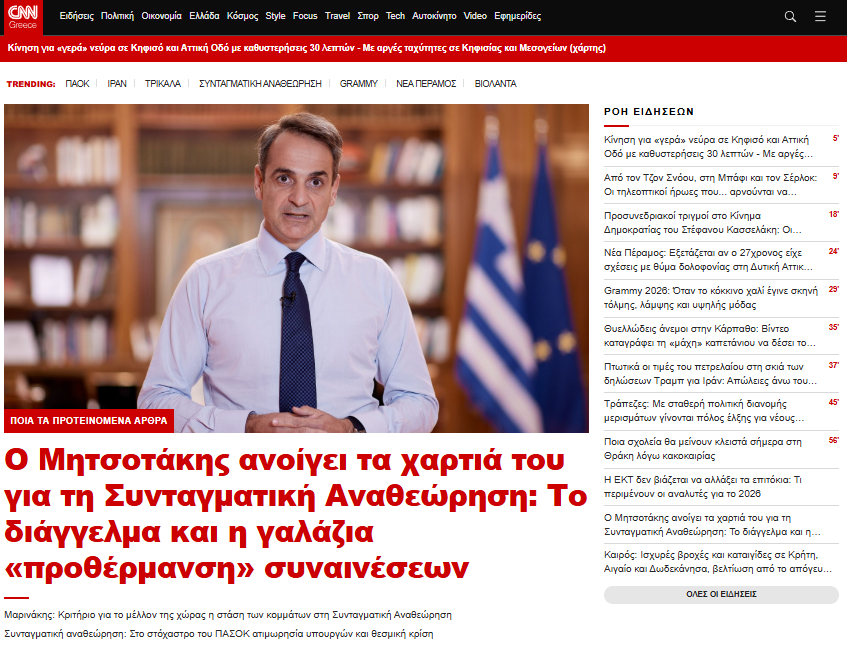
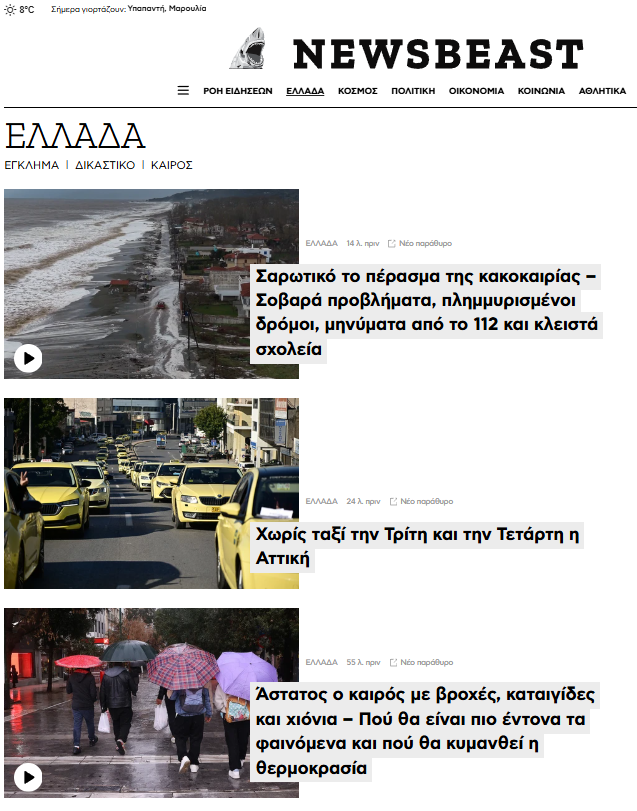

SUNDAY PAPERS
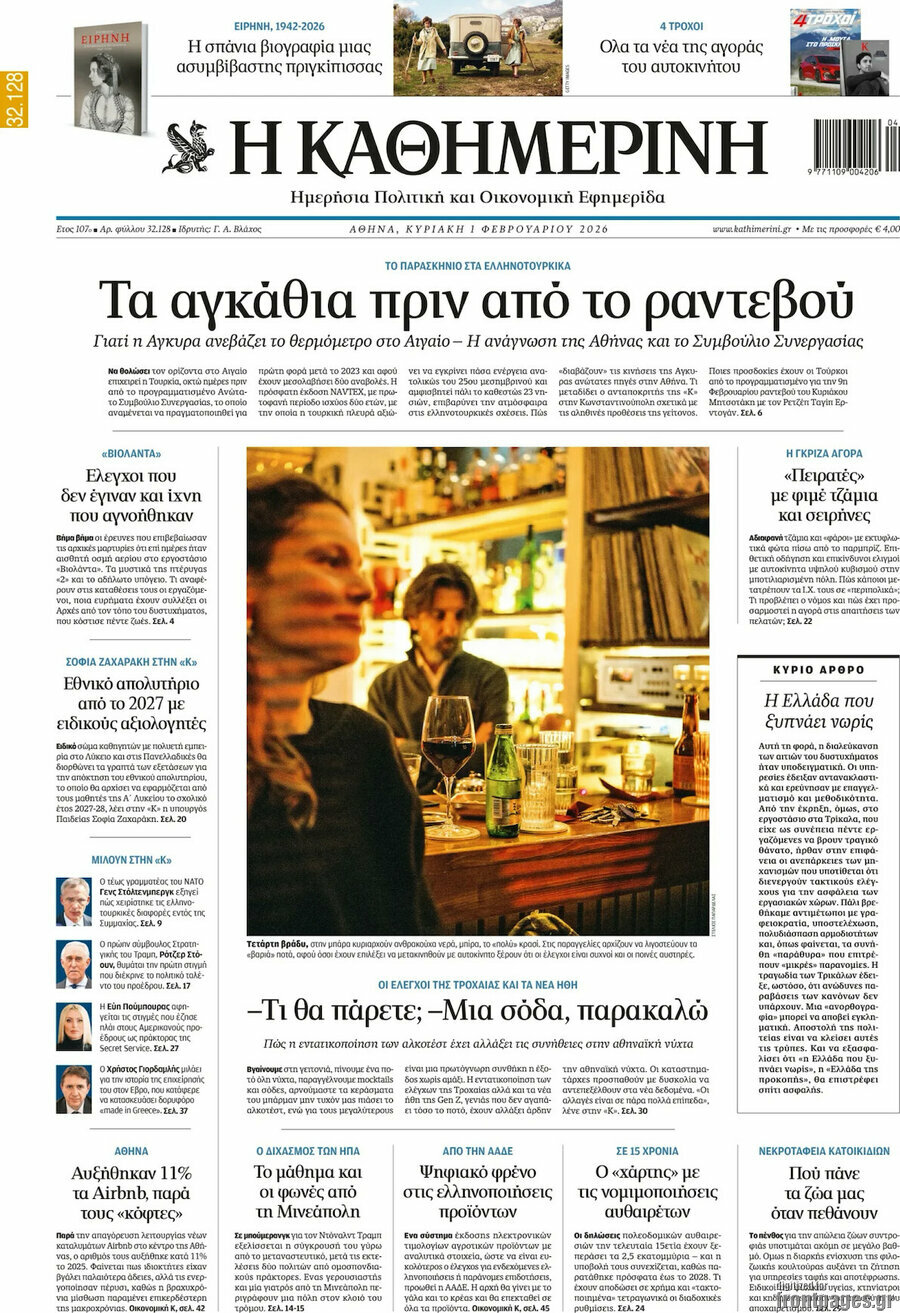
KATHIMERINI: Erdogan-Mitsotakis meetings: The “thorns” prior to the appointment
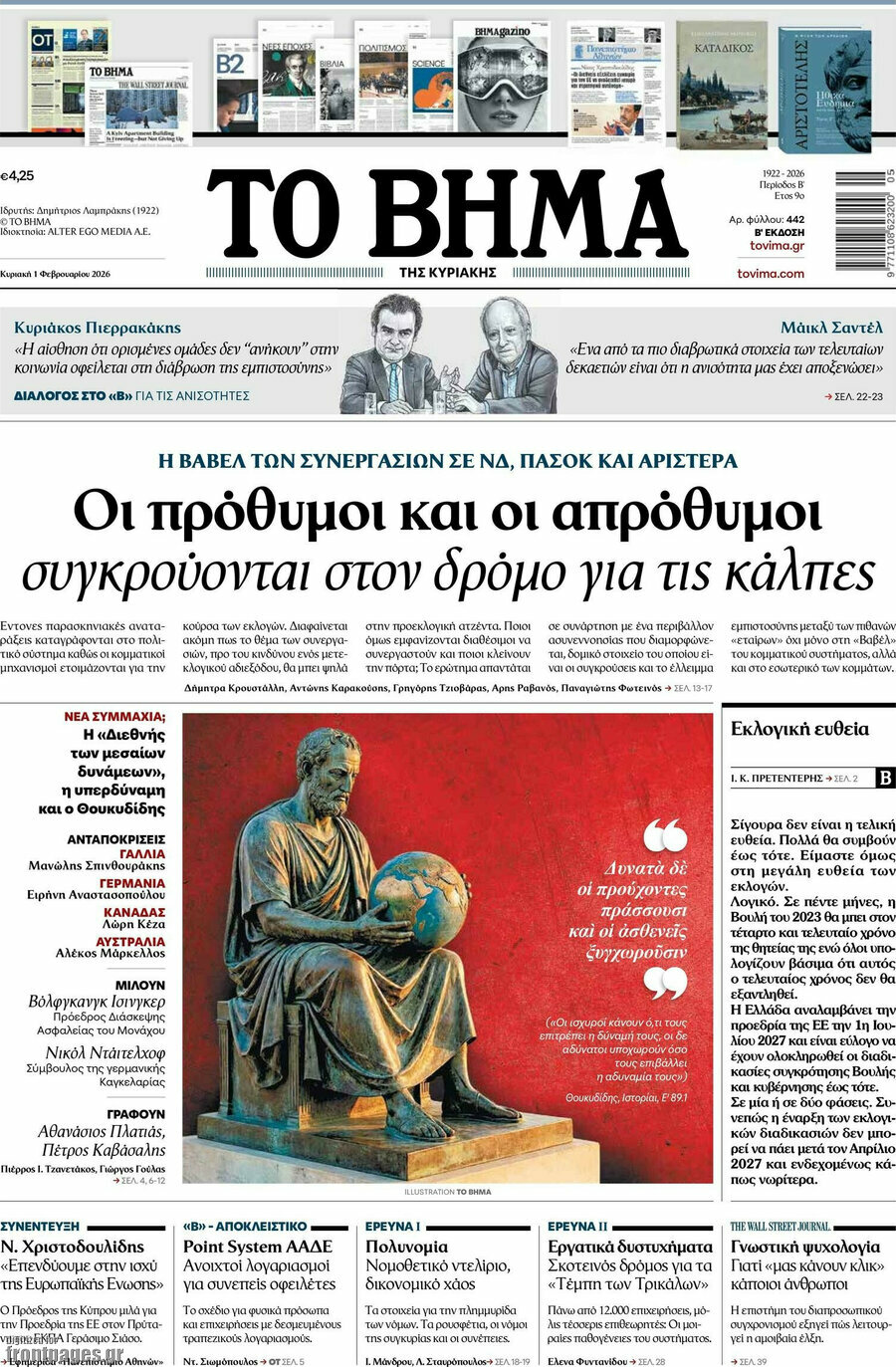
TO VIMA: The willing and the non-willing clash on the way to the next general elections
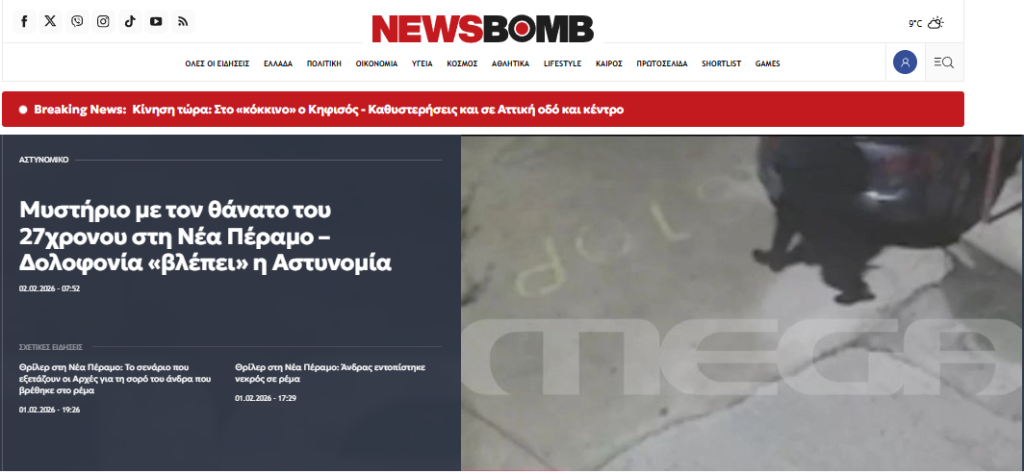
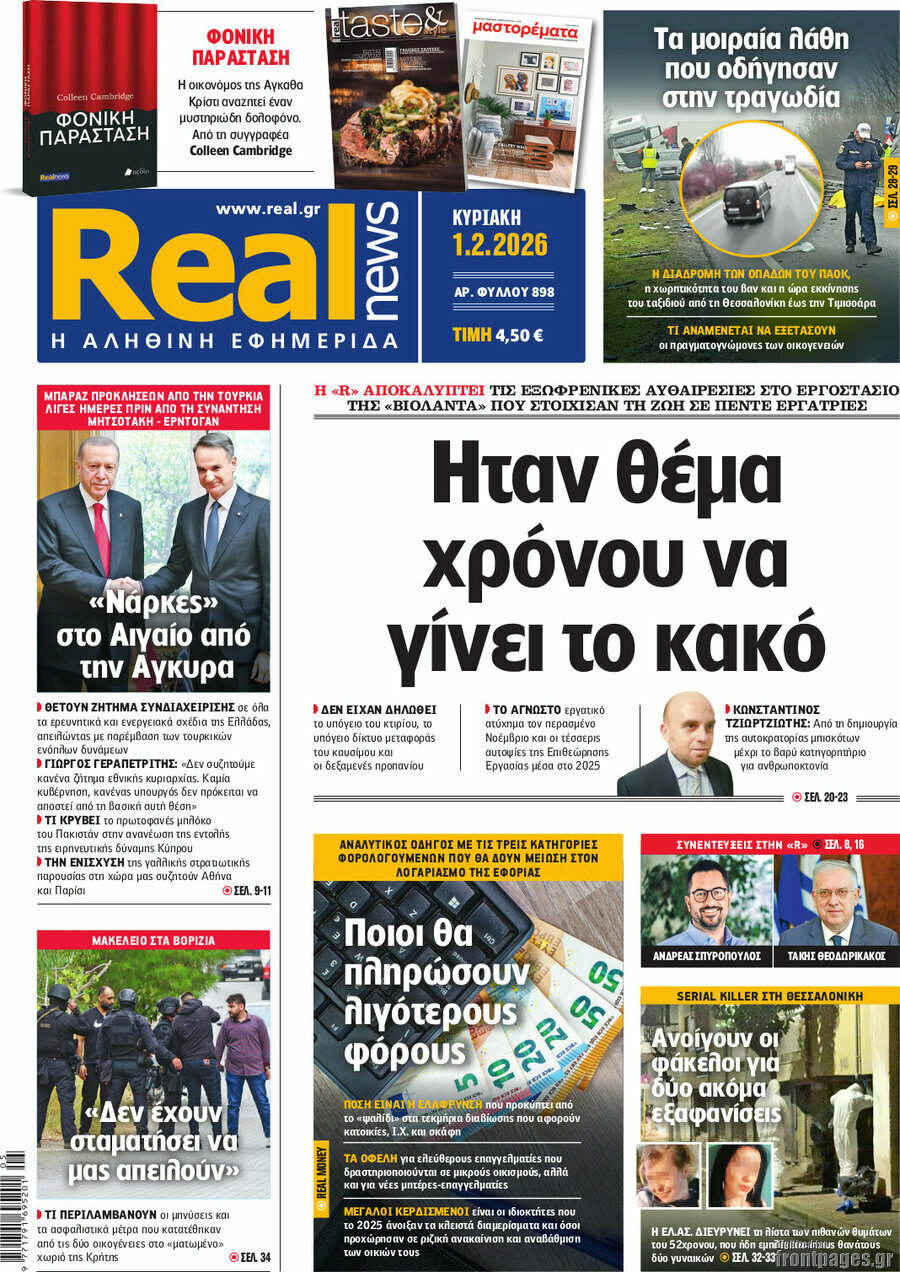
REAL NEWS: Violanta biscuit factory: The accident was just a matter of time
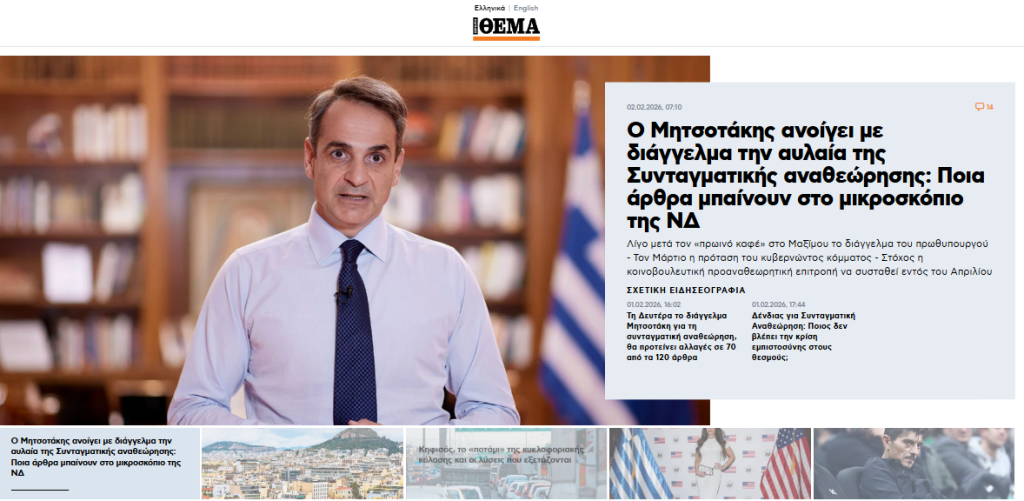
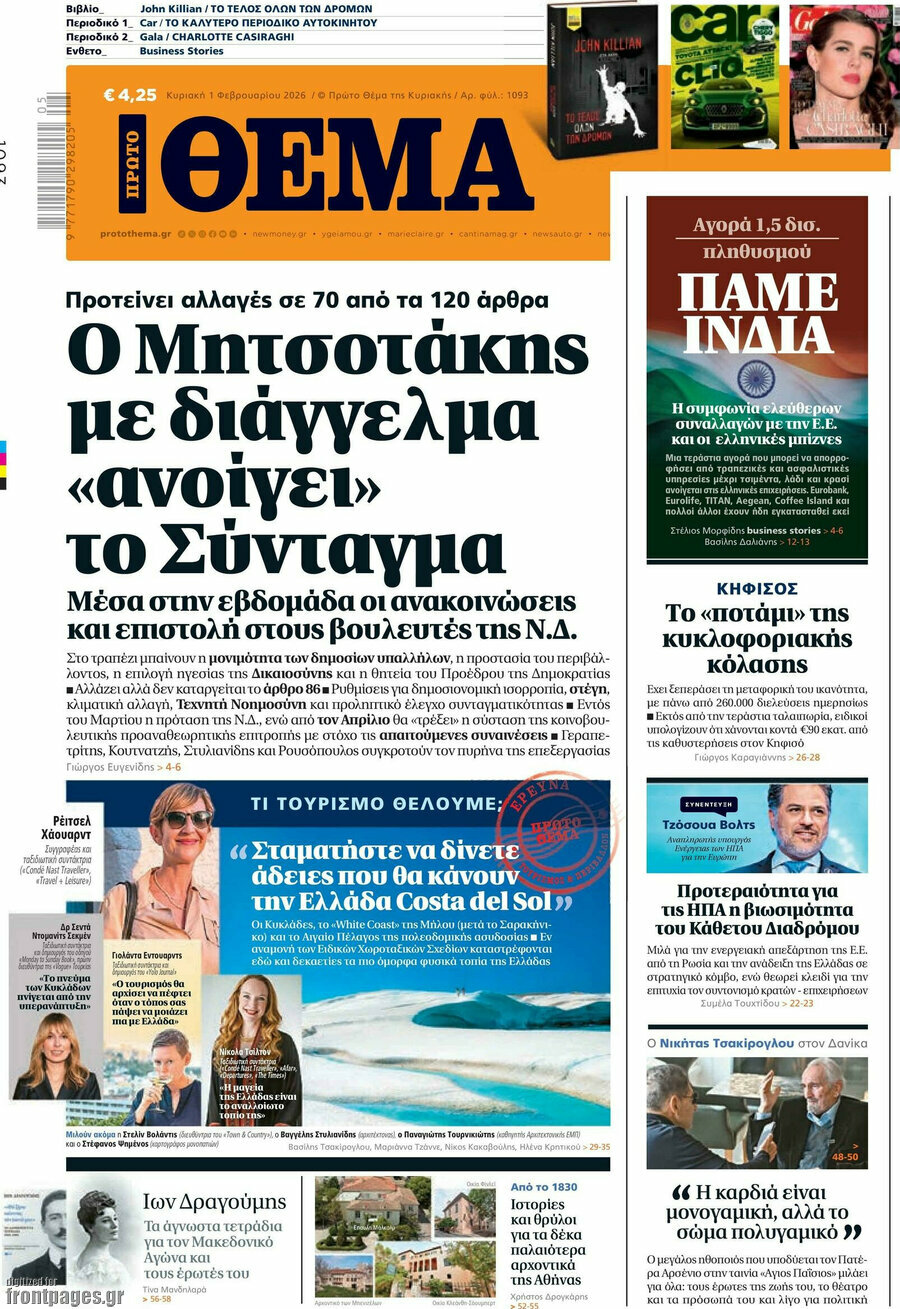
PROTO THEMA: Mitsotakis will address the public and open the discussion on the constitution’s amendment
MONDAY PAPERS:
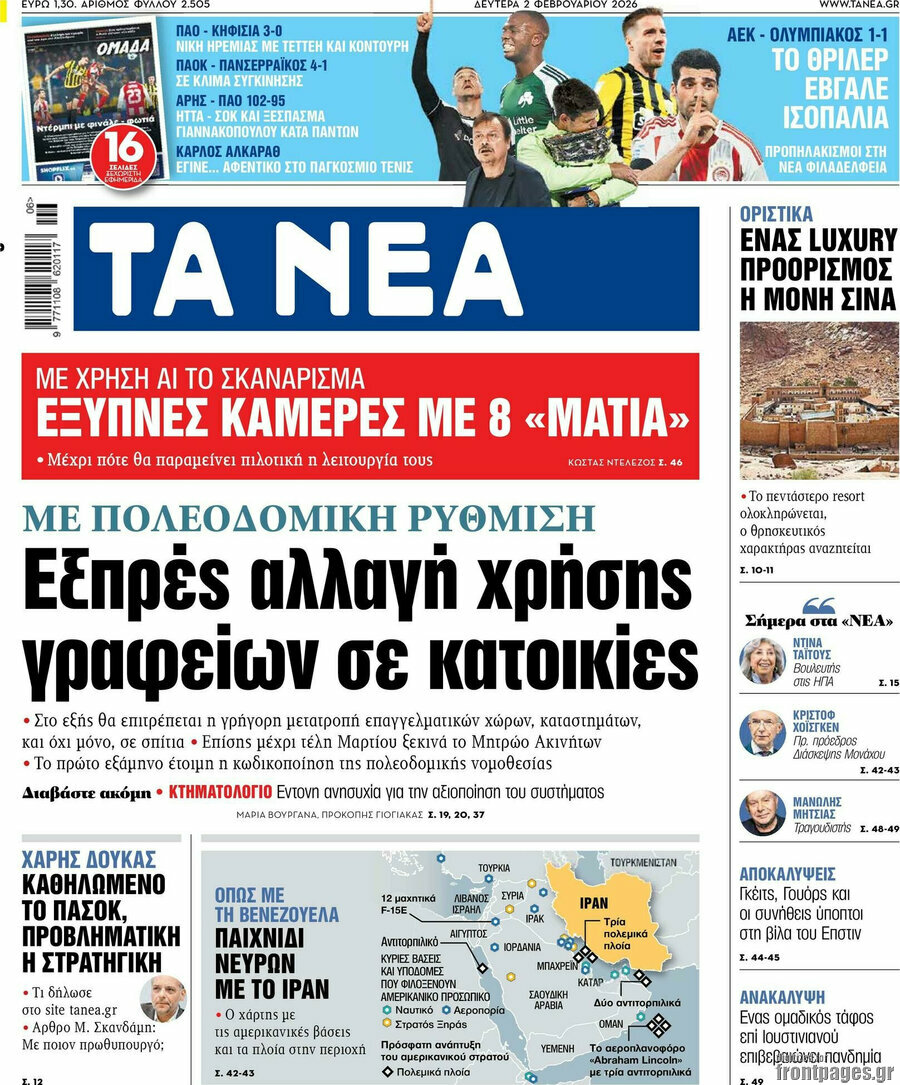
TA NEA: New city planning regulation: Swift change of offices into residences
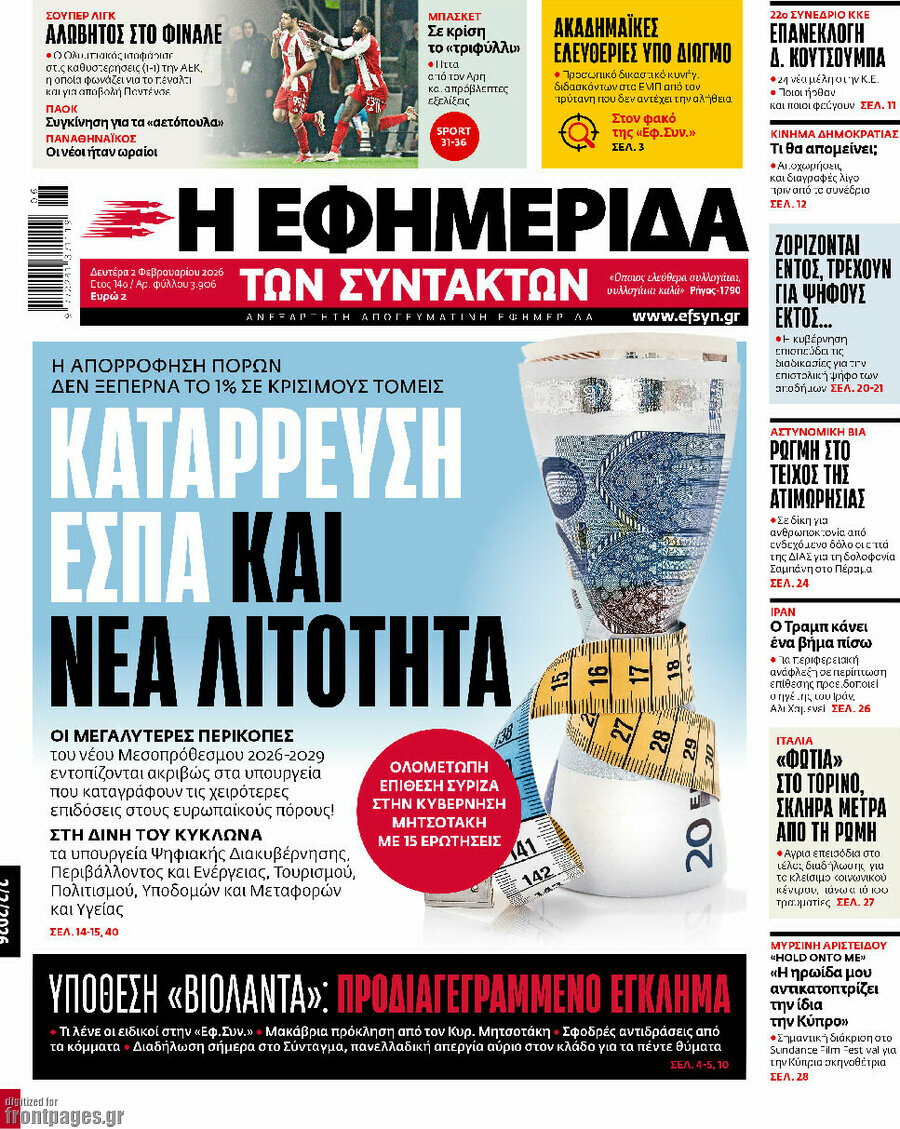
EFIMERIDA TON SYNTAKTON: NSRF collapses while new austerity looms in
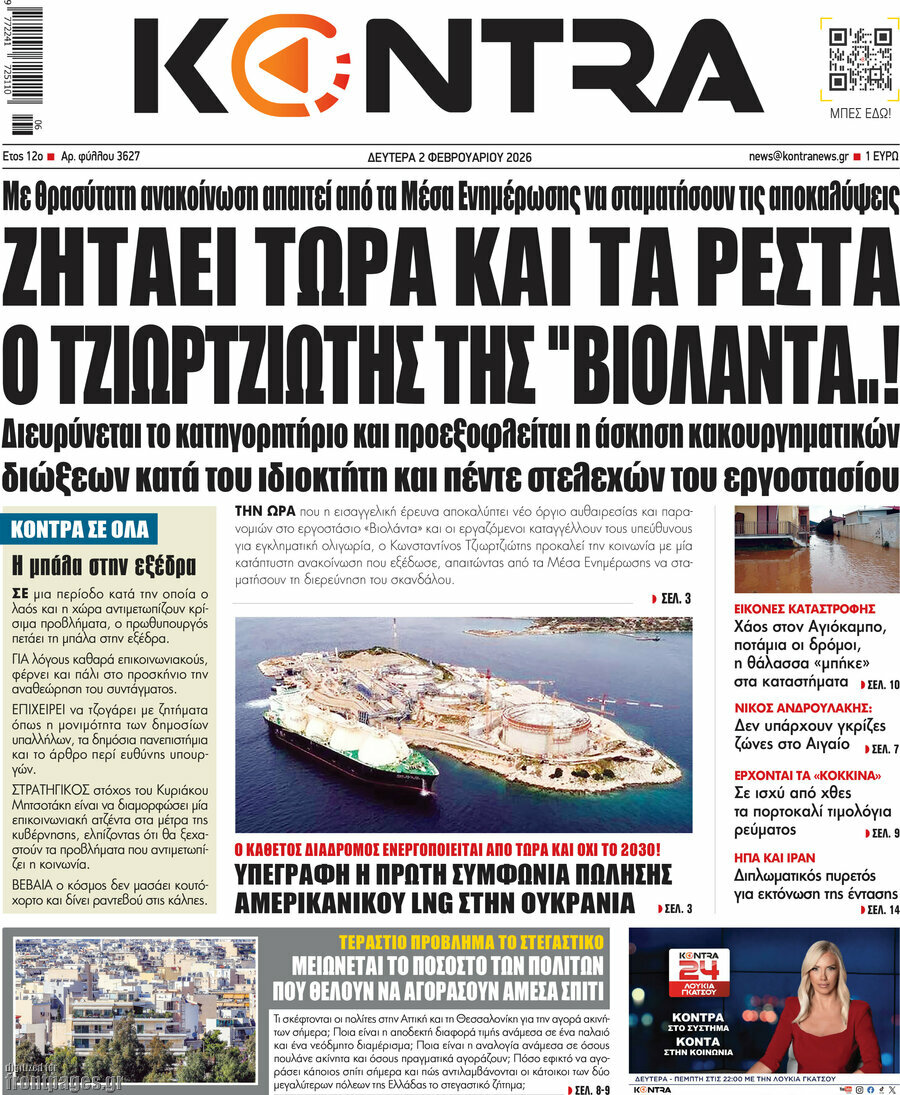
KONTRA NEWS: Violanta biscuit factory Tzortziotis is now asking the media to stop their revelations
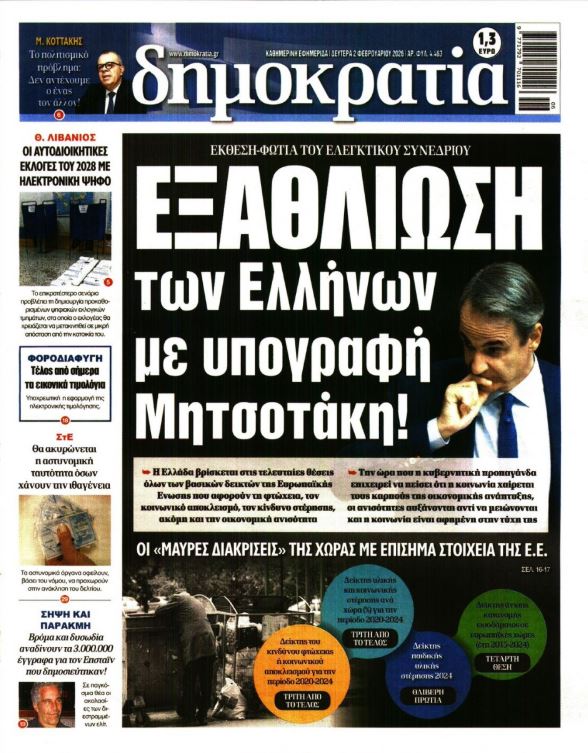
DIMOKRATIA: Mitsotakis signed the impoverishment of the Greek people
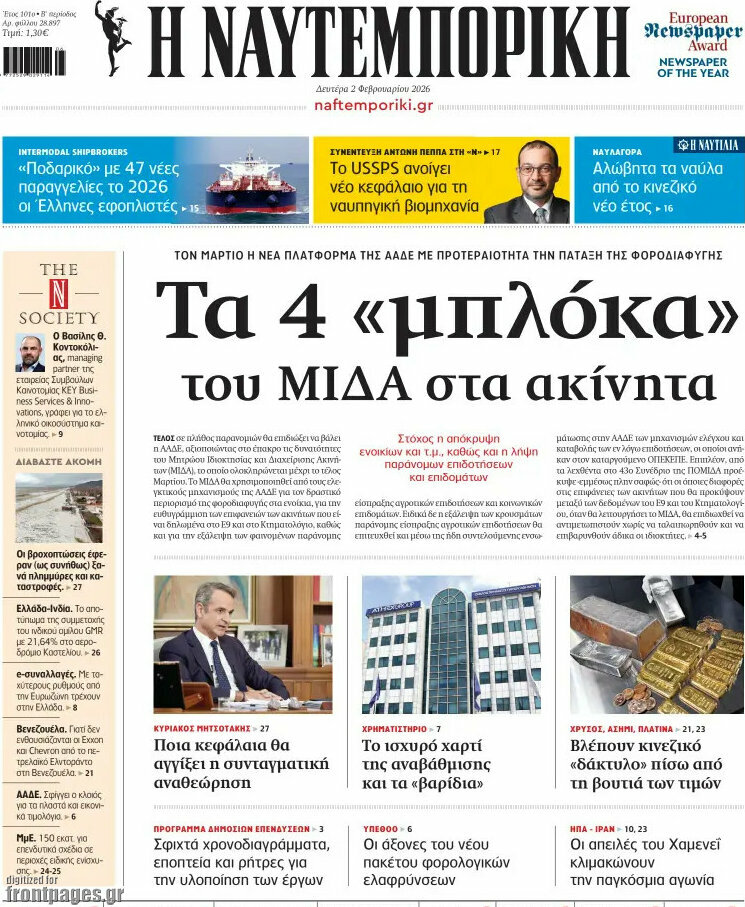
NAFTEMPORIKI: Midas: 4 blocks for real estate assets

DRIVING THE DAY
ECONOMIC BATTLE LINES: An informal gathering of European leaders next week is supposed to kickstart solutions to the European Union’s economic problems — but may instead end up exposing its internal divisions.
Driven Italians: Leaders are quietly staking out positions ahead of the Feb. 12 summit at Alden Biesen, a secluded castle in the Belgian countryside. It takes place in the presence of two Italian political figures with strong EU cred and a powerful message to deliver: Former European Central Bank President Mario Draghi and ex-Prime Minister Enrico Letta, both set to address the gathering at different times.
Roadmap for success: Draghi and Letta have laid out their economic visions: the former warning that Europe must reform its internal market to stave off “slow agony;” the latter calling for urgent action in revamping the single market before the window of opportunity closes. Yet both may need to temper their expectations. So far, only a tiny fraction of their recommendations has been translated into changes, prompting diplomats to downplay the chances of a breakthrough at the offsite.
Curb your enthusiasm: “I don’t have hopes for the February leaders’ retreat that it will really deliver anything concrete,” said a senior EU diplomat who was granted anonymity to discuss sensitive internal deliberations. “We’ve always known there are huge obstacles when it comes to tackling national interests.”
Rhetoric to reality: While the leaders may have agreed on the need to claim independence from major powers, the task of agreeing on what reforms are needed to put the EU on a stronger footing is a harder nut to crack. For now, leaders are drawing battle lines, with European Council President António Costa expected to send out formal summit invitations today.
Deregulatory duo: German Chancellor Friedrich Merz and Italian Prime Minister Giorgia Meloni, whose governments have teamed up to produce a series of joint papers, are calling for the slashing of red tape. In a discussion paper obtained by POLITICO, Rome and Berlin call for an “emergency break” on new EU law, as part of a ramping up of the bloc’s deregulation drive. However, they offer little on how to complete the single market.
Watered-down Italians: While the two countries name-check Draghi and Letta in their paper, they stop short of backing recommendations to create a European Capital Markets Union (CMU) that could unleash growth by breaking down barriers between the EU’s fragmented financial markets.
EPP simplification: Then there’s the take of the European People’s Party (EPP), the powerful conservative grouping that brings together Merz, European Commission President Ursula von der Leyen and other leaders such as Greek Prime Minister Kyriakos Mitsotakis. In a paper published Sunday, following an EPP leaders’ meeting in Croatia, the group calls for both simplification and efforts to beef up the single market — although simplification remains the top priority.
On the other side is French President Emmanuel Macron, whose government is a consistent advocate of the CMU, along with measures to protect European industry via “Buy European” clauses in procurement deals or Made in Europe labels (more on that below). Speaking to leaders in Davos last month, Macron doubled down on calls to protect European industries while urging massive investments into breakthrough technologies.
Non, merci: But France’s Buy European insistence grates with export-oriented countries such as Germany and the Nordics. Macron’s calls for massive investments are also certain to set off alarm bells about using public money to help EU industries at a time when many countries are already struggling to meet higher defense-spending targets.
Take your medicine: Per one veteran EU diplomat, leaders are stuck in a pattern of inertia when it comes to internal reforms. “We have the diagnosis. We have the prescription. We haven’t gone to the pharmacy.”
Pre-summit huddle: EU industry ministers meeting today in Nicosia, Cyprus, will try to lay the groundwork for the leaders’ summit. On the agenda are strengthening the European defense, technological and industrial base and “underlining the need for closer integration of defense and industrial policies.” But today’s gathering will have a narrower focus than the Feb. 12 summit, an EU official told Playbook.
The bottom line: Fixing the EU’s economy may prove harder than ramping up the bloc’s defense capacities. Producing more weapons, partly thanks to cheap EU loans, doesn’t require much sacrifice from leaders in the short term. Taking on entrenched interests that don’t want bloc-wide supervision carries a clear political price — one that not all leaders are willing to pay.
MADE IN EUROPE
PATRIOTIC PURCHASING: France’s EU commissioner, industry chief Stéphane Séjourné, is stepping up his increasingly public lobbying effort to ensure the bloc keeps as much money as possible within its own market, rather than allowing it to wind up in the U.S. or China.
Go European: In an op-ed published this morning in more than a dozen national newspapers, seen in advance by Playbook’s Gabriel Gavin, the commissioner urges the creation of a new “Made in Europe” label designed to mirror Washington’s “Buy American” push.
Simple rule: “International competition has never been so unfair,” Séjourné writes. “As the rules of trade are being redefined, we have no choice anymore … We must establish, once and for all, a genuine European preference in our most strategic sectors. It is based on a very simple principle: Whenever European public money is used, it must contribute to European production and quality jobs.”
Mixed response: The public nature of the push — from one of the Commission’s most senior figures — is an unusual tactic inside the bloc, where policy is usually made behind closed doors. Whether it’s enough to convince Séjourné’s colleagues remains to be seen. Commission President Ursula von der Leyen has backed Made in Europe criteria in the past. But other countries pushed back, arguing that only the larger EU members stand to benefit from such clauses.
Sej ain’t alone: This time, more than 1,000 signatories from companies and industrial groups from across the continent, as well as major EU trade associations, are supporting the Made in Europe calls.
Britain beams in: U.K. Prime Minister Keir Starmer is signaling he wants to move closer to the EU on defense matters after a push for London to participate in the bloc’s SAFE weapons procurement failed. Focus is now on the EU’s €90 billion loan for Ukraine, Jacopo Barigazzi writes in to report.
French resistance: The U.K. would like to be included in the countries eligible for Ukrainian arms purchases using the loan. But France has opposed this, citing the fact that it will be EU countries on the hook for paying interest on the loan. EU ambassadors were meant to discuss the loan again Friday, with many diplomats expecting a final agreement. But the meeting was postponed until this afternoon, Jacopo reports.
Berlin backs U.K.: A German government official texted to say: “In view of the geopolitical situation, the U.K must participate” in the loan scheme.
NORWAY AND GREENLAND
KALLAS GOES TO NORWAY: Top EU diplomat Kaja Kallas will huddle with Norwegian Prime Minister Jonas Gahr Støre, Defense Minister Tore Onshuus Sandvik and others during a two-day high-level visit to the Nordic country focused on security, an EU official tells Playbook.
Arctic security: Talks will focus on “how to take the EU-Norway security and defense partnership forward,” the official said, adding that “security in the High North” would also feature prominently, given the American claims to Greenland.
Periphery moves closer: Norway was among the countries threatened by U.S. President Donald Trump’s tariffs following a NATO mission to bolster security in Greenland — until Trump backed down on his threat. Oslo’s stance should be filed as a wider trend of countries on the EU’s periphery, including the U.K., that are considering closer ties with the bloc amid threats to the transatlantic order.
Facts: Norway isn’t in the EU but it is a member of NATO and has been involved in efforts to bolster Arctic security, following Trump’s claims that Greenland is vulnerable to Chinese and Russian incursions. Oil-rich Norway is also a crucial energy partner for the EU, as the bloc seeks to diversify its energy sources away from Russian hydrocarbons and, possibly, American energy as well.
Where to see her: Kallas will speak at the Oslo Security Conference and the Arctic Frontiers Conference in Tromsø.
DOUBLING DOWN ON GREENLAND: The European Commission should increase its investment in Greenland to encourage people there to “choose” Europe, amid intensified geopolitical competition for the island, Barry Andrews, vice chair of the European Parliament’s Development Committee, told Playbook.
Sweetening Europe’s offer: “We have a really good opportunity to integrate with the Greenlandic strategy and to demonstrate to them that the European path is one they can choose, and choose profitably,” Andrews said.
Millions for Greenland: The EU has earmarked more than €500 million for Greenland in its next long-term budget starting in 2028 — more than double the current outlay. But the EU also plans to disburse an additional €150 million in the current period using a “cushion” in the budget, according to a Jan. 26 letter from the Commission to Parliament, seen by Playbook. A Commission spokesperson had no immediate comment on the plans on Sunday night.
EPP HUDDLE
MUTUAL DEFENSE: Leaders from the EPP group are keen to put the EU’s mutual defense clause into effect amid growing concerns about Donald Trump’s commitment to NATO, Rasmus Buchsteiner writes in to report. The push came during a Saturday night dinner in Zagreb, which included Merz, von der Leyen and Mitsotakis.
Details: The EPP heavyweights will task two as yet unnamed heads of state or government with looking at how to implement the EU Treaty’s Article 42.7. It’s not clear by when the leaders will have to deliver this plan or what exactly it will address. But a policy paper published Sunday pointed to nine areas where the EU needs to develop military capacity if it’s to become independent of the U.S., including drones, space and missile defense.
Why it matters: The push to make the EU’s mutual defense clause worth more than the paper it’s printed on comes amid the worst transatlantic crisis in decades, with Trump’s claim to Greenland shaking belief in the U.S. commitment to NATO.
Hedging: The EPP’s policy still makes mention of NATO as the cornerstone of European defense. But actions speak louder than words and the push to operationalize Article 42.7, along with a major ramp-up in EU defense capabilities, shows Europe’s most powerful politicians are hedging their bets about U.S. security guarantees.
That’s not all: During a closing press conference, EPP President Manfred Weber — who’s shared some big ideas in recent days — praised French President Macron for his offer to extend France’s nuclear umbrella to other EU states. “Having the new U.S. developments in mind,” said Weber, “I am totally in favor that the leaders are … considering how this option of a French nuclear weapon can be used for European security,” Rasmus writes in to report.
Other summit highlights: Merz did not endorse Weber’s call to merge the roles of European Commission and Council presidents into one, powerful job.
IN OTHER NEWS
EPSTEIN SCANDAL HITS EUROPE: Miroslav Lajčák, national security adviser to Slovakian Prime Minister Robert Fico, stepped down over the weekend after his name came up in the latest batch of Epstein files. In the newly released documents, the late convicted sex offender Jeffrey Epstein bantered with Lajčák about women while discussing Lajčák’s meetings with Russian Foreign Minister Sergey Lavrov, Giedrė Peseckytė reports.
Fond farewell: Fico praised Lajčák as “a great diplomat” in a video statement on Facebook and said Slovakia was losing “an incredible source of experience in diplomacy and foreign policy.” Meanwhile, Peter Mandelson, the U.K.’s former ambassador to Washington, sacked in September because of his ties to Epstein, resigned his membership of the Labour Party on Sunday after new allegations emerged in the latest Epstein release.
PORTUGUESE CONSERVATIVES RALLY AROUND THE LEFT: With just one week left until Portugal holds its runoff presidential elections, the leading center-right figures are publicly committing to vote for center-left candidate António José Seguro. The conservative endorsements represent a mass rejection of the other candidate in the runoff, far-right Chega party leader André Ventura, who secured nearly a quarter of the ballots cast in the first round of voting last month.
However, center-right Prime Minister Luís Montenegro is declining to publicly back anyone in Sunday’s election. His refusal to reject the ultranationalist contender is being harshly criticized.