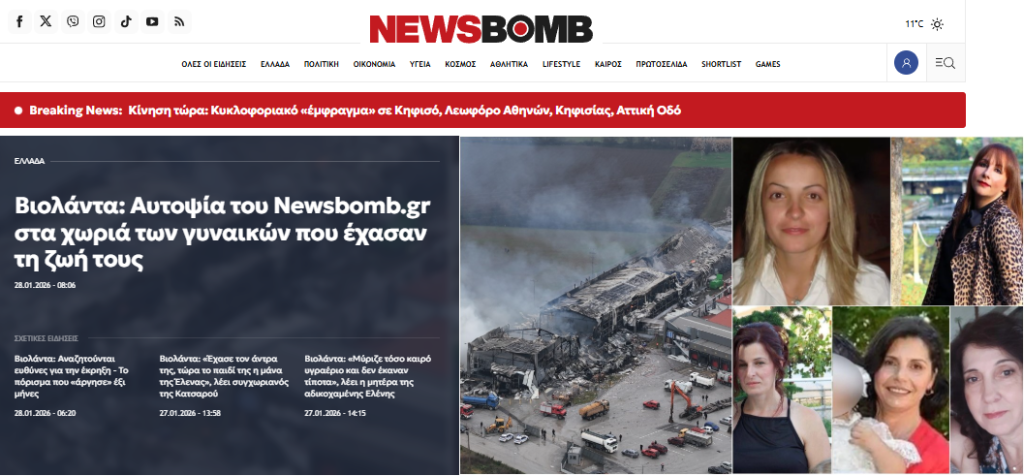
Three persons arrested for the blast at ‘Violanta’ factory; to appear before the Trikala Prosecutor’s Office
Three arrested persons, including the Violanta factory owner, will be brought before the competent Trikala Prosecutor’s Office on Wednesday for the explosion that killed five female workers at the company’s factory in Trikala on Monday.
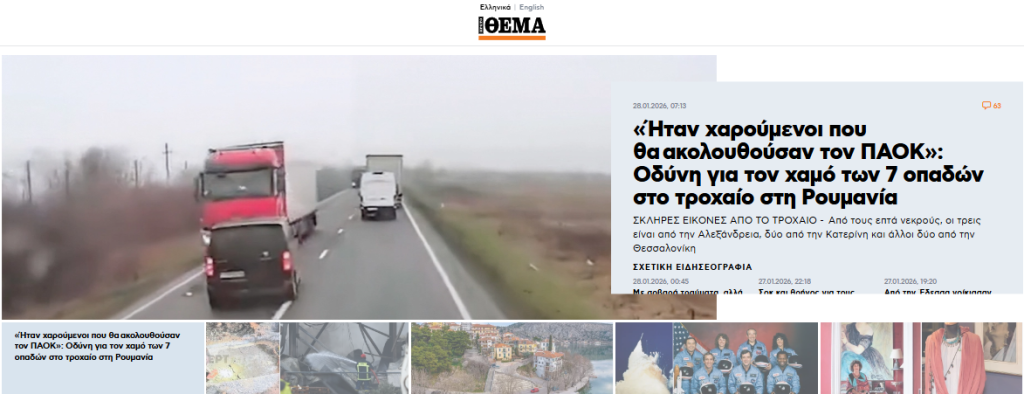
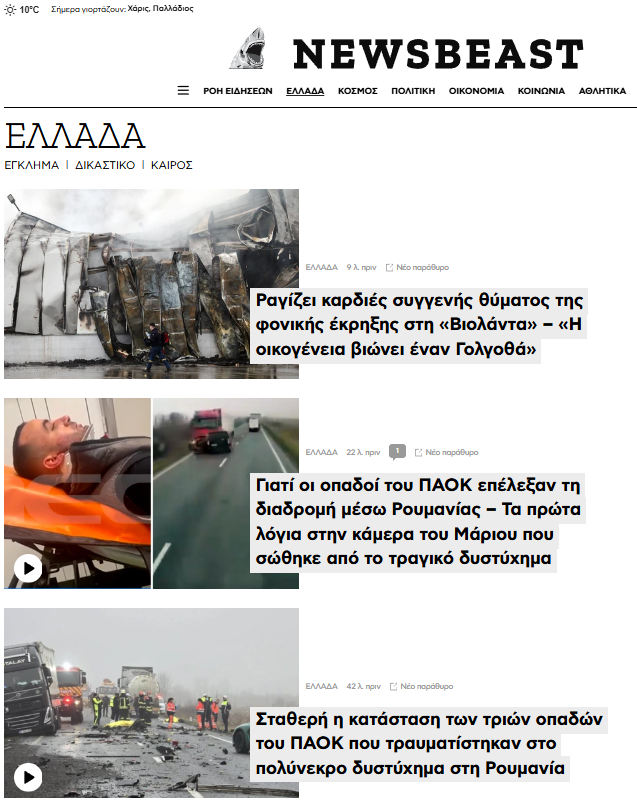
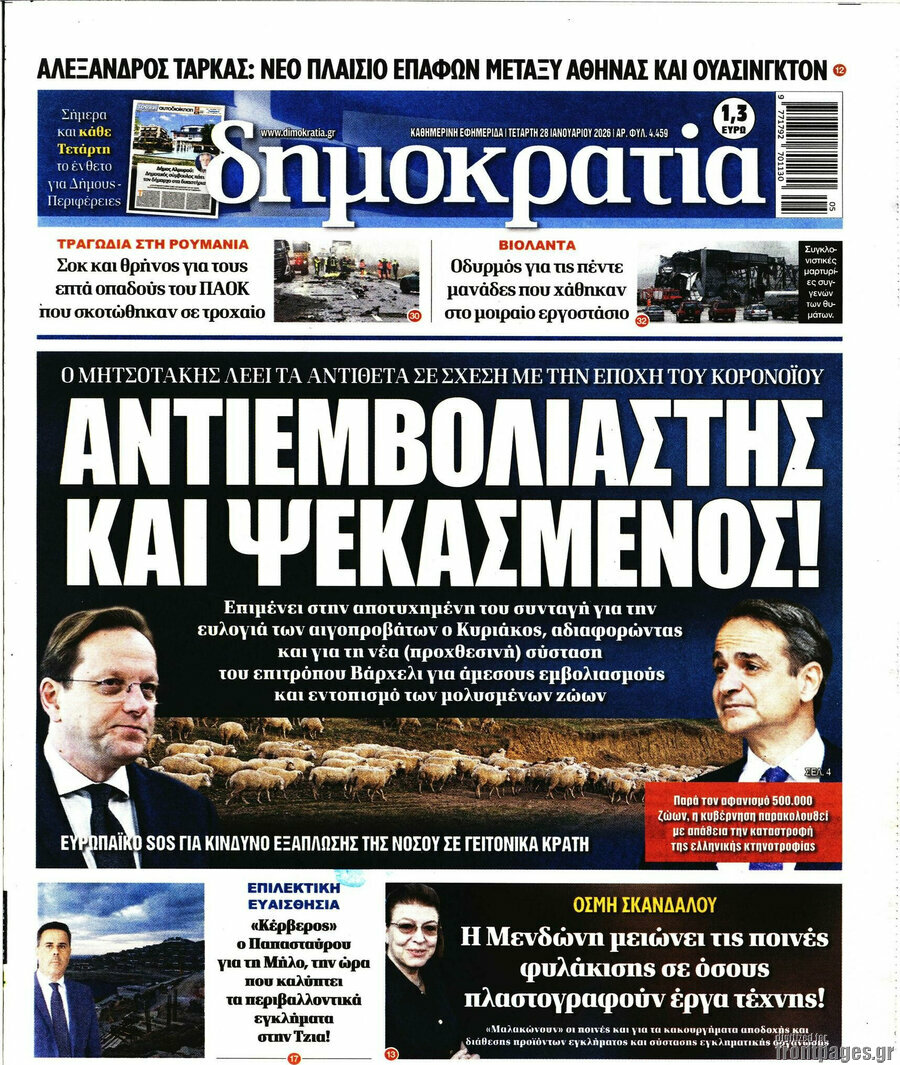
Seven PAOK fans die at road accident in Romania
Seven Greek fans of PAOK were confirmed dead by the Greek embassy in Romania on Tuesday, following a traffic accident near Timisoara. The passengers rode in a van heading to France that was involved a head-on collision at the village of Lugojel, in the Timis County of Romania.
https://www.amna.gr/en/article/965857/Seven-PAOK-fans-die-at-road-accident-in-Romania
Mitsotakis rejects mass vaccination as tool to stop sheep and goatpox
Prime Minister Kyriakos Mitsotakis rejected the mass vaccination of animals in a government meeting on Tuesday to discuss Greece’s response to the ongoing outbreak of goat and sheep pox. Mitsotakis said that vaccination could aggravate the situation by spreading the disease further instead of containing it, as biosecurity measures have not been followed properly, adding that there is no method to differentiate vaccinated animals from diseased ones. Mitsotakis’ comments come after Health Commissioner Oliver Varhelyi said that the European Commission has recommended vaccination as a tool to address goat and sheep pox in Greece. “Apply the rules. The rules are clear for this disease,” he said.
IOBE issues quarterly assessment report on the Greek economy
Geopolitical threats, the tension between Europe and the United States, and the crisis of American institutions were some of the concerns expressed by Foundation for Economic & Industrial Research (IOBE) Board President Yiannis Retsos on Tuesday, during the presentation of the institution’s quarterly report.
https://www.amna.gr/en/article/965973/IOBE-issues-quarterly-assessment-report-on-the-Greek-economy
ATHEX: MSCI news takes index over 2,300 points
Greek stocks secured fresh gains on Tuesday on the back of an unexpected statement by MSCI on Monday night that pointed to a likely upgrading of Athens Exchange to developed markets this August, having already started its necessary consultation with investors. In September, FTSE will also upgrade ATHEX, while STOXX has put the local bourse on its watch list, too. Therefore the benchmark at Athinon Avenue climbed to yet another 16-year-high, with banks and turnover being the predictable winners of the day.
https://www.ekathimerini.com/economy/1293572/athex-msci-news-takes-index-over-2300-points

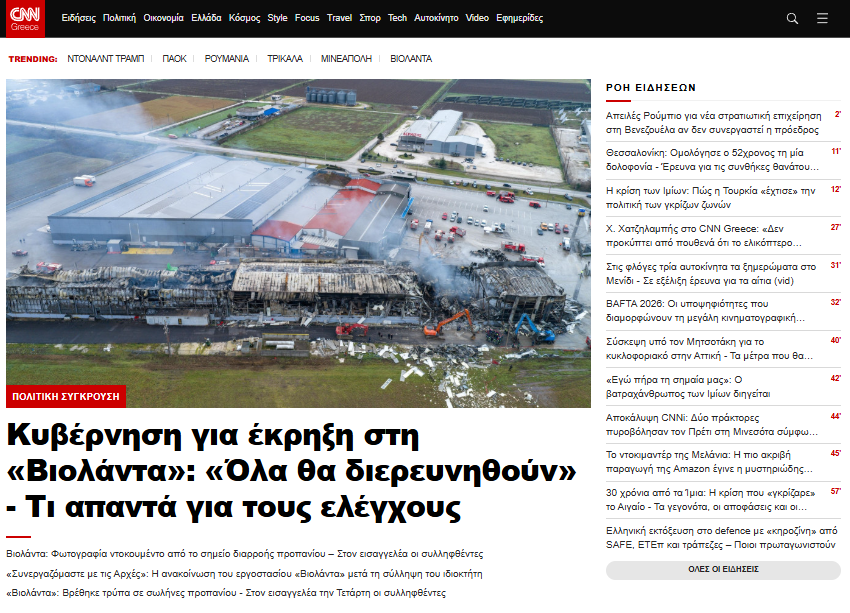
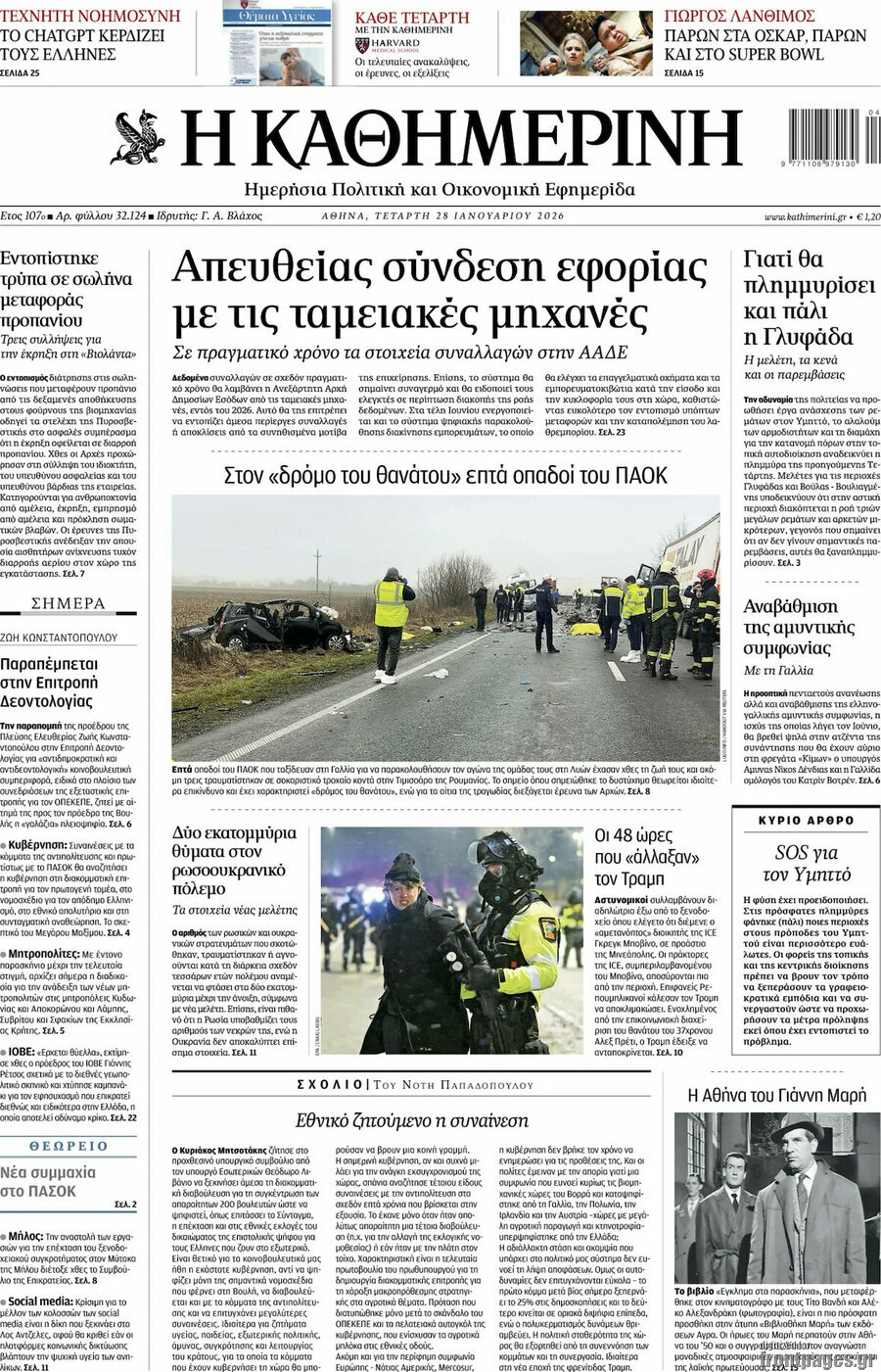
KATHIMERINI: Tax-office to be directly connected to cash registers
TA NEA: All Master’s degrees to be considered equal
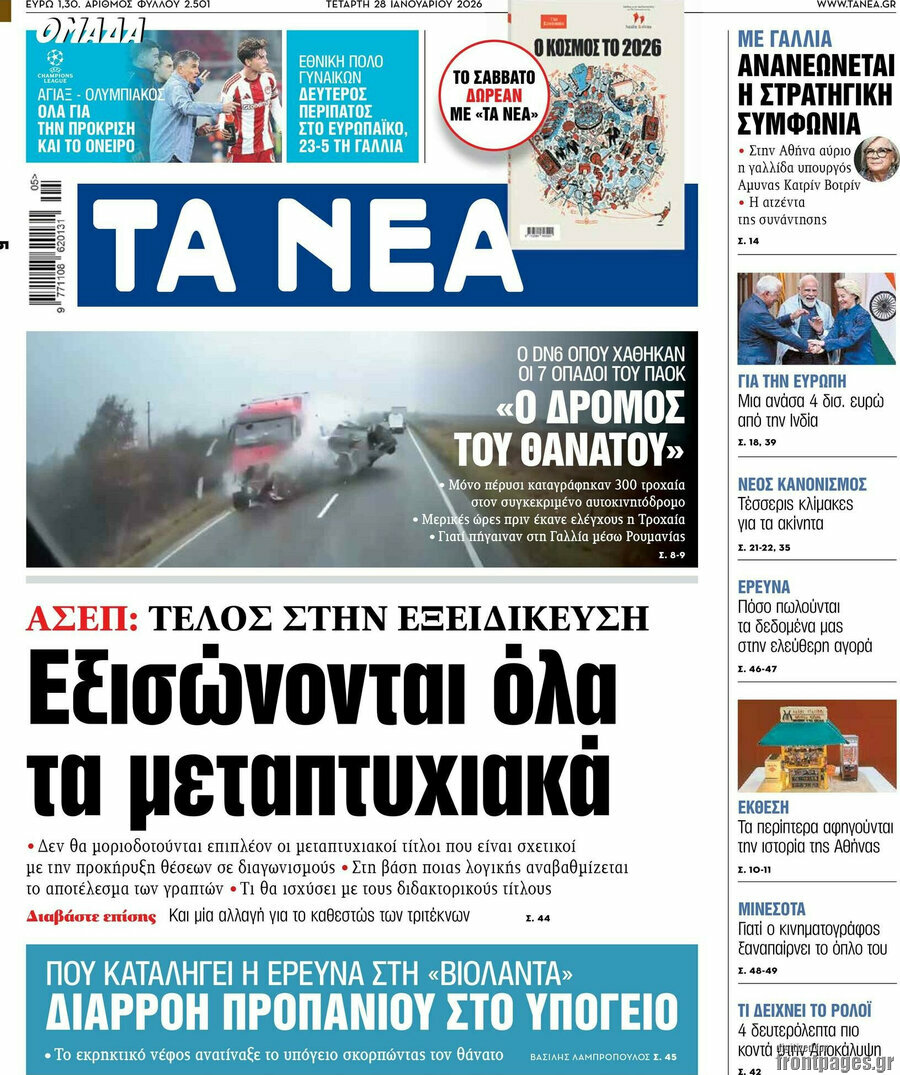
EFIMERIDA TON SYNTAKTON: Deadly explosion at biscuit factory: 5 questions about the tragedy
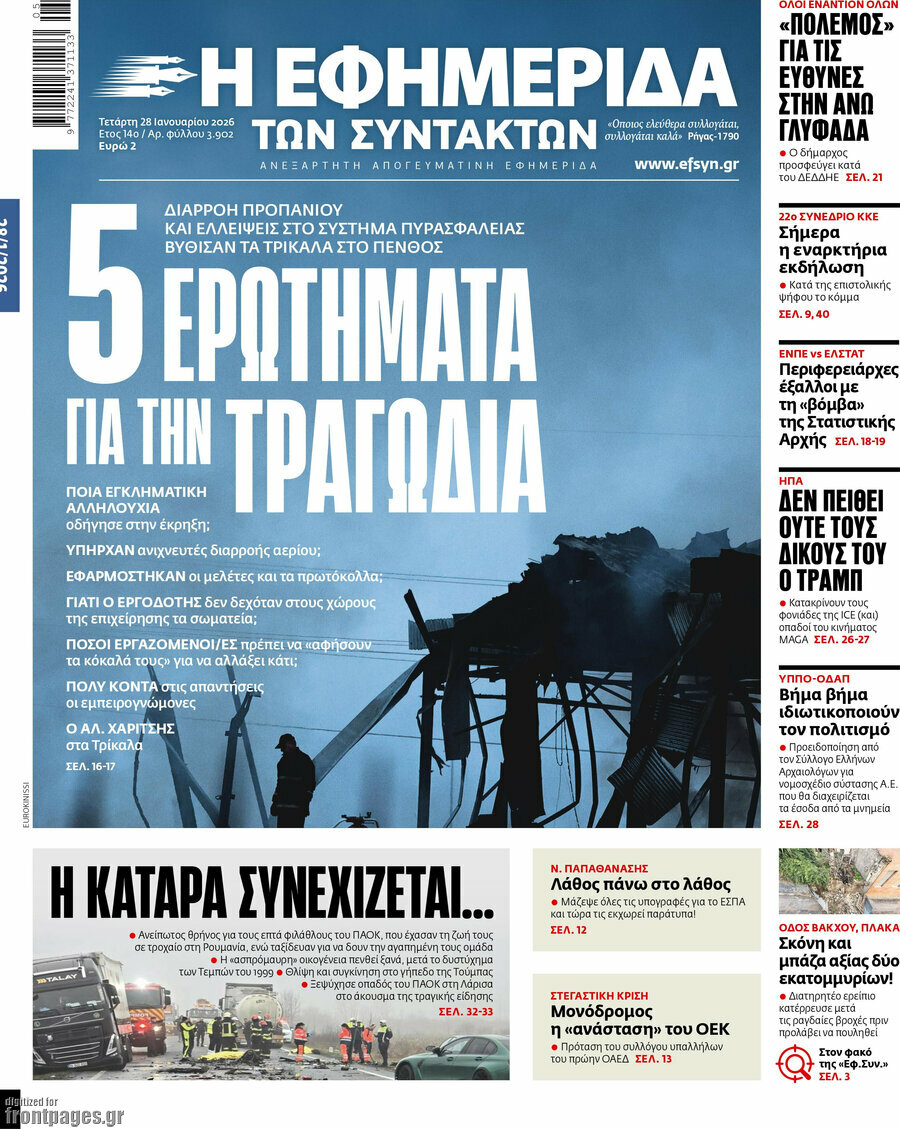
RIZOSPASTIS: Optimism as Greek Communist Party’s 22nd conference begins
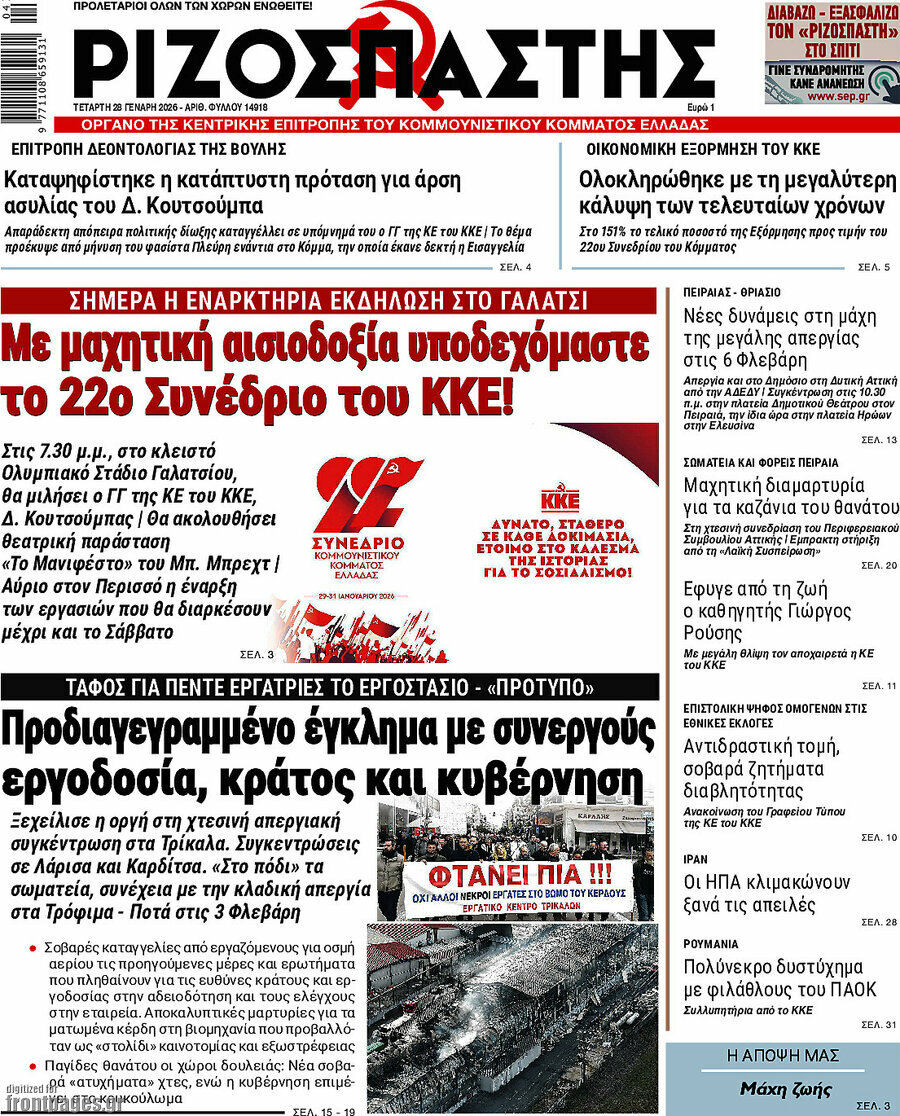
KONTRA NEWS: Deadly explosion at “Violanta” biscuit factory: The “whitewashing” failed and company owner Tzortziotis was arrested
DIMOKRATIA: Sheep-pox: PM Mitsotakis is an antivaxxer and conspiracy-theorist
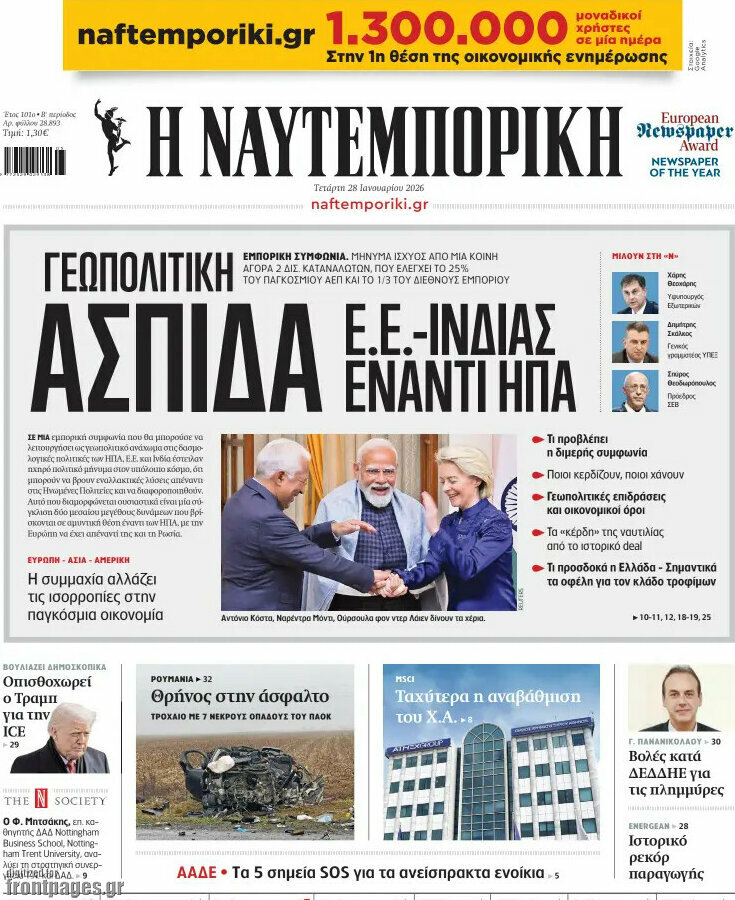
NAFTEMPORIKI: EU-India geopolitical shield against the USA

DRIVING THE DAY
WHAT EUROPE WAS TOLD ABOUT TRUMP’S STATE OF MIND: One of Europe’s most pro-Donald Trump leaders came back from a meeting with the U.S. president badly rattled — and told this to some of his counterparts at last week’s EU summit, according to five diplomats who spoke to POLITICO for a major story published on our website this morning.
According to the dramatic account given by the diplomats to my colleagues Nicholas Vinocur and Zoya Sheftalovich in a series of chats over the past few days, Slovak Prime Minister Robert Fico said his face-to-face meeting with Trumpat his Mar-a-Lago residence on Jan. 17 left him deeply alarmed about the U.S. president’s state of mind.
A note about who told us what: While none of the diplomats who spoke to POLITICO were present in the conversation with Fico, individual leaders briefed them separately on the content of the conversation shortly afterward. All the diplomats were granted anonymity by POLITICO to allow them to discuss the confidential exchanges between leaders. As you can imagine, these are sensitive discussions. The diplomats come from four different EU governments. The fifth is a senior EU official. All of them said they didn’t know the details of what Trump had said to Fico that triggered such a strong reaction.
But whatever it was, it wasn’t pretty: Fico seemed to be “traumatized” by his encounter with Trump, one of the diplomats said.
On the record: POLITICO made multiple attempts to get responses to these accounts from spokespeople for Fico and Trump. Fico’s representatives didn’t get back to us. Anna Kelly, a White House spokesperson, said: “This is absolutely total fake news from anonymous European diplomats who are trying to be relevant. The meeting at Mar-a-Lago was positive and productive.”
A senior Trump administration official who was in the meeting with Trump and Fico, granted anonymity to describe their discussion, said they couldn’t recall any awkward moments or off-key exchanges. They said the meeting, which Fico had requested, was pleasant, normal and included some lighthearted exchanges that were captured by a White House photographer.
Dangerous: Fico’s conversation with his European counterparts took place in an informal huddle on the sidelines of last Thursday’s emergency EU summit, with the Slovak PM and a small bunch of other leaders and EU officials. Fico said he was concerned about the U.S. president’s “psychological state,” two of the diplomats said. Fico used the word “dangerous” to describe how the U.S. president came across during their face-to-face meeting at Trump’s estate, according to two of the diplomats.
A notable verdict: These remarks carry extra weight because Fico is no Trump skeptic. Quite the opposite. He regularly echoes Trump’s critique of Europe, has spoken of him in glowing terms and — even after the Mar-a-Lago meeting — posted a Facebook video touting Trump’s “respect and trust.” Publicly, Fico said their talks were “informal and open.”
Where to go from here: Ever since Trump returned to office a year ago, European governments have been grappling with how to deal with his positions on issues such as Russia’s invasion of Ukraine, his administration’s apparent backing for far-right politicians, barriers to free trade and the U.S. role in the continent’s defense. Even after the apparent “deal” on Greenland last week, leaders were clearly not complacent about the transatlantic challenges ahead.
Fico’s remarks put those challenges into starker context. The EU knows these are unprecedented times.
REORIENTING NATO?
GRAVITATIONAL PULL: EU foreign policy chief Kaja Kallas will use a speech this morning to stress that while Russia remains Europe’s top long-term security threat, the picture is much broader. The EU faces mounting pressure from China, instability in the Middle East and a United States intent on shifting its strategic center of gravity to the Americas, Kallas will say.
Immediate change: Kallas will also use her 9 a.m. keynote address at the annual conference of the European Defence Agency (EDA) to call for a structural reorientation in transatlantic ties, with Europe needing to adapt — and fast. “As the U.S. sets its sights beyond Europe, NATO needs to become more European to maintain its strength,” she is expected to say.
Caught in a Rutte: The pitch is at odds with recent remarks by NATO Secretary-General Mark Rutte, who dismissed talk of European strategic autonomy. “If anyone thinks … Europe can defend itself without the U.S., keep on dreaming,” he told MEPs on Monday.
Rutte doctrine: The NATO chief’s bluntness has drawn fire — but also praise. “The reality is Rutte is delivering,” one senior NATO diplomat told POLITICO’s Victor Jack. “Unlike some other leaders, he never doubted the alliance,” another added.
Cost of Trump veneration: Others warn that public deference to Trump could erode NATO’s credibility. “For the benefit of the alliance, [Rutte is] sucking up” to Donald Trump, one diplomat said. “But the question is: Where does it end?”
The EDA gathering follows last week’s Davos inflection point and Commission President Ursula von der Leyen touting a new EU security push in Cyprus. The event is spearheading a cluster of defense meetings in Brussels, which has sparked a (peaceful) invasion of the city by people in military uniforms.
EVERYONE LOVES DEFENSE TECH: Ahead of today’s defense extravaganza, Playbook sat down with Tobias Billström, the former Swedish foreign minister, who now heads up strategy and government affairs for Nordic Air Defence (NAD), a drone start-up. Billström said Russia’s invasion of Ukraine has rapidly reshaped attitudes toward defense tech, with newly graduated engineers in Sweden increasingly ranking the sector among their top employer choices.
The sector’s pull is being driven by a growing sense that “young people feel security is so important,” Billström said.
Have Trump’s threats to take over Greenland broken NATO? Billström reckons not. “The language and actions from Trump have been detrimental,” he said. “But NATO has gone through many different crises and this is not the worst one.” There’s still need for a security diplomacy platform, so “NATO is not going away.”
NATO’s next headache? France’s far-right National Rally winning the 2027 presidential election could have major implications for the alliance. POLITICO’s Laura Kayali, Sarah Paillou and Marion Solletty explain why.
EU-INDIA TRADE DEAL
AS IT HAPPENED: “A new era begins,” said Indian Prime Minister Narendra Modi. “A tale of two giants,” added Ursula von der Leyen. Rhetoric aside, the EU–India trade deal sealed Tuesday is a landmark. It was clinched after nearly 20 years of talks and turbocharged by Donald Trump’s tariff pressure and China’s export dominance. Camille Gijs was on the ground in New Delhi with a full play-by-play.
Portuguese Mahatma: The EU’s diversification push was also something of a homecoming for European Council President António Costa — dubbed the “Gandhi of Lisbon” by Modi on Wednesday.
The Costa connection: Costa’s grandfather came from the Indian state of Goa, a former Portuguese colony. “I am the president of the European Council, but I am also an overseas citizen. As you can imagine, for me, it has a special meaning,” Costa said as he held up his Overseas Citizen of India card. The status allows visa-free entry into the country but doesn’t amount to dual citizenship. “The connection between Europe and India is something personal to me,” he said.
Deal essentials: India will cut tariffs on key European exports, most notably cars, reducing duties from 110 percent to 10 percent on an annual quota of 250,000 vehicles. Wine tariffs will fall to 20–30 percent, from 150 percent, while European olive oil will enter India duty free instead of facing a 45 percent levy.
Strings attached: While European carmakers finally gain access to the Indian market, the agreement comes with a host of provisos that will continue to constrain the European car sector, our senior automotive reporter Jordyn Dahl writes in to report.
Brussels concedes: Even the Commission admitted the deal does not grant automakers as much access as the EU wants.”On cars, we have not reached our initial ambition,” said an EU official, briefing reporters on condition of anonymity.
What else is in: Benefits on a wider range EU agricultural products, while the EU commits itself to supporting Indian companies on decarbonization and negotiating duty-free steel quotas.
FASHION DIPLOMACY: Nothing in politics is accidental — especially wardrobe choices. Von der Leyen leaned into that logic throughout her India trip.
And it landed: The Commission president’s Republic Day outfit, designed by Indian stylist Rajesh Pratap Singh with input from the Fashion Design Council of India, drew rave reviews. India Today praised the maroon-and-gold brocade bandhgala paired with white trousers as a sign of “deep appreciation for Indian culture.”
Symbolism layered in: The Banarasi brocade von der Leyen wore is traditionally reserved for formal occasions — and, EU officials told Playbook, was intended as a tribute to the handloom weavers of Varanasi. It’s no coincidence that Modi is a member of parliament for Varanasi.
Closing look: For the signing ceremony, von der Leyen shifted to a restrained Euro-blue (the name is a pure coincidence) silk bandhgala with hand embroidery and handmade lace cut-outs. During high tea for the Indian president’s “at home” reception, both von der Leyen and Costa wore the traditional Assamese gamosa, scarves woven with metallic zari and red selvedge.
CUSTOMS, POLITICS AND EUROVISION
MAY THE BEST CITY WIN: Bucharest, The Hague, Liège, Lille, Málaga, Porto, Rome, Warsaw and Zagreb: One of these cities will land the headquarters of the EU Customs Authority (EUCA). By 2028, the agency will replace today’s patchwork of 27 national authorities policing the customs union. The starting gun went off today.
Casting couch: The European Parliament opens its internal selection process in speed-dating mode at the Internal Market Committee (IMCO). There will be two rounds of pitches, a parliamentary official told Playbook: the first four cities from 9 a.m., the rest from 10:45 a.m.
Customary rivalry: Host-city competition has become an EU tradition in its own right. My colleague Koen Verhelst has masterfully rounded up everything you need to know about the nine hopefuls (spoiler alert for his early front-runners: Lille, The Hague, Málaga and Zagreb).
Capitals have a say, too … The seat of EUCA is bundled into the broader reform of the EU customs code, pulling the EU Council squarely into the process, requiring it to agree on a common position with MEPs.
… and they prefer Eurovision: The Council is keen to reuse the voting system that handed Frankfurt the EU’s Anti-Money Laundering Authority in 2024 — much to Parliament’s annoyance. Under this complex point-system that bears a striking resemblance to the one used in the Eurovision Song Contest, the Council can always outflank Parliament by pre-agreeing on a single candidate.
Mediterranean derby: On the Council side, the betting centers on two bids. Italy is launching a robust campaign for the agency, a senior European official with knowledge of the voting process told POLITICO’s Seb Starcevic. But so is Croatia, chasing its first-ever EU agency.
Overheard from the Italian side: Rome’s camp has declined to comment but considers its bid “pretty solid.” That would mark another remarkable achievement after the country managed to secure a Brussels Playbook author! Italy is offering the full package: rent-free building with exclusive use and all costs covered — indefinitely. Would this be enough?
Pure politics: As the senior official put it, there’s a long-standing custom of countries trading support for agency bids in exchange for backing on other dossiers — or future hosting. In short: it’s transactional.
What’s next? After today’s IMCO hearings, the calendar goes blank. No parliamentary vote is scheduled and the joint decision-making procedure is still under construction, the parliamentary official told Playbook.
Eyes on the prize: At stake are 250 well-paid staff positions, a powerful data hub monitoring all goods entering and leaving the bloc and oversight of import-duty collection — including the new €2 flat fee on low-value parcels agreed last year.
The scenario to avoid: Another Amsterdam-vs.-Milan moment, in which ministers deadlocked after three rounds of votes when deciding who would host the EU’s post-Brexit medicine agency. Brussels eventually resorted to drawing lots from a bowl.
IRAN SANCTIONS
CRUNCH TIME: EU ambassadors meet this morning at 9:30 a.m. with one eye on Thursday’s foreign affairs ministers meeting and the return of a long-standing conundrum — whether to designate Iran’s Islamic Revolutionary Guard Corps (IRGC), the Pasdaran, as a terrorist organization.
Where things stand: Earlier this month, Playbook reported that around 10 EU members were backing the idea, including Germany, the Netherlands, Sweden, Austria and Portugal. Opposition remains entrenched, led by France and Spain, with Italy until recently in that camp.
Roaming Rome: Italy has now shifted, signaling readiness to back sanctions against IRGC individuals and — more consequentially — to support listing the organization itself. The legal risk is obvious: The IRGC is a constitutionally embedded arm of the Iranian state, making designation diplomatically explosive.
No mea culpa: Italian Foreign Minister Antonio Tajani triggered a sharp reaction in Tehran this week after posting about the change of tack on X, prompting Iran to call in Italy’s ambassador in Tehran. Tajani brushed off the reaction on Tuesday evening, telling reporters: “It’s not our fault that there was a massacre in Iran.”
Holdouts: Attention now turns to the remaining skeptics. One EU official put it bluntly: France and Spain are the key — but not the only — holdouts. “I see no change at this stage,” one diplomat from this camp told Playbook. “France hasn’t changed,” added another diplomat from the pro-designation side.
Unanimity problem: That matters because unanimity is required for the terrorist designation, particularly as it concerns the IRGC itself. Two diplomats hope the issue is pushed to ministers on Thursday, given its highly political nature. Another two diplomats say it is impossible that ambassadors won’t at least test the waters this morning, given the sensitivity.
What it’s not: The debate is separate from two existing Iran sanctions regimes: one covering drones and missiles, the other centering on human-rights abuses. Both files are effectively closed and sitting in “relex” — EU jargon for awaiting final, largely procedural, sign-off at the Foreign Affairs Council. This will serve as a reaction to the recent violent crackdown by Iranian authorities.
IN OTHER NEWS
FOREIGN TECH WEAPONS: Commission Executive Vice President Henna Virkkunen warned about Europe’s reliance on foreign technology at an event hosted by POLITICO, arguing that the bloc must avoid dependence on “one country or one company” for critical technologies.
MELONI SLIPS ON ICE: U.S. Immigration and Customs Enforcement has confirmed that its agents will assist with security at next month’s Winter Olympics in Italy — a decision now turning into a political headache for Italian Prime Minister Giorgia Meloni.
The Left group in the European Parliament has written to the European Commission urging the EU to impose travel bans on all ICE agents coming to Italy, according to a letter obtained by Max Griera.
EU NERD ALERT NO. 1: For the first time in a decade, MEPs and the Council of the European Union are heading into the rarely used conciliation phase, after failing to bridge differences through standard interinstitutional talks.
The file is air passenger rights. At 1:15 p.m., Parliament President Roberta Metsola will open and chair the inaugural meeting of Parliament’s delegation to the Conciliation Committee. An equal number of MEPs and Council representatives will then attempt to hammer out a joint text — or watch the file crash-land.
EU NERD ALERT NO. 2: The EU’s top court set a precedent on Tuesday, ruling for the first time that a member state — Hungary — breached EU law by voting against an agreed EU position in another international body. The judges found Budapest had violated the principle of sincere cooperation by opposing the EU Council’s position on scheduling of cannabis as narcotics in two United Nations conventions.