
Farmers decide to meet with prime minister on Tuesday, reject Athens rally proposal
Representatives of protesting farmers concluded their meeting at the Nikea roadblock of Larissa on Saturday, deciding that they would meet with the prime minister as scheduled on Tuesday afternoon (Jan. 13), and rejecting a proposal for a rally in Athens during that meeting at Maximos Mansion.
Greece awaits political developments amid new party moves
Greece’s political system appears to be in a period of anticipation following announcements about the possible formation of new political parties. Maria Karystianou, president of the association representing the families of victims of the Tempe rail disaster, has initated the launch a new political party, expected to emerge later this year. After a series of ambiguous public statements, Karystianou – a Thessaloniki-based doctor who lost her daughter, Martha, in the 2023 crash – said she will spearhead the political change she wants to see. Opinion polls suggest her support would largely come from protest and anti-establishment voters, leaving the ruling New Democracy party and the main opposition PASOK largely unaffected. Former prime minister Alexis Tsipras is also expected to step up his public presence in 2026, as he plans to launch his own political party.
Greece could expect new upgrades to its credit ratings in 2026; first three assessments in March
The upgrades of Greece’s credit rating by large credit rating agencies in 2025 are expected to continue into the new year, with Greece’s creditworthiness approaching rating A, which most eurozone countries have. The first good news may come in March, when three credit rating agencies – USA’s Moody’s, Canada’s DBRS, and Germany’s Scope – will announce the first of their two assessments for 2026. The other two large agencies, America’s S&P and Fitch, will provide their first assessments in April and May, respectively.
Fiscal overperformance in 2025, with a primary surplus exceeding target at 11.5 bln
The conclusion of 2025 brought another piece of good news on the Greek economy’s performance. According to all available data, the general government’s primary surplus for 2025 showed a significant overperformance, heading toward 4.5% of GDP against the already upward revised target of 3.7% of GDP. This means that in absolute numbers the budget’s primary surplus will reach close to 11.5 billion euros, at 2024 levels, when the surplus had jumped to 4.8% of GDP.
ATHEX: Greek bourse has clearly risen to new level
The Greek stock market has clearly entered a new division this year, as it is not just the successive 16-year highs the benchmark is recording, but also the persistently high daily turnover, as share packages change hands and local blue chips (especially banks) appear to be grabbing more and more attention. This was also evident on Friday, when despite the drop of banks due to some predictable profit taking, the main index refused to decline and turnover remained over four times last year’s average level.
https://www.ekathimerini.com/economy/1291977/athex-greek-bourse-has-clearly-risen-to-new-level


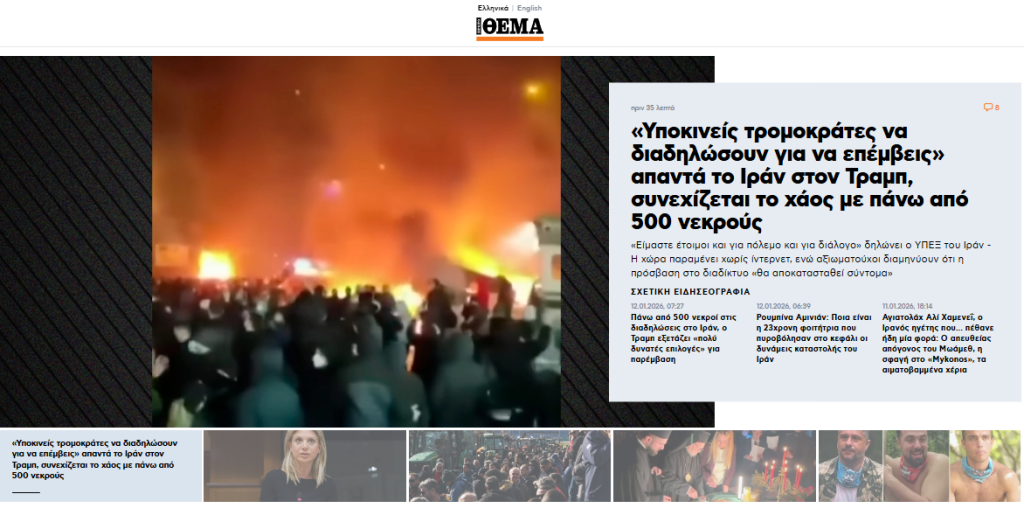
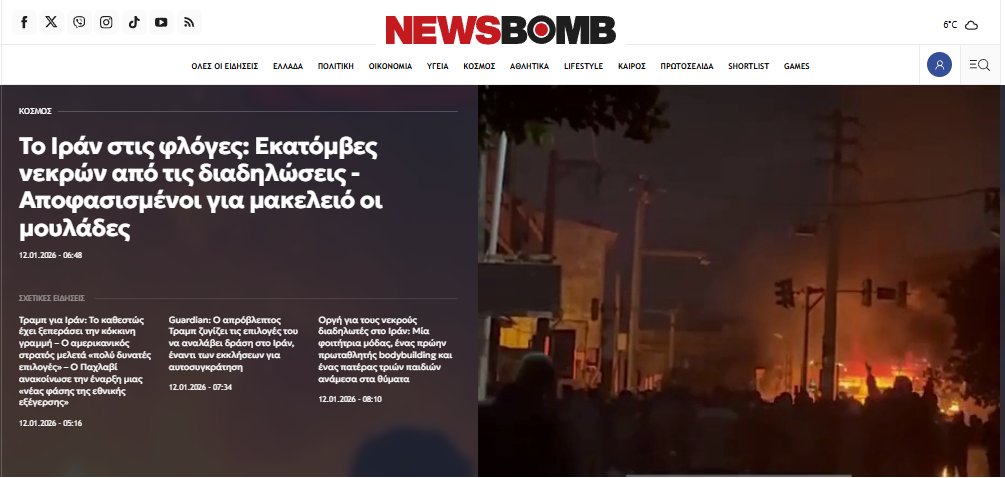
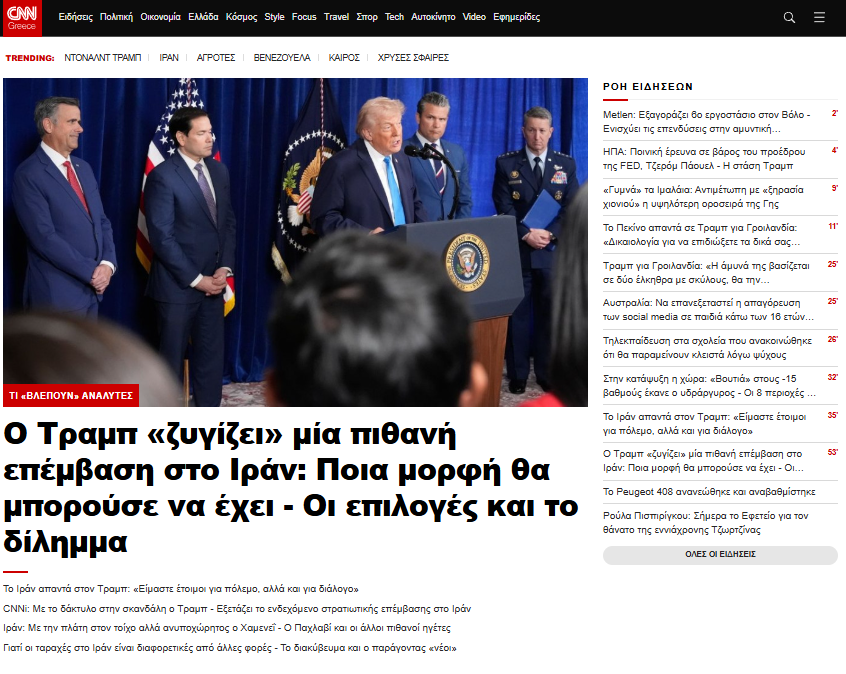
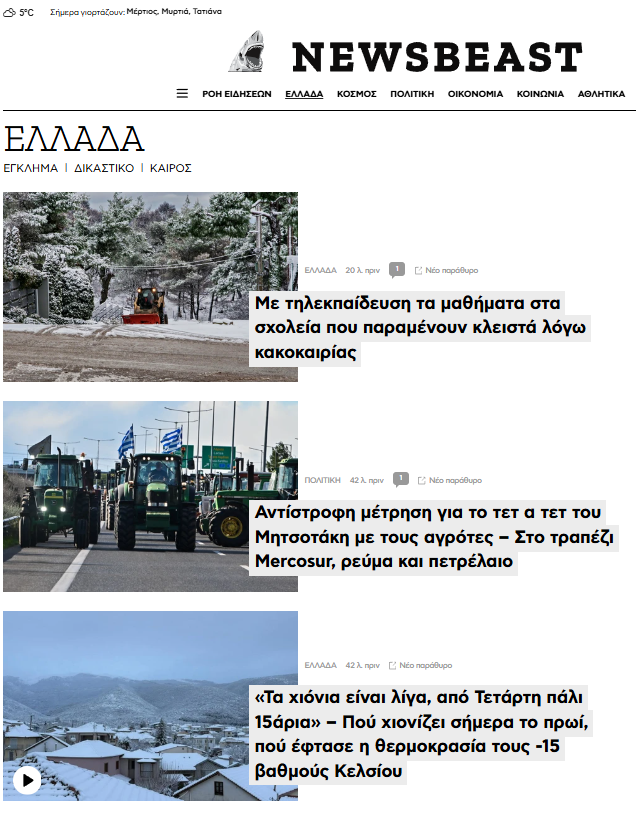

SUNDAY PAPERS
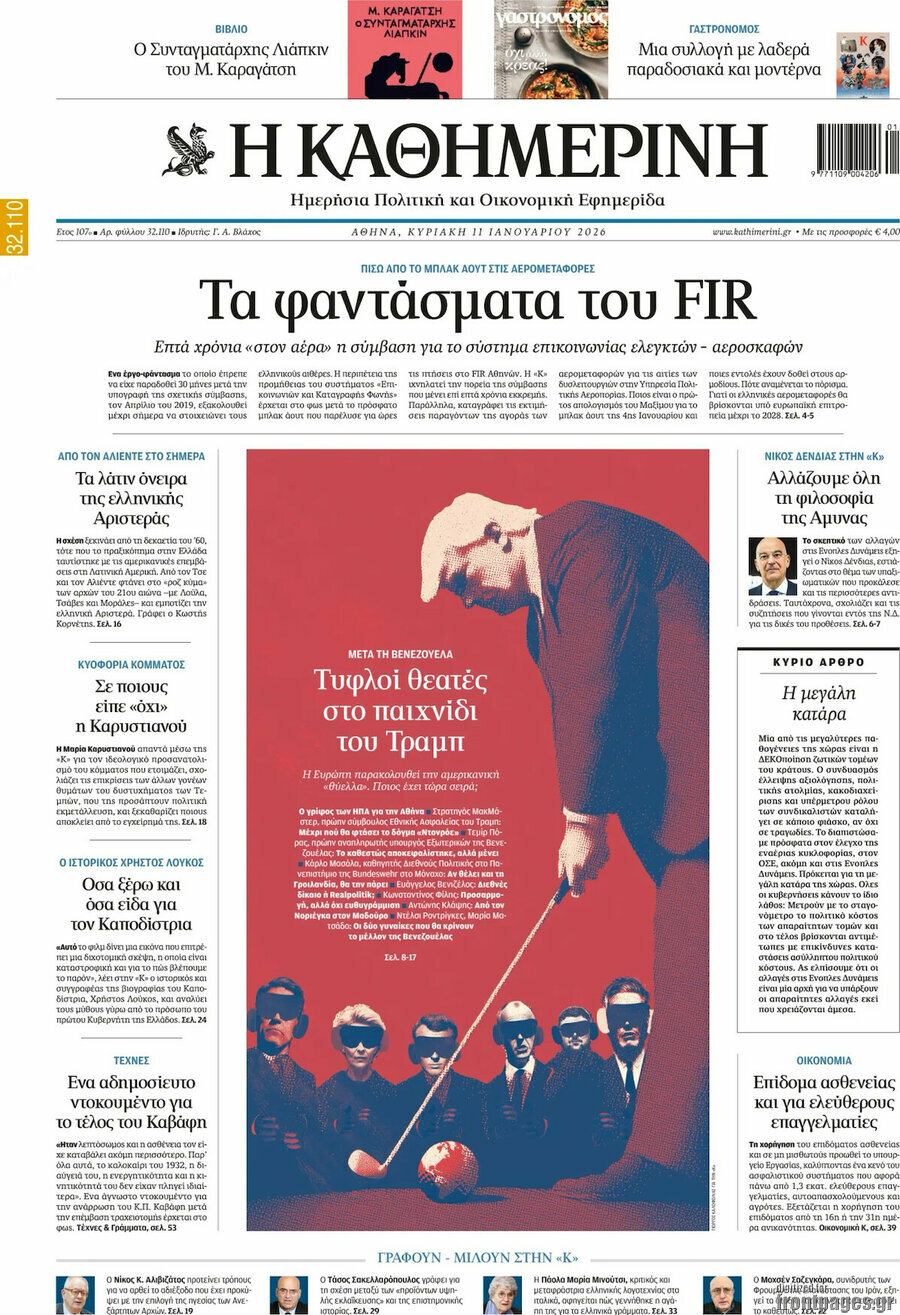
KATHIMERINI: The ghosts of the Greek FIR
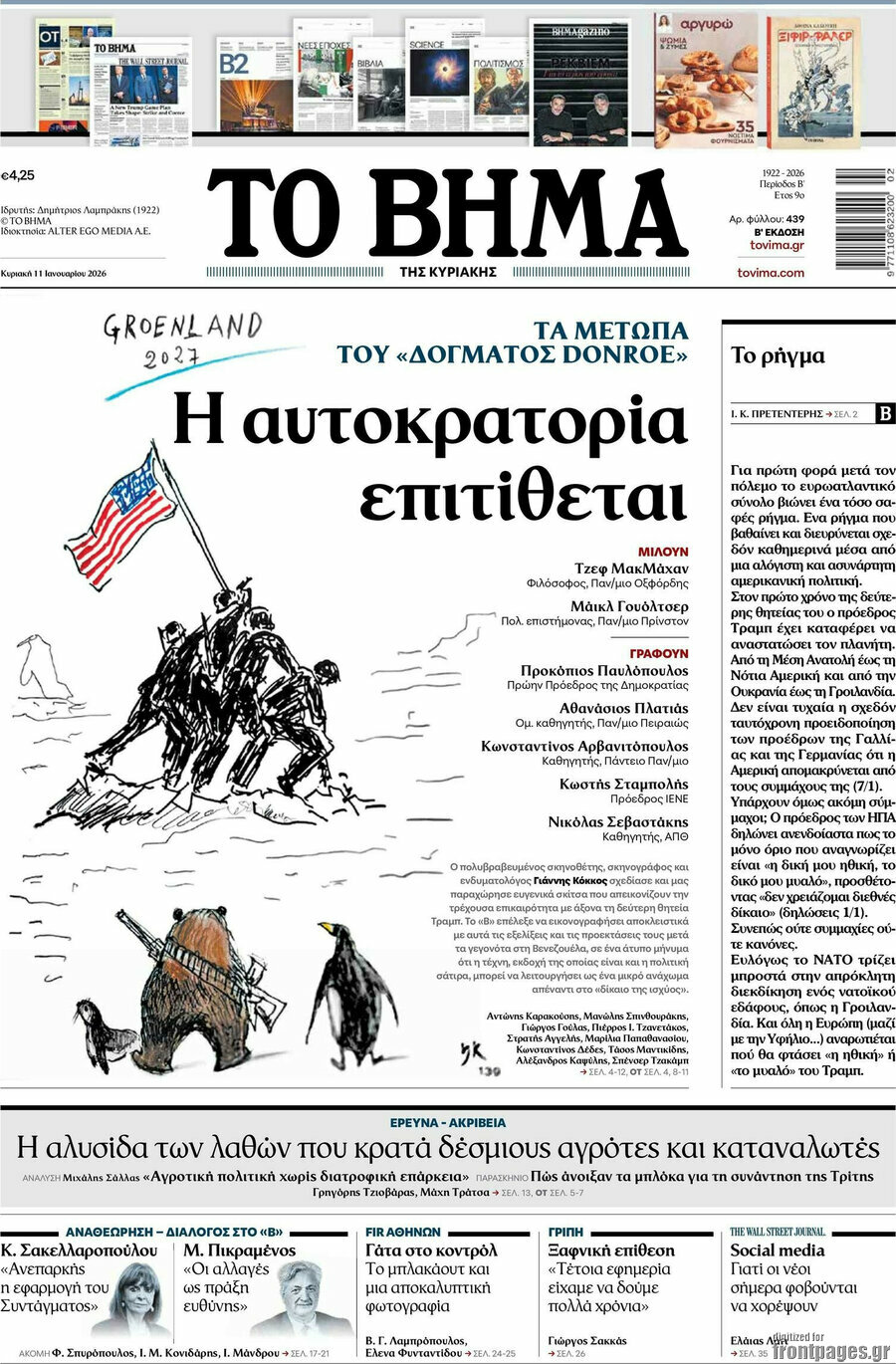
TO VIMA: The [American] empire attacks
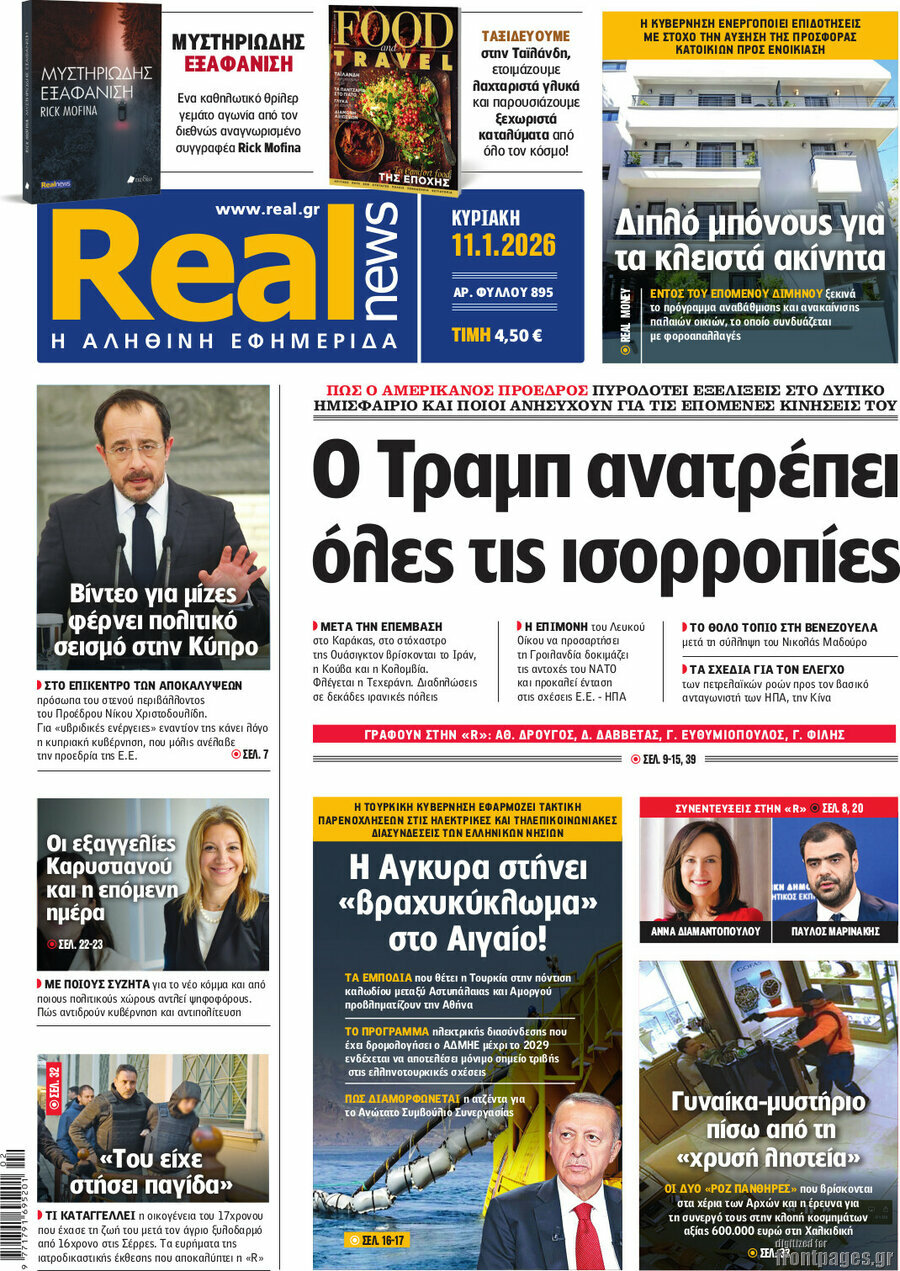
REAL NEWS: US President Trump overturns all balances
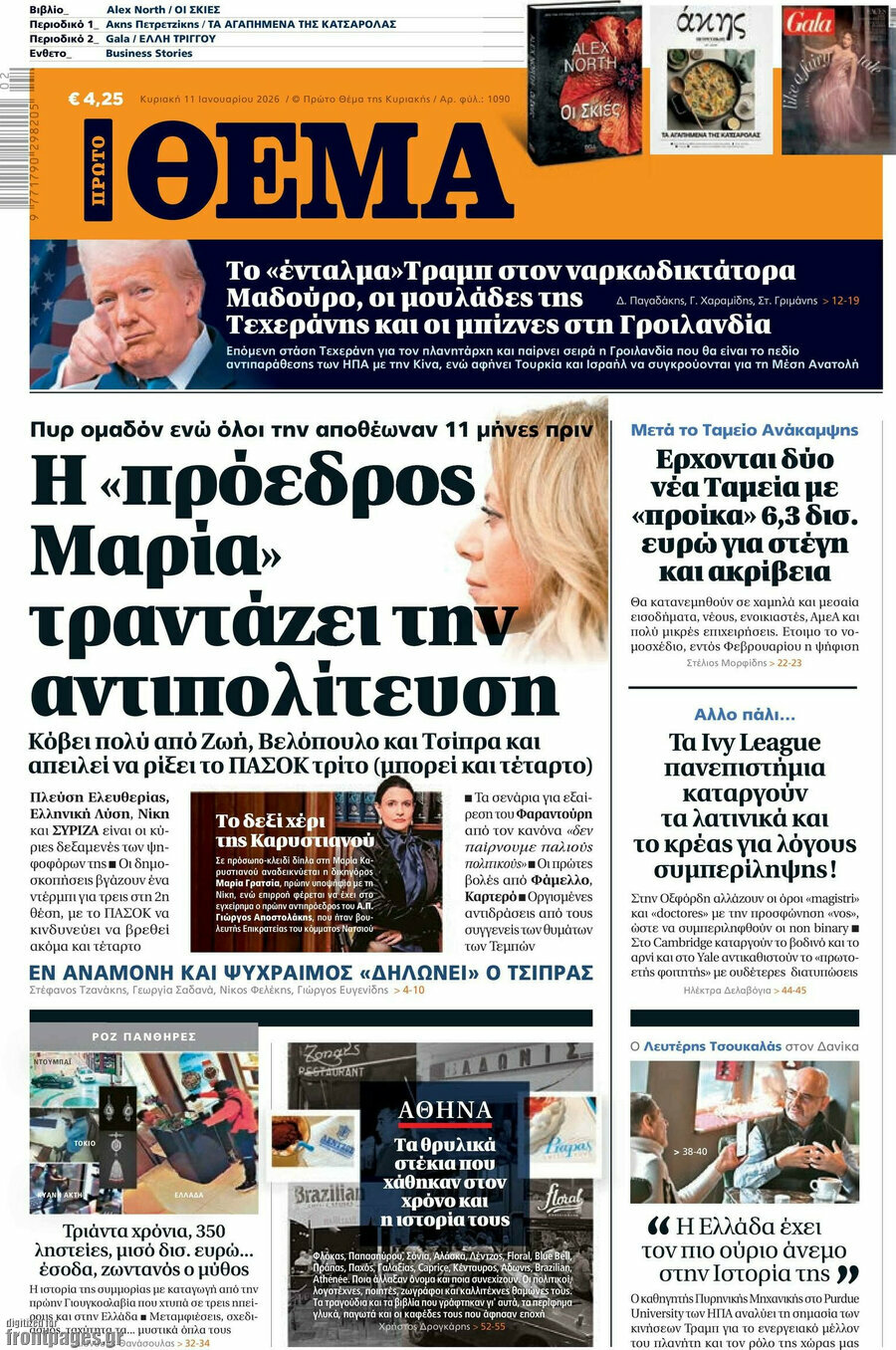
PROTO THEMA: Party president Maria Karystianou shakes opposition parties
MONDAY PAPERS:
TA NEA: Banking frauds with the use of AI
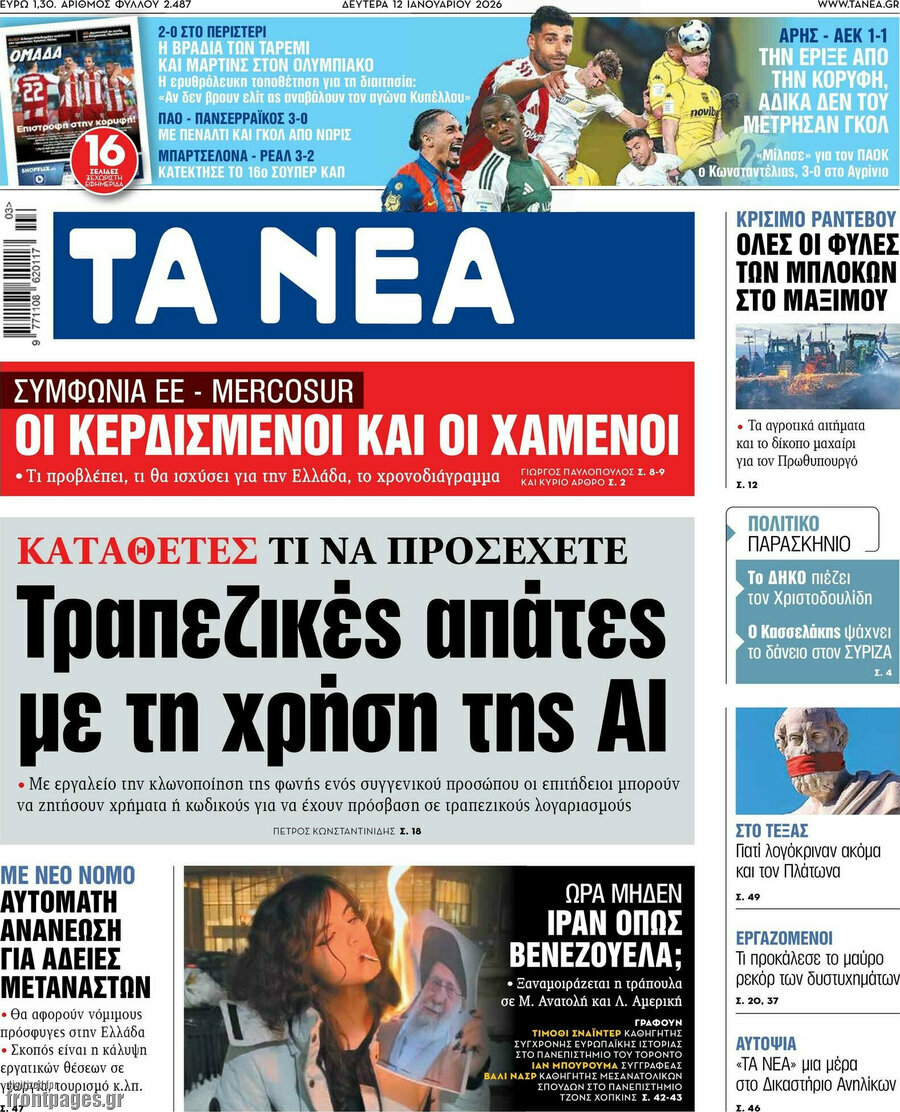
EFIMERIDA TON SYNTAKTON: Mitsotakis: The party [New Democracy] c’est moi!
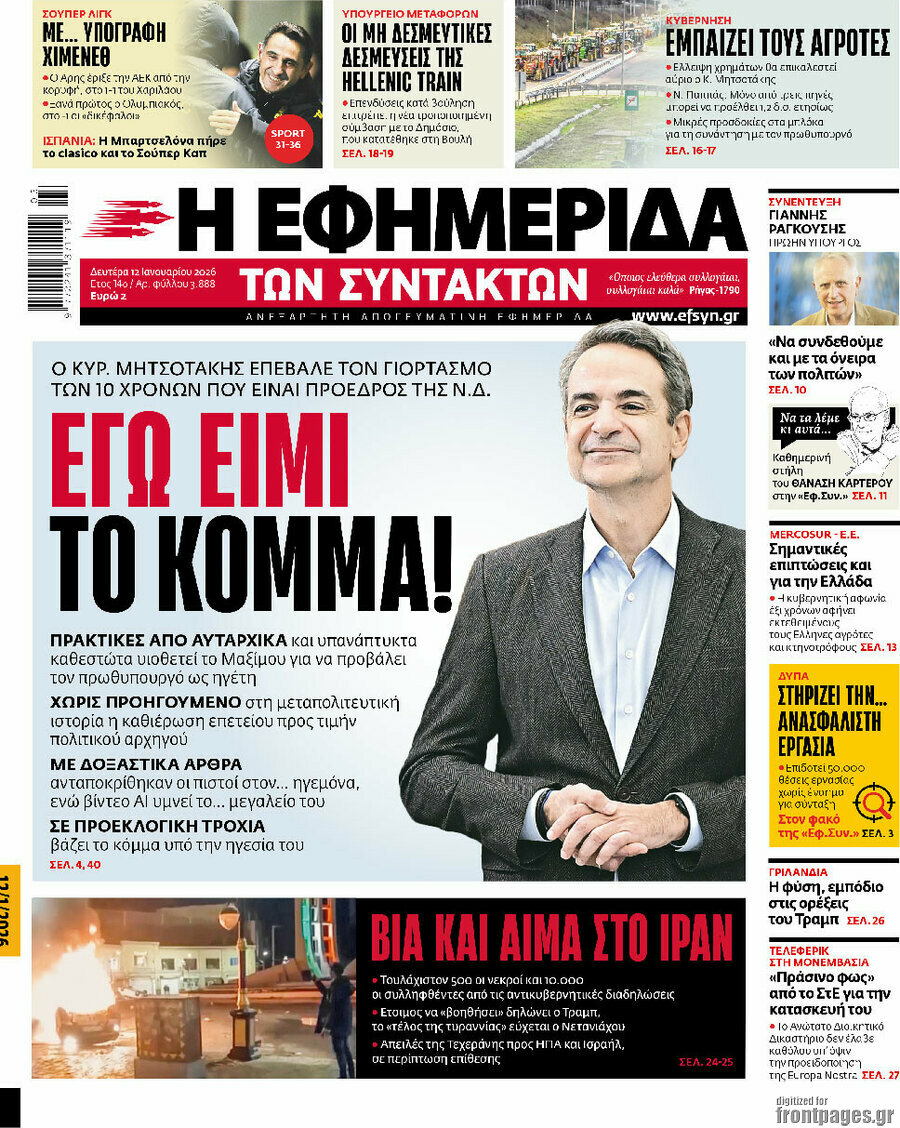
KONTRA NEWS: Kickbacks in Cyprus lead to the fall of the government
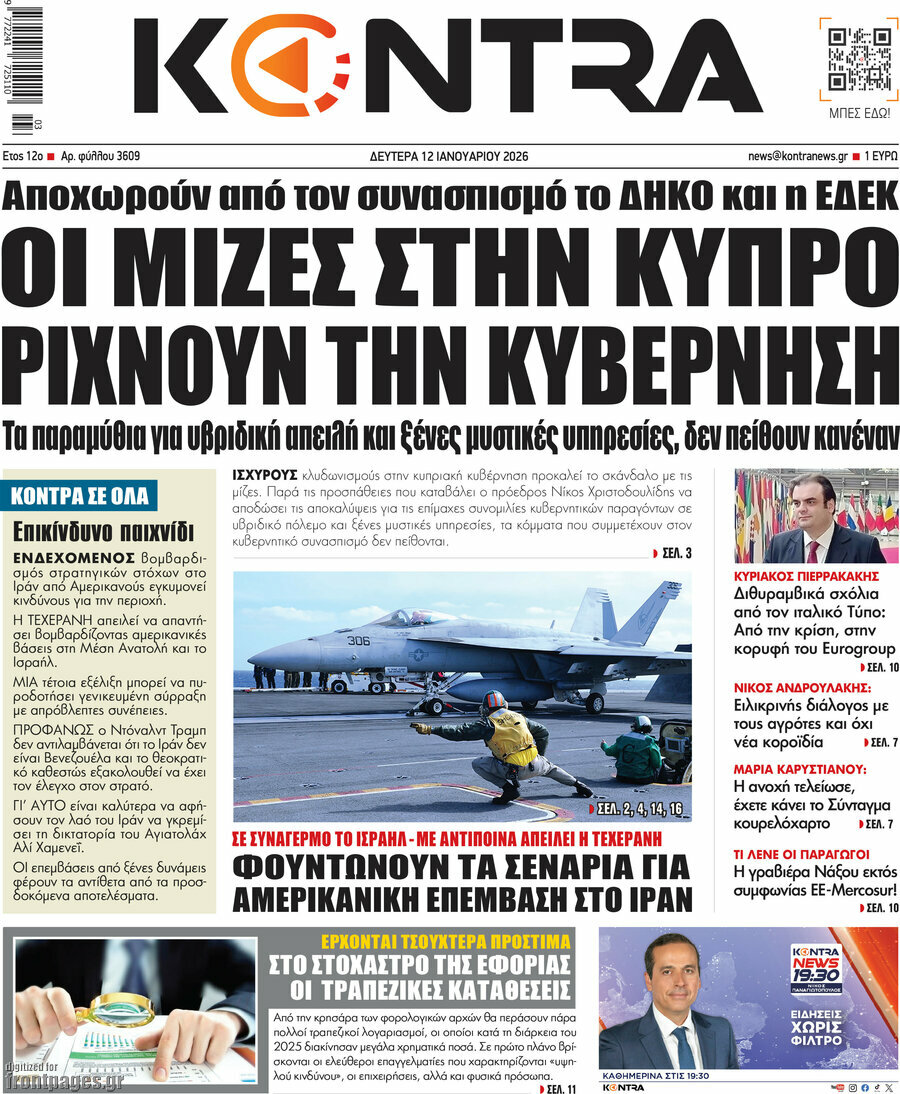
DIMOKRATIA: Price hikes in foods annul wage and pension increases
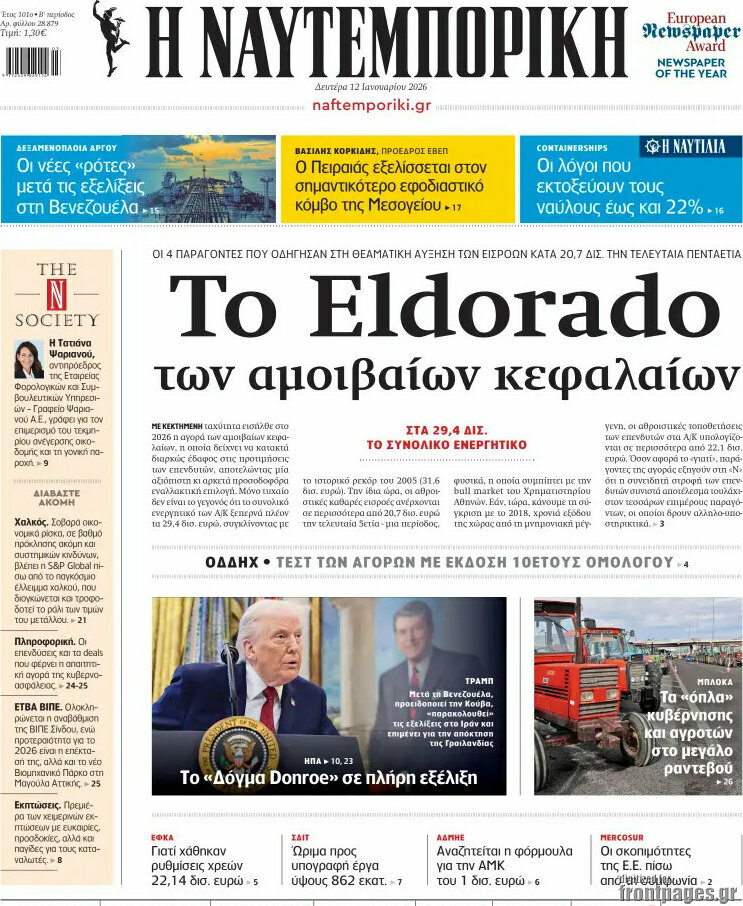
NAFTEMPORIKI: The Eldorado of mutual bonds

DRIVING THE DAY
WEIGHING NEW IRAN SANCTIONS: The EU’s top diplomat, Kaja Kallas, is gearing up to pitch fresh sanctions against Iran following a crackdown that has reportedly killed hundreds of people since protests broke out nearly two weeks ago.
“I am prepared to propose additional sanctions in response to the regime’s brutal repression of protesters,” the EU’s high representative said in comments shared with Welt and POLITICO (both of which are owned by Axel Springer). Kallas said these would come on top of “sweeping” sanctions already in place over nuclear proliferation and Tehran’s support for Russia.
Stepping up: The proposal marks the strongest response yet from an EU official to Iran’s bloody crackdown. Commission President Ursula von der Leyen said over the weekend that Brussels was “monitoring” the situation, while Parliament President Roberta Metsola wrote on X that “Europe must understand its duty and need to act.”
Blood in the streets: The comments coincide with a rising death toll. Iran Human Rights, an Oslo-based group, said Sunday that nearly 200 protesters had been killed since protests broke out on Dec. 28. Other rights groups put the number at more than 500.
“The regime has a track-record of crushing protests, and we see a heavy-handed response by the security forces,” Kallas went on to say in the written comments. “Citizens are fighting for a future of their own choosing and risking everything to be heard.” (More below on Iran protests in Brussels.)
Stand back: The EU’s response remains cautious when compared to statements from U.S. President Donald Trump, who has pledged support for the protesters and is being briefed on options including military strikes and targeted cyber attacks, my colleagues in Washington report. Trump also said last night he’ll talk to tech billionaire and SpaceX owner Elon Musk about restoring internet services in Iran, which have been blacked out for days.
Questions: “Why Europe and the European nations have still not cut their diplomatic ties with the Mollah regime?” former Belgian PM Guy Verhofstadt posted on X Sunday night.
More to come? Asked about the absence of stronger measures, an EU diplomat said that capitals were assessing their options in light of a fast-moving situation and could yet unveil measures in coming days. In 2023, several EU states recalled their ambassadors or summoned Iran envoys following a wave of executions.
The risk for Europe, as always, is being left to play catch-up in a volatile region where its levers — sanctions, development money, diplomatic pressure — are often overshadowed by the threat of brute force.
Over the horizon: With talk of potential U.S. strikes against Iran swirling, some officials are already looking to the day after a potential toppling of the Tehran regime. One name that’s being discussed is Reza Pahlavi, Iran’s crown prince who has lived in exile for the past 50 years. (Tim Ross interviewed him in June.)
Exiled prince: Pahlavi reportedly has some support inside Iran and has issued repeated calls from the U.S., where he lives, for protesters to take to the streets via Farsi-language satellite broadcasts.
The bottom line: It’s too early to say how this round of protests will end. What’s different is that the regime has been weakened since its 12-day war with Israel last year — and Trump seems determined to keep up the pressure. Europe, once again, is searching for its voice.
EU-MERCOSUR
LEADERS TO INK MERCOSUR DEAL IN PANAMA: Commission President Ursula von der Leyen and Council President António Costa are flying to Panama this Saturday to sign the long-awaited EU-Mercosur trade deal despite France’s ongoing objections, Koen Verhelst reports.
Geopolitical play: The move is a milestone for Europe, which has been discussing the Mercosur deal for the past 25 years and is trying to diversify its trading relationships amid unstable relations with the U.S.
On the same theme … German Chancellor Friedrich Merz is headed today to India to try to move along the EU-India trade deal, our Berlin Playbook colleagues report.
Meanwhile, France isn’t budging. In an interview with daily Ouest France, French Foreign Minister Jean-Noël Barrot said the game had now moved to the European Parliament, exhorting the deal’s opponents in France to “use their energy” to oppose Mercosur there.
And it’s far from over as far as Parliament is concerned, Max Griera writes in to report. Starting during next week’s plenary, lawmakers are likely to vote on whether to refer the whole deal to the European Court of Justice for a legal opinion on whether it complies with treaties. Following pressure from lawmakers who oppose the deal, Parliament President Metsola committed to schedule the vote in plenary after Council concluded the agreement.
If the legal review is approved, Parliament would not be able to vote on the deal itself until the Court issues its opinion. This typically takes between 18 and 24 months.
Then you need to get the votes: Once the judicial review is sorted, Parliament will need to give the OK. It will not be able to modify the content of the agreement.
Expect a nail-biter. Inside the Commission, the officials tasked with tallying the votes (yes, that job exists) are bracing for a long count. This isn’t an ideological fight or a party-line split, but mostly a nationality issue.
NOW READ: Europe’s farmers may have lost the Mercosur battle, but as my colleague Bartosz Brzeziński reports, they remain one of the EU’s most powerful political constituencies, capable of reshaping trade deals, budgets and reform agendas even when they fail to block them outright.
DEFENDING EUROPE
DUTCH BACK UKRAINE BUYING U.S. WEAPONS: The Netherlands is leading a push to give Ukraine more leeway in how it spends the €90 billion loan the EU has promised Kyiv to help fund its defense against Russia’s forces.
With only a few days to go before the European Commission formally unveils its proposal on Wednesday, the Dutch government suggested earmarking at least €15 billion for Ukraine to buy weapons produced in the U.S. and other non-EU countries in a letter seen by our Morning Financial Services colleagues.
The Hague vs. Paris: The Netherlands and France have been sparring over how many strings to attach to the EU’s upcoming loan, which will include yet undefined amounts for military and budget support. Paris wants to introduce a tight “Buy European” clause that would make it very hard for the funds to flow non-EU countries, Gregorio Sorgi writes in to report.
Battle continues: The Netherlands retorts that this approach would tie Ukraine’s hands and limit its ability to defend itself against Russia’s aggression. “Ukraine also urgently requires equipment produced by third countries, notably U.S.-produced air defense systems and interceptors, F-16 ammunition and spare parts and deep-strike capacities,” the Dutch wrote in the letter.
The EU is not enough: The Hague claims that European countries do not produce some armaments in sufficient amounts to help Ukraine. While they support introducing a “Buy European” clause, they propose setting aside some €15 billion to purchase foreign armaments not immediately available in Europe.
KUBILIUS HINTS AT EU ARMY: The EU’s Defense Commissioner Andrius Kubilius suggested the bloc may need a combined force of around 100,000 soldiers to replace American troops in Europe. Speaking at a security conference in Sweden on Sunday, the Lithuanian commissioner also floated the creation of a European Security Council to coordinate top defense decisions — with the U.K. given a seat at the table.
ORESHNIK MISSILE LAUNCH: The U.K.’s Permanent Representative to NATO, Angus Lapsley, has slammed Moscow’s launch of a nuclear-capable missile at Ukraine late last week. “[Vladimir] Putin claims he wants peace while staging another attack on Ukraine, 50 miles from the NATO border, using a ballistic missile system Russia developed in clear breach of its international treaty obligations,” he told POLITICO’s Victor Jack. “We see what Putin is doing and will not be deterred from supporting Ukraine.”
HOUSING PLEA
EUROPE “DISCONNECTED” FROM ITS PEOPLE: The EU’s institutions are growing more removed from the concerns of regular citizens — a situation that plays into the hands of populists, Séamus Boland, head of the European Economic and Social Committee (EESC) told Playbook.
“We get it”: Speaking on his way to Rome’s airport after a meeting with Pope Leo XIV, Boland said he understood why Brussels and national capitals were funneling more money toward defense. “The whole ‘peace project’ narrative is no longer appealing to anybody. We have moved into a very different situation,” said Boland. (The EESC is a consultative body of the EU that brings together trade union and civil society representatives from around the bloc. Boland took over the chair in October.)
What are we defending? The Irishman said defense spending increases had to be accompanied by urgent measures to make housing more affordable for young and vulnerable Europeans. “We have to look at defense in a major way — but if we do we have to bring civil society in because the question is: What Europe are we defending?” The only way you define that is by including civil society organizations,” he said.
Housing crisis: Boland welcomed the EU’s first Affordable Housing Plan in December but argued that officials and leaders need to do more. “I’ve called for an emergency declaration for housing to be tackled much faster than we are currently doing,” he said, adding that he has another meeting on that soon with António Costa. “What we will be saying is that an emergency call will mean each EU state will have to come up with measures.”
Asked about the EU-Mercosur trade deal, the EESC president (who is also CEO of Irish Rural Link, which promotes sustainable rural development) said the agreement “may be very good for Europe but it’s not good for farmers. I would argue that the Commission needs to put guarantees in the next CAP and MFF.”
Finally, on migration, Boland — who’s had meetings with Costa, Parliament President Metsola and several commissioners — said the EU needs to heed the words of Pope Leo, whom he quoted as saying: “We have to be kind to strangers, we have to be kind to foreigners, but also respect their dignity.”
IN OTHER NEWS
VÁRHELYI FACES PARLIAMENT: Health Commissioner Olivér Várhelyi will face questions today from MEPs about his knowledge of an alleged spy ring that reportedly operated out of the Hungarian embassy in Brussels during the period Várhelyi worked at, and then ran, the office, Mari Eccles writes in to report.
Reminder: When reports surfaced last year that intelligence officers for Viktor Orbán’s government attempted to recruit EU officials as spies between 2012 and 2018, Várhelyi told von der Leyen that he was “not aware” of those alleged activities. Many Hungarian officials working in the EU institutions at the time described the network to POLITICO as an open secret in the Belgian capital.
Green MEP Daniel Freund will lead the one-hour long hearing, with questions likely to focus on the spying allegations, Várhelyi’s time as the EU’s enlargement commissioner, and his links to Orbán.
LE PEN FIGHTS TO SAVE PRESIDENTIAL DREAMS: A court appeal begins in Paris on Tuesday that will determine whether Marine Le Pen or her protege Jordan Bardella will head into next year’s French presidential election as favorite from the far-right National Rally party. Le Pen looks set to fight her appeal on technical legal objections and an argument that the ban is disproportionate, rather than going out all-guns blazing and insisting she is the victim of a political hit job, Victor Goury-Laffont reports.
PANDOROGATE: Italy has been gripped by the downfall of the country’s most politically influential Instagram couple in a fraud scandal over sales of sweet pandoro Christmas bread, Elena Giordano and Giulia Poloni report.