
Government seeks talks before holiday crunch
The government moved quickly on Monday to respond to farmers’ demands, formally inviting them to dialogue through Agriculture Minister Kostas Tsiaras, as nationwide protests and road blockades continue. Ahead of the minister’s brief statement, government spokesman Pavlos Marinakis set the tone, stressing limits to what the state can offer.
https://www.ekathimerini.com/politics/1289874/government-seeks-talks-before-holiday-crunch
Mitsotakis reaffirms Greece’s support for Moldova’s EU bid
Prime Minister Kyriakos Mitsotakis said on Monday that Greece supports Moldova’s bid to join the European Union, calling its progress toward EU standards “indisputable” despite external pressure. Speaking after meeting Moldovan President Maia Sandu in Athens, Mitsotakis praised Moldova’s recent parliamentary elections as a sign of “stability and democratic maturity” and said the Moldovan people had shown they were “neither intimidated nor manipulated.”
GPO poll shows New Democracy lead dips
Ruling New Democracy leads in voter preferences but saw its support fall compared with November, according to a new GPO poll conducted for Parapolitika radio. The poll showed New Democracy at 23.7%, down from 25.2% in November, while maintaining a wide lead. Socialist PASOK placed second with 12.3% and right-wing Greek Solution followed in third with 10.1%.
https://www.ekathimerini.com/politics/1289846/gpo-poll-shows-new-democracy-lead-dips
Early repayment of debt due in 2031
Greece paid off debt worth 5.3 billion euros that had been due after 2031 ahead of schedule on Monday, two government officials said. Monday’s payment would allow Greece to save €1.6 billion in interest payments up until 2041 and lower its debt to below 120% of its economic output by 2029, Greek government spokesperson Pavlos Marinakis said.
https://www.ekathimerini.com/economy/1289868/early-repayment-of-debt-due-in-2031
ATHEX: Eurobank steals show at bourse
Eurobank garnered most of the interest at the start of the trading week on the Greek bourse, as the introduction of its new shares after its trading pause last week gave fresh momentum to Athinon Avenue that offset foreign pressures and saw the benchmark end with minor gains in Monday’s session. A similar process will follow next week with Piraeus Bank. Turnover was rather satisfactory, given this is mid-December, with investors engaging in extensive stock-picking without an overall direction.
https://www.ekathimerini.com/economy/1289889/athex-eurobank-steals-show-at-bourse



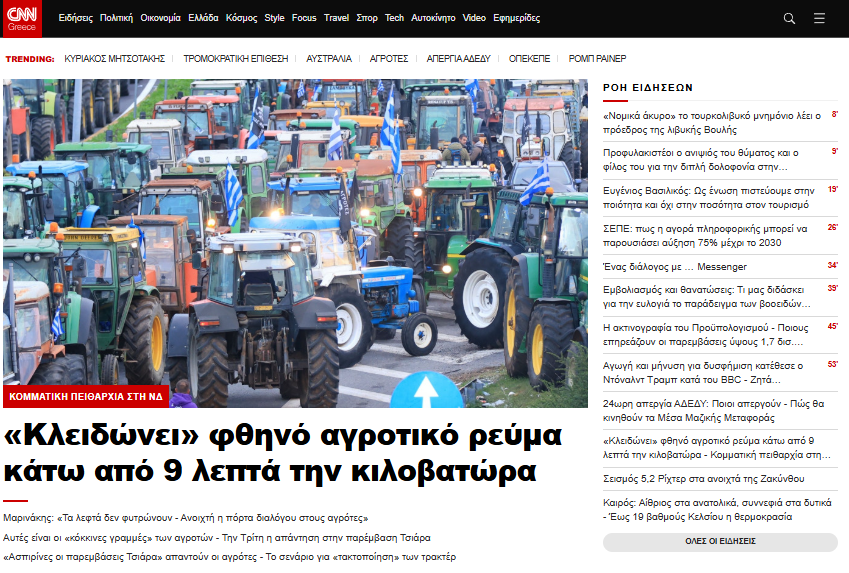

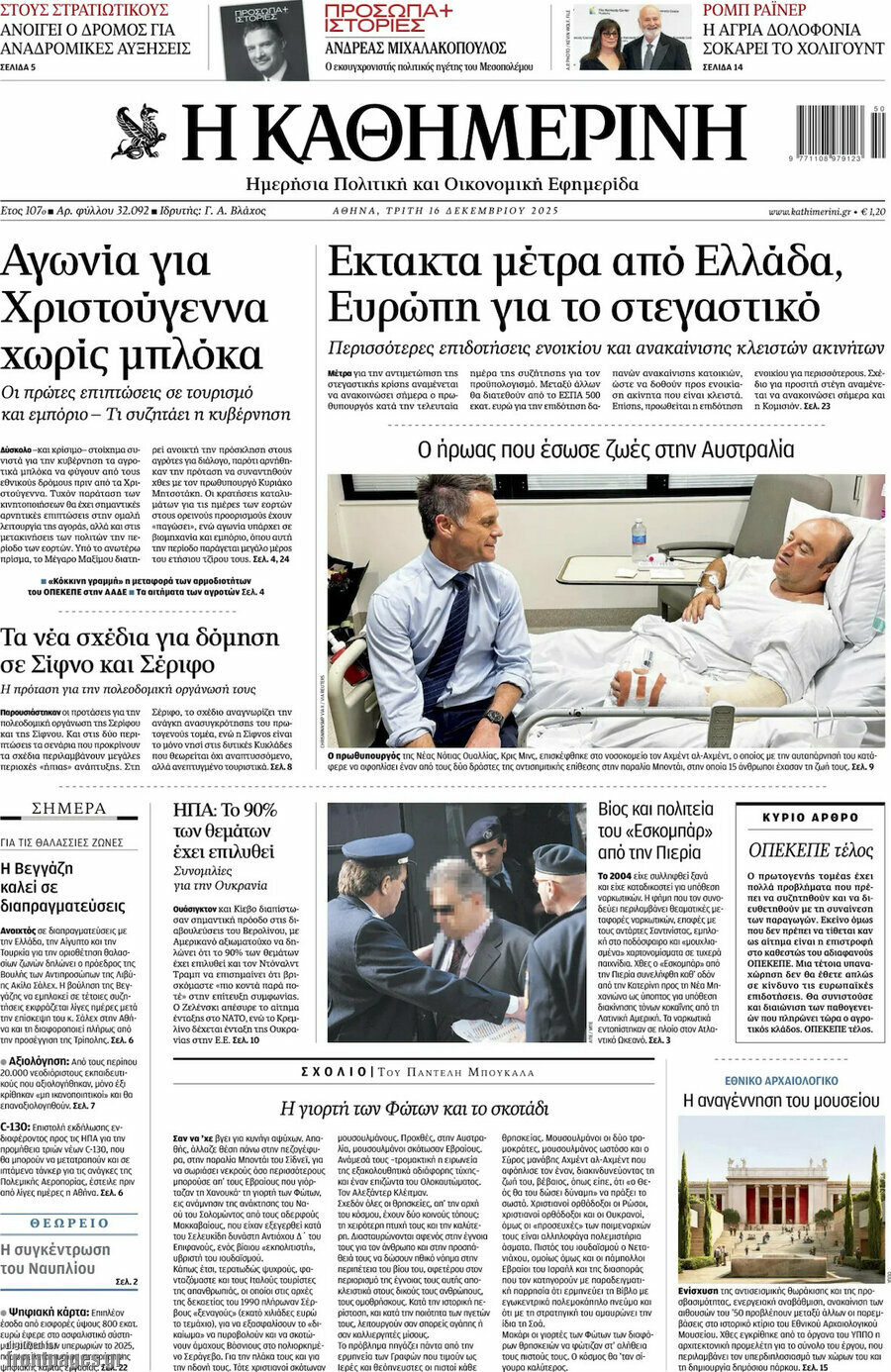
KATHIMERINI: Extraordinary measures from Greece and Europe regarding housing
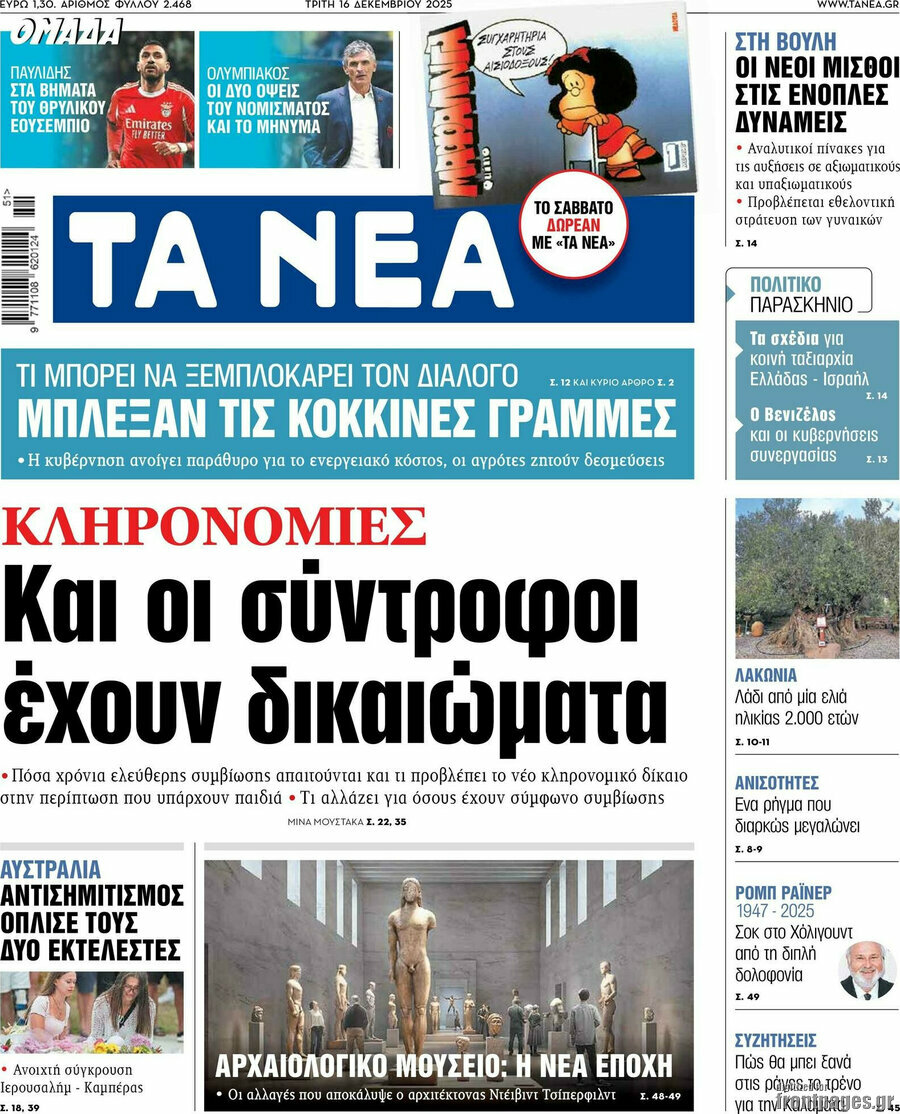
TA NEA: Inheritances: partners have rights as well
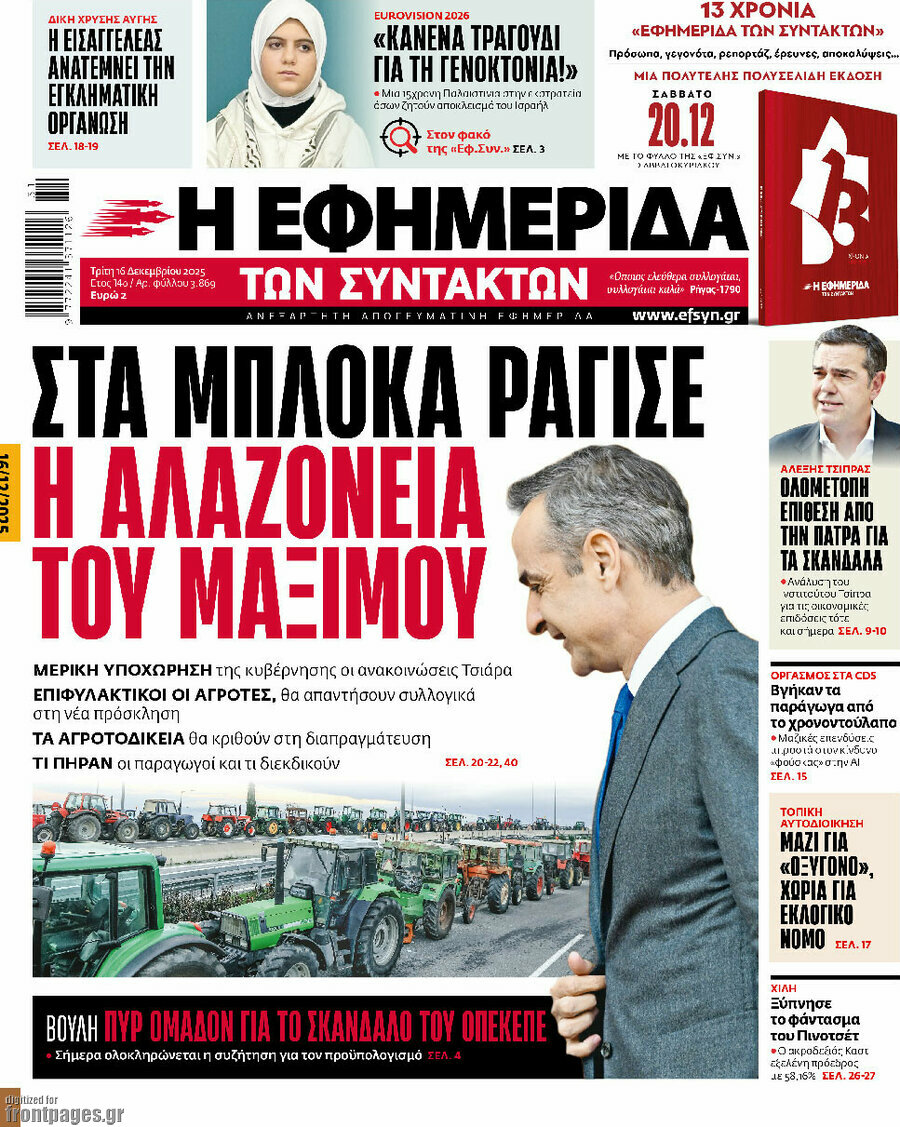
EFIMERIDA TON SYNTAKTON: The PM’s arrogance was shattered by farmers’ blockades
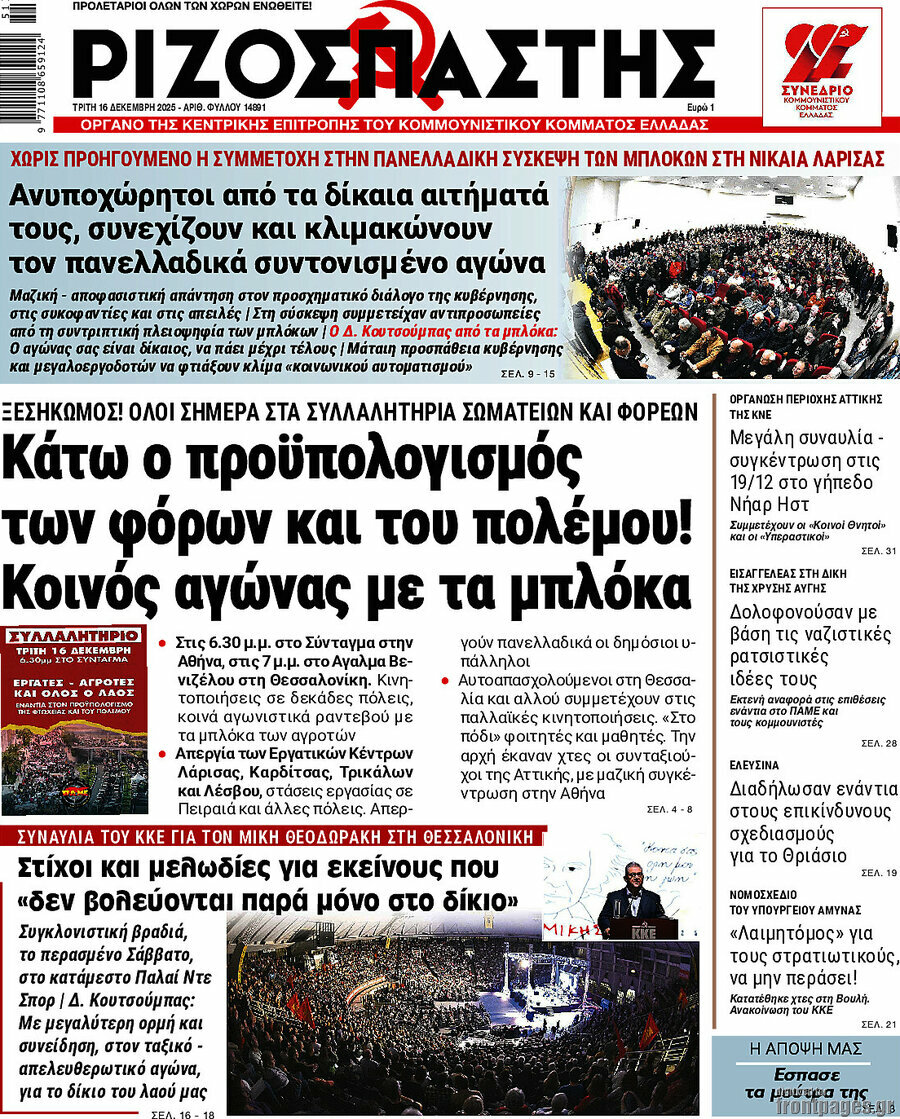
RIZOSPASTIS: Down with the budget of taxes and war expenditure!
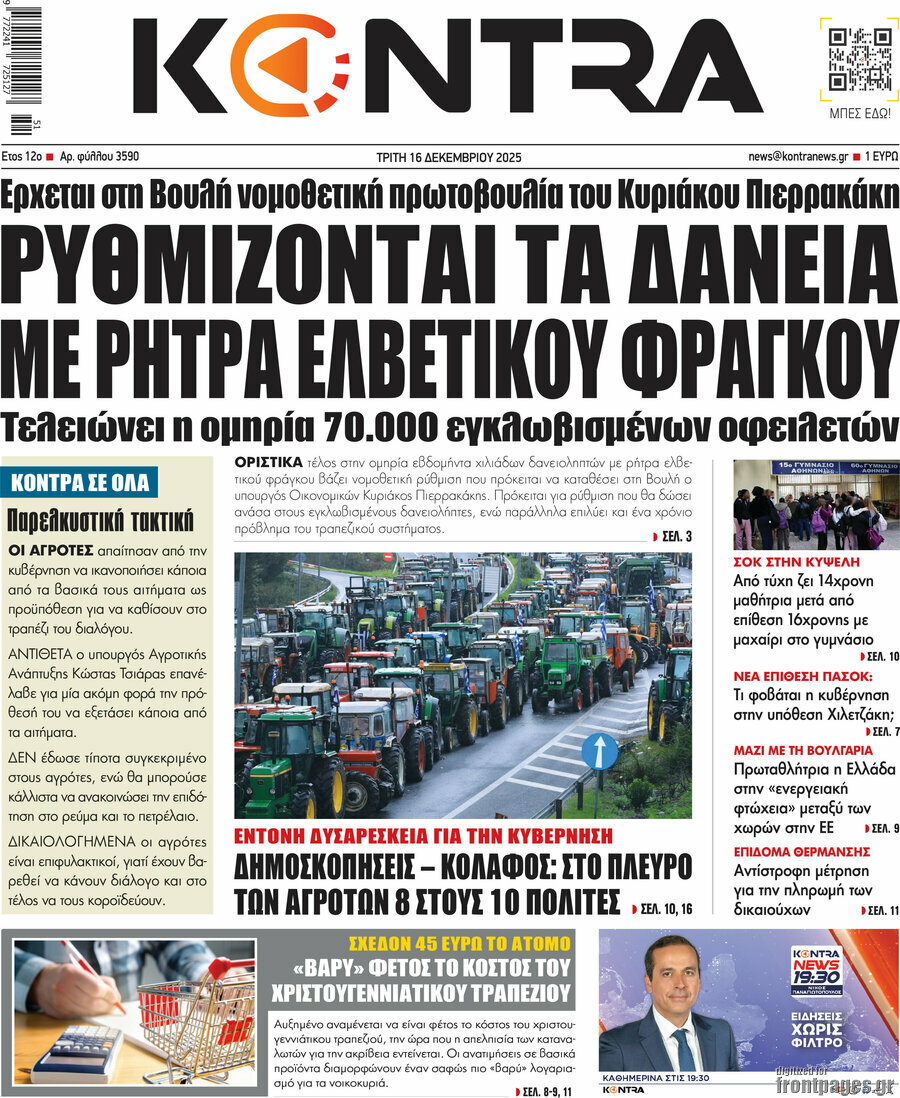
KONTRA NEWS: Loans with Swiss franc clause to be regulated
DIMOKRATIA: The government is attempting to deceive farmers
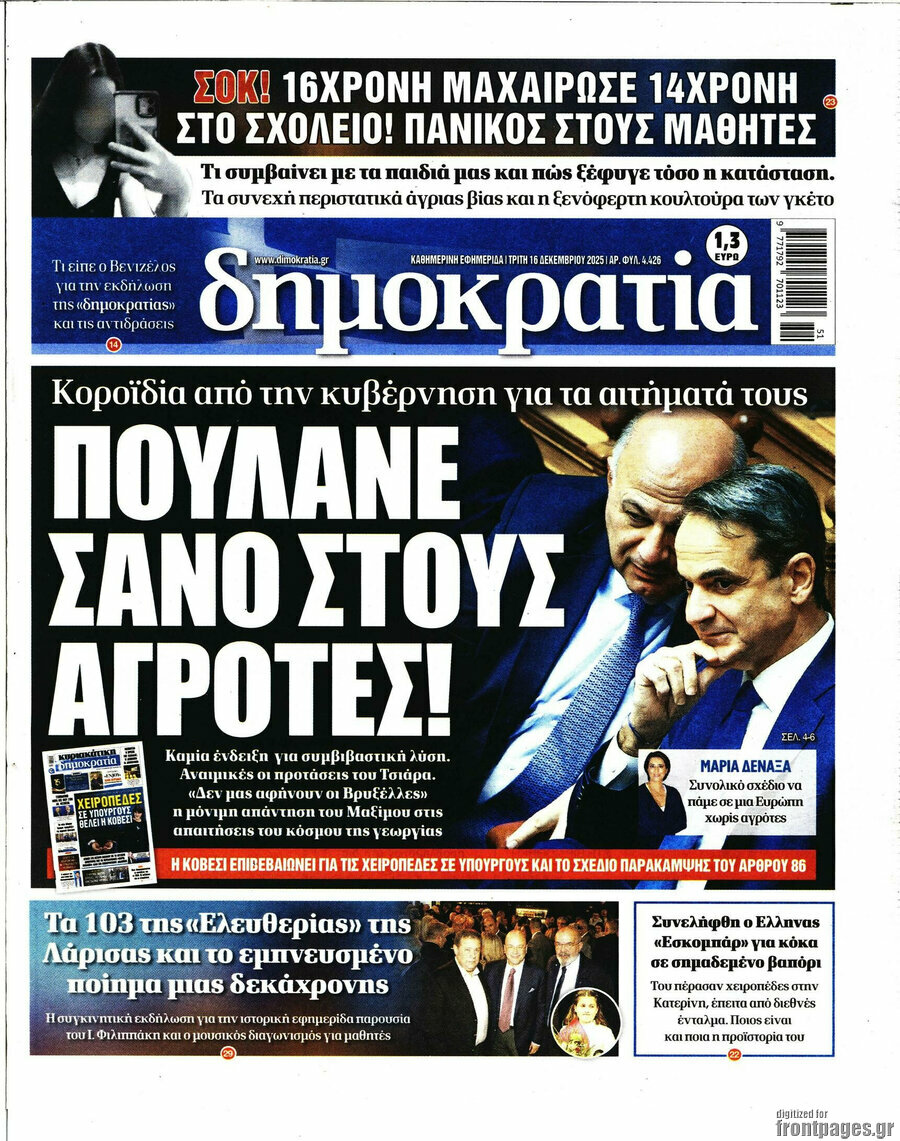
NAFTEMPORIKI: Farmers’ blockades affect the Christmas market


DRIVING THE DAY
ELEVENTH HOUR: EU ambassadors were locked in the European Council building until late last night, trying to convince Belgium to back plans to use €210 billion of Russian assets to help fund Ukraine into 2027. But with the clock ticking before leaders meet for a European Council (EUCO) summit on Thursday, the government of Prime Minister Bart De Wever is holding out for more.
Delay, delay, delay: As we reported Monday, the meeting of envoys was supposed to take place Sunday and ended up being postponed. The reason: ensuring Belgium, which holds the bulk of the immobilized reserves, was able to review a compromise text drafted by the European Commission. The Belgians want to be sure their country won’t be left exposed.
The latest document, which my colleague Gregorio Sorgi got his hands on, includes three assurances. First, that Belgium can tap into funding equal to the entire package if it faces legal claims or retaliation from Moscow. Second, that it can rely on this safety net, regardlessof the total financial guarantees that EU countries individually provide. And third, that no money will be transferred until those guarantees are in place. All capitals will be directed to simultaneously scrap their bilateral investment treaties with Russia to ensure Belgium isn’t left out in the cold to face Moscow’s ire.
It’s still not enough. That was the verdict of Belgium’s delegation on Monday, four diplomats told Gregorio and me as talks wrapped up. The country continues to maintain it needs more assurances it won’t be left open to disproportionate risks. Meanwhile, Belgian officials told POLITICO that any effort to overrule their concerns would be pointless and the funds in the Euroclear depository would simply not be released.
But but but … according to one EU official, granted anonymity to speak to Playbook, the negotiations are far from over. “All the work has been on prioritizing getting a deal on reparations; there is no clear alternative. And we will get there. It’s just a matter of time.” The EU’s top diplomat, Kaja Kallas, said Monday that she is “optimistic by nature,” but was also seeing “how difficult it is” to get Belgium’s sign-off. Ambassadors will meet again today and, if needed, on Wednesday to iron out more details.
Others say it’s all political theater: “There will be no deal until EUCO,” said one of the diplomats, arguing that because of the size of the commitments being made, presidents and prime ministers will want to take responsibility (and credit) for a breakthrough when they meet in person Thursday.
German Chancellor Friedrich Merz, meanwhile, has emerged as the leader most committed to convincing De Wever ahead of the showdown, my Berlin colleagues report this morning.
Do unto others: De Wever has domestic support for digging in his heels, according to an Ipsos survey for media outlets including Le Soir, which found 67 percent of Belgians are opposed to the frozen-assets plan. European Parliament Vice President Sophie Wilmès also warned against forcing the country to accept “what other countries would not accept themselves.”
More worrying numbers: Western voters overwhelmingly want to see their countries continue to support Kyiv. But a new POLITICO Poll of more than 10,000 people found those in the sampled EU countries were less likely to back financial contributions than Americans, Brits and Canadians. It suggests leaders have their work cut out for them to build public understanding of why the money is needed.
 |
PEACE TALKS
THE PROXIMITY OF PEACE: An end to the war in Ukraine is closer than ever, according to Donald Trump … Friedrich Merz reckons the negotiators made a “big step forward” … Volodymyr Zelenskyy thinks the proposals look “pretty good.”
After two days of discussions in Berlin, the prospect of security guarantees for Kyiv means that a peace deal might just be doable, my colleagues report this morning — although there are still major questions to be resolved, and no guarantees Vladimir Putin will play along if they are.
According to American officials, the U.S. is offering Ukraine security guarantees similar to those the country would receive as part of NATO. The offer of an “Article 5-like” security arrangement is the strongest and the most explicit security pledge the Trump administration has put forward to date — and potentially a critical step forward.
But there was also arm-twisting by the Americans in the talks, where Trump was represented by special envoy Steve Witkoff and his son-in-law Jared Kushner. Kyiv should take the deal now, the U.S. made clear, because the next iteration might not be as generous.
“Those guarantees will not be on the table forever,” a senior U.S. official said. “Those guarantees are on the table right now if there’s a conclusion that’s reached in a good way.”
Ukraine’s on you: The Americans also said they expect the Europeans to be part of any future peacekeeping initiatives, something Merz and other national leaders appeared ready to accept. They agreed to a European-led multinational force with contributions from the “coalition of the willing” and supported by the U.S. Separately, the Americans would monitor the ceasefire and provide early warning of any future attack.
“This is a truly far-reaching and substantial agreement, which we have not had before, namely that both Europe and the U.S. are jointly prepared … to give similar security guarantees to Ukraine,” the German chancellor said.
Russian recalcitrance? It’s unclear whether Moscow even wants to sign up to a peace deal, let alone one that will plonk foreign troops on Ukrainian soil. Yet after Monday’s dinner in Berlin, Dutch Prime Minister Dick Schoof said security guarantees were “essential” for Ukraine, Europe and the U.S.
“If all three say so, then I think Russia will have to move in this direction in the negotiations and accept it,” the Dutch leader told a group of reporters, including my Berlin Playbook colleague Hans von der Burchard. The U.S. “really feels that it can also talk to Russia on the basis of this proposal,” Schoof said.
MONEY MATTERS
HAPPENING TODAY — COMPENSATION FOR UKRAINIANS GETS CLOSER: Volodymyr Zelenskyy is expected to join fellow politicians and leaders in The Hague today for the launch of the International Claims Commission, which will eventually allow Ukrainians to seek damages for losses suffered during Russia’s war. The next step is to begin talks on getting the money for the compensation, with the expectation that a fund will be up and running in 18 months.
Where’s that cash coming from? All roads lead to Russian assets. Some of the money in the so-called reparations loan for Ukraine (assuming it happens) is earmarked for victim compensation; Other funding is expected to come from countries that have signed up to the claims commission, among them EU nations as well as Canada, Australia, the U.S., Japan and others. You can livestream today’s event via the Council of Europe.
In the room: Representing the EU, Justice Commissioner Michael McGrath told Playbook that today marks a “defining moment” in Europe’s determination “to fight impunity and deliver accountability for Ukraine.” Kallas is also set to say Europe will take “important decisions” in The Hague to hold Russia financially accountable for the damage caused by its invasion, according to remarks seen by Playbook.
PAY REVIEW: U.S. advisory firm Gartner Consulting has won a major contract from the European Commission to work out how much officials should be paid as part of the EU executive branch’s all-important review of its staffing structure, two sources confirmed to Playbook.
But not everyone is happy. “Pay-setting is an internal policy matter and delegating its assessment to an American private firm risks undermining the independence and authority of EU institutions,” said one official, granted anonymity to speak freely. The Commission insists Gartner will provide consultancy support in conjunction with the OECD and will make the Berlaymont a more attractive employer.
CASH ON THE TABLE: Europe ministers are in town today for talks on the bloc’s next long-term budget, as part of a General Affairs Council under the Danish Presidency. But, while progress is being made to ensure the so-called nego box can be put to leaders at EUCO on Thursday, albeit without concrete values for how much money is being spent, fault lines are opening between the bloc’s haves and have-nots.
Denmark, a net contributor to the budget, has opened the door for the potential return of rebates, by which wealthier countries can claw back cash — paving a showdown for those who wouldn’t feel the benefits. A new version of the text, obtained by our finance whiz Gregorio Sorgi, also seeks to stop capitals slashing funding for regions. This would require countries to “provide a justification based on objective criteria” to explain any regional funding cuts exceeding an undefined amount.
TRADE DEAL OR NO DEAL?
MERCOSUR FINISH LINE? MEPs will get their say at noon today on whether the Commission has done enough to ensure cheap agricultural products don’t flood into the EU as part of a new deal with South America’s Mercosur bloc. POLITICO’s Camille Gijs and Max Griera spoke to lawmakers who said they expect a majority to back the Parliament’s position that safeguards need tightening.
Chill out: “We have a really good safety netso that also the agricultural sector can be calm,” Socialists and Democrats MEP Bernd Lange, chair of the Parliament’s trade committee, told my colleagues. Whether the workaround gets approved will determine if big players France and Italy can support the overall agreement in time for Commission President Ursula von der Leyen to fly to Brazil on Dec. 20 and finally sign the long-awaited trade accord. Paris on Sunday called for a delay of the vote and the signature ceremony.
Moving quickly: Depending on how the vote goes, the three EU institutions are contemplating a new round of talks as soon as Wednesday, an EU diplomat and a parliamentary official told POLITICO. If there’s a deal, ambassadors could consider “the final compromise text with a view to agreement” at 8 p.m. that day, according to a draft agenda seen by Morning Trade.
Not so fast! However, more than 145 MEPs from across the parties are poised to request a legal opinion on the deal from the EU’s Court of Justice, which could delay it until the summer of 2027 or, even, to 2028, given the length of the procedures. “We want to delay the Mercosur adoption process as long as possible,” the Left Co-Chair Manon Aubry told Max.
IN OTHER NEWS
TRUMP SUES BBC: Donald Trump confirmed overnight that he filed a lawsuit seeking billions in damages against the BBC on Monday, over what he contends was a deliberately misleading edit of a speech he gave on Jan. 6, 2021, as the Capitol riot was getting underway. The lawsuit, filed in federal court in Miami, claims the British public broadcaster “maliciously” strung together separate comments to convey the impression Trump had urged his supporters to engage in violence.
DAS AUTO DIGS IN: A long-awaited ban on combustion engine cars by 2035 will be watered down when it is unveiled later today, with the European Commission allowing automakers to cut their emissions by 90 percent instead of the original 100 percent. That’s according to four officials who spoke to POLITICO’s Jordyn Dahl.
The car industry has long opposed the ban,whichit says would harm European automakers’ ability to compete with Chinese companies that are in the lead on electric vehicles. The campaign has secured the support of auto-loving Germany and the governing center-right European People’s Party group. Whatever the outcome, Cyprus will have to take over the politically divisive file during its presidency — a tall order for a country with no major car industry.
FROM THE FLANK: Leaders from eight EU countries bordering Russia will use a summit in Helsinki today to ask for dedicated funding from the bloc’s long-term budget to shore up their defense and security. My colleague Victor Jack is on the ground and has this report on the demands here.
SAVING CIVILIZATION? Donald Trump has promised to restore “European greatness” and his officials are already courting far-right leaders from Paris to Berlin to make it happen. James Angelos and Joshua Berlinger have the inside story.