
Farmers remain on the blockades and send their demands to the government
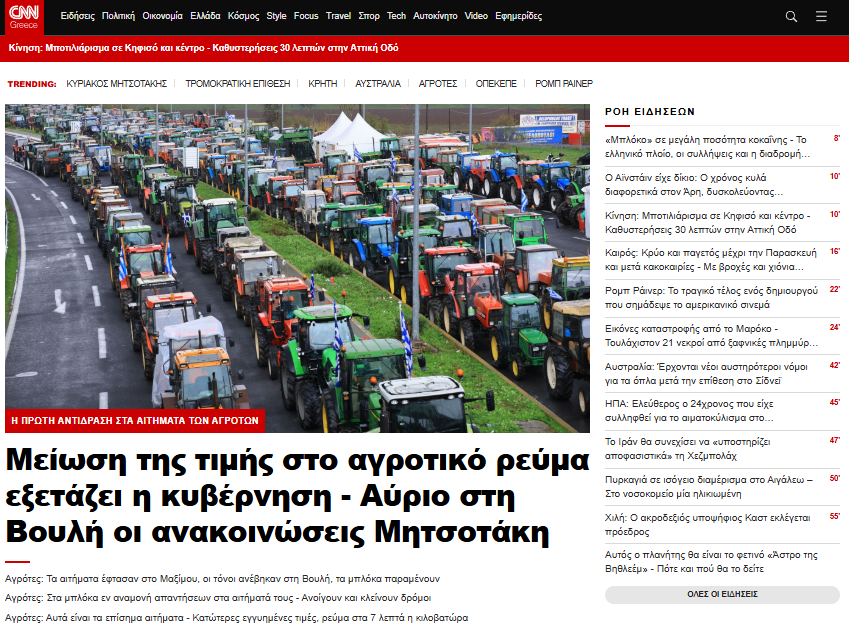
Greek farmers remain on the blockades and are further escalating their mobilizations. At the meeting held in Nikaia, Larissa, on Saturday, it was decided to send their requests in a structured manner to the Prime Minister Kyriakos Mitsotakis and the relevant ministers, clarifying that they will not respond to the prime minister’s invitation for a meeting.
Police probe finds false farm subsidy claims filed in 2025 amid OPEKEPE scandal
Several alleged members of a criminal organization dismantled by Greek police over the weekend went on to submit agricultural subsidy applications containing false information to Greece’s state payment agency, OPEKEPE, for the year 2025, even after a major corruption scandal had erupted, according to findings from a police investigation.
State airport concessions aimed at upgrading them
The 22 airports managed by the Hellenic Civil Aviation Authority are small, with outdated infrastructure and intense seasonality. Their concession by the Growthfund will not be easy, as their revenues are low and they require investments totaling 300 million euros. The tender model that has been selected foresees the participation of the three existing concessionaires of airports, namely Athens International Airport, Fraport Greece, which already manages 14 large regional airports, and the GEK Terna-GMR Airports Ltd scheme, which will manage the new airport being built in Iraklio on Crete.
https://www.ekathimerini.com/economy/1289774/state-airport-concessions-aimed-at-upgrading-them
Greece is a champion in reducing tax evasion: VAT “gap” below 10% in 2024
Greece is recording progress in the fight against tax evasion, with the gap in the collection of Value Added Tax now estimated to have already fallen below 10% for 2024. For the first time in history, the “VAT gap” in our country (as calculated by the EU) is close to or below the European average.
ATHEX: Stocks slip on day and the week
Friday’s session at Athinon Avenue resembled that of Wednesday, with minimal losses for the benchmark, growth for the majority of stocks and the mid-cap index, and a moderate decline for banks. The week closed with a marginal drop, with a predictable shrinking of turnover, and with selective moves in mid- and small-caps in accordance with the nine-month results they are in the process of releasing.
https://www.ekathimerini.com/economy/1289677/athex-stocks-slip-on-day-and-the-week


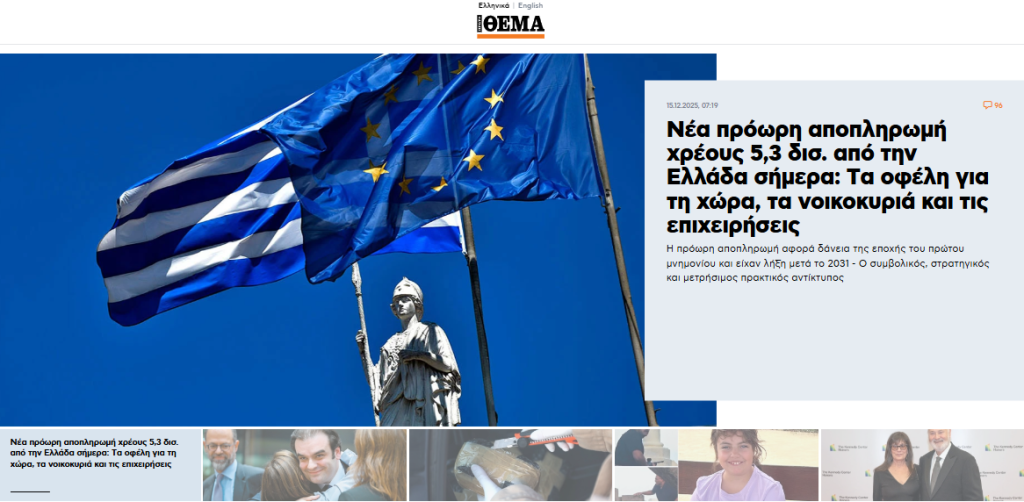
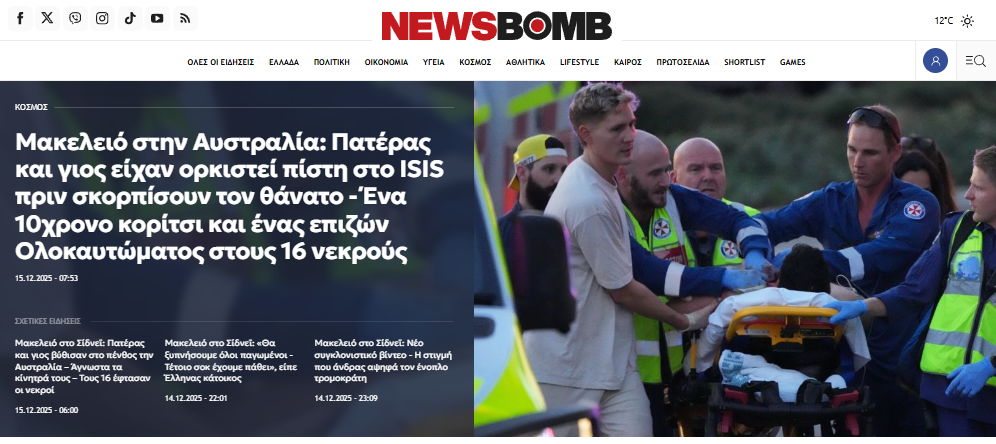


SUNDAY PAPERS
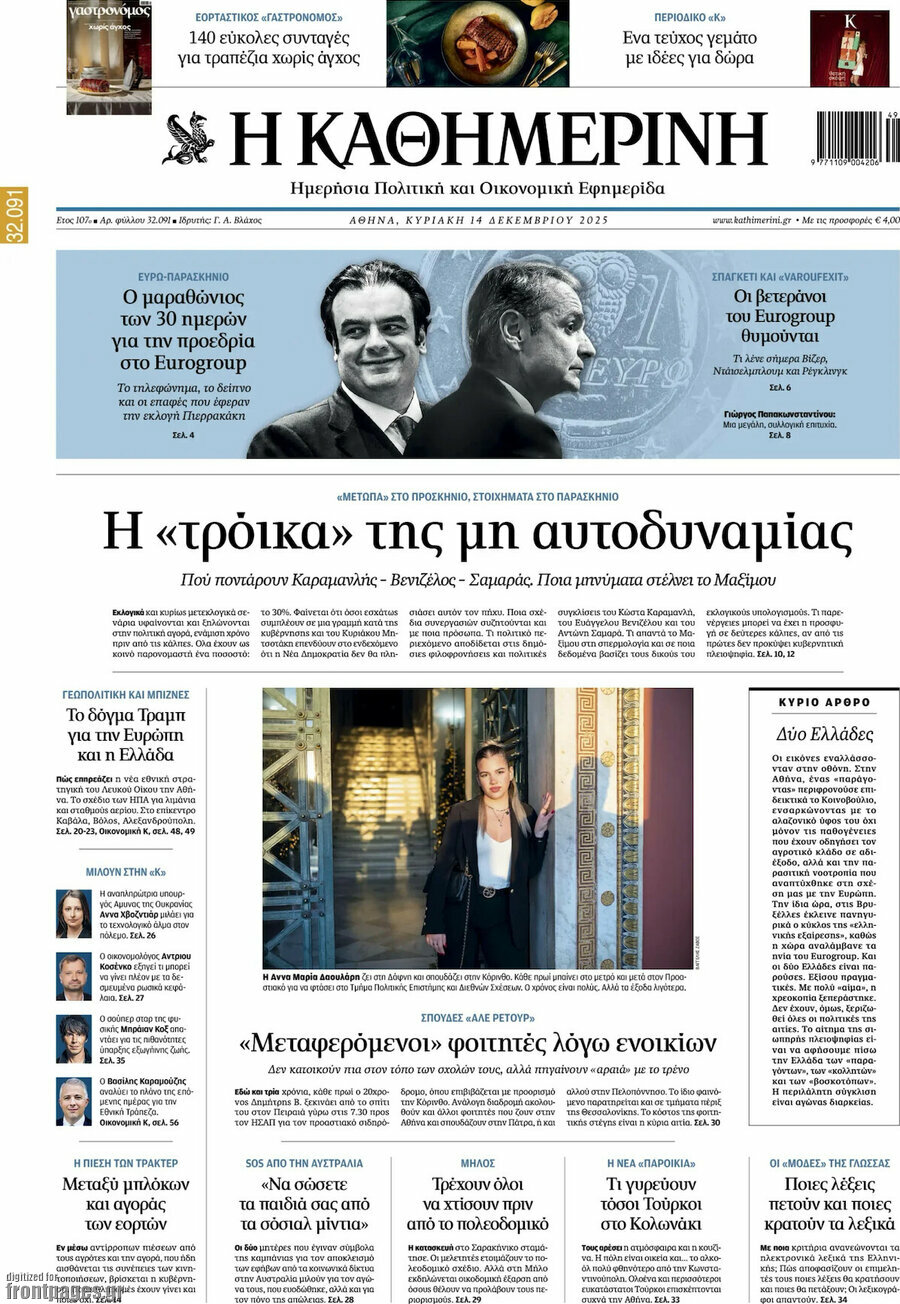
KATHIMERINI: The “troika” of Karamanlis, Venizelos and Samaras undermines the prospects of a single-party government
TO VIMA: In search of 200,000 young farmers

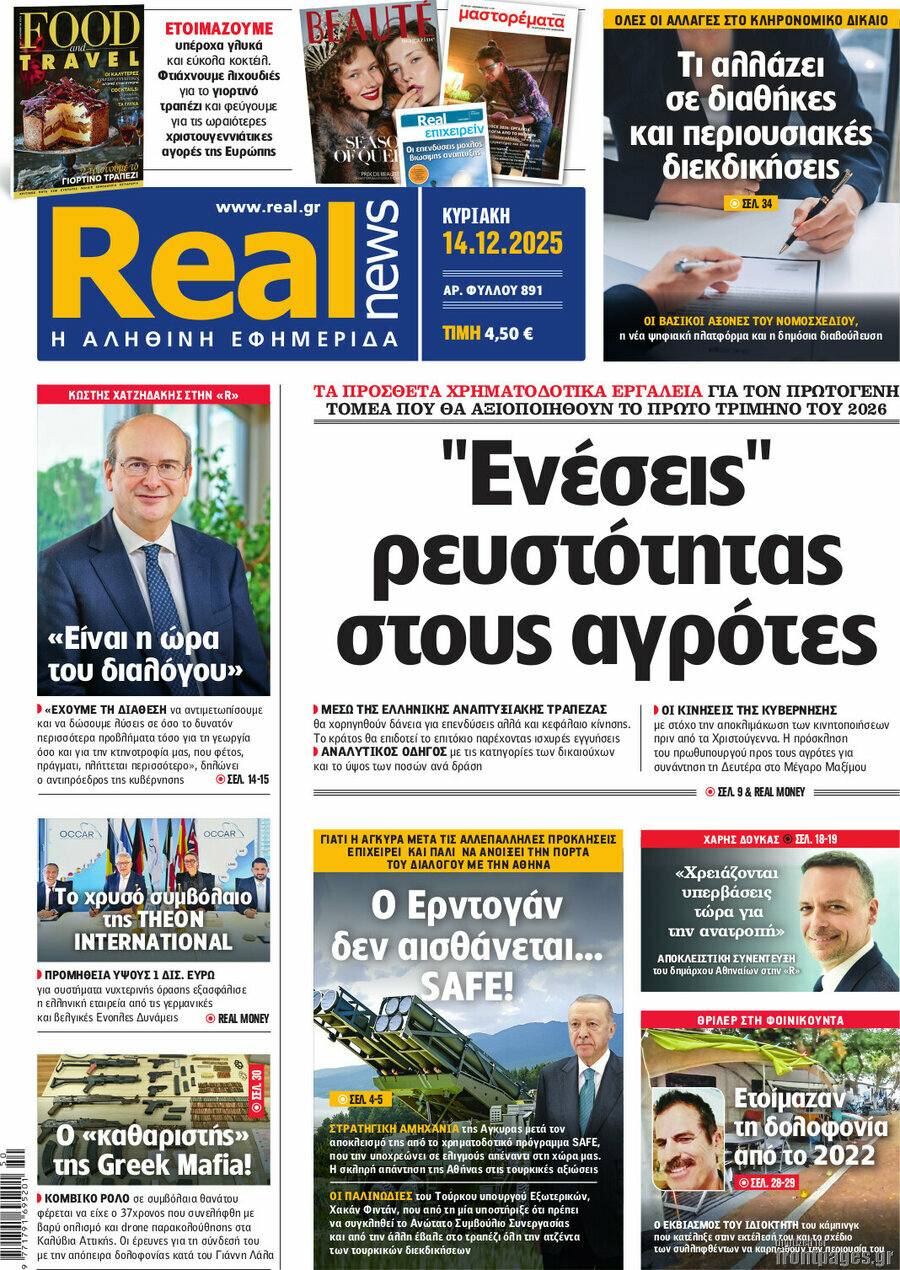
REAL NEWS: Liquidity “injections” for farmers
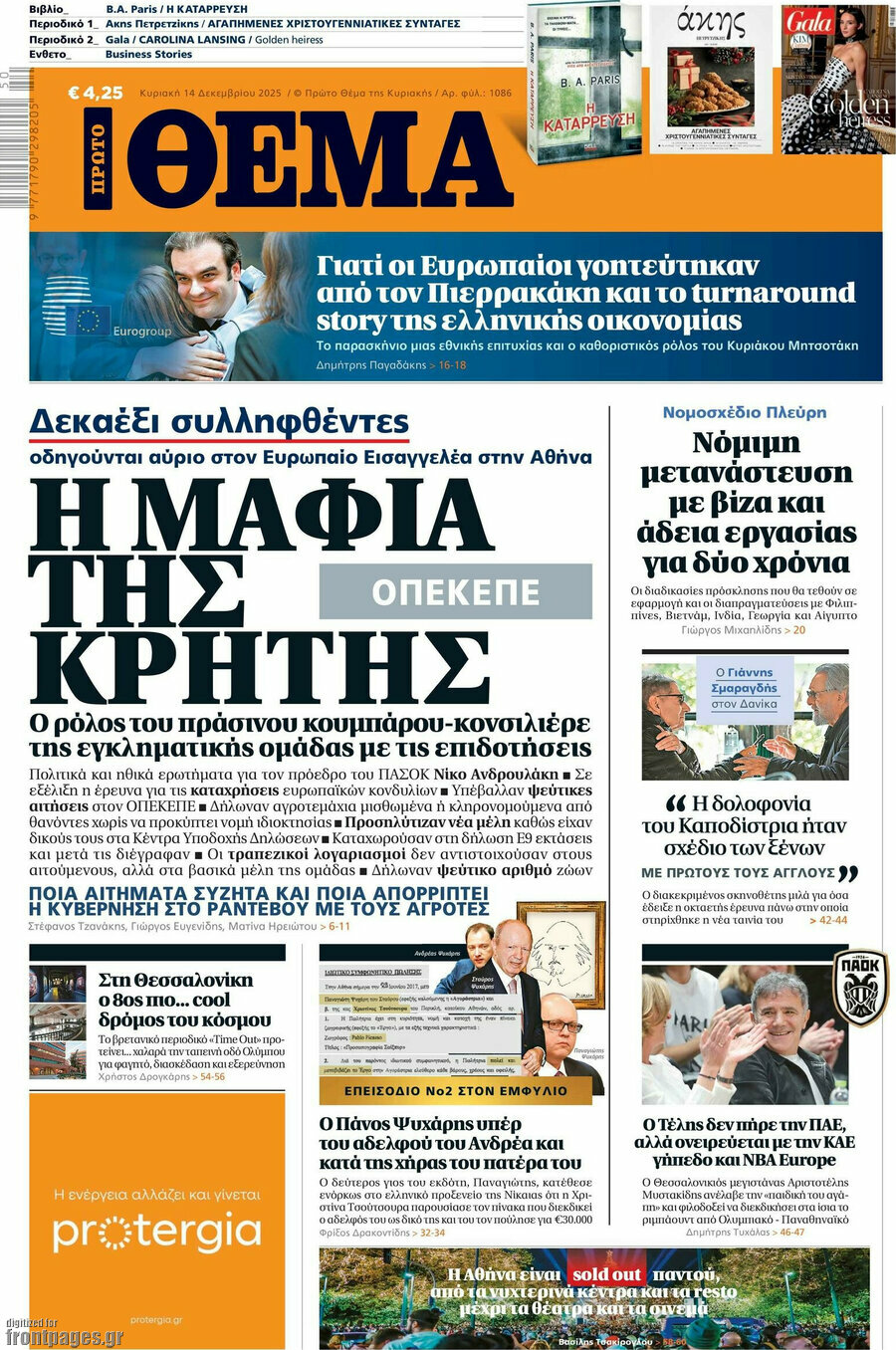
PROTO THEMA: The Mafia of Crete
MONDAY PAPERS:
TA NEA: Who is threatened by the super flu

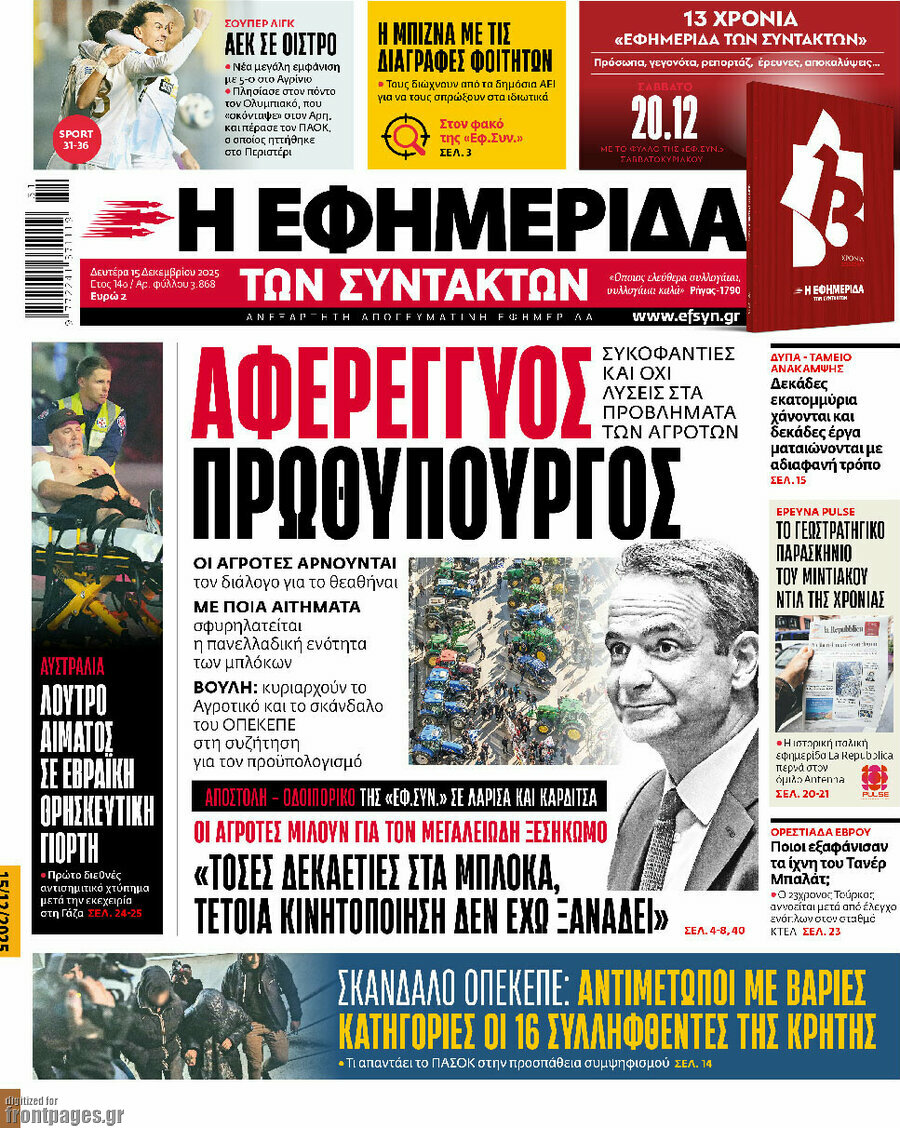
EFIMERIDA TON SYNTAKTON: Unreliable prime minister
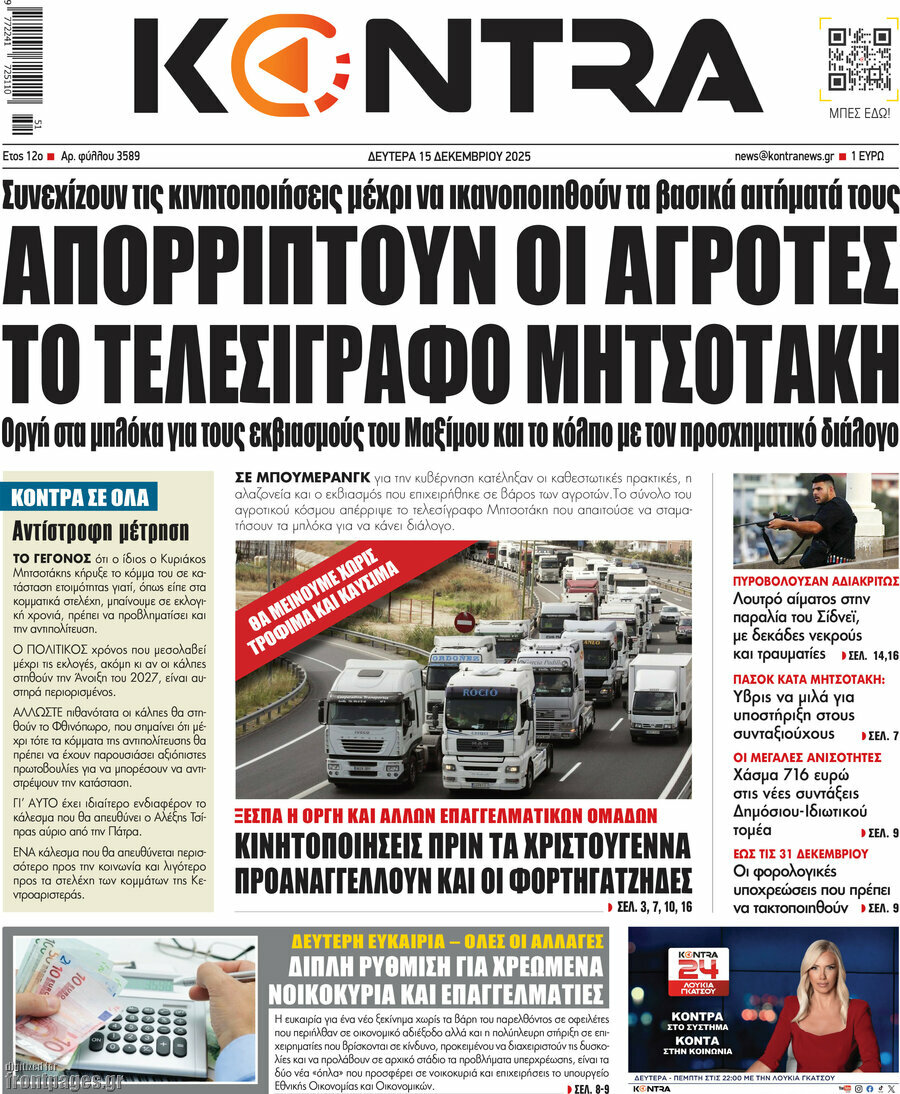
KONTRA NEWS: Farmers reject Mitsotakis’ ultimatum
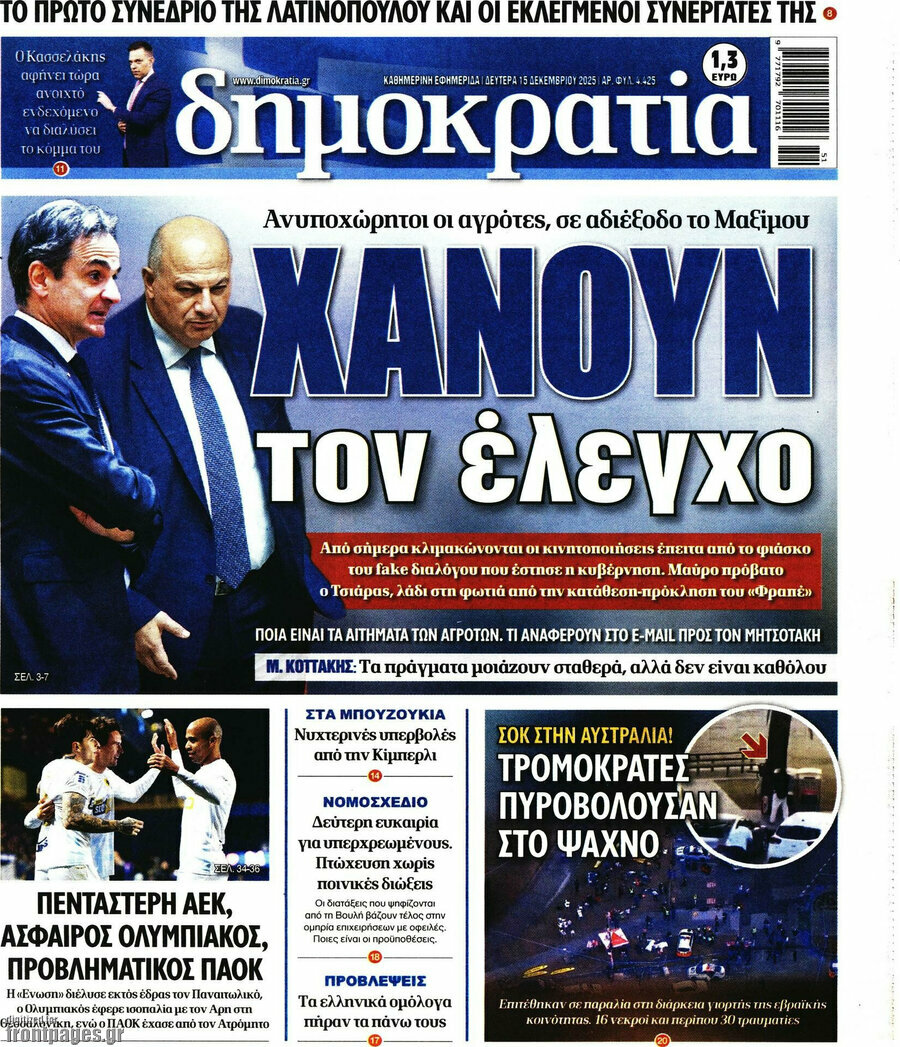
DIMOKRATIA: The government is losing control
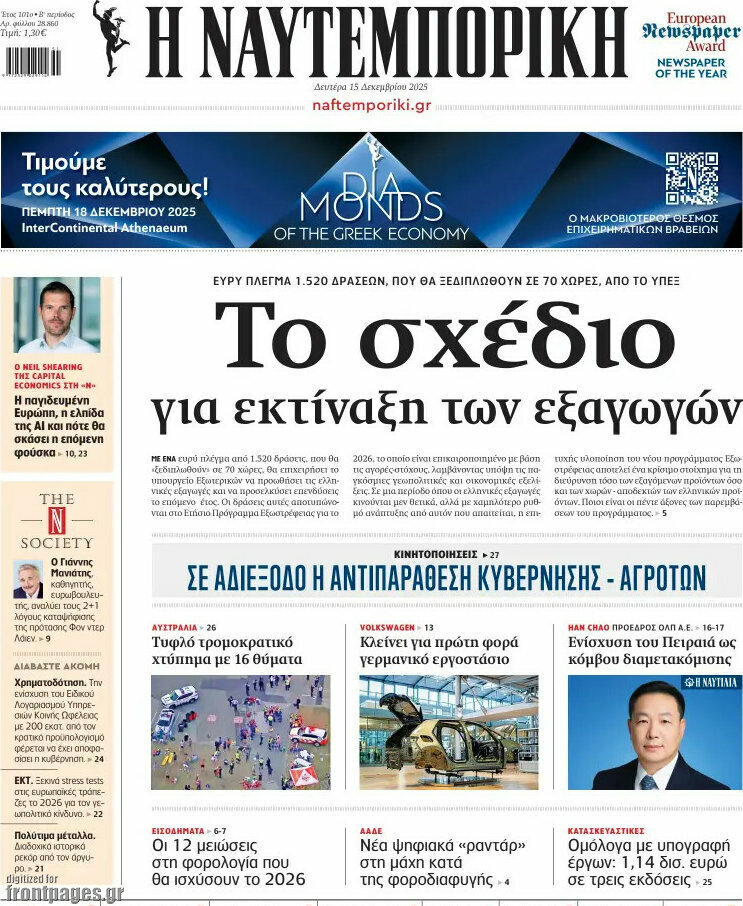
NAFTEMPORIKI: Plan to boost exports

DRIVING THE WEEK
EUROPE’S TURNING POINT: The European Union faces a geopolitical moment of truth this week, as leaders square up to hugely consequential decisions on peace in Ukraine and how to finance the war-torn country’s fight against Russia. It’s also make-or-break time for a trade deal with South America that has been in the works for 25 years.
Answering Trump: Having been attacked by U.S. President Donald Trump as “weak” and aimless, EU leaders including Merz and Macron now have a chance to prove Europe is ready to cast the die and take charge of its destiny.
Half-Rubicon: A decision last week to use emergency powers to deep-freeze Russia’s immobilized assets in Belgium marked a first step toward new independence for the bloc, several EU diplomats told Playbook over the weekend.
Full-Rubicon: Big moves on Mercosur and Ukraine financing could drive home the point — with Europe finally flexing its geopolitical muscle. “We had a U.S. president who said leaders can’t make decisions. Now is their chance to show they can,” said one EU diplomat.
DECISION 1 — UKRAINE PEACE: Berlin will be the backdrop of the first crunch moment today, where Ukrainian President Volodymyr Zelenskyy is meeting Merz before huddling with the following European leaders from 6:30 p.m.: Macron, Keir Starmer, Alexander Stubb, Mette Frederiksen, Donald Tusk, Ulf Kristersson, Dick Schoof, Jonas Gahr Støre, Ursula von der Leyen and António Costa. Also present: NATO Secretary-General Mark Rutte.
Why it’s crucial: The Berlin gathering marks a key chance for Europe to influence a peace deal, weeks after an initial 28-point plan drawn up by the U.S. and Russia prompted outrage in the bloc.
Getting closer: “We’re probably closer to a peace agreement than we have been at any time during these four years,” Finland’s Stubb told a Dutch interviewer on Sunday.
What’s at stake: The fate of Ukrainian territories that Russia is demanding, as well as security guarantees sought by Kyiv. Here’s the full story by Ben Munster, Gregorio Sorgi and Gabriel Gavin.
DECISION 2 — UKRAINE FINANCING: As leaders huddle in Berlin, EU foreign ministers and ambassadors will be making a last-ditch effort in Brussels to strike a deal on a €210 billion loan for Ukraine using frozen Russian assets ahead of a leaders’ gathering later this week.
Make or break: “The decision on frozen assets … will determine whether the EU is still a relevant actor. There is no option B,” a German official wrote to Playbook.
Going wobbly: Yet plans to tap billions in Russian frozen assets face headwinds after Italy, together with Malta and Bulgaria, came out against the plan last week. Hungary and Slovakia are also likely to oppose. Two diplomats told Hans von der Burchard that Budapest’s opposition to using the EU’s budget headroom to fund Ukraine has paradoxically made the reparations loan the main game in town.
Another one: Czechia’s newly installed prime minister, Andrej Babiš, came out against the Russian-asset proposal over the weekend, saying his country was unwilling to provide financial guarantees to Belgium, Gregorio Sorgi reports.
Dead in the water? Not quite. Even if all seven countries band together on the assets, they lack the numbers — population-wise — to form a blocking minority in a qualified majority vote. But while EU states might steamroll Hungary in a QMV, they’re unlikely to do so with Belgium.
Status check: It’s against this background that Belgian Prime Minister Bart De Wever has received some TLC from European leaders, as they try to allay his fears. On Sunday, the EU’s Danish presidency was fine-tuning a legal proposal from the Commission ahead of the Coreper this evening, per an EU diplomat. The meeting, originally scheduled for Sunday, was postponed to make time for this work.
WITKOFF AND KUSHNER AT FAC? EU foreign ministers gathering in the morning for a Foreign Affairs Council are likely to get a briefing on Gaza peace efforts by Trump envoys Jared Kushner and Steve Witkoff, per an EU diplomat, who said the move was pitched by France. An EU official said Sunday night the briefing was “possible.”
DECISION 3 — MERCOSUR: Finally, this week may bring closure on the long-awaited Mercosur trade deal, which multiple officials describe as a geopolitical power play for Europe to offset its dependency on the U.S. More on that below.
The bottom line: Rarely have the words “crunch time” been more appropriate, with an EU leaders’ gathering later this week likely to mark the start of a new era for Europe. But nothing about it will be easy: One diplomat said they were preparing “multiple shirts” for the summit — suggesting the EUCO will be long and sweaty. Buckle up: the road to Christmas will be bumpy.
MERCOSUR IN THE BALANCE
ELEVENTH-HOUR CALL FOR MERCOSUR DELAY: With Europe’s free-trading nations scrambling to finalize the trade deal with South America, France threw a spanner in the works on Sunday night by calling for a decision to be postponed, to allow more time to address Paris’s concerns, Camille Gijs reports.
Why it matters: Several countries warn that the holdup risks ultimately killing the trade deal, which has been in the works for decades and could create a free-trading zone of 700 million people.
Key concern: Further stalling could embolden opposition in the European Parliament or complicate next steps when Paraguay, which is skeptical about the agreement, takes over the presidency of the Mercosur bloc from Brazil.
The deets: Denmark has vowed to hold the line and go ahead with scheduling the vote in time to allow European Commission President Ursula von der Leyen to fly to Brazil on Dec. 20, despite France seeking to delay the decision, as my trade colleagues reported last week.
Down to the wire: But the final talks may not be wrapped up until the summit of European leaders on Thursday and Friday this week. Adding to the headaches, a protest of farmers is expected in Brussels on Thursday. Multiple sensitive files — from Russia’s immobilized assets to the Mercosur deal — are being linked at the highest level to extract concessions, diplomats said.
Rome as kingmaker: Three diplomats portrayed Italy as the swing vote. Two of them said it wasn’t clear whether Rome was seeking to obtain favors on other files, with one citing the guarantees on the Multiannual Financial Framework currently in negotiations, or whether it was more a question of domestic politics.
Enigmatic: Italy’s Agriculture Minister Francesco Lollobrigida remained ambiguous when he briefed the press on the sidelines of an Agriculture Council on Friday.
France not alone: Aside from France, those also on the more skeptical side of the deal are Italy, Poland, Ireland and Austria. Conversely, pro-Mercosur nations such as Germany, Spain and Sweden argue the French have already been accommodated, including by the proposal of additional safeguards to protect European farmers, should Latin American beef or poultry flood EU markets.
Assurances: The texts, published last week, include a temporary strengthened safeguard — one of the key conditions for Paris to back the deal. The European Parliament votes tomorrow on the safeguard text. That will open the door for final talks between the EU Council and Parliament. But the timing looks tight, Camille writes.
HOUSING
BRUSSELS TAKES ON THE CRISIS: From Lisbon to Tallinn, Europeans are being overwhelmed by soaring home prices. This week, Brussels lays out its ambition to do something about it, with the bloc’s first-ever Affordable Housing Plan. Housing Commissioner Dan Jørgensen previews the policy in an exclusive interview with Aitor Hernández- Morales.
What to expect: The legislative package includes a revision of state-aid rules to funnel public cash into housing projects, the targeting of short-term rentals that are exacerbating the shortage of homes in touristic cities and a bid to track speculation on the housing market. A new construction strategy to cut red tape and create common standards, and a bid to ensure the rights of Europe’s homeless are respected, are also in the plan.
Do this — or else: While much of the plan will consist of recommendations member countries aren’t required to implement, Jørgensen warned against ignoring them. “Take this problem seriously,” he urged leaders, or accept disgruntled voters will “hand over power to the populists.”
COMMISSION CORNER
COMMISSION PONDERS GEO IMBALANCES IN STAFFING: Berlaymont recruiters have received instructions to keep a closer watch on the geographical mix of its staff, with an eye to making corrective moves, per documents seen by Playbook.
An internal document from early November states that, from 2026, DGHR will actively monitor trends in terms of which EU members are under- or appropriately represented (a separate document shows that Belgium and Bulgaria are adequately represented, for example, while Finland, Ireland, Germany and Denmark are under-represented).
Quotas floated: If the monitoring shows trends aren’t improving, DGHR may decide further measures are needed to fix imbalances. These can include interviewing “at least one person from under-represented nationalities” … “giving preference to candidates from under-represented states,” assuming merits are “substantially the same” … and applying “nationality-based recruitment targets.” The document is adamant to rule out “reserving posts for nationals of a specific member states”; or compromising on the “highest standards of ability, efficiency and integrity of the Union civil service.”
IN OTHER NEWS
WHILE YOU WERE SLEEPING: Jimmy Lai, the pro-democracy former media mogul who has been an outspoken critic of Beijing, was convicted in a landmark national security trial in Hong Kong and could now face life behind bars. The 78-year-old’s trial, which was held without a jury, has been closely monitored by the EU and others as a measure of Hong Kong’s media freedom and judicial independence under Chinese control, the Associated Press reports.
THE KIDS WHO WANT A “SUPERPOWER EUROPE”: A futuristic EU soldier stands guard, laser blaster at the ready. European fighter jets zoom through the sky over thumping Eurodance beats. An imaginary map shows a vastly enlarged EU, swallowing everything from Greenland to the Caucasus. Welcome to the wild world of pro-Europe online propaganda, where the EU isn’t a fractious club of 27 countries but a juiced-up superpower on par with China or the U.S. — only wiser and more cultured! Deep-dive into pro-Europe propaganda with your Playbook author.
CONFLICT OF INTEREST IN EU GREEN RULE-SLASHING:Ten civil society organizations are pointing the finger at Swedish European People’s Party MEP Jörgen Warborn, who led negotiations to limit the number of companies under the scope of the EU’s green supply chain rules (omnibus I), as president of SME Europe. Warborn did not report the possible conflict of interest in the mandatory transparency form, Max Griera reports.
SME Europe, which the organizations say is a “lobbying wing” of the EPP party, is an independent legal entity in the EU lobbying transparency register whose objective is to shape “SME friendly policy.” The organizations urge the European Parliament’s code of conduct committee to open an investigation and potentially sanction the lawmaker. Warborn did not reply to a request for comment.
SÁNCHEZ BATTERED BY #METOO MOVEMENT: Sexual-harassment scandals are set to overshadow the traditional end-of-year address that Spanish Prime Minister Pedro Sánchez is scheduled to deliver today. His governing Socialist Party is being battered by a deluge of abuse complaints that is threatening the stability of the country’s weak coalition government.
Call for reshuffle: Deputy Prime Minister Yolanda Díaz, whose far-left Sumar electoral platform is the junior partner in Sánchez’s coalition, is demanding a Cabinet reshuffle to break with the rot. Meanwhile, the Socialists’ parliamentary partners say that if the party can’t get a handle on the scandals, snap elections will need to be called. Aitor Hernández-Morales has been following the story.
ON CARS, DOES WEBER SPEAK FOR BRUSSELS? In an interview with Bild last week, the German EPP chief Manfred Weber announced that the European Commission would scrap its proposed 2035 phaseout of combustion engines. Commission officials are pushing back on Weber’s announcement, but for now it’s all off-record. Officially, the Commission is a “no comment” on the 2035 phaseout. Jordyn Dahl and Zia Weise have been reporting on this.
Respect yourself: Speaking to Playbook, former German Cabinet member Sven Giegold criticized Weber’s move. “Handing over the right of initiative from the European Commission to MEP Manfred Weber sets an institutional precedent. If the Commission will now seriously open the fleet regulation, Ursula von der Leyen will demonstrate an unprecedented lack of institutional self-respect,” he wrote in a text. Giegold is deputy chair of the German Greens party and former state secretary for climate and economy under ex-Chancellor Olaf Scholz.
TRAVEL FEARS GRIP MEPS: Lawmakers in the European Parliament are raising alarms that their travel plans could soon be disrupted — or even snooped on — by the U.S. In a draft letter to President Roberta Metsola, obtained by tech colleague Mathieu Pollet, they are set to urge Metsola to immediately suspend and replace Parliament’s current travel-booking provider, Carlson Wagonlit Travel. The company’s recent acquisition by U.S.-based American Express, they argue, made MEPs vulnerable to foreign snooping and placed them at the mercy of American sanctions.
Get us off CWT: “The use of CWT for our travel arrangements exposes MEPs and Parliament staff to the real and present danger of U.S. sanctions, which have already been weaponized against European officials in the past,” warns the text drafted by centrist Austrian lawmaker Helmut Brandstätter (who also steered a recent push to detox in-house IT from U.S. tech).